Are you struggling to choose the right air purifier for your space? Selecting the best filtration system can make a massive difference in your health, comfort, and indoor air quality.
You might already know that the ultimate debate usually comes down to HEPA Vs. Carbon Filters…
But what are the exact differences, and which one do you actually need?
Well, you’re in for a treat because I’ve put together a complete breakdown. I will give you advice that goes beyond the basic spec sheets to explain the unique mechanisms, pros, cons, and best applications for each.
In this guide, you’re going to learn exactly how to tackle everything from everyday dust and allergens to stubborn odors and VOCs, step by step.
What is a HEPA Filter?
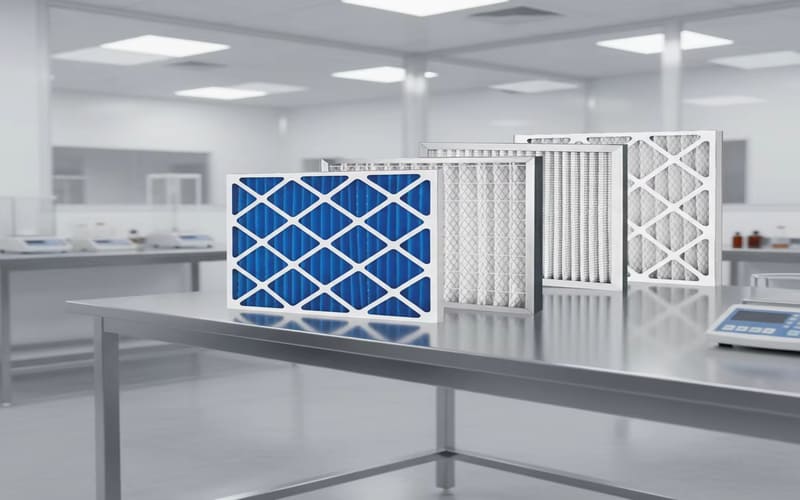
A HEPA (High-Efficiency Particulate Air) filter is a pleated mechanical air filter designed to trap the vast majority of harmful particles circulating in your environment. As a leading HEPA filter manufacturer, we engineer these filters to meet strict industry standards, ensuring they capture at least 99.97% of airborne particulates as small as 0.3 microns. They are the gold standard in modern air purifiers for improving indoor air quality.
How HEPA Filters Work
HEPA filters rely on a dense web of randomly arranged fiberglass fibers. When air passes through these mechanical filters, particles are trapped through a multi-layered filtration mechanism:
- Impaction: Large particles like dust and pollen crash directly into the fibers.
- Interception: Medium-sized particles graze the fibers and stick to them.
- Diffusion: The smallest, fine particulates are pushed around by gas molecules, causing them to zigzag and eventually crash into the fiber web.
Pros and Cons of HEPA Filters
Understanding the strengths and limitations of HEPA technology is crucial for optimizing your air purification systems.
Pros:
- Exceptional Particle Removal: Highly effective against dust, dander, mold spores, and pollen.
- Health Benefits: Significantly reduces allergy and asthma triggers in the home.
- No Byproducts: Operates purely as a mechanical filter without producing harmful ozone.
Cons:
- Ineffective Against Gases: Cannot trap volatile organic compounds (VOCs), chemical fumes, or odors.
- Airflow Resistance: The dense fibers require a powerful fan, which can increase energy consumption.
- Maintenance: Requires strict adherence to filter replacement schedules to maintain efficiency.
Best Applications for HEPA
Because of their highly specific target pollutants, HEPA filters are essential in environments where microscopic solid particles are the primary concern. They are the optimal choice for:
- Residential Bedrooms: Capturing dust mites and pet dander for better sleep.
- Medical Facilities: Trapping airborne pathogens and fine particulates to maintain sterile environments.
- Allergy and Asthma Relief: Proactively removing dust and pollen from the breathing zone.
- Wildfire Zones: Filtering out dangerous ash and soot particles from the air.
What is an Activated Carbon Filter?
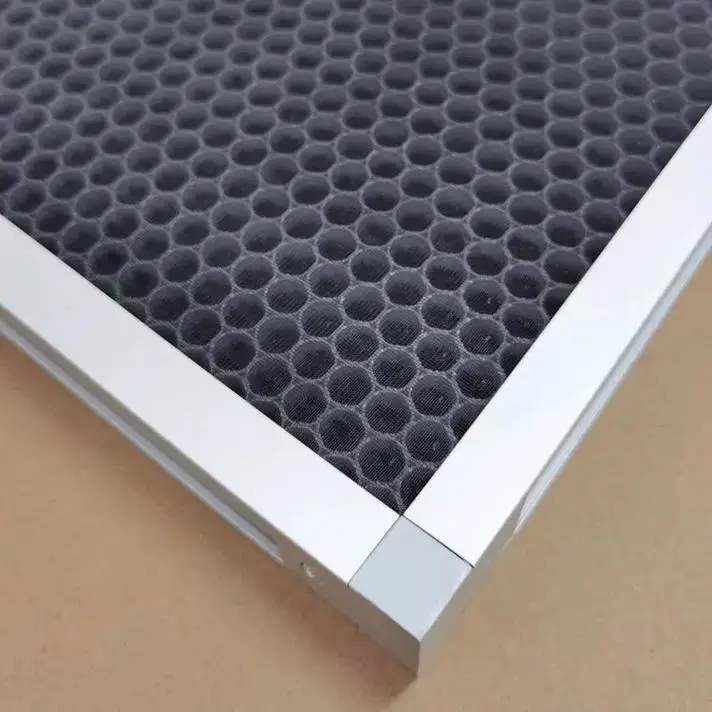
While HEPA handles solids, an activated carbon air filter tackles the invisible threats in your indoor environment. These filters use a bed of highly porous carbon—often derived from treated charcoal—to capture gases and odors that standard mechanical filters simply cannot catch.
How Carbon Filters Work
Carbon filters rely on the adsorption process rather than physical trapping. When polluted air passes through the filter bed, gas pollutants and volatile organic compounds (VOCs) stick directly to the porous surface of the carbon at a molecular level. If you want to dive deeper into the exact mechanics, understanding what is a carbon filter and how it works reveals just how much surface area these filters have to trap airborne chemicals. Once every pore is filled, the filter reaches its capacity.
Pros and Cons of Carbon Filters
To understand where carbon fits into your air purification systems, it helps to look at its strengths and weaknesses.
Pros:
- Exceptional Odor Removal: Instantly neutralizes tough smells from pets, cooking, and garbage.
- Traps Harmful Gases: Effectively absorbs VOCs, formaldehyde, and everyday household chemical fumes.
- Ideal for Smoke: Works brilliantly alongside smoke extractors to clear out lingering odors.
Cons:
- Ignores Airborne Particulates: Cannot trap dust and pollen or fine particulates.
- Frequent Maintenance: Requires strict filter replacement schedules. Once saturated, they stop working and can even release trapped odors back into the room.
Best Applications for Carbon
If your primary goal is improving indoor air quality by removing smells and chemical fumes, carbon is the answer. These filters are perfect for newly painted homes dealing with off-gassing VOCs, active kitchens requiring intense odor removal, or living spaces impacted by wildfire smoke. They are essential components in both portable air purifiers and whole-house setups when gas pollutants are your main concern.
HEPA vs. Carbon Filters: Key Differences
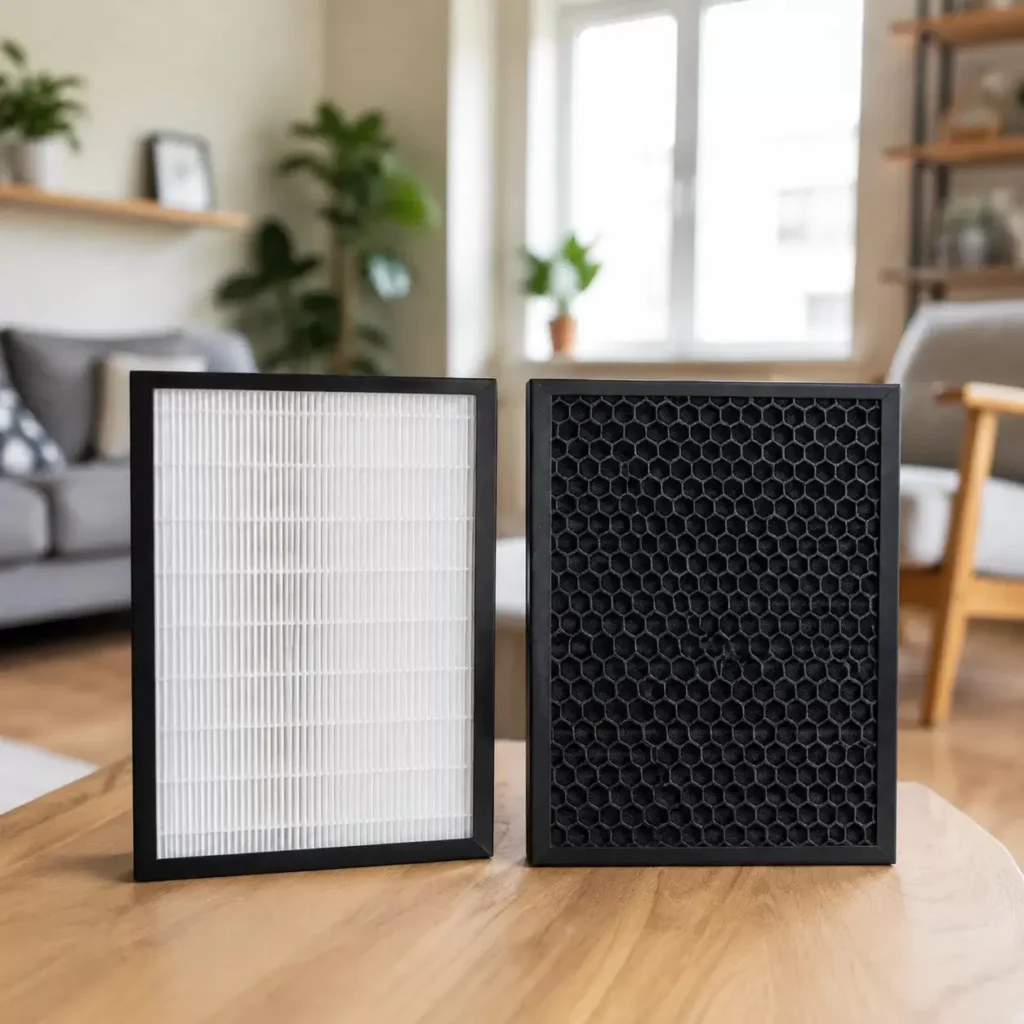
Understanding the distinction between HEPA vs. carbon filters is crucial for optimizing your indoor air quality. While both are essential components in modern air purification systems, they tackle completely different types of air pollution. As a HEPA filter manufacturer, we constantly see users confusing the capabilities of these two distinct technologies.
Here is a quick breakdown of how they compare:
| Feature | HEPA Filters | Activated Carbon Filters |
|---|---|---|
| Primary Target | Airborne particulates | Gas pollutants & Odors |
| Method | Mechanical trapping | Chemical adsorption |
| Best For | Dust, pollen, pet dander | Smoke, cooking smells, VOCs |
| Average Lifespan | 6 to 12 months | 3 to 6 months |
Filtration Mechanism
The core difference lies in their filtration mechanism. HEPA filters are mechanical filters. They use a dense web of fine fiberglass threads to physically trap passing particles. It is a straightforward physical barrier. In contrast to an electrostatic air filter that relies on static charges, HEPA relies on interception, impaction, and diffusion.
Activated carbon filters work through an adsorption process. The carbon is treated with oxygen to open up millions of tiny pores. When air passes through, gases and odors chemically bind to the porous surface of the carbon, effectively trapping them inside the filter bed.
Target Pollutants
Because of their unique designs, these filters target entirely different pollutants:
- HEPA Filters: Designed specifically for solid airborne particulates. They excel at capturing dust and pollen, mold spores, pet dander, and fine particulates (PM2.5).
- Carbon Filters: Engineered for gases. They handle volatile organic compounds (VOCs) from household cleaners, gas pollutants, and are the primary defense for odor removal and chemical neutralization.
Lifespan and Maintenance
Filter replacement schedules vary significantly between the two. HEPA filters generally last longer, typically between 6 to 12 months depending on the air quality and usage. Once the mechanical fibers are fully clogged with dust, the filter must be replaced.
Carbon filters usually have a shorter lifespan, often requiring replacement every 3 to 6 months. Because they rely on available surface area for adsorption, once the carbon pores are full (saturated) with gases and odors, they can no longer absorb anything else and may even start releasing trapped odors back into the room.
Which Filter Do You Need?
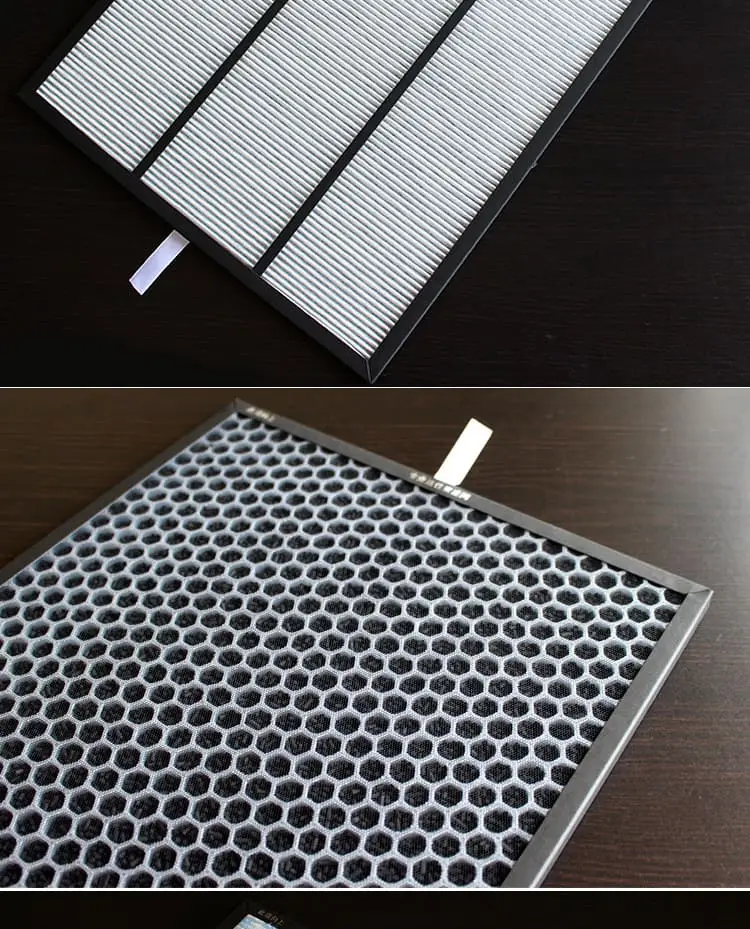
Deciding between HEPA vs. carbon filters comes down to identifying the specific target pollutants in your environment. Neither filter is universally better; they simply perform entirely different jobs for your indoor air quality.
Choosing HEPA for Allergens and Dust
If your primary goal is to remove solid airborne particulates, HEPA is the absolute standard. As an experienced HEPA filter manufacturer, we build these mechanical filters to trap the physical debris floating through your home or workspace.
- Dust and pollen: Highly effective at trapping the heavy physical particles that trigger asthma and allergies.
- Fine particulates: Easily captures microscopic threats, including pet dander, mold spores, and airborne bacteria.
- Reliable upgrades: Installing a durable panel HEPA filter in your air purification systems guarantees maximum particle retention without restricting airflow.
Choose HEPA if you need to physically clean the air of solid matter.
Choosing Carbon for Odors and VOCs
Activated carbon steps in exactly where HEPA fails: filtering out gases. Because gases are smaller than the tightest HEPA mesh, you need a different filtration mechanism to trap them.
- Odor removal: The best defense against lingering smells from pets, cooking, and smoke extractors.
- Volatile Organic Compounds: Actively pulls dangerous VOCs and gas pollutants emitted by household cleaners, fresh paint, and off-gassing furniture.
- Chemical trapping: Relies on the adsorption process to bond chemical molecules to the porous carbon surface permanently.
Choose activated carbon if your main struggles are smells, smoke fumes, or chemical off-gassing.
Can You Use HEPA and Carbon Filters Together?
Yes, absolutely. Combining these two filtration mechanisms is the most effective way to improve your overall indoor air quality. As a dedicated HEPA filter manufacturer, we always recommend pairing these technologies because they complement each other perfectly within modern air purification systems.
Benefits of Dual Filtration
Using both HEPA and carbon filters in the same unit means you are protected against a much wider range of target pollutants. Mechanical filters handle the physical solids, while the adsorption process of activated carbon neutralizes the invisible gases.
Key Advantages of Dual Systems:
- Total Air Cleaning: HEPA safely traps airborne particulates like dust and pollen, while carbon handles volatile organic compounds (VOCs) and gas pollutants.
- Superior Odor Removal: If you deal with strong smells or need functionality similar to smoke extractors, the dual setup removes both the physical smoke particles (HEPA) and the lingering smells (Carbon).
- Filter Protection: Many systems use a carbon pad as a pre-filter. This catches large hair and dust, preventing fine particulates from prematurely clogging the more expensive HEPA media.
Finding the Right Air Purifier
Whether you are looking at portable air purifiers for a bedroom or whole-house air purifiers for a large facility, always check the filter specifications. Look for units that utilize True HEPA alongside granular activated carbon pellets rather than just a thin carbon-sprayed sponge.
To keep this dual-system running at peak performance, regular filter replacement is non-negotiable. Staying on top of how often to change your air purifier filter ensures your machine continues to effectively capture both dangerous particulates and harmful gases year-round.
| Feature | HEPA Filter | Activated Carbon | Dual Filtration System |
|---|---|---|---|
| Main Target | Solids (Dust, Pollen, PM2.5) | Gases (VOCs, Odors, Smoke) | Both Solids and Gases |
| Technology | Dense fiber web | Highly porous carbon | Combined multi-stage |
| Best For | Allergies & Asthma | Chemical Sensitivities | Complete Indoor Air Quality |