
Komtfil Activated Carbon Air Filter for VOCs, smoke, and chemical odors with coconut shell GAC advanced gas phase adsorption suitable for HVAC systems.
An Activated Carbon Air Filter is a specialized air filtration component designed to trap gases, volatile organic compounds (VOCs), and odors from the air. As an experienced Activated Carbon Air Filter Manufacturer, we engineer these filters to serve as the ultimate defense against invisible indoor pollutants. Unlike standard HEPA filters that only capture physical particles, carbon filters specifically target gaseous pollutants, making them essential for comprehensive indoor air quality management in both residential air purifiers and commercial HVAC systems.
The core material of these filters is activated charcoal. Through a specific manufacturing process involving extremely high temperatures or chemical treatments, standard carbon is “activated.” This process creates a massive network of microscopic pores within the carbon structure. Just one pound of activated carbon can have a surface area equal to over 100 acres. This highly porous structure is what gives the filter its exceptional ability to capture organic contaminants and noxious gases from the surrounding environment.
To understand how these filters work, it is critical to distinguish between adsorption and absorption. Carbon filters rely strictly on the adsorption process.
| Feature | Adsorption (Activated Carbon) | Absorption (Sponge) |
|---|---|---|
| Mechanism | Pollutants physically bind to the outer surface of the carbon. | Substances soak entirely into the volume of the material. |
| Application | Trapping VOCs, odors, and chemical fumes. | Soaking up liquid spills. |
| Filter Lifecycle | Once all surface pores are filled, the filter must be replaced. | Material becomes physically saturated and expands. |
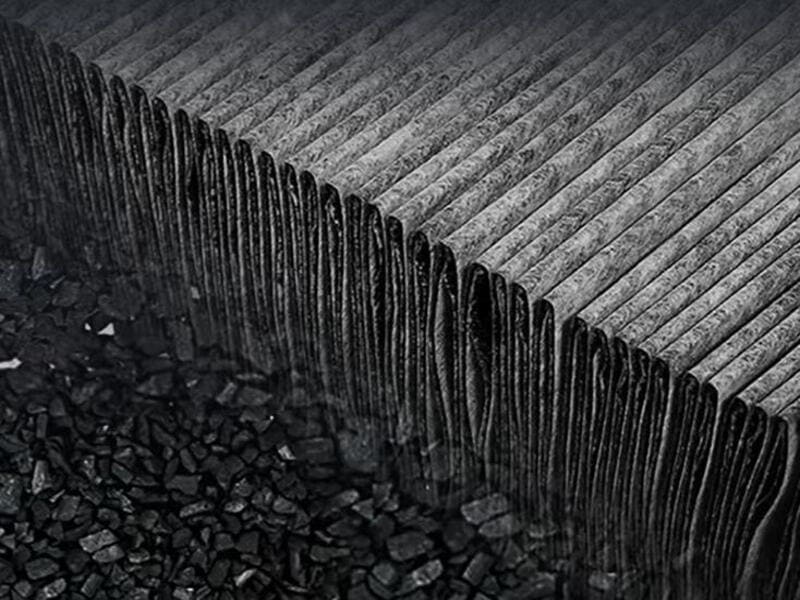
We don’t cut corners on raw materials. We source premium-grade coconut shell and coal-based raw materials to manufacture our gas absorption media. Coconut shell carbon offers a superior micro-pore structure, making it the absolute best choice for low-molecular-weight compound removal and everyday smoke removal filter layer applications.
For specialized industrial and commercial environments, standard carbon is not enough. We offer custom chemical impregnation upgrades to target specific, highly toxic gases.
| Impregnation Agent | Target Pollutant | Common Application |
|---|---|---|
| Potassium Permanganate | Formaldehyde & VOCs | New construction, medical clinics |
| Phosphoric Acid | Ammonia & Amines | Laboratories, pet facilities |
| Sulfur / Alkali | Hydrogen Sulfide & Acid Gases | Wastewater facilities, heavy industry |
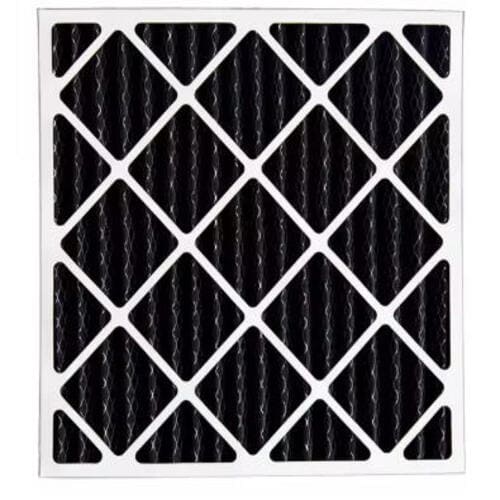
For standard HVAC systems and residential air purification, our pleated carbon air cleaner design provides a smart dual-action solution. We bond fine granular activated carbon (GAC) directly onto a synthetic media backing. The pleats multiply the surface area, allowing the filter to catch airborne pollutants and target odor reduction without choking your system’s airflow. If you are noticing drops in heating or cooling efficiency before your scheduled replacement, it helps to understand what a bad air filter look like so you can swap it out before airflow drops too low.
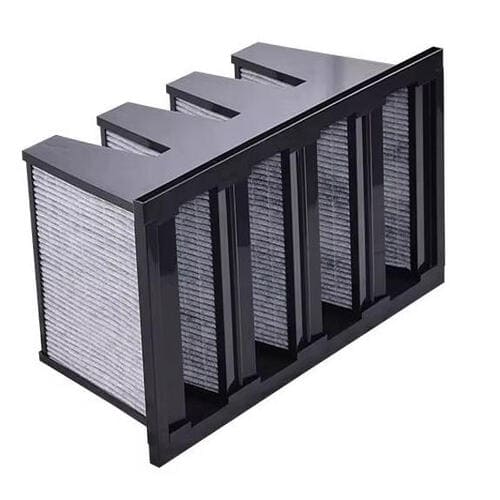
V-Cell Design: Arranges multiple carbon beds into a V-shape to handle high-velocity gas-phase filtration with minimal pressure drop.
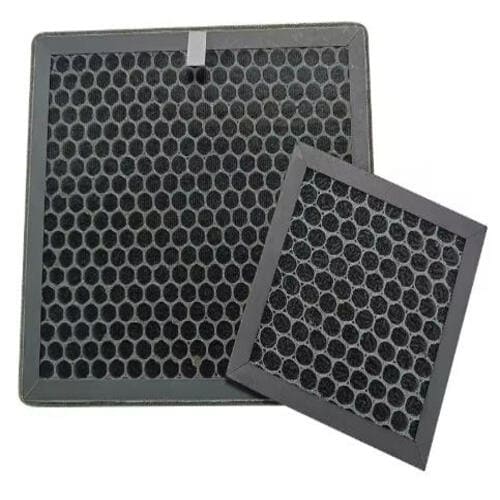
When your main goal is chemical odor filtration and heavy smoke removal, standard pleats might not hold enough raw material. Our rigid HVAC carbon panels utilize a durable honeycomb geometric structure. We pack these cells tightly with premium carbon pellets, ensuring that passing air streams directly through a dense molecular adsorption media. This setup maximizes contact time, successfully achieving dangerous volatile organic compounds (VOCs) and noxious gases neutralization.
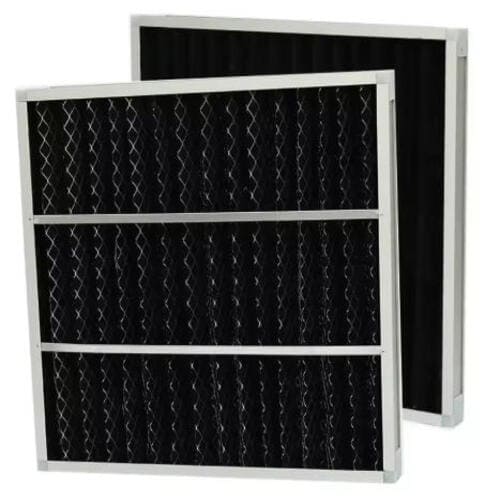
We manufacture our activated carbon air filter lines to strict industrial tolerances. When selecting the right gas-phase filtration or molecular adsorption media for your ventilation system, specific engineering metrics dictate actual field performance.
The matrix below outlines the baseline technical configurations for our standard commercial and industrial HVAC carbon panels. For a deeper understanding of how these mechanical constraints pair with particulate efficiency ratings, view our guide to types of air filters and their uses.
| Performance Metric | Standard Duty Configuration | Heavy-Duty Industrial Configuration |
|---|---|---|
| Substrate Composition | Non-woven polyester matrix blend | Rigid honeycomb composite / Extruded aluminum cell |
| Carbon Weight Density | 200 g/m2 to 450 g/m2 | 60% to 90% total fill weight (Granular Activated Carbon) |
| Carbon Tetrachloride (CTC) Rating | 50% minimum activity | 60% to 80% premium virgin activity |
| Initial Airflow Resistance Profile | 0.20″ to 0.35″ w.g. at 450 FPM | 0.40″ to 0.65″ w.g. at 500 FPM |
| Standard Dimensional Matrix | 1″, 2″, and 4″ nominal depths | 12″ v-bank modules / Custom frame footprints |
We design our activated carbon air filter lineups to integrate seamlessly into existing HVAC setups and specialized air purification systems media across multiple sectors. Whether you need to eliminate everyday household odors or neutralize heavy industrial chemicals, our gas-phase filtration solutions deliver targeted molecular adsorption media performance where it matters most.
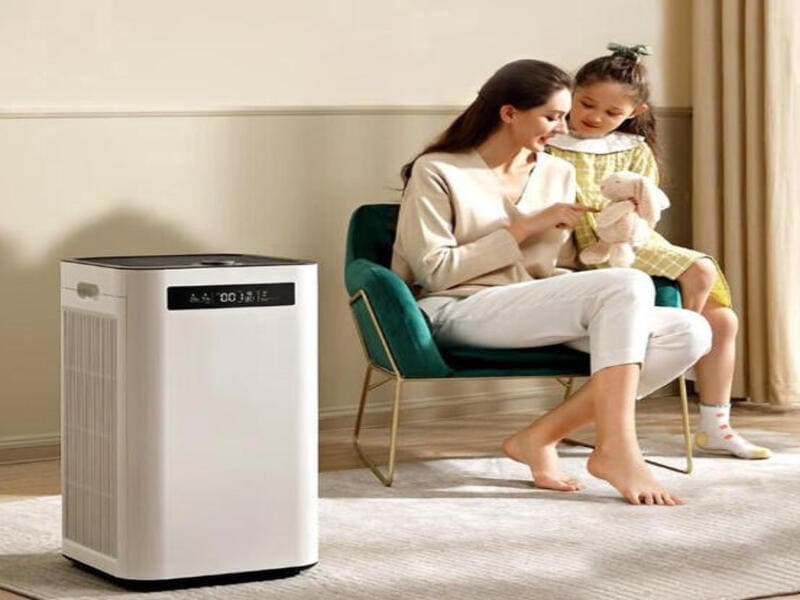
In home environments, maintaining indoor air quality means tackling volatile organic compounds (VOCs), cooking odors, pet smells, and tobacco smoke.
High-traffic buildings require robust air purification to keep occupants healthy and comfortable. Our commercial HVAC carbon panels provide continuous chemical odor filtration in demanding environments.
For extreme environments dealing with heavy air contamination, standard filters won’t cut it. We manufacture heavy-duty granular activated carbon (GAC) solutions engineered for maximum gas absorption.
For facility managers looking to protect complex machinery and staff from raw outdoor intake pollution, integrating our specialized carbon media alongside robust industrial air filters ensures complete control over both heavy particulate matter and toxic gaseous emissions.
| Industry Sector | Primary Target Pollutants | Equipment Configuration |
|---|---|---|
| Manufacturing & Printing | Solvent vapors, ink odors, heavy VOCs | Heavy-duty carbon tower systems |
| Laboratories & Cleanrooms | Acid gases, chemical fumes, hazardous vapors | Deep-bed refillable carbon trays |
| Wastewater & Facilities | Hydrogen sulfide, sewage odors, ammonia | High-capacity V-cell modules |
An activated carbon air filter does not last forever. Unlike standard particulate filters that mechanically trap dust, charcoal filter elements rely on chemical binding sites that eventually fill up completely. Understanding how long these filters last and when to swap them out ensures your indoor air remains free of volatile organic compounds (VOCs) and hazardous gases.
Several real-world factors dictate how fast your gas-phase filtration media reaches the end of its useful life:
When molecular adsorption media becomes fully saturated, it can no longer deliver effective chemical odor filtration. Watch for these clear warning signs:
Activated carbon cannot be washed, vacuumed, or effectively regenerated at home. Once the media is spent, timely replacement is the only way to maintain gas absorption performance.
For proper handling, spent HVAC carbon panels should be sealed in plastic bags during removal to prevent trapped VOCs from off-gassing back into your space. For a detailed breakdown on handling old filtration media safely, review our comprehensive air filter disposal guide. Always replace components according to a fixed schedule rather than waiting for odor breakthrough alone.
It captures odors, smoke, and harmful VOCs (volatile organic compounds) from the air, making your indoor environment fresher and healthier.
For best performance, replace every 3 to 6 months, depending on your air quality and usage.
Yes, our smoke removal filter for air purifiers is designed to adsorb smoke particles and reduce smoke odors efficiently.
We offer activated carbon filters for HVAC systems, including metal frame carbon filter panels and die-cut options to fit various setups.
Absolutely. The high-efficiency activated carbon in our filters targets VOCs and other harmful gases to improve indoor air safety.
Yes, the odor removal air filter captures pet smells and other household odors for fresher air.
Installation is straightforward—simply remove the old filter and slide in the new activated charcoal air filter following your device’s instructions.
Many of our filters come with a pre-filter layer to trap larger particles, extending the life of the activated carbon section.
We use high-quality coconut shell activated carbon with tiny pores to maximize adsorption and odor elimination.
Yes, our filters are non-toxic and safe for typical household use.
If you have any further questions, our support team is here to help.
Ready to improve your indoor air quality with a high-efficiency activated carbon air filter? Komtfil’s carbon air purifier filters offer reliable odor removal, smoke filtering, and VOC reduction, making them the perfect fit for your home or HVAC system.