What is a MERV Rating for Air Filters?
When shopping for a replacement filter, you will immediately encounter the term MERV. Standing for Minimum Efficiency Reporting Value, MERV is the standard measurement scale created by the American Society of Heating, Refrigerating, and Air-Conditioning Engineers (ASHRAE). As a dedicated MERV Air Filter manufacturer, we utilize this universal metric to communicate exactly how effectively a furnace filter or AC filter can trap airborne contaminants from your indoor environment.
How MERV Ratings Work
The MERV rating system evaluates an air filter’s overall ability to trap and hold particles ranging from 0.3 to 10 microns in size. The scale typically ranges from 1 to 16 for residential and standard commercial applications.
- The Basic Rule: The higher the MERV rating, the finer the filtration capabilities.
- Lower Ratings (1-4): Primarily act as a basic lint filter to protect the internal components of your HVAC system from large debris.
- Mid-Range Ratings (5-13): Highly effective at capturing particles that impact daily health, including dust mites, mold spores, and pet dander.
- High Ratings (14-16): Capable of capturing micro dust and bacteria, providing an environment that approaches a hospital-level clean.
Why Choosing the Right MERV Rating Matters
Selecting the correct MERV rating is a critical balancing act between achieving optimal indoor air quality and maintaining peak HVAC system performance.
- System Efficiency: Air filters with excessively high MERV ratings have denser filtration media. If your system is not designed for this density, it can severely restrict airflow, forcing the unit to work harder and increasing energy costs.
- Targeted Health Benefits: If you require superior allergen control or pollen removal, choosing the appropriate rating (such as a MERV 11 or MERV 13) ensures you capture irritating airborne contaminants without suffocating your furnace or air conditioner.
- Equipment Longevity: Using the correct replacement filter prevents dust buildup on vital mechanical parts, preventing costly breakdowns and extending the lifespan of your entire system.
The Complete MERV Rating Chart Explained
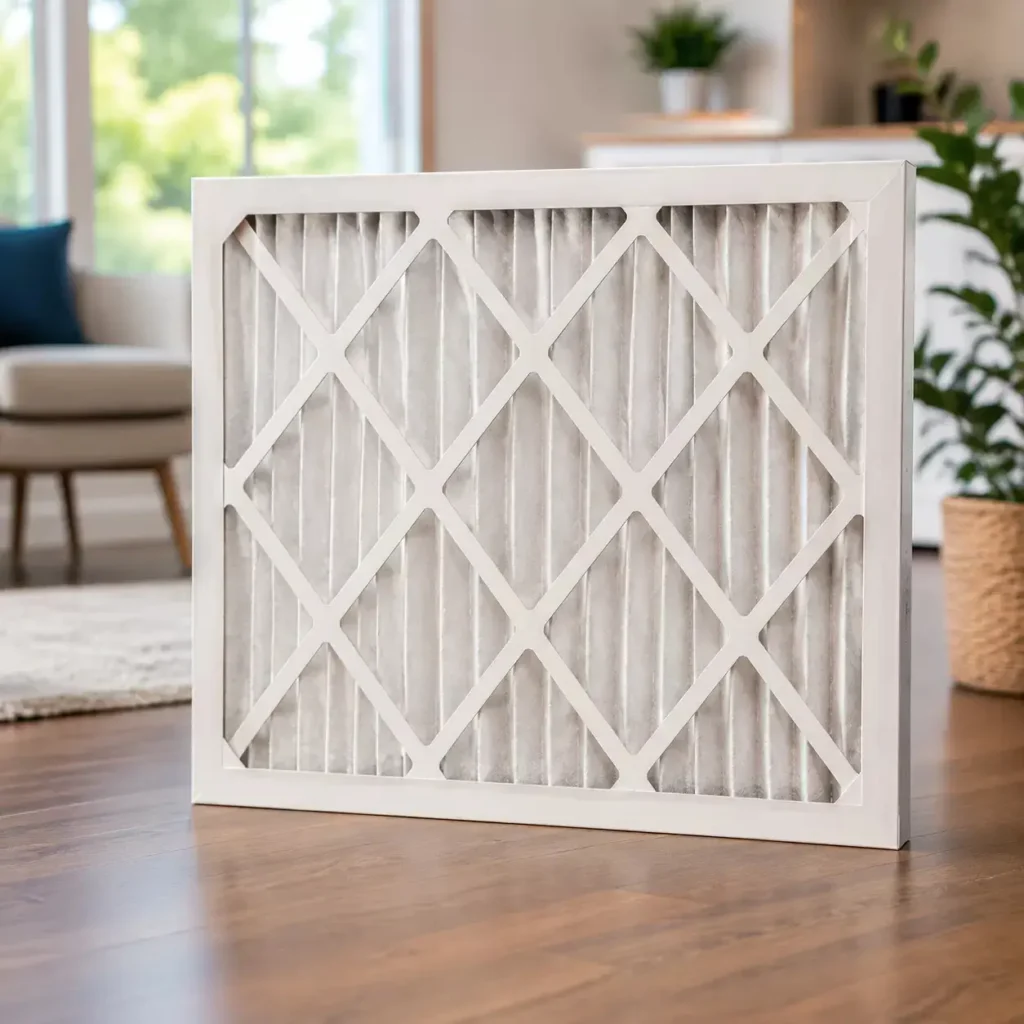
Understanding the standard measurement scale for air filters makes finding the right replacement filter much easier. As an experienced MERV Air Filter manufacturer, we know that knowing exactly what each tier targets is the key to improving your indoor air quality. Let’s break down the MERV rating chart so you know what you are putting in your HVAC system.
MERV 1-4: Basic Dust Protection
These filters offer the baseline level of filtration. They function primarily as a basic lint filter designed to protect your HVAC equipment from large debris rather than actively improving the air you breathe.
- Captures: Dust, lint, and large insects.
- Best for: Window AC units or minimal residential protection where capturing particles for health reasons isn’t a primary concern.
MERV 5-8: Standard Residential Use
This is the sweet spot for standard homes. A MERV 8 AC filter provides a highly effective balance between maintaining good system airflow and trapping everyday airborne contaminants.
- Captures: Dust mites, household dust, pollen, and large mold spores.
- Best for: Normal household use without indoor pets or severe respiratory issues.
MERV 9-12: Enhanced Allergen Control
If you have pets or mild allergies, stepping up to this tier makes a noticeable difference. A MERV 11 furnace filter excels at pollen removal and finer allergen control without overworking your system. If you are unsure if this tier is right for you, reviewing which MERV rating filter you should use for home air quality can help clarify your needs.
- Captures: Pet dander, fine micro dust, auto emissions, and finer mold spores.
- Best for: Homes with pets, allergy sufferers, or houses in areas with higher outdoor pollution.
MERV 13-16: Premium Air Filtration
For those needing the cleanest air possible, these filters target the smallest airborne contaminants. A MERV 13 filter approaches hospital-level clean, trapping particles that lower tiers miss entirely. However, you must ensure your system can handle the denser material.
- Captures: Bacteria, virus carriers, smoke, and microscopic allergens.
- Best for: Severe allergy or asthma sufferers, healthcare facilities, and highly polluted environments.
Comparing Popular Home Air Filters: MERV 8 vs. 11 vs. 13
As a dedicated MERV Air Filter manufacturer, we see many homeowners struggle to choose between the most common ratings. Selecting the right replacement filter balances your indoor air quality needs with your HVAC system’s performance.
Here is a quick breakdown to help you compare these top choices:
| Filter Rating | Best Suited For | Key Contaminants Captured |
|---|---|---|
| MERV 8 | Standard homes, no pets | Dust, lint, pollen |
| MERV 11 | Homes with pets, mild allergies | Pet dander, dust mites, smog |
| MERV 13 | Severe allergies, premium air | Mold spores, fine smoke, viruses |
When to Use MERV 8 Filters
For most standard residential setups, a MERV 8 rating hits the sweet spot. It is the baseline for excellent everyday protection.
- Cost-effective: Provides great value without straining your budget.
- Airflow-friendly: Keeps your AC and furnace running smoothly.
- Solid baseline defense: Excellent at capturing particles like household dust, lint, and common pollen.
If your home does not have pets or family members with respiratory issues, a reliable MERV 8 air filter is usually all you need to maintain a clean system and fresh air.
Benefits of Upgrading to MERV 11
Upgrading steps up your defense against finer airborne contaminants. We strongly recommend MERV 11 if you have shedding pets or mild seasonal allergies.
- Traps finer allergens: Highly effective against dust mites and pet dander.
- Fights minor odors: Helps reduce smog and auto emissions from creeping indoors.
- Slightly tighter mesh: It filters better while still remaining safe for most modern HVAC systems.
If you are torn between the baseline and the mid-tier, checking a detailed MERV 8 vs. MERV 11 air filters guide can help you determine exactly which upgrade makes sense for your specific living environment.
Is a MERV 13 Filter Right for You?
MERV 13 is the gold standard for residential indoor air quality. It approaches hospital-level clean, designed for environments where pure air is an absolute necessity.
- Maximum residential protection: Captures dangerous micro dust, mold spores, and even bacteria.
- Health-focused: Ideal for asthma sufferers, newborns, or those with compromised immune systems.
- System check required: Because the filter media is very dense, you must verify your HVAC system can handle the restricted airflow before installing.
Choosing a MERV 13 filter guarantees premium air filtration, actively stripping the most stubborn microscopic pollutants from your breathing space.
How to Choose the Right MERV Air Filter for Your Home

As a dedicated MERV Air Filter manufacturer, we know that finding the perfect replacement filter is about balancing clean air with system efficiency. Using the standard measurement scale of the minimum efficiency reporting value helps you narrow down exactly what your home requires.
Assess Your Indoor Air Quality Needs
Your choice depends entirely on your daily indoor air quality challenges. Evaluating what airborne contaminants you need to block is the first step in capturing particles effectively.
Here is a quick guide to matching your needs with the right rating:
| Household Situation | Primary Contaminants | Recommended Rating |
|---|---|---|
| Basic home without pets | Dust, lint | MERV 8 |
| Homes with pets or mild allergies | Pet dander, dust mites | MERV 11 |
| Severe allergies or asthma | Smoke, smog, advanced pollen removal | MERV 13 |
Check Your HVAC System Capabilities
Before upgrading your furnace filter or AC filter, consult your HVAC system manual. Higher-rated filters have denser media. While a MERV 13 is excellent for air quality, older or smaller systems might struggle to push air through it, leading to frozen coils or an overworked motor. Most modern residential setups handle MERV 8 and MERV 11 without issue. Once you select the appropriate rating, ensure it operates efficiently by following a proper HVAC installation guide to maintain the correct airflow direction.
Find the Correct Air Filter Size
Even the best filter is useless if it does not fit snugly. An improper fit allows dirty air to bypass the filter media entirely. You can find the correct dimensions printed on the cardboard frame of your current filter. Always note the exact length, width, and depth (for example, 20x20x1) before purchasing your next filter.
Frequently Asked Questions About MERV Air Filters
As a MERV Air Filter manufacturer, we hear a lot of questions from customers trying to navigate the minimum efficiency reporting value scale. Here are the answers to the most common questions regarding indoor air quality and everyday filter maintenance.
Can a High MERV Rating Damage My HVAC System?
Yes, it can if you are not careful. Filters with a very high MERV rating have a tighter weave designed for capturing particles like micro dust, smoke, and mold spores. While this is great for purifying your air, this tight weave naturally restricts airflow.
- Airflow Restriction: If your HVAC system is not built to push air through a dense replacement filter, the blower motor has to work much harder.
- System Strain: This extra strain can lead to higher energy bills, an overheating furnace, or frozen AC coils.
- The Solution: Always check your equipment’s manual before making a drastic jump, such as moving from a basic lint filter to a premium rating.
How Do MERV Filters Compare to HEPA Filters?
The standard measurement scale for residential and commercial HVAC setups is the MERV rating chart. HEPA (High-Efficiency Particulate Air) filters are essentially a step above, sitting off the standard chart at an equivalent of MERV 17 or higher.
- System Compatibility: Most home furnace filter and AC filter setups cannot handle the extreme airflow resistance of a true HEPA filter.
- The Best Alternative: If you want near hospital-level clean air without having to completely retrofit your HVAC system, utilizing high-tier options like HEPA air purifiers provides exceptional airborne contaminants control safely.
How Often Should I Replace My MERV Air Filter?
Staying on top of your filter changes is the simplest way to protect your HVAC system and maintain excellent indoor air quality. As a general rule, standard 1-inch filters should be changed every 30 to 90 days.
You will need to replace your filter more frequently (every 30-45 days) if:
- You have pets indoors that shed hair and dander.
- You need strict allergen control to combat dust mites and heavy seasonal pollen.
- You live in an area with high pollution or regular wildfires.
If you use thicker media filters (4 to 5 inches), such as deep-pleated MERV 12 filters, they have a much larger surface area and can typically last between 6 and 12 months before restricting airflow.