You might already know that running a purifier is great for your health…
But do you know exactly how often to change your air purifier filter?
Well, you’re in for a treat because I’ve put together a complete guide covering exactly when to swap them out.
As an indoor air quality expert, I know that ignoring a dirty filter can ruin your machine and compromise your health.
In this post, you’re going to learn the true lifespans of HEPA and activated carbon filters, the hidden signs your filter needs replacing, and the exact factors that affect your replacement frequency.
So if you want to protect your motor, lower your energy costs, and keep your indoor air pristine, this guide is for you.
Let’s dive right in.
How Often Should You Change Your Air Purifier Filter?
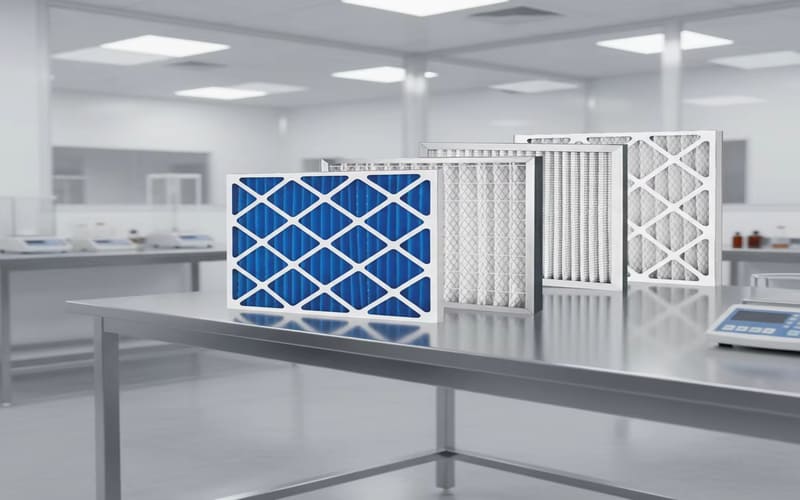
Understanding exactly how often to change air purifier filter components is critical for maintaining optimal indoor air quality and protecting your equipment investments. As a trusted global manufacturing partner with over 20 years of industry experience, we test air purifier filter service life extensively in our ISO6-rated laboratory to guarantee precision and performance. While exact timelines depend on specific application environments, commercial and residential users should follow established baselines for different filtration media.
Average Filter Lifespan Overview
| Filter Type | Average Replacement Interval | Primary Function |
|---|---|---|
| Pre-Filters | 1 to 3 months | Captures large dust, hair, and debris |
| Activated Carbon | 3 to 6 months | Absorbs odors, gases, and VOCs |
| True HEPA / ULPA | 6 to 12 months | Traps fine particles, bacteria, and microbes |
HEPA Filters Lifespan
High-efficiency particulate air (HEPA) and ULPA filters are the core of any high-performance air purification system. In standard environments, a true HEPA filter lasts between 6 to 12 months. However, in demanding commercial or industrial settings, strict adherence to manufacturer recommendations is necessary. Because these filters physically trap microscopic pollutants, their capacity is finite. Once the media is saturated, the filter must be replaced to maintain MERV-rated efficiency.
Activated Carbon Filters Lifespan
Activated carbon filters manage gas phase filtration, neutralising odours, oils, and harmful chemicals. These filters typically require replacement every 3 to 6 months. Unlike particle filters that show visible dust, carbon filters become saturated invisibly. Once the carbon pores are filled with gas molecules, the filter ceases to function and may even release absorbed odours back into the air.
Pre-Filters and Washable Filters
Pre-filters act as the first line of defence, capturing heavy dust and extending the life of your more expensive HEPA filters. You should clean pre-filters monthly and replace them every 1 to 3 months. Maintaining these primary layers ensures your full room air purifiers operate at peak efficiency.
Key Factors That Affect Filter Replacement Frequency
Indoor and Outdoor Air Quality
The concentration of airborne pollutants directly impacts filter lifespan. Facilities located near industrial zones, construction sites, or areas prone to wildfire smoke will experience faster filter degradation. High levels of particulate matter force high-efficiency filters to work harder, accelerating the replacement schedule.
Daily Usage and Operating Speed
An air purifier running 24/7 at maximum speed processes a vastly larger volume of air than a unit running intermittently. Continuous operation in commercial HVAC systems or critical environments shortens the replacement interval, requiring more frequent maintenance checks to ensure clean air delivery.
Room Size and Environmental Conditions
Deploying an air purifier in a space larger than its specified capacity forces the unit to overwork, rapidly depleting the filter media. Furthermore, extreme temperature and humidity levels affect filter integrity. Our engineering team conducts rigorous environmental adaptability testing to ensure our OEM and custom filters withstand diverse and challenging conditions.
Telltale Signs Your Air Filter Needs Replacing
Visible Dirt and Filter Wear
A visual inspection is the easiest diagnostic tool. If the filter media is heavily discoloured, caked with dark dust, or shows signs of structural wear, it is time for an immediate replacement. Clean, white HEPA pleats turning dark grey or black indicate maximum saturation.
Noticeable Decline in Airflow
Clogged particle filters restrict the passage of air. If you notice a significant drop in the volume of air exiting your purifier, the filter is likely blocked. This restriction compromises indoor air quality and indicates that the filter has reached the end of its usable life.
Strange Odours or Increased Energy Usage
If your air purifier begins emitting a stale or sour smell, the activated carbon filters are completely saturated and require replacement. Additionally, a sudden spike in energy consumption often points to a clogged filter forcing the fan motor to work overtime.
What Happens If You Don’t Change Your Filter on Time?
Decreased Indoor Air Quality and Health Risks
Failing to adhere to a regular filter replacement schedule leads to a drastic drop in indoor air quality. Saturated filters can no longer trap allergens, microbes, and pollutants, exposing facility occupants and allergy sufferers to compromised, unhealthy air.
Strain on the Purifier Motor
A blocked filter acts as a physical barrier. The purifier’s internal motor must exert significantly more force to pull air through clogged media. This excessive strain accelerates mechanical wear and tear, drastically reducing purifier longevity and leading to costly equipment failures.
Higher Energy Costs and Inefficiency
When airflow is restricted, systems consume more electricity to maintain baseline performance. Delaying filter replacement directly translates to higher energy costs and operational inefficiency, negating the benefits of your air purification infrastructure.
Tips for Maintaining Filters and Saving Money
Cleaning Pre-Filters Regularly
Implementing a strict maintenance routine for pre-filters is the most cost-effective way to protect your system. Vacuuming or washing clean pre-filters every few weeks prevents large debris from prematurely blinding your primary HEPA filters.
Buying Multi-Packs and Subscriptions
For businesses, facility managers, and appliance brands, purchasing filters in bulk is essential for managing filter replacement costs. We operate 15+ automated production lines capable of manufacturing over 500 different models. With a standard 12-day lead time and large-scale material procurement, we provide affordable prices for bulk OEM and contract manufacturing orders without compromising quality.
Choosing Genuine Replacement Filters
Always opt for high-quality, manufacturer-approved replacement filters. Inferior off-brand filters often bypass air, fail prematurely, and lack rigorous testing. We offer custom design and rapid prototyping to ensure every filter perfectly matches your specific equipment and performance requirements, backed by a 100% satisfaction guarantee.
Frequently Asked Questions About Filter Replacement
Can you wash a HEPA air purifier filter?
No. Unless explicitly labelled as a washable filter by the manufacturer, exposing a true HEPA filter to water destroys the delicate fibreglass or synthetic media web. Washing permanently ruins its ability to trap fine particles and bacteria, rendering it completely useless.
How do I know if my filter is completely ruined?
A filter is completely ruined if it exhibits physical damage, tears in the pleated media, mould growth, or structural warping. If the filter frame is compromised or the media is saturated to the point of completely restricting airflow, it must be discarded and replaced immediately.