Can You Cut an Air Filter to Fit?
You can only cut an air filter if it is explicitly designed as a cut-to-fit filter. Trimming a standard cardboard-framed pleated filter destroys its structural support, leading to frame collapse, unfiltered air leaks, and potential HVAC system damage.
Understanding How Air Filter Fit Affects Performance
A precise fit is essential for effective air filtration and optimal airflow. When a filter does not sit flush within the return vent slot, overall system performance degrades rapidly.
- Air Bypass: Unfiltered air takes the path of least resistance, flowing through gaps around the filter rather than through the media.
- Coil Contamination: Dust and debris bypass the filter, clogging the evaporator coils and reducing system efficiency.
- Increased Energy Costs: System strain caused by improper airflow forces your blower motor to work harder, driving up monthly utility bills.
The Difference Between Standard and Cut-to-Fit Filters
Standard HVAC filters rely on rigid framing to handle continuous air pressure, while cut-to-fit media uses flexible synthetic fibers designed for custom sizing.
| Feature | Standard Pleated Filter | Cut-to-Fit Filter Media |
|---|---|---|
| Frame Type | Rigid cardboard or wire reinforcement | Frameless flexible mesh or foam |
| Trimmable | No (Destroys structural integrity) | Yes (Engineered for custom sizing) |
| Best Used For | Standard residential HVAC slots | Non-standard vents, RVs, window ACs |
| Filtration Level | High MERV ratings available | Moderate dust and pollen capture |
Why You Shouldn’t Cut Standard Pleated Air Filters
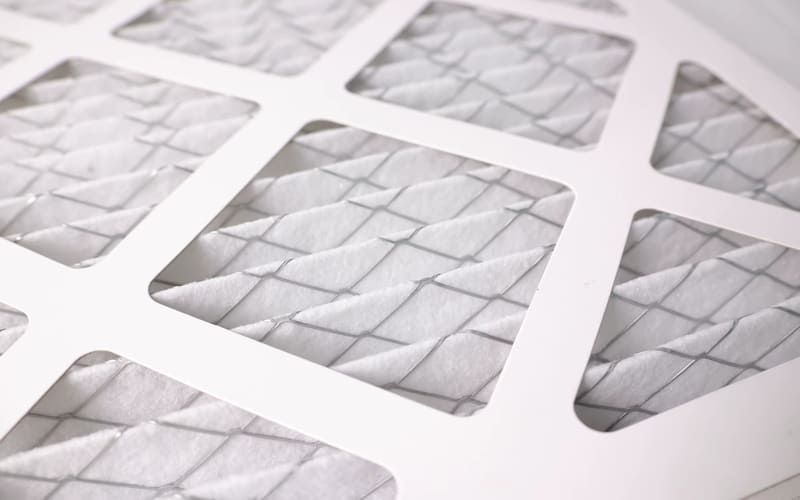
Trimming a standard off-the-shelf pleated air filter might seem like a quick solution for an odd-sized slot, but it almost always ruins the product. As an air filter manufacturer, we design standard units to precise structural specs that disappear the moment the frame is sliced.
Loss of Structural Integrity and Frame Collapse
Cutting through a standard cardboard frame destroys the rigid outer border that keeps the filter upright inside your ductwork.
- Broken Frame Seal: Standard pleated filters rely on an intact perimeter frame and integrated wire backing to maintain tension.
- Bending Under Airflow: Without four solid cardboard sides, normal system suction causes the filter media to sag, buckle, or pull entirely into the blower housing.
Air Bypass and Reduced Filtration Efficiency
Modifying a standard filter creates rough, raw edges that cannot form a tight seal against the vent walls.
- Path of Least Resistance: Air naturally travels around loose edges. Unfiltered air bypasses the filter media completely, carrying dust, allergens, and debris straight through your ductwork.
- Drop in Performance: Even high-efficiency pleated media becomes ineffective when air bypass allows airborne particles to skip the filtration process entirely.
Risk of HVAC System Damage and High Energy Bills
A compromised, hand-cut filter directly impacts your equipment’s health and monthly operating costs.
Dust escaping around loose edges settles directly onto the internal motor and evaporator coils. Over time, this buildup chokes system airflow, strains major components, and drives up power consumption. Using properly fitted HVAC air intake filters protects your equipment, whereas hacking away at a standard pleated frame risks expensive system repairs and spikes your energy bills.
What Are Cut-to-Fit Air Filters?
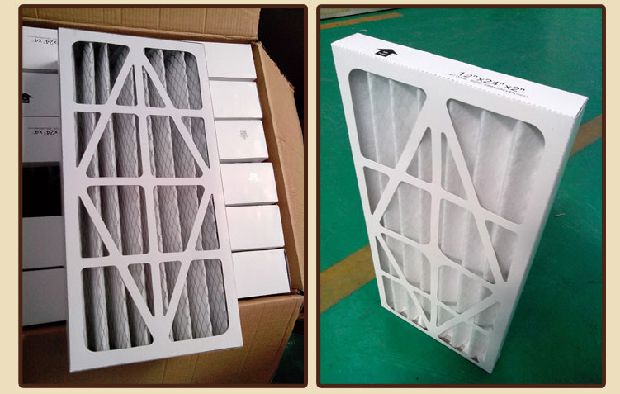
Cut-to-fit air filters are frameless filter pads designed specifically to be trimmed down to fit custom or hard-to-find HVAC slots. Unlike factory-sealed pleated units, these rolls or sheets feature self-supporting material that maintains integrity without a rigid outer perimeter.
Types and Materials of Trimmable Filter Media
Trimmable filter media come in various synthetic and natural compounds, each serving a specific filtration purpose. Understanding what material are air filter prefilters made of helps you select the right option for your equipment.
| Filter Material | Key Properties | Primary Application |
|---|---|---|
| Polyester Webbing | High airflow captures large dust & lint | HVAC return vents, prefilters |
| Washable Foam | Reusable, water-resistant, durable | Window AC units, RV filters |
| Activated Carbon | Odor absorption, VOC reduction | Pet owners, kitchen returns |
| Fiberglass Mesh | Minimal airflow resistance, low cost | Older furnace units |
For a deeper look into media composition, explore our detailed breakdown on what are air filters made of.
Benefits of Cut-to-Fit Filters for Non-Standard Slots
- Solves Odd-Sized Vent Issues: Perfect for vintage furnaces, custom ductwork, and window air conditioners.
- Cost Efficiency: A single bulk roll provides multiple replacement pads at a lower cost per unit.
- Minimal Storage Space: Flat sheets store easily compared to bulky boxed pleated filters.
Are Cut-to-Fit Filters as Effective as Standard Filters?
Trimmable filters are effective for basic dust containment and system protection, but they rarely match high-efficiency factory filters. Most cut-to-fit media operates between MERV 1 and MERV 6. They excel at capturing large debris, pet hair, and lint, but fine particles like pollen, mold spores, and smoke will pass through. Use them for specialized equipment or as protective prefilters, but rely on standard pleated filters when maximum indoor air quality is required.
How to Measure and Cut a Cut-to-Fit Filter Safely
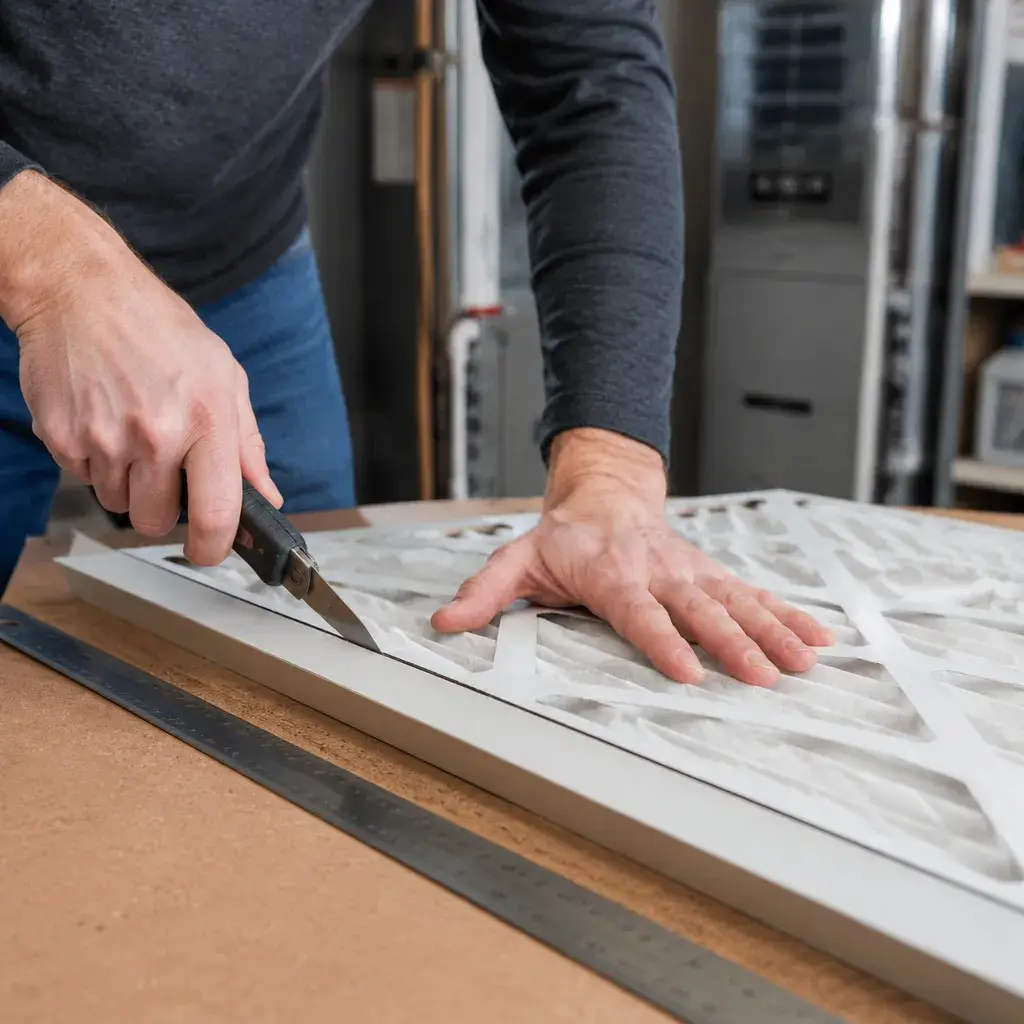
Trimming bulk filter media requires precision to maintain proper airflow and prevent dust from bypassing your system. Follow these three steps to size and install a cut-to-fit filter correctly.
Step 1: Measure Your HVAC Filter Slot Accurately
Before purchasing or cutting material, get exact dimensions directly from your unit’s filter track or return grille.
- Power down the unit: Always turn off your HVAC system at the thermostat and breaker box before opening the filter slot.
- Measure the track: Use a tape measure to get the exact length, width, and depth of the filter housing.
- Focus on actual dimensions: Never rely on rounded label numbers. Learning how to measure your air filter size accurately helps differentiate between nominal label sizes and actual track dimensions.
Step 2: Mark and Cut the Filter Material
Working on a flat, clean surface ensures straight lines and prevents tearing the filter media.
- Lay media flat: Place your foam, mesh, or polyester filter pad on a cutting mat or large piece of cardboard.
- Mark guidelines: Transfer your measured dimensions onto the media using a straight edge and a permanent marker.
- Trim cleanly: Cut along the lines using sharp, heavy-duty scissors or a utility knife. Allow an extra 1/4 inch along the edges to create a tight friction fit within the track.
Step 3: Reseal and Secure the Frame Edges
Unframed media needs proper support so it does not collapse into the blower cabinet under air pressure.
- Fit into frame channels: If using a plastic or metal reusable frame, tuck the cut filter edges firmly under the retaining tabs or side channels.
- Check for gaps: Ensure the material sits completely flat without bunching or leaving open spaces along the border.
- Verify airflow direction: Insert the assembled unit into the AC return vent, making sure any reinforced grid side faces toward the HVAC unit.
Better Alternatives to Cutting Wrong-Sized Air Filters
Modifying standard pleated units compromises structural integrity and leads to dirty air bypass. Instead of risking damage to your HVAC system with improvised trimming when you buy the wrong filter size, two permanent solutions guarantee a snug fit and optimal airflow.
Ordering Custom-Sized Air Filters Online
Ordering directly from a manufacturer eliminates sizing headaches completely. We build high-efficiency custom air filters tailored to exact fractional measurements, securing a tight seal inside your furnace or AC return vent.
- Exact Dimensions: Built to your precise height, width, and depth requirements.
- Full Performance: Delivers superior MERV ratings without collapsing under air pressure.
- Cost Efficiency: Ordering custom sizes in multi-packs lowers your long-term replacement costs.
Using Reusable or Adjustable Air Filter Frames
An adjustable filter frame provides a sturdy, permanent foundation for non-standard slots. You install the heavy-duty frame once and slide in bulk trimmable pad media when it is time for a filter replacement.
| Feature | Adjustable Filter Frames | Custom Pleated Filters |
|---|---|---|
| Best For | Hard-to-find dimensions & frequent media changes | Factory-grade performance with an exact fit |
| Frame Material | Heavy-duty plastic or aluminum | Moisture-resistant beverage board |
| Maintenance | Swap outer media pad only | Replace the entire framed filter |
| Bypass Protection | Secure perimeter seal prevents air gaps | Flawless edge-to-edge fit |
Using dedicated frame systems lets you cut bulk synthetic media safely without destroying structural support, keeping your HVAC system protected year-round.
Frequently Asked Questions
How often should cut-to-fit air filters be replaced?
Most cut-to-fit filter materials should be replaced or cleaned every 30 to 60 days. Because trimmable filter media is typically thinner than standard pleated options, it fills up with dust faster, which can create airflow restriction if left too long.
- Disposable Foam or Mesh: Replace completely every 30 to 45 days.
- Washable Media: Clean every 30 days with mild water and replace every 6 to 12 months.
- High-Traffic Homes: Inspect monthly if you have pets or indoor air quality concerns. Choosing the right MERV rating filter for home air quality ensures your HVAC system maintains balanced airflow and efficient filtration.
What should you do if you bought the wrong filter size?
Never trim a standard pleated unit. Cutting into a cardboard frame ruins its structural integrity, causing air bypass and allowing unfiltered dust directly into your equipment.
If you bought the wrong filter size, take these immediate steps:
- Exchange the Filter: Return unopened standard filters to the store for the correct dimensions.
- Order Custom Sizes: If your AC return vent uses non-standard dimensions, order a custom-size HVAC filter built to your exact specifications.
- Use True Trimmable Media: Switch to frameless, bulk filter media specifically designed to be trimmed safely with scissors or a utility knife. Review our full guide to learn can you cut an air filter to fit without causing system damage.