Are you constantly wondering: do you need an air purifier in every room?
Getting your home’s air quality right can make a massive difference in your health, sleep, and daily comfort.
But figuring out if one unit can clean an entire house or if you need multiple devices can be incredibly confusing.
As someone who has evaluated countless home setups, I know that investing in the right purification strategy is crucial for your lungs—and your wallet. I will give you advice that goes beyond the basics to help you avoid overspending on equipment you don’t need.
In this guide, you’re going to learn exactly how to assess your space, step by step.
From understanding room size and CADR to finding the absolute best places for an air purifier, I’ve put together the complete breakdown.
So if you’re looking to breathe easier and build the perfect clean-air strategy for your home, this guide is for you.
Do You Need an Air Purifier in Every Room?
Determining whether you need an air purifier in every room depends on your specific living environment, health goals, and the layout of your home. While a single unit can improve air quality in a localized area, achieving comprehensive whole-home coverage often requires a more strategic approach.
The Short Answer: Evaluating Your Air Quality Needs
The necessity for multiple units is dictated by your air quality goals. If you suffer from severe seasonal allergies or live in an area prone to wildfire smoke, placing a unit in every frequently used room is often the most effective solution. However, if you are simply looking to reduce general dust in a small apartment, a single, high-capacity unit might suffice.
When a Single Air Purifier is Enough
A single air purifier is typically sufficient under the following conditions:
- Studio Apartments: Small, open-concept living spaces where airflow is unobstructed.
- Targeted Use: You only spend a significant amount of time in one specific area, such as a home office.
- High CADR Ratings: The unit has a high Clean Air Delivery Rate that exceeds the total square footage of the open area.
- Portability: You are willing to move the unit between the living room during the day and the bedroom at night.
Why You Might Need Multiple Units
In most standard residential layouts, one unit is rarely enough to clean the entire house. You should consider multiple units because:
- Physical Barriers: Walls and closed doors significantly restrict air circulation, preventing a single purifier from reaching other rooms.
- Specific Room Requirements: The kitchen needs carbon filtration for odors, while the bedroom requires a HEPA filter for allergens.
- Continuous Filtration: Air pollutants are generated constantly; having dedicated units ensures 24/7 protection in high-traffic zones.
- Efficiency: Running two smaller units in separate rooms is often more energy-efficient than running one large unit on “Turbo” mode to try to move air through a hallway.
Can One Air Purifier Clean an Entire House?
The idea that a single high-capacity unit can clean an entire house is a common misconception. While a powerful machine might have the technical capacity to filter a large volume of air, its effectiveness is strictly limited by your home’s physical layout and the way air moves between walls.
Open Floor Plans vs. Closed Rooms
In an open concept home, air moves more freely, allowing a single unit to handle a larger area like a combined living and dining space. However, walls and doors act as physical barriers that stop the purification process in its tracks.
- Closed Rooms: If you close a bedroom door, the air inside that room remains stagnant and unfiltered, regardless of how powerful the purifier is in the hallway.
- Air Stagnation: Even with doors open, air doesn’t naturally circulate from one end of a house to the other with enough force to be properly filtered.
- Layout Barriers: Hallways and L-shaped floor plans create “dead zones” where the air remains trapped and polluted.
Understanding Airflow and Square Footage Limitations
When we look at square footage ratings, those numbers are based on a single, unobstructed room. An air purifier rated for 1,000 square feet will not effectively clean five separate 200-square-foot rooms.
- Airflow Resistance: Furniture, corners, and narrow doorways create resistance that prevents the unit from pulling in “dirty” air from distant parts of the home.
- The Circulation Gap: For the best air quality, the unit needs to draw air from all directions. Tucking it in a central room does not mean it is pulling air from the back of the house.
- Capacity vs. Reach: A high air purifier capacity refers to how much air the machine can process, but it does not account for the physical travel distance of air through a complex home layout.
To achieve true whole-home coverage, you must think in terms of “zones.” One unit per enclosed space is the only way to ensure the air you are breathing is actually being cycled through the filter.
Understanding Room Size and CADR
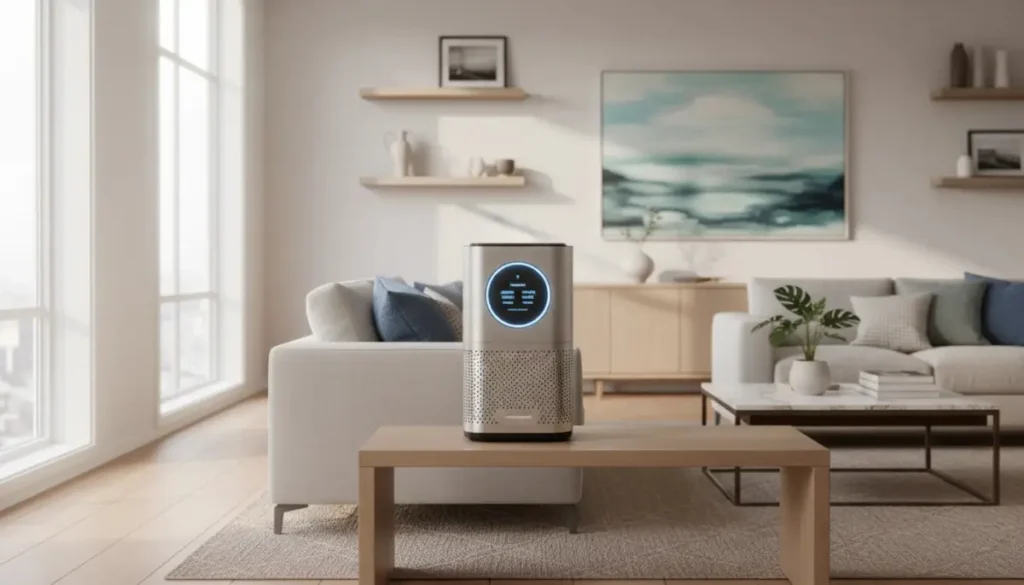
To get the most out of your investment, you have to look beyond the sleek design of a device. The effectiveness of an air purifier depends entirely on how well its power matches the volume of the space it’s in. If the unit is too small for the room, the air will never truly get clean; if it’s too large, you’re likely overspending on electricity and filter replacements.
What is Clean Air Delivery Rate (CADR)?
CADR, or Clean Air Delivery Rate, is the standard metric used to measure an air purifier’s efficiency. Developed by the Association of Home Appliance Manufacturers (AHAM), it tells you exactly how many cubic feet of air the unit can scrub clean of specific pollutants per minute.
When looking at CADR ratings, you will usually see three distinct numbers:
- Smoke: Measures the smallest particles (0.09 to 1.0 microns).
- Dust: Measures mid-size particles (0.5 to 12 microns).
- Pollen: Measures the largest common airborne particles (5 to 11 microns).
A higher CADR means the unit cleans the air faster. As a manufacturer, I always tell customers that the Smoke CADR is the most critical number to watch, as it represents the unit’s ability to handle the finest, most dangerous particles.
How to Match Purifier Capacity to Room Dimensions
Matching air purifier capacity to your square footage is straightforward if you follow the “Two-Thirds Rule.” To ensure the air in a room is cleaned at least five times per hour (the gold standard for allergy sufferers), the CADR of your unit should be at least two-thirds of the room’s total square footage.
| Room Type | Average Square Footage | Recommended Smoke CADR |
|---|---|---|
| Small Bedroom / Office | 150 sq. ft. | 100+ |
| Medium Living Room | 300 sq. ft. | 200+ |
| Large Open Concept | 500+ sq. ft. | 330+ |
Key considerations for sizing:
- Ceiling Height: If you have vaulted or high ceilings, you have more air volume to clean. You’ll need a higher CADR than the square footage alone suggests.
- Air Changes Per Hour (ACH): For medical-grade air quality or heavy smoke issues, aim for a unit that can handle the room size with a high ACH rating.
- Filter Quality: Ensure the CADR rating is backed by a True HEPA filter. A high-speed fan is useless if the filter isn’t catching the microscopic particles.
Where Are the Best Places for an Air Purifier?
Placement is just as important as the unit’s capacity. To get the most out of your investment, you need to target areas where you spend the most time or where pollutants are generated. Proper positioning ensures the airflow isn’t blocked, allowing the device to cycle the air effectively.
The Bedroom: Prioritizing Clean Air for Sleep
We spend about a third of our lives sleeping, making the bedroom the most critical spot for an air purifier. Clean air reduces nighttime allergy triggers like dust mites and pet dander, which often settle in bedding and carpets.
- Placement Tip: Keep the unit at least 3 feet away from your bed to avoid direct drafts while you sleep.
- Benefit: Improves sleep quality by removing fine particles that cause congestion and snoring.
- Noise Level: We recommend units with a “Sleep Mode” to maintain a quiet environment.
The Living Room: Protecting High-Traffic Areas
As the heart of the home, the living room usually has the largest square footage and sees the most activity. It’s where dust gets kicked up from foot traffic and where pets spend the majority of their day.
- Focus: Use a high-capacity unit with a strong CADR (Clean Air Delivery Rate) to handle the larger volume of air.
- Airflow Management: Ensure the purifier is placed in an open area. Tucking it behind a sofa or deep in a corner limits its ability to pull in dirty air from the rest of the room.
The Kitchen: Controlling Odors and Smoke
Cooking is a major source of indoor air pollution, releasing VOCs, smoke, and lingering odors that can migrate to other parts of the house.
- Filter Type: For this area, a unit with a thick activated carbon filter is essential for neutralizing smells.
- Pro Tip: Place the purifier near the entrance of the kitchen or in an adjacent dining area. Avoid placing it directly next to the stove, as airborne grease can quickly clog your HEPA filters and reduce their lifespan.
Should You Put Multiple Air Purifiers in One Large Room?
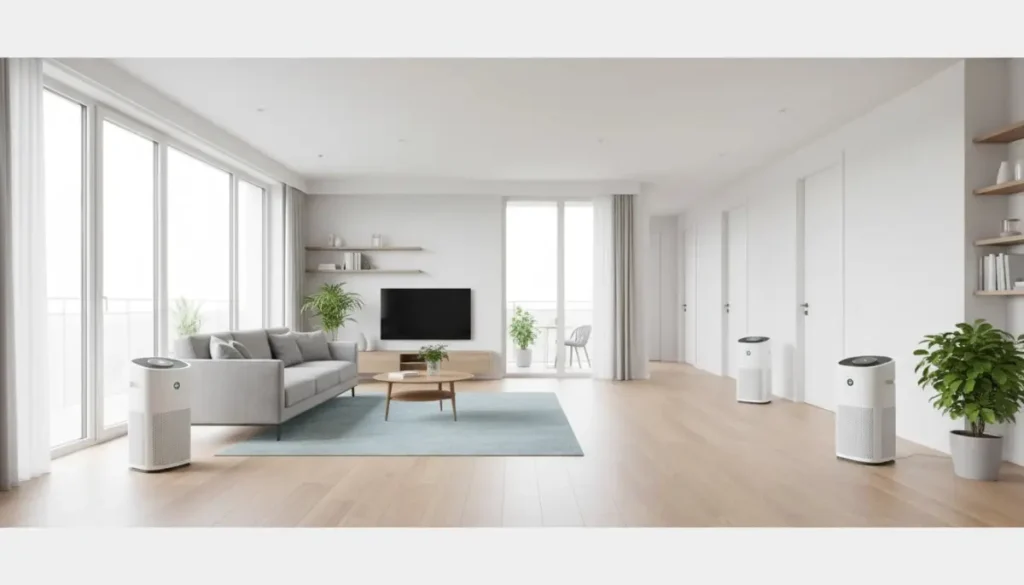
Sometimes, a single unit—even a powerful one—isn’t enough to handle a massive, open-concept area. In my experience, placing two air purifiers at opposite ends of a large room is often more effective than relying on one giant machine. This setup eliminates “dead zones” where air stagnates, ensuring that every corner of the space benefits from consistent airflow.
Dealing with Extra-Large Spaces or High Ceilings
When a room has vaulted ceilings or an expansive floor plan, the total volume of air increases significantly. Most air purifier capacity ratings are based on standard 8-foot ceilings. If your ceilings are higher, you are dealing with much more air than the square footage suggests.
- Strategic Placement: Position units on opposite sides to create a “push-pull” effect for better circulation.
- Noise Management: Running two units on a medium setting is often quieter than running one large unit on its highest, loudest “turbo” mode.
- Total Coverage: Multiple units ensure the Clean Air Delivery Rate (CADR) is sufficient to cycle the entire air volume at least four times per hour.
Addressing Severe Indoor Air Pollutants
If you are dealing with heavy smoke, persistent pet odors, or severe seasonal allergies, doubling up on hardware can make a massive difference. High concentrations of targeted pollutants require a faster filtration cycle to keep the air breathable.
- Faster Recovery: After cooking or during high-pollen days, two units will scrub the air twice as fast.
- Redundancy: If one filter becomes clogged, the second unit continues to provide protection, maintaining better overall air quality.
- Enhanced Filtration: You can use one unit with a True HEPA filter for particles and another with a heavy activated carbon filter for odors, creating a comprehensive defense system for your home.
Key Factors to Consider Before Buying Multiple Units
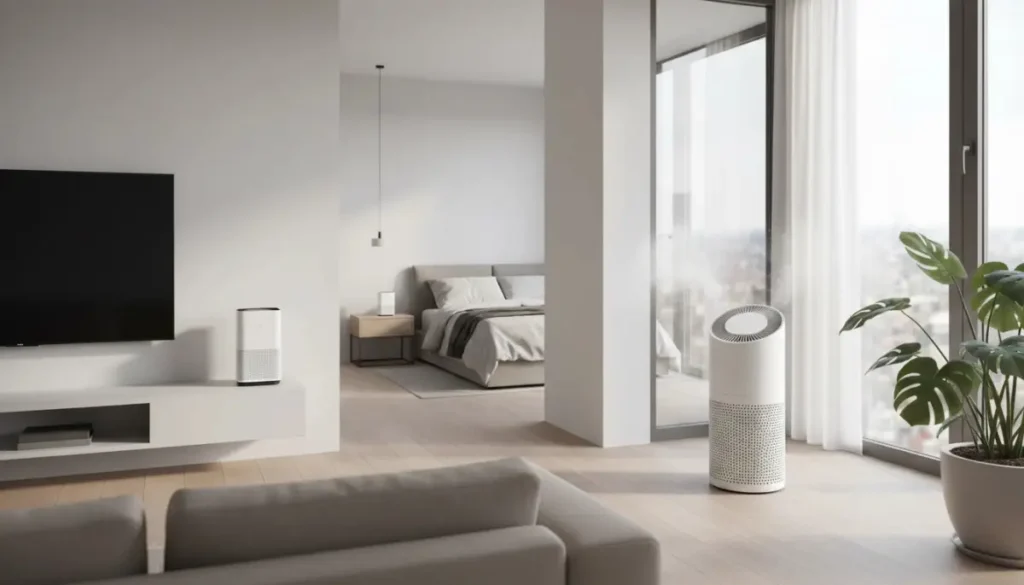
Before deciding to place a machine in every corner of your home, it is important to step back and evaluate your actual needs. As an air purifier filter manufacturer, we see many customers overspend by ignoring a few fundamental details. Equipping multiple rooms requires a solid strategy.
Specific Health Concerns and Allergies
Your health goals dictate your equipment needs. If you are dealing with severe asthma, seasonal allergies, or a household with heavy pet dander, investing in multi-room capability is a smart move. Focus on the spaces where you spend the most time, such as the bedroom and living room. Identifying your targeted pollutants helps you choose the right-sized air purifier for each specific enclosed space, rather than guessing what might work.
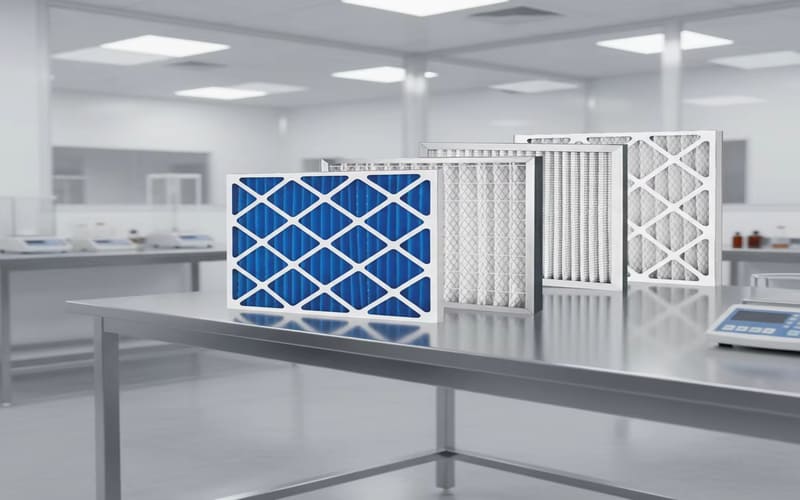
Filter Types: True HEPA vs. Carbon Filters
Not all filters do the same job. To effectively clean your indoor air, you need to match the filter technology to your specific air quality issues.
- True HEPA Filters: These are non-negotiable for capturing fine particles. They trap 99.97% of dust, pollen, mold spores, and pet dander. If allergies are your main concern, True HEPA is the standard.
- Activated Carbon Filters: These are designed to tackle smells and gases. If you need to neutralize cooking odors in the kitchen, cigarette smoke, or volatile organic compounds (VOCs) from fresh paint, a heavy-duty carbon filter is required.
Energy Consumption and Maintenance Costs
Running units in multiple rooms means multiplying your operating costs. It is crucial to look beyond the initial purchase price and consider the long-term expenses.
- Filter Replacements: Every machine needs fresh filters every 6 to 12 months to maintain proper airflow and air purifier capacity. Budget for these recurring costs.
- Electricity Usage: Running several devices 24/7 will impact your utility bill. Always check for energy-efficient certifications before buying.
- Upkeep: Washing or vacuuming reusable pre-filters every few weeks prevents the main HEPA and carbon filters from clogging prematurely, saving you money and extending the life of your machines.
How to Choose the Right Air Purifier Strategy for Your Home
Deciding on the best setup depends on balancing your home layout with your specific air quality goals. I recommend focusing on high-traffic areas first rather than trying to cover every square inch of the house immediately. A targeted approach is often more effective and sustainable for your budget.
Assessing Your Budget vs. Air Quality Goals
Your strategy should align with your health priorities and financial limits. Buying several smaller units for multiple rooms might cost more upfront in filter replacements than one high-capacity unit for an open-concept area. As an air purifier filter manufacturer, I see many homeowners overlook the long-term maintenance costs.
| Strategy | Best For | Pros | Cons |
|---|---|---|---|
| Single High-CADR Unit | Open floor plans | Lower maintenance (one filter) | Won’t reach behind closed doors |
| Multiple Small Units | Homes with many closed rooms | Targeted air cleaning per room | Higher filter replacement costs |
| Hybrid Approach | Families with allergies | Maximum protection in bedrooms | Requires a higher initial investment |
Using Smart Devices and Air Quality Monitors
To truly determine if you need an air purifier in every room, you need data. Air quality monitors are the most reliable way to identify “dead zones” where airflow is poor or pollutants are high. By using smart devices, you can automate your air purifier capacity based on real-time needs.
- Real-Time Tracking: Monitors detect spikes in PM2.5 or VOCs, telling you exactly which room needs a unit.
- Auto-Mode Efficiency: Smart purifiers ramp up speed only when pollutants are detected, saving energy and extending filter life.
- App Integration: Control multiple units across different rooms from a single interface to ensure whole-home coverage without running units in empty spaces.
Focusing on a data-driven strategy ensures you aren’t overspending on electricity or filters while maintaining the high air quality your family deserves.