What is a MERV Rating?
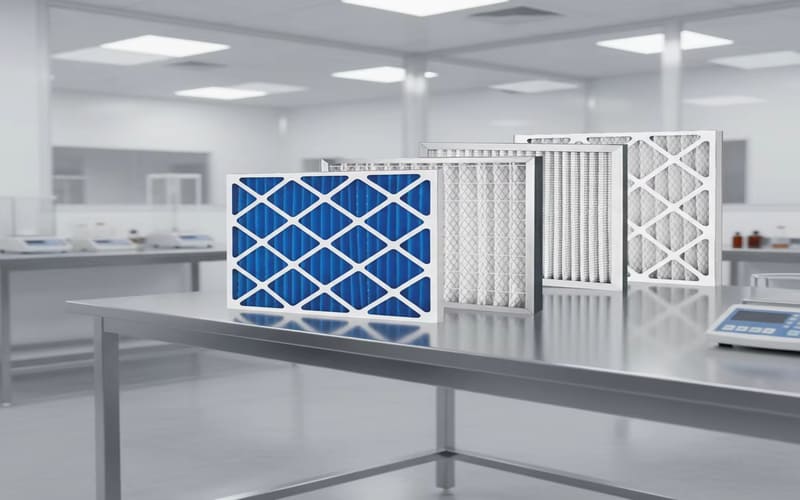
The Minimum Efficiency Reporting Value (MERV) is the primary industry standard used to measure the effectiveness of air filters. Developed by ASHRAE, this rating system provides a universal language for consumers and professionals to evaluate how well a filter traps airborne particles. As a leading manufacturer, we utilize these ratings to ensure our products meet specific filtration benchmarks, allowing you to choose the right balance between air purity and system performance.
Understanding the MERV Rating Scale
The MERV scale ranges from 1 to 16 for most residential and commercial applications. This numerical value represents a filter’s ability to capture particles sized between 0.3 and 10 microns.
- Low Ratings (MERV 1-4): Provide basic protection for HVAC systems but offer minimal air filtration for occupants.
- Mid-Range Ratings (MERV 5-8): Effectively capture common household debris like lint, large dust particles, and pollen.
- High Ratings (MERV 9-16): Designed for superior indoor air quality, trapping smaller contaminants including mold spores, fine dust, and pet dander.
How MERV Ratings Impact Indoor Air Quality
Selecting the correct MERV ratings is the most direct way to control the health of your indoor environment. A higher rating indicates a denser filter media capable of stopping microscopic irritants that lower-rated filters would simply let pass through.
- Particle Capture: Higher MERV filters remove a greater percentage of airborne pollutants, reducing respiratory triggers.
- Health Benefits: Improved filtration is essential for households with pets, smokers, or family members suffering from seasonal allergies.
- System Synergy: While higher ratings improve air quality, they also increase airflow resistance. The goal is to find the “sweet spot” where your HVAC systems operate efficiently while maintaining a clean, breathable atmosphere.
An Overview of MERV 8 Air Filters
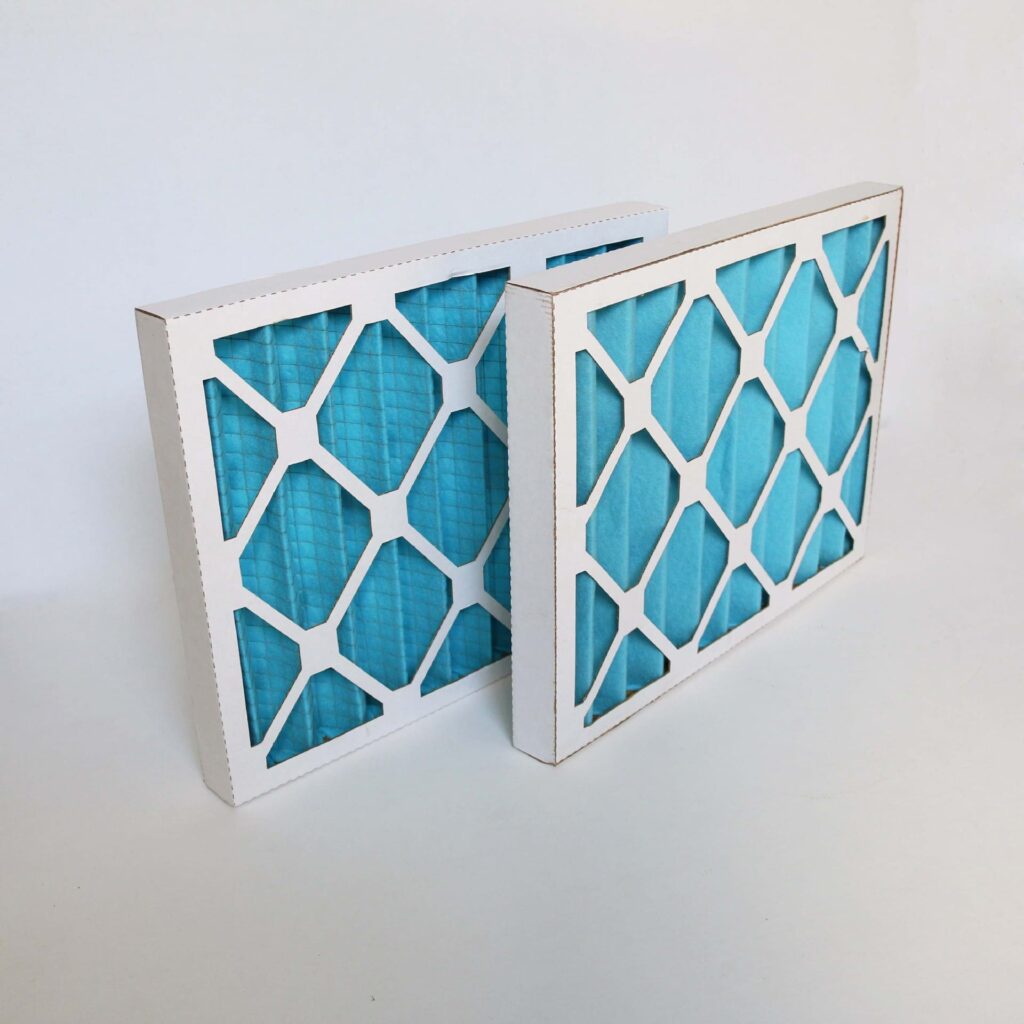
As a MERV filter manufacturer, we consider the MERV 8 to be the “gold standard” for basic residential filtration. It is a pleated filter designed to provide a significant upgrade over cheap fiberglass filters without putting undue stress on your HVAC system. It balances cost, airflow, and particle capture for the average household.
Features and Filtration Capabilities
MERV 8 air filters are engineered to trap the majority of large airborne particles that circulate through your home. They utilize a pleated media—usually a synthetic blend—to increase the surface area for catching debris.
| Feature | Specification |
|---|---|
| Particle Size Capture | 3.0 to 10.0 microns |
| Efficiency Rating | Captures 70% to 85% of large particles |
| Common Contaminants | Dust, lint, pollen, and dust mites |
| Media Type | Synthetic pleated material |
Key Benefits for Residential Use
For most homeowners, the MERV 8 offers the best “bang for your buck.” It protects both your indoor air quality and your mechanical equipment.
- Low Airflow Resistance: These filters allow air to move freely, which keeps your HVAC systems running efficiently without overheating the motor.
- Budget-Friendly: MERV 8 filters are the most affordable pleated option, making regular replacements easy on the wallet.
- System Protection: By capturing dust and pollen, these filters prevent buildup on your evaporator coils, extending the lifespan of your furnace or AC unit.
- Standard Compatibility: They fit almost every standard residential HVAC setup without requiring any system modifications.
Common Limitations of MERV 8
While highly effective for general use, MERV 8 filters have specific limits that might not meet every user’s needs.
- Misses Fine Particles: They are not designed to capture microscopic triggers like tobacco smoke, bacteria, or very fine pet dander.
- Basic Allergy Relief: If you suffer from severe seasonal allergies or asthma, a MERV 8 might leave too many irritants in the air.
- High-Traffic Homes: In homes with multiple pets or high levels of outdoor pollution, a MERV 8 can clog quickly, requiring more frequent changes to maintain performance.
An Overview of MERV 10 Air Filters
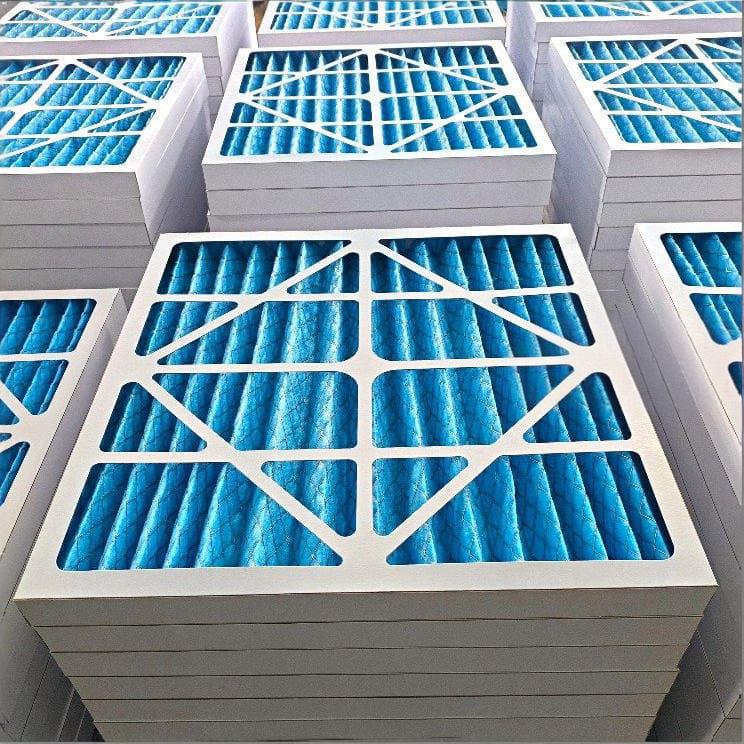
We design our MERV 10 filters to serve as a high-performance upgrade for residential and light commercial HVAC systems. While a MERV 8 filter is the standard baseline, the MERV 10 is engineered for those who need a cleaner indoor environment without jumping into the heavy-duty industrial territory. It strikes a balance between effective particle capture and maintaining steady airflow, making it one of our most popular choices for modern homes.
Improved Pollen and Allergen Removal
The primary reason we recommend moving to a MERV 10 is its ability to trap smaller, more irritating particles. While lower-rated filters focus on large dust clumps, MERV 10 filters are significantly more efficient at capturing:
- Pollen: Essential for seasonal allergy sufferers.
- Pet Dander: Traps the tiny skin flakes that trigger reactions.
- Dust Mites: Filters out the microscopic debris that accumulates in carpets and bedding.
- Mold Spores: Helps prevent these spores from circulating through your vents.
By upgrading to this level, you are actively improving your indoor air quality by removing the triggers that a standard filter often misses.
Pros and Cons of Stepping Up to MERV 10
Choosing the right filter involves weighing the benefits of cleaner air against the mechanical requirements of your system. Here is the breakdown of what to expect when you step up to a MERV 10:
The Pros:
- Healthier Environment: Noticeable reduction in airborne allergens and respiratory irritants.
- Cleaner Equipment: By trapping more fine dust, it keeps your HVAC coils and internal components cleaner, which can prevent efficiency drops over time.
- Versatility: It fits into most standard furnace slots without requiring expensive system modifications.
The Cons:
- Airflow Resistance: Because the filter media is denser, it creates slightly more resistance than a MERV 8. You must ensure your system is rated to handle this pressure.
- Replacement Cycle: Because it captures more debris, it may clog faster in homes with multiple pets or high levels of dust, requiring more frequent monitoring.
- Price Point: There is a marginal increase in cost compared to entry-level filters, though many users find the health benefits far outweigh the price difference.
MERV 8 vs. MERV 10: Key Differences Compared
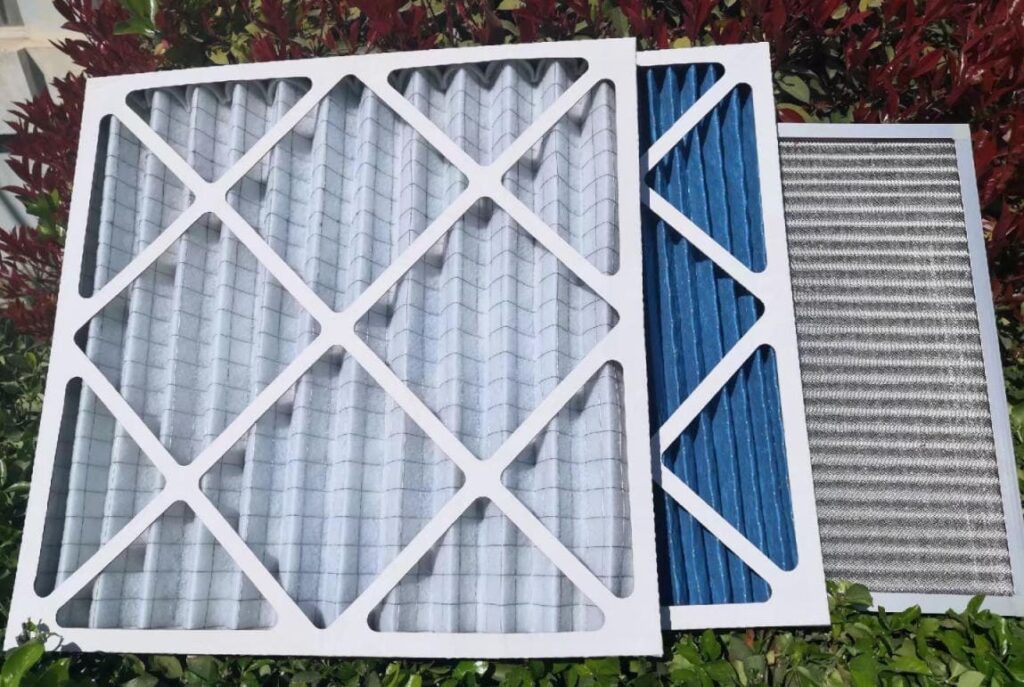
Choosing between a MERV 8 vs. MERV 10 air filter often comes down to balancing your need for cleaner air with the capabilities of your HVAC system. While both are standard residential choices, the performance gap is noticeable in specific environments.
| Feature | MERV 8 Filter | MERV 10 Filter |
|---|---|---|
| Primary Target | Dust, Lint, Pollen | Pet Dander, Dust Mites, Fine Dust |
| Airflow Resistance | Low | Moderate |
| Best For | Standard homes, no pets | Homes with pets or mild allergies |
| Price Point | Budget-friendly | Mid-range |
Filtration Efficiency and Particle Capture
As a manufacturer, we see how the pleat density changes between these two ratings. A MERV 8 filter is highly effective at capturing large particles like pollen and dust mites, typically stopping about 70-85% of particles in the 3.0 to 10.0-micron range.
Stepping up to a MERV 10 filter improves the capture rate of smaller contaminants. It is specifically better at trapping pet dander and finer dust particles that a MERV 8 might miss. If you have indoor cats or dogs, the MERV 10 provides a significant upgrade in trapping those microscopic skin flakes.
HVAC Airflow and System Pressure
Airflow is the lifeblood of your HVAC system.
- MERV 8: Offers minimal resistance, making it the safest bet for older furnaces or systems with weaker blower motors.
- MERV 10: The tighter weave required to catch smaller particles naturally increases static pressure.
While most modern systems handle a MERV 10 without issue, a dirty MERV 10 will restrict airflow faster than a dirty MERV 8. We recommend checking your system’s manual to ensure it can handle the slightly higher resistance.
Maintenance Frequency and Lifespan
Because a MERV 10 air filter captures more debris and smaller particles, it tends to “load” or clog faster than a MERV 8.
- MERV 8: Usually lasts a full 90 days in a standard environment.
- MERV 10: May need a swap every 60 to 75 days, especially during peak heating or cooling seasons when the fan runs constantly.
Ignoring a clogged MERV 10 can lead to system overheating or increased wear on the motor.
Cost and Long-Term Value
In terms of upfront cost, MERV 8 filters are the most economical option for bulk buyers and homeowners on a budget. They provide excellent basic protection for your HVAC coils.
A MERV 10 filter carries a slight price premium. However, the value lies in indoor air quality. If the higher rating prevents allergy flare-ups or keeps your furniture dust-free for longer, the extra few dollars per filter are a worthwhile investment in home comfort.
Does a Higher MERV Rating Always Mean Better Performance?
In the world of air filtration, “higher” doesn’t always translate to “better” for your specific setup. While a higher MERV rating indicates a superior ability to trap smaller particles, performance is measured by how well your HVAC system functions as a whole. If a filter is too restrictive, it can actually decrease the overall performance of your heating and cooling units, leading to poor air circulation and uneven temperatures throughout your home.
The Relationship Between MERV and Airflow Resistance
Every air filter creates some level of resistance to the air trying to pass through it. As we move from MERV 8 to MERV 10, the filter media typically becomes denser to catch finer pollutants like pollen and pet dander.
- Pressure Drop: This is the technical term for the resistance a filter creates.
- Airflow Velocity: A high-resistance filter slows down the air, meaning your system has to work harder to push the same volume of air into your living spaces.
- Balance: The goal is to find the “sweet spot” where the filter captures enough contaminants to improve indoor air quality without suffocating the blower motor.
Potential Risks to Your HVAC System
Installing a high-MERV filter in a system not designed to handle the resistance can lead to serious mechanical issues. We often see homeowners choose the highest rating available, only to face expensive repair bills later.
- Blower Motor Strain: The motor must spin faster and work harder to pull air through a dense MERV 10 filter, leading to premature burnout.
- Increased Energy Consumption: When the system runs longer and harder to compensate for restricted airflow, your monthly utility bills will rise.
- System Freeze-ups: In the summer, restricted airflow can cause the evaporator coil to get too cold and freeze over, shutting down your AC entirely.
- Heat Exchanger Cracks: In the winter, low airflow can cause the furnace to overheat, potentially cracking the heat exchanger—a major safety hazard and a costly replacement.
Choosing between MERV 8 vs. MERV 10 air filters requires knowing your system’s limits. We always recommend checking your manufacturer’s specifications to ensure your unit can handle the increased static pressure of a higher-rated filter.
How to Choose Between MERV 8 and MERV 10
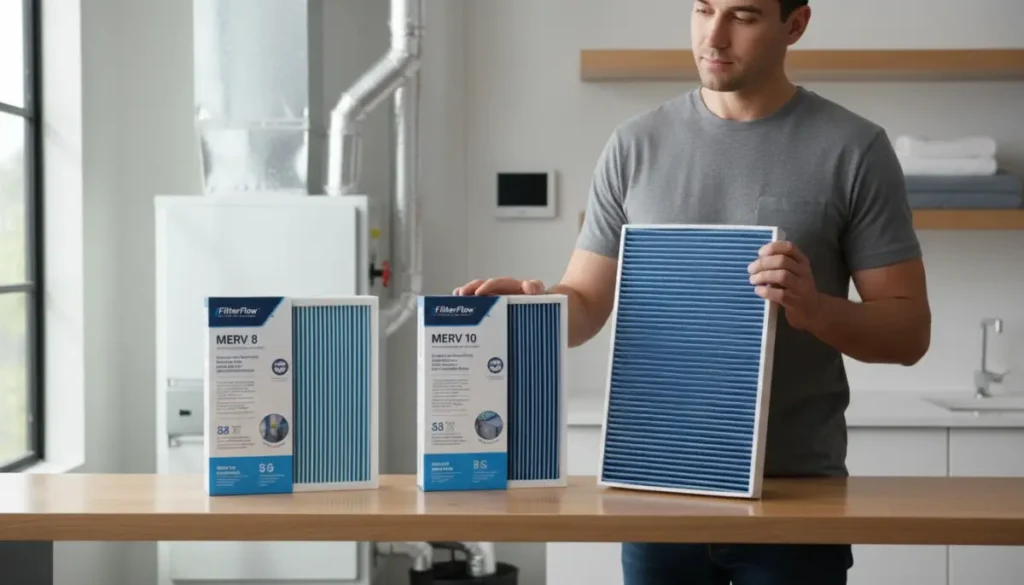
Deciding between a MERV 8 and a MERV 10 air filter comes down to finding the right balance between air purity and your HVAC system’s performance. As a manufacturer, I’ve seen that the best choice isn’t always the highest rating, but the one that fits your specific living conditions and equipment capacity.
Factors to Consider: Pets, Allergies, and Environment
Your lifestyle is the biggest driver in this decision. If your home is a “low-traffic” zone with no pets, a MERV 8 is usually plenty. However, once you add animals or seasonal allergies into the mix, stepping up to a MERV 10 makes a noticeable difference.
- Pet Owners: If you have dogs or cats, pet dander becomes a constant issue. A MERV 10 filter captures these smaller proteins more effectively than a MERV 8.
- Allergy Sufferers: For those sensitive to pollen or dust mites, the tighter weave of a MERV 10 provides an extra layer of defense during high-pollen seasons.
- Local Environment: If you live near a busy road or in a dusty area, the MERV 10 will trap more fine particles before they settle on your furniture or in your lungs.
| Feature | MERV 8 | MERV 10 |
|---|---|---|
| Best For | Standard homes, no pets | Homes with pets, mild allergies |
| Target Particles | Dust, lint, pollen | Dander, fine dust, mold spores |
| Airflow Impact | Low resistance | Moderate resistance |
| Value | Most budget-friendly | Better filtration for small price jump |
Checking Your HVAC System Specifications
Before you upgrade to a MERV 10, you must ensure your HVAC system can handle the increased density. Higher MERV ratings mean the filter material is thicker, which naturally creates more resistance to airflow.
- Check the Static Pressure: Older HVAC units are often designed for low-resistance filters. Using a MERV 10 in a system built for MERV 8 can cause the motor to work harder, potentially leading to higher energy bills or a frozen evaporator coil.
- Review the Manual: Look for the Maximum Recommended Pressure Drop. If your system is already struggling with airflow, stick with a high-quality MERV 8.
- Filter Thickness: Ensure your filter slot can accommodate the pleat density of a MERV 10. While most are 1-inch, some high-efficiency MERV 10 filters perform better in 4-inch or 5-inch housings.
Choosing the right filter is about protecting your indoor air quality without sacrificing the lifespan of your furnace or air conditioner. If your system is modern and your family has pets, the MERV 10 is the superior choice for a cleaner home.
Frequently Asked Questions
Can I Use a MERV 10 Filter in a Standard Furnace?
In most cases, yes. The majority of modern residential HVAC systems are built to handle the airflow requirements of a MERV 10 filter without any issues. However, if you have an older furnace, the denser material might restrict airflow and strain the blower motor. As a MERV filter manufacturer, I always advise checking your equipment manual to confirm the maximum filter rating your specific system can support safely.
How Often Should I Replace MERV 8 vs. MERV 10 Filters?
When comparing MERV 8 vs. MERV 10 air filters, the replacement schedule shifts slightly due to how much debris each filter catches.
- MERV 8 Filters: Generally need to be replaced every 2 to 3 months. They capture larger dust and lint particles, taking longer to clog.
- MERV 10 Filters: Usually require replacement every 1 to 2 months. Because they trap finer particles like pet dander, pollen, and dust mites, they fill up much faster.
- High-Traffic Homes: If you have multiple pets or keep windows open often, you should inspect your filters monthly, regardless of their MERV ratings.
Will a MERV 10 Filter Increase My Energy Bills?
It can, but the increase is typically minimal if you stay on top of maintenance. A MERV 10 filter has a tighter weave to improve indoor air quality, which creates slightly more airflow resistance than a MERV 8. Your HVAC system has to work a bit harder to push air through. The real threat to your energy bill is a dirty filter. If you leave a clogged MERV 10 filter in your system, the unit will run longer and consume more power. Changing your filter on time prevents energy spikes and protects your equipment.