What Is a Bag Filter?
Definition and Core Purpose
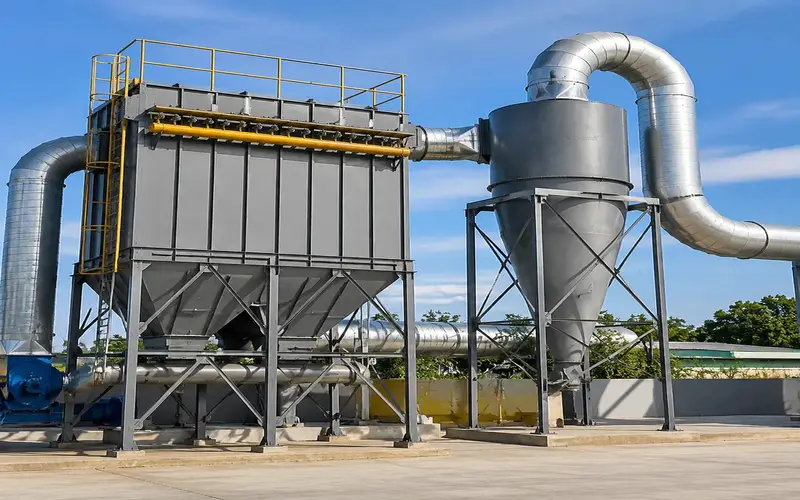
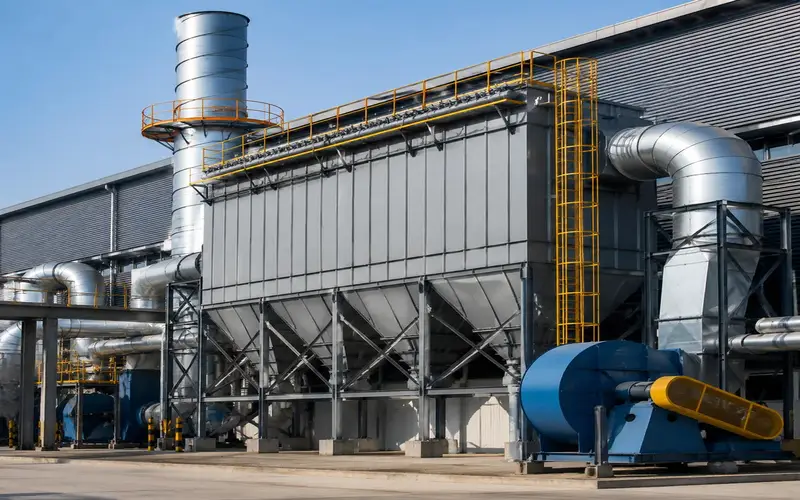
A bag filter (or baghouse filter) is a high-efficiency industrial filtration system engineered to capture solid particles, dust, and impurities from liquid streams or industrial air flows. Its core purpose is to deliver clean process outputs, recover valuable materials, meet strict air quality standards, and protect machinery downstream. As a foundational component in modern industrial pollution control, bag filters provide an adaptable, high-capacity solution for managing heavy particulate matter and suspended solids.
How Bag Filtration Works
Bag filtration operates on a simple yet effective physical barrier principle inside a durable filter housing:
- Contaminated Feed Entry: Raw gas, air, or liquid enters the filter enclosure under controlled pressure or suction.
- Surface & Depth Trapping: As the stream passes through permeable fabric filters, contaminants collect on the bag media surface, forming a filter cake that enhances filtration efficiency over time.
- Purified Discharge: Cleaned air discharges into the atmosphere (or ventilation systems), while filtered liquids proceed to downstream storage or processing.
- Media Regeneration: Industrial air systems utilize pulse-jet bursts or mechanical shaking to dislodge accumulated dust into a hopper for continuous operation.
Liquid Filtration vs. Industrial Air Dust Collection
While both rely on specialized media, liquid bag filters and air baghouse systems serve distinct operational demands across global manufacturing:
| Feature | Liquid Bag Filtration | Industrial Air Dust Collection |
|---|---|---|
| Primary Target | Suspended solids, viscous fluids, slurries | Fine dust, particulate matter, toxic fumes |
| Housing Design | Compact, pressure-rated metal filter housing | Large-scale multi-compartment baghouse filter |
| Flow Mechanism | Positive fluid pressure | Pulse-jet airflow or suction exhaust |
| Core Application | Water treatment, chemicals, food processing | Power generation, metalworking, gas cleaning |
What Are Bag Filters Used For? Key Industrial Applications
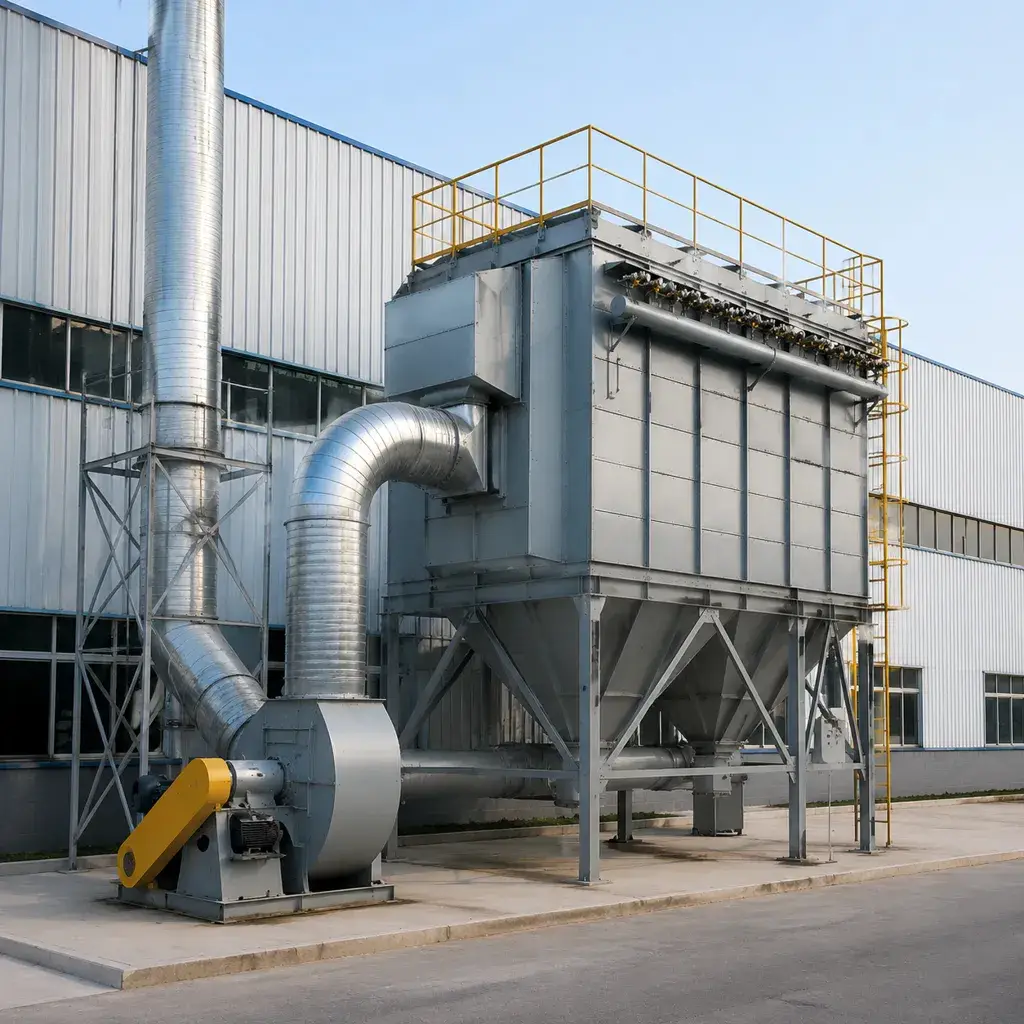
As a dedicated bag filter manufacturer, we design filtration solutions for a wide range of global sectors. Whether capturing airborne particulates or clarifying process fluids, bag filters are essential for operational efficiency, safety, and regulatory compliance.
Air Pollution Control and Dust Collection
Industrial facilities rely on heavy-duty dust collector systems and baghouse filters to trap dry particulates before they enter the atmosphere.
- Flue Gas Cleaning: Captures toxic fly ash and fine particulate matter in power plants and incinerators.
- Metal Processing: Filters fine dust and fumes during smelting, grinding, and sandblasting.
- Bulk Material Handling: Traps airborne nuisance dust in cement, woodworking, and grain handling operations.
To ensure peak dust collection performance, evaluating the velocity of bag filters is crucial during system design to maintain optimal airflow without damaging the filter media.
Water and Wastewater Treatment
In liquid filtration, fabric filters serve as a cost-effective method to remove suspended solids from liquid streams.
- Raw Water Pre-Filtration: Removes sand, algae, and debris in municipal water treatment facilities prior to membrane filtration.
- Wastewater Treatment: Traps heavy sediments and contaminants in industrial effluent before discharge.
- Cooling Tower Maintenance: Filters side-stream water to prevent scale buildup and bio-fouling in closed-loop systems.
Chemical, Petrochemical, and Paint Processing
Chemical processing requires reliable filtration media that can withstand aggressive solvents, extreme pH levels, and elevated temperatures.
- Paint and Coatings: Removes gel agglomerates, unmixed pigments, and foreign debris to ensure a smooth surface finish.
- Petrochemical Refining: Filters catalysts, polymers, and amine solutions to protect downstream processing equipment.
- Solvent Clarification: Captures microscopic contaminants from volatile organic compounds and specialized liquid compounds.
Food, Beverage, and Pharmaceutical Manufacturing
Sanitary liquid filtration is critical in the food and beverage industry to guarantee product safety and consistent taste.
- Beverage Clarification: Removes yeast, sediment, and solid residues from beer, wine, spirits, and fruit juices.
- Edible Oil Processing: Filters carbon traces and bleaching earths from cooking oils during refining.
- Pharmaceutical Purification: Traps fine particulates in process water, syrups, and active medicinal batches under strict hygiene standards.
Main Types of Industrial Bag Filters
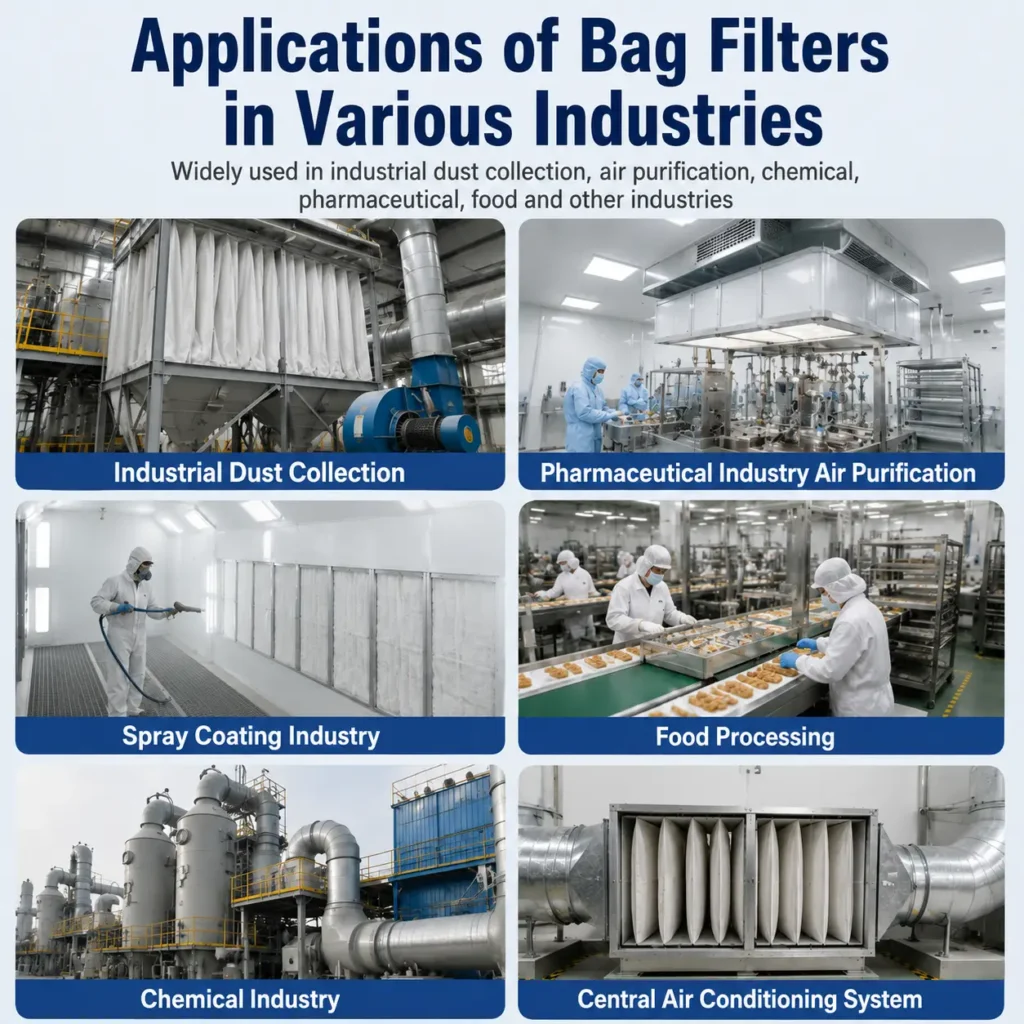
Choosing the right filter system depends on your operating environment, air volume, and dust characteristics. We engineer equipment to handle specific air quality requirements and cleaning methods across diverse global manufacturing setups.
Pulse-Jet Bag Filters
Pulse-jet systems use short blasts of high-pressure compressed air to blow off dust cakes while the system remains online.
- Continuous Operation: Filters clean automatically during operation, eliminating system shutdown during cleaning cycles.
- High Efficiency: Effectively captures fine dust and particulate matter in demanding industrial air filters applications.
- Space-Saving: Handles higher air-to-cloth ratios, allowing for compact baghouse footprints.
Reverse-Air Bag Filters
Reverse-air systems clean by directing a low-pressure reverse airflow through the filter bags, gently collapsing them so the dust cake cracks and falls into the hopper below.
- Fabric Protection: Ideal for delicate or high-temperature fabric filters, such as woven fiberglass media.
- Extended Bag Life: Gentle cleaning action minimizes wear and tear on the filter material.
- Heavy-Duty Use: Essential for large-scale operations like power generation, cement production, and steel manufacturing.
Mechanical Shaker Bag Filters
Mechanical shaker systems physically shake the filter rack to detach built-up particulates. Cleaning occurs offline when the main airflow is briefly paused.
- Simple Design: Operates without compressed air lines or complex control systems, keeping operating costs low.
- Intermittent Operations: Ideal for batch manufacturing processes, small processing plants, or seasonal operations.
- Reliable Construction: Provides a straightforward solution across standard bag filters setups where offline cleaning fits the workflow.
Common Types of Bag Filter Media
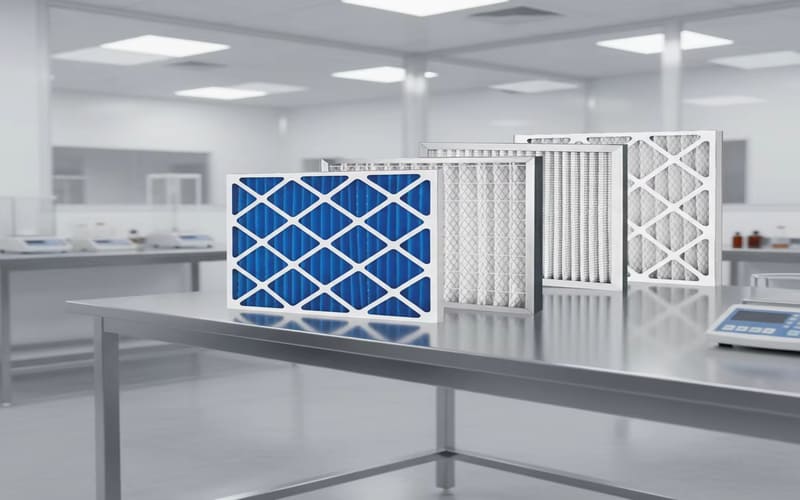
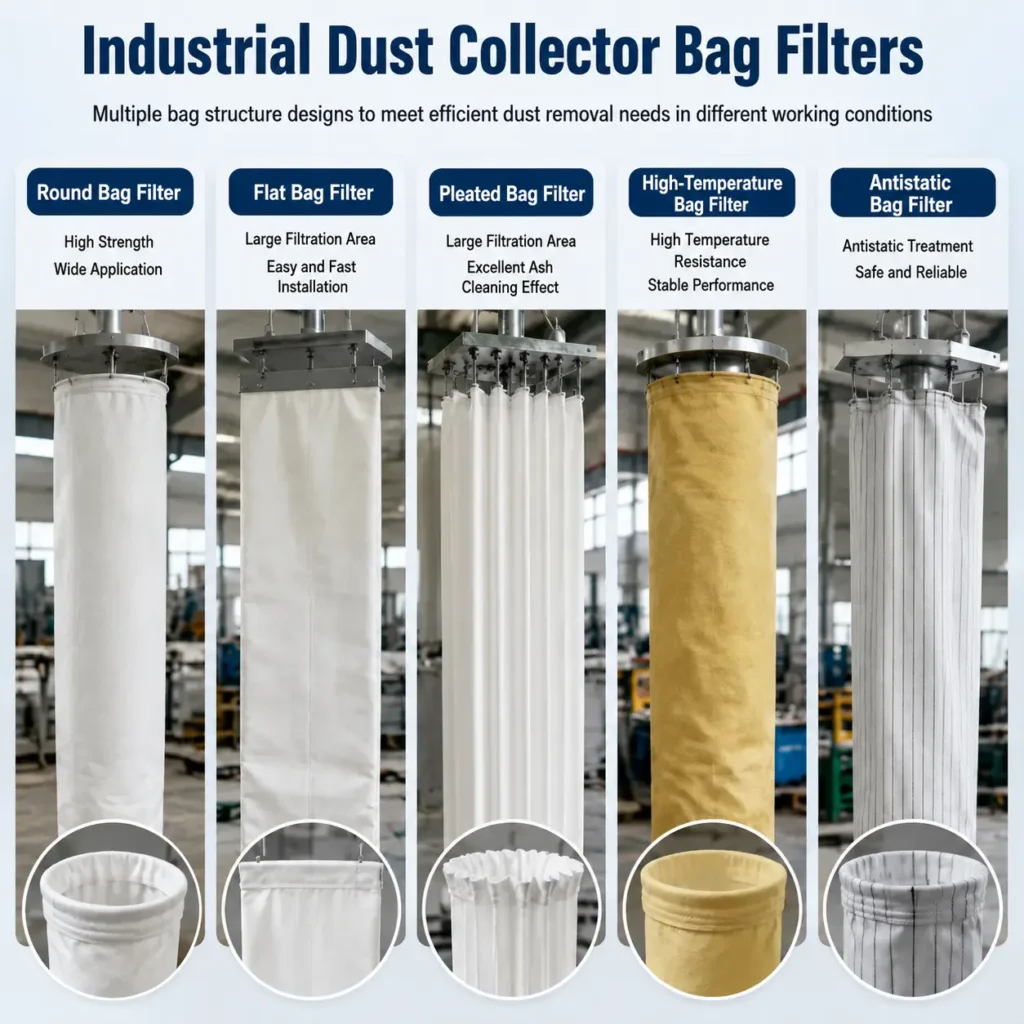
Choosing the right bag filter media is essential to maximizing filtration performance. The choice of material dictates chemical compatibility, temperature limits, and particle retention efficiency.
Woven vs. Non-Woven Synthetic Fabrics
We manufacture filter bags using two core structural methods to match specific operating environments:
- Woven Synthetic Fabrics: Yarns are woven in precise, uniform patterns. This creates discrete pore sizes ideal for surface straining, easy cake release, and applications requiring high tensile strength.
- Non-Woven Synthetic Fabrics: Fibers are randomly layered and mechanically needle-punched or thermally bonded. This creates a dense, three-dimensional matrix that traps fine particulate matter throughout the depth of the media.
When evaluating fabric density and flow rates, comparing filters for resistance and efficiency helps ensure optimal balance between energy consumption and particle capture.
Polyester, Nylon, and Felted Filters
For standard industrial temperature ranges, versatile polymer materials provide reliable service across dust collection and liquid filtration systems:
| Media Type | Key Properties | Primary Applications | Max Operating Temp |
|---|---|---|---|
| Polyester (PE) | Excellent physical toughness, good dry heat stability, cost-effective | Cement manufacturing, woodworking, food processing | 275°F (135°C) |
| Nylon (NMO) | High tensile strength, superb alkali resistance, reusable mesh | Chemical processing, paint and ink, water treatment | 230°F (110°C) |
| Needle-Punched Felt | High dirt-holding capacity, deep particle entrapment | Wastewater treatment, general industrial dust collectors | 275°F (135°C) |
High-Temperature PTFE and Fiberglass Media
Demanding operations involving aggressive chemicals, steam, or extreme thermal conditions require advanced technical textiles:
- PTFE (Polytetrafluoroethylene): Provides complete chemical inertness across the full pH spectrum and outstanding non-stick dust release up to 500°F (260°C).
- Fiberglass Media: Delivers high thermal resistance up to 500°F (260°C) with zero fabric stretch. Specialized chemical finishes are applied to protect glass fibers from mechanical flexing wear.
- Aramid (Nomex): Offers excellent resistance to high-temperature abrasion and thermal breakdown up to 400°F (204°C), making it the standard choice for asphalt plants and hot gas cleaning.
Key Advantages of Bag Filters
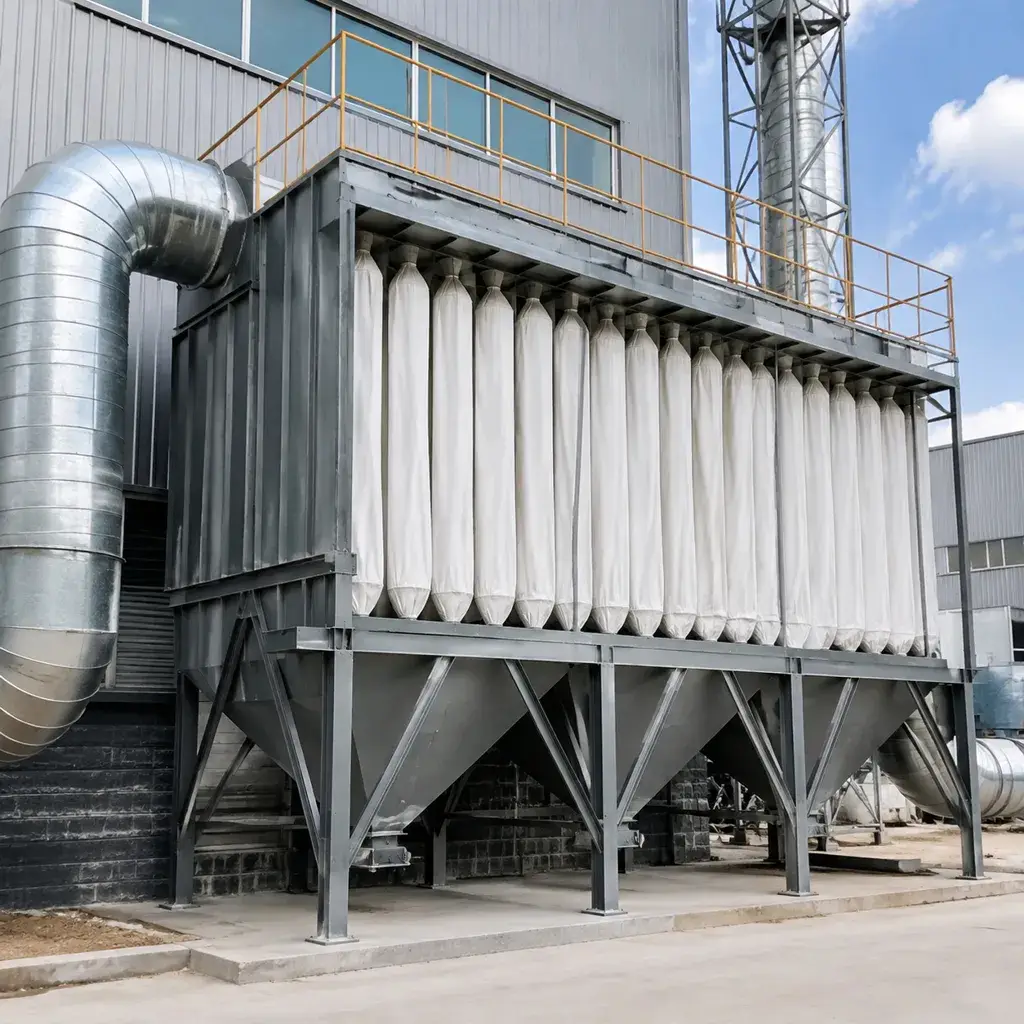
When industrial operators ask what bag filters are used for, the answer comes down to reliable performance and strong long-term ROI. As a manufacturer, we build fabric filters to deliver maximum capture efficiency and minimal operational downtime across demanding environments.
High-Efficiency Particulate and Fine Dust Removal
Bag filters capture solid contaminants with high precision across both air quality control and liquid filtration processes.
- Sub-Micron Capture: Traps fine dust and particulate matter down to 1 micron.
- High Dirt-Holding Capacity: Retains heavy loads of suspended solids before requiring replacement.
- Consistent Separation: Maintains clean fluid and gas cleaning streams even during high-volume production surges.
Cost-Effective Operation and Maintenance
Engineering durable baghouse filter units keeps operational costs low while extending overall equipment lifespans.
| Cost Driver | Bag Filter Advantage | Operational Impact |
|---|---|---|
| Capital Cost | Lower setup expense than scrubbers or precipitators. | Faster initial ROI |
| Maintenance Labor | Fast-change design allows quick bag changeouts. | Reduced downtime |
| Energy Consumption | Low resistance to airflow complements systems like air handling unit filters. | Lower fan power usage |
High Scalability and Customization Options
Industrial facilities require filtration systems tailored to specific physical and chemical challenges.
- Tailored Filter Media: Choose woven or non-woven synthetic fabrics engineered for high heat, acid exposure, or heavy abrasion.
- Modular Filter Housing: Easily scale system capacity up or down as plant throughput grows.
- Multi-Industry Fit: Seamlessly adapts to dust collector setups, water treatment plants, and viscous chemical processing lines.
Selection and Maintenance Best Practices
As a bag filter manufacturer, we know that proper selection and routine upkeep are critical to maintaining peak system efficiency, prolonging equipment lifespan, and keeping operating costs low across industrial facilities.
Key Factors Affecting Baghouse Performance
Several operational variables directly impact how efficiently your fabric filters capture fine dust and particulate matter:
- Air-to-Cloth Ratio: Operating at the correct gas-to-cloth ratio prevents excessive velocity from driving fine dust deep into the filter fabric.
- Operating Temperature & Chemistry: Hot gases and corrosive chemicals require specialized media like PTFE or fiberglass to prevent premature thermal or chemical degradation.
- Differential Pressure: Tracking resistance across the filter housing is vital. Reviewing a pressure drop chart helps you establish baseline operational standards and identify airflow restrictions early.
- Dust Load & Moisture: Sticky, moist, or abrasive dust requires specialized surface treatments or membranes to prevent blinding.
Cleaning Sequences and Routine Inspection
Proper cleaning cycles protect the integrity of your pulse jet filter systems and prevent unnecessary wear on the media.
- Optimize Pulse Intervals: Set automated pulse-jet cleaning frequency and compressed air pressure to dislodge dust cakes without tearing the fabric.
- Daily Pressure Monitoring: Track differential pressure gauges constantly to ensure your baghouse filter operates within target ranges.
- Routine Visual Audits: Inspect clean-air plenums for dust trace lines, which signal broken bags or loose seals.
- Catch Clogs Early: Recognizing performance drops and early signs your filter is clogged allows you to clear restrictions before motor burnout or system shutdown occurs.
Guidelines for Bag Replacement and Upkeep
When it is time to service or replace filter media, following these core practices ensures smooth turnarounds and long-term reliability:
| Maintenance Task | Best Practice Guideline | Key Benefit |
|---|---|---|
| Pre-Coating Media | Apply a protective conditioning dust layer before initial startup. | Prevents fine particles from blinding raw fabric fibers. |
| Proper Installation | Ensure tight cuff seating and correct cage alignment in the cell plate. | Eliminates bypass leaks and extends bag life. |
| Systematic Replacement | Replace full sets of filter bags rather than patching individual bags. | Maintains uniform differential pressure across all rows. |
| Dry Storage | Store replacement bags in clean, dry, sealed packaging away from UV light. | Protects synthetic fibers from humidity and degradation prior to use. |