You might already know that regularly swapping out your HVAC filter is crucial for clean indoor air…
But when it’s time to toss that dust-caked frame, you’re probably asking yourself: Are Air Filters Recyclable?
Well, you’re in for a treat because I’ve put together a complete guide to answer exactly that.
Some materials can actually be saved.
Most are destined for the trash due to nasty contaminants.
Others require specific mail-in programs.
In this post, you’re going to learn exactly why mixed materials make recycling difficult, how to properly dispose of your old filters, and the best eco-friendly alternatives to upgrade to.
Let’s dive right in.
Are Air Filters Recyclable?
The Short Answer on Recycling HVAC Filters
When it is time for a replacement, you might wonder if you can simply toss your old filters into the blue bin. The short answer is no, standard air filters are not accepted in curbside recycling.
As an air filter manufacturer, we prioritize indoor air quality, but we also understand the end-of-life challenges of our products. Standard recycling programs reject used HVAC filters primarily because they consist of mixed materials. A single filter often contains a cardboard frame, metal wire backing, and synthetic fibers or pleated cotton. Separating these components is not cost-effective for local recycling facilities. Furthermore, once an air filter has done its job, it is packed with dust, allergens, and debris, classifying it as a contaminated item.
Differences Between AC and Furnace Filters
Homeowners frequently ask if there is a difference in the disposal or recycling rules for AC filters versus heating filters. In most modern residential systems, AC filters and furnace filters are the exact same product, simply utilized during different seasons.
Here is a quick breakdown of how they compare:
| Feature | AC Filters | Furnace Filters |
|---|---|---|
| Primary Role | Protects the cooling coils from dust buildup | Protects the heating blower from debris |
| Common Materials | Fiberglass, pleated cotton, synthetic fibers | Fiberglass, pleated cotton, synthetic fibers |
| Trapped Contaminants | Dust, pollen, pet dander, mold spores | Dust, soot, lint, airborne allergens |
| Curbside Recyclable? | No (Contaminated & mixed materials) | No (Contaminated & mixed materials) |
Whether you are pulling a dirty air filter from your air conditioner in the middle of summer or your furnace in the dead of winter, the recycling reality remains identical. Both trap hazardous particulates and feature complex, multi-material constructions that require specific, alternative disposal methods rather than the standard recycling bin.
Why Most Air Filters Are Not Recyclable
As one of the best air filter manufacturers, we constantly get questions about eco-friendly ac filter disposal. The harsh reality is that tossing your old HVAC filters or furnace filters straight into the standard curbside bin usually does not work. Here is why.
Mixed Manufacturing Materials Make Separation Difficult
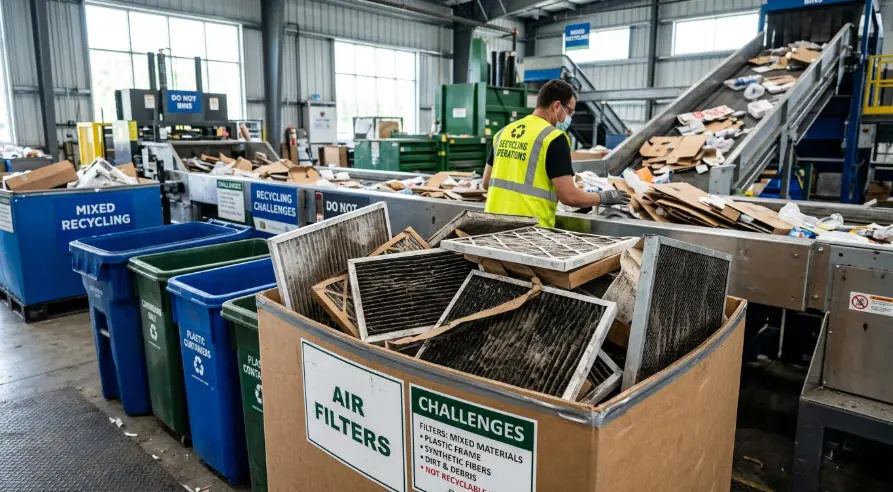
Standard recycling programs rely on clean, easily sorted items. However, most air filters are built from a complex blend of mixed materials that are glued or stitched together tightly.
- Outer Frames: Typically made of rigid cardboard or plastic.
- Filter Media: Built from synthetic fibers, pleated cotton, or fiberglass.
- Structural Support: Backed by wire mesh or aluminum to hold its shape.
Local recycling facilities simply do not have the equipment or time to pull these elements apart. Understanding the different materials used in pleated vs fiberglass air filters helps illustrate why these composite products are so difficult to break down mechanically. Because the cardboard is fused directly to the metal and fabric, it cannot be processed like a standard cardboard box.
Used Filters Are Considered Contaminated
Even if the materials could be easily separated, a much bigger issue stops the recycling process. By design, air filters trap all the unwanted particles floating around your home or office. A dirty filter is loaded with:
- Pet dander and dust mites
- Mold spores and active bacteria
- Pollen and seasonal allergens
- Airborne chemicals and VOCs
Once an air filter has done its job, it officially becomes a contaminated filter. Recycling centers automatically reject these items. Mixing dirty air filters with clean recyclables can ruin entire processing batches and pose respiratory health hazards to the facility workers handling the waste.
Recyclability of Air Filter Material
When customers ask us, “Are air filters recyclable?”, our answer always depends on the specific construction of the product. As an air filter manufacturer, we build everything from standard HVAC filters to highly specialized units using a variety of components. The reality is that the core material dictates whether a filter is destined for the recycling bin or the landfill.
Fiberglass and Polyester Filters
These are the most common disposable filters found in residential heating and cooling systems. Unfortunately, your standard fiberglass filter or polyester filter is almost never recyclable.
- Complex Construction: They are built using tightly woven synthetic fibers glued to heavy cardboard frames and backed by wire mesh. Separating these materials is too costly for recycling plants.
- The Contamination Factor: Once used, they are packed with dust, dead skin, and biological matter, making them completely unviable for local recycling facilities.
- The Verdict: Always bag these up and toss them in your regular household trash.
Aluminum and Metal Mesh Filters
If sustainability is your priority, aluminum filters are the absolute best choice. Metal mesh filters break the standard mold because they are entirely recyclable and exceptionally durable.
- Built to Last: Most metal mesh units are designed as reusable filters. You simply wash away the grease or large dust particles and reinstall them.
- End of Life: When an aluminum filter finally degrades or warps beyond repair, it does not go in the trash. You can drop it off at scrap metal yards or local recycling facilities that process aluminum goods.
Carbon and HEPA Filters
High-efficiency air purifier cartridges and commercial-grade filters handle the toughest air quality jobs, but that makes them the hardest to dispose of cleanly.
- Carbon Filters: Because these rely on activated carbon to absorb odors, smoke, and volatile organic compounds (VOCs), the filter media becomes saturated with trapped chemicals. They cannot enter standard recycling programs safely.
- HEPA Filters: Whether you are dealing with thick industrial panels or high-efficiency mini-pleat HEPA filters designed for tight spaces, the tightly woven glass fibers trap microscopic biological contaminants. Because of this high contamination risk and mixed-material frames, they must be securely bagged and thrown in the garbage.
How to Properly Dispose of or Recycle Old Air Filters
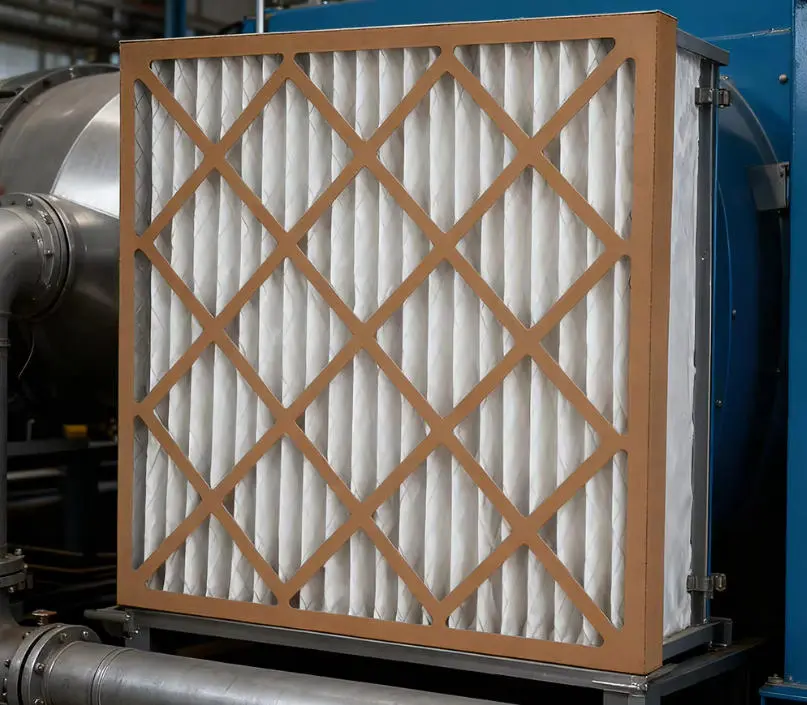
As an air filter manufacturer, we frequently answer questions about proper disposal methods. Since the answer to “Are air filters recyclable?” is usually no for standard residential types, getting rid of them safely is your next best step.
Safe Bagging for Regular Trash Disposal
When dealing with dirty air filters, your main goal is to keep trapped dust, pollen, and mold spores from escaping back into your home. Here is the safest routine for standard AC filter disposal:
- Bag it immediately: Carefully slide the old filter directly into a plastic trash bag without shaking it.
- Seal it tight: Tie the bag off completely to lock in all the trapped contaminants.
- Take it outside: Put the sealed bag straight into your outdoor garbage bin.
- Replace correctly: Once the old one is safely in the trash, double-check which way the air filter goes before sliding your fresh replacement into the HVAC unit.
Utilizing Mail-In Recycling Programs
If you want to minimize your environmental footprint, look into mail-in recycling programs. A growing number of eco-conscious brands are stepping up to handle the waste for you.
- Save the box: Keep the cardboard box your new filter arrives in.
- Pack it up: Once the filter is dirty, place it in the saved box.
- Ship it out: Use the manufacturer’s prepaid return label to send it back to their facility, where they handle the separation of mixed materials safely.
Contacting Your Local Recycling Center
It never hurts to call your local recycling facilities. While standard recycling programs will reject common fiberglass or pleated cotton filters, they often have protocols for specific components.
- Metal parts: If you use aluminum filters or models with heavy wire backing, your local center might accept them as scrap metal.
- Electronic waste: Washable electrostatic filter units or certain heavy-duty air purifier cartridges may need to be dropped off at designated e-waste locations. If you are tracking how often to change your air purifier filter, coordinate those replacements with a trip to the e-waste center.
- Always ask first: Never throw questionable items into your curbside bin without confirming with your local waste management office first.
Eco-Friendly Air Filter Alternatives

Since standard recycling programs often reject contaminated filters, finding eco-friendly filters is the most practical step toward reducing waste. As an air filter manufacturer, we always tell our customers that the best way to handle waste is prevention. By choosing the right products, you can drastically cut down on the number of dirty air filters sent to landfills each year.
Upgrading to Washable and Reusable Filters
Instead of throwing out a cheap fiberglass filter every 30 days, make the switch to reusable filters. This one upgrade significantly reduces your household waste.
- Aluminum filters: Highly durable, rust-resistant, easy to wash, and designed to last for years.
- Fabric filters: Many synthetic fiber options can be simply rinsed with water, dried, and reinstalled.
Before throwing away your current HVAC filters, it is worth checking to see if you can reuse a wavy air conditioner filter to safely extend its lifespan.
Investing in Long-Lasting Pleated Filters
If washable frames do not fit your specific HVAC system, step up to high-quality pleated cotton filters. While they still eventually require standard AC filter disposal, they are a massive improvement over flimsy, short-lived alternatives.
Why pleated filters are the smarter choice:
- Extended Lifespan: They typically last 3 to 6 months, meaning you throw away 75% fewer filters a year.
- Resource Efficiency: You consume fewer raw materials annually compared to swapping out a basic polyester filter every month.
- Superior Performance: The pleated design creates a larger surface area to trap dust without choking your system’s airflow.
Balancing Air Quality with Environmental Impact
You do not have to sacrifice clean breathing air to be environmentally conscious. The trick is to balance the specific air quality you need with the filter’s environmental footprint.
Avoid automatically buying heavy-duty HEPA filters unless your home strictly requires them. They use dense, mixed materials that require more energy to manufacture and are tougher on local landfills. Instead, figure out exactly which MERV rating filter you should use for home air quality. Picking the right MERV rating for your actual needs ensures your system runs efficiently, lowers your energy bill, and prevents the unnecessary waste of high-end custom air filters.
Frequently Asked Questions About Filter Disposal
As an air filter manufacturer, we get a lot of questions about how to handle end-of-life HVAC filters. Here are the clear-cut answers to the most common questions we hear regarding AC filter disposal.
Can I recycle a filter if it has a cardboard frame?
In most cases, no. Even though the outer frame is cardboard, the filter as a whole is usually rejected by standard recycling programs.
- Mixed Materials: The cardboard is tightly glued to the wire mesh and synthetic fibers or fiberglass inside.
- Difficult Separation: You cannot easily rip the clean cardboard away from the used media without releasing a cloud of trapped dust and allergens back into your home.
What happens if I put a dirty filter in the curbside bin?
Tossing dirty air filters directly into your curbside recycling bin causes more harm than good.
- Batch Contamination: The dust, mold spores, and debris trapped in the filter can contaminate clean, recyclable materials like paper and cardboard in the same truck.
- Facility Rejection: When it reaches the local recycling facility, workers will simply pull it off the line and throw it in the trash, slowing down the entire sorting process.
Always stick to proper disposal methods by sealing the old filter in a plastic bag and placing it in your regular garbage.
Are higher MERV rating filters better for the environment?
Not necessarily. A higher MERV rating means the filter is denser and catches much smaller particles. While this is fantastic for your indoor air quality, it does not automatically make the product more eco-friendly.
- Replacement Frequency: Highly rated filters often restrict airflow faster as they fill up with microscopic dust. This means you might end up throwing them in the trash more frequently than standard filters.
- System Efficiency: On the upside, keeping your HVAC system clean with the right filter ensures it runs efficiently, reducing your home’s overall energy footprint.
If you are trying to balance environmental impact with keeping your air clean, it helps to understand exactly what these ratings mean for your system’s lifespan. Read our complete guide to MERV air filter ratings to find the right fit for your home without creating unnecessary waste.