A clogged lawn mower air filter will choke your engine, waste gas, and eventually cause costly motor damage.
The good news? Swapping it out takes less than five minutes and requires zero expert mechanics.
If you’re looking for exact, step-by-step instructions on how to change lawn mower air filter systems—plus how to inspect, clean, and maintain paper, foam, or dual-element filters—you’re in the right place.
Why Replacing Your Lawn Mower Air Filter Is Essential
The air filter element is the primary line of defense in small engine maintenance. During lawn care operations, your mower ingests dust, dirt, and fine grass debris. Without a clean air filter, these particles pass directly into the carburetor and combustion chamber, causing accelerated internal engine wear, poor combustion, and premature equipment failure. Protecting this component guarantees long-term efficiency and reliable start-ups.
Benefits of Maintaining a Clean Air Filter
Proper lawn mower maintenance directly impacts running costs and machine longevity. A fresh air filter maintains the correct air-to-fuel ratio required for optimal operation.
| Benefit | Operational Impact |
|---|---|
| Engine Performance | Restores maximum horsepower and consistent RPM under heavy cutting conditions. |
| Fuel Efficiency | Optimizes gas consumption by preventing an over-rich fuel mixture. |
| Engine Protection | Blocks abrasive debris from scoring cylinder walls and pistons. |
| Lower Maintenance Costs | Prevents costly small engine repair and premature carburetor overhauls. |
Signs Your Lawn Mower Air Filter Needs Replacement
Recognizing the warning signs of a dirty air filter helps prevent severe engine damage before it occurs. Inspect your air filter assembly if you notice any of the following symptoms:
- Engine Power Loss: Sputtering, stalling, or uneven running when cutting thick grass.
- Hard Starting: Difficulty cranking the engine or requiring multiple pulls to start.
- Dark Exhaust Smoke: Black smoke emitted from the muffler, indicating incomplete fuel combustion.
- Increased Fuel Consumption: Burning through fuel significantly faster than normal.
- Visible Contamination: Heavy accumulation of dirt, debris, or oil on the paper air filter or foam pre-filter.
Types of Lawn Mower Air Filters
Before learning how to change lawn mower air filter elements, you must identify which design your engine uses. Small engines rely on three primary styles of air filtration to trap dust, clippings, and grit before clean air enters the carburetor. For a deeper look at different filtration designs across machinery, explore our guide on types of air filters explained.
Foam Air Filters
Foam air filters are common in light-duty push mowers and smaller outdoor power tools. These oil-saturated foam inserts rely on a dense matrix of synthetic pores to capture airborne debris.
- Key Features: Washable, budget-friendly, and reusable.
- Maintenance Requirement: Must be washed, thoroughly dried, and lightly oiled to maintain filtering efficiency.
- Best Uses: Standard residential lawns with minimal airborne dust.
Paper Air Filters
Paper air filters feature tightly pleated paper media sealed inside a rubber or plastic gasket. As a filter manufacturer, we engineer paper air filter elements with consistent porosity to maximize airflow while stopping micro-particles.
- Key Features: Disposable, easy to swap out, and highly efficient.
- Maintenance Requirement: Replace once clogged; paper media cannot be washed or saturated with oil.
- Best Uses: Dry, dusty mowing conditions requiring high filtration accuracy.
Dual-Element Air Filters
Dual-element air filters deliver premium two-stage protection by wrapping a foam pre-filter around a primary pleated paper air filter element. This combination is standard on heavy-duty mowers and premium engines like Briggs and Stratton.
- Key Features: Maximum engine protection and longer service life.
- Maintenance Requirement: Wash the outer foam pre-filter regularly while replacing the inner paper element when dirty.
- Best Uses: Commercial lawn care equipment, rough terrain, and high-dust environments.
Tools and Materials Needed
Required Tools and Replacement Parts
Gathering the right equipment before you start makes learning how to change lawn mower air filter components quick and hassle-free. For routine small engine maintenance, you only need a few simple supplies:
- New Replacement Filter: Select the exact match for your engine—whether it requires a foam air filter, paper air filter, or dual-element air filter. As a lawn mower air filter manufacturer, we recommend matching OEM specifications for engine brands like Briggs and Stratton, Honda, or Kohler. Understanding airflow performance when comparing filters for resistance and efficiency ensures your replacement filter offers maximum dust protection without restricting intake airflow.
- Screwdriver or Socket Wrench: Used to unfasten the air filter screw or latch holding the filter cover in place.
- Clean Shop Cloth: Perfect for wiping away trapped dirt inside the air filter housing.
- Foam Filter Oil: Required if your system utilizes an oiled foam pre-filter element.
Safety Gear and Precautions
Always prioritize basic safety before attempting any small engine repair or inspection.
- Disconnect the Spark Plug: Prevents accidental engine startup while working near moving parts or the carburetor.
- Work Gloves: Keep your hands clean and protected from sharp metal edges on the engine shroud.
- Safety Glasses: Shield your eyes from loose dirt, dust, and debris inside the housing.
- Cool Engine: Allow the mower to cool completely to prevent burn risks during maintenance.
How to Change a Lawn Mower Air Filter: Step-by-Step
Replacing a lawn mower air filter is one of the easiest routine tasks in small engine maintenance. Following a simple, structured process protects your engine from dirt and keeps performance at its peak.
Step 1: Disconnect the Spark Plug Wire for Safety
Before touching any engine component, practice basic safety precautions:
- Locate the spark plug boot at the front or side of the engine.
- Firmly pull the rubber boot off the spark plug terminal.
- Tuck the wire aside so it cannot accidentally touch the plug and start the engine while you work near the carburetor intake.
Step 2: Locate and Open the Air Filter Housing
Next, access the filter element inside its protective casing:
- Find the air filter housing mounted on the side of the engine block. If you have trouble finding it, review our guide on where the air filter is located across standard engine models.
- Release the filter cover by loosening the air filter screw or unsnapping the outer retention clips.
- Set the screws or clips aside in a secure spot so they do not get lost in the grass.
Step 3: Remove the Old Filter and Clean the Housing
Clear out accumulated debris before inserting new parts:
- Carefully lift out the dirty air filter element from the assembly.
- Inspect the interior of the housing for dirt, dry grass, or oil residue.
- Wipe the inner housing clean using a dry shop rag or microfiber cloth. Make sure no loose dust falls into the carburetor throat during cleaning. For detailed maintenance tips on maintaining reusable units, check out our guide on cleaning an air filter step-by-step.
Step 4: Install the New Filter and Reassemble
Complete the swap and restore your mower to working order:
- Align the fresh replacement filter inside the housing, ensuring the rubber seal or pleated edge sits flush against the mating surfaces.
- Position the filter cover back onto the base and tighten the screw or snap the latches firmly into place.
- Reconnect the spark plug wire back onto the plug terminal.
How to Clean Different Types of Lawn Mower Air Filters
Cleaning your engine’s filter extends its service life and maintains peak engine performance. We recommend matching your cleaning method directly to the filter material to avoid damaging the small engine maintenance components.
How to Clean and Oil Foam Filters
Pure foam air filter elements require regular washing and light re-oiling to trap dust effectively.
- Wash: Submerge the foam in warm water with mild detergent and squeeze out trapped dirt. Never twist or wring the foam to prevent tearing.
- Dry: Blot the filter in a clean towel and let it air-dry completely.
- Oil: Apply 1 to 2 tablespoons of clean engine oil. Squeeze the filter thoroughly to distribute the oil evenly and remove any excess before reinstalling.
How to Clean Paper Air Filters
A paper air filter should never come into contact with liquids or high-pressure air.
- Tap: Gently tap the pleats against a flat surface to loosen fine dust and grass clippings.
- Inspect: Hold the filter up to a light source. If light does not shine through the paper pleats, or if you spot tears or heavy grease, replace the unit immediately.
How to Clean Dual-Element Filters
A dual-element air filter combines an outer foam pre-filter with an inner paper cartridge for heavy-duty protection.
| Filter Component | Cleaning Technique | Oil Required? |
|---|---|---|
| Outer Foam Pre-Filter | Wash with warm soap and water; air-dry completely. | Yes (saturate lightly, squeeze excess) |
| Inner Paper Element | Tap gently on a solid surface to shake off debris. | No (water and oil ruin paper fibers) |
When to Clean or Replace Your Lawn Mower Air Filter
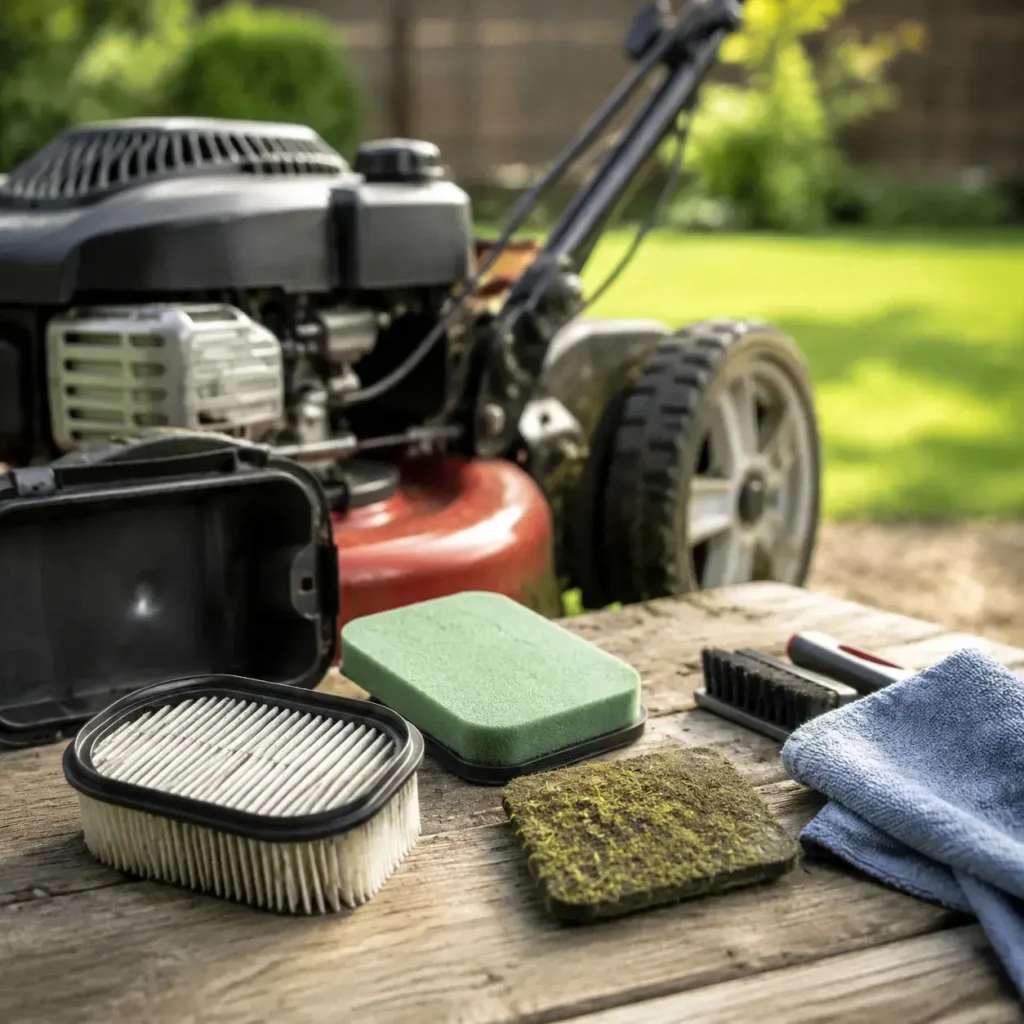
Keeping track of your filter condition is one of the easiest ways to protect your engine from premature wear. As an air filter manufacturer, we always emphasize that staying ahead of routine small engine maintenance prevents costly repairs and keeps your engine running smoothly.
Recommended Maintenance Schedule
How often you service your filter depends on operating hours and environmental conditions. Here is our recommended routine maintenance schedule:
- Before Every Use: Inspect the air filter housing for visible dirt, grass clippings, or loose oil.
- Every 25 Hours: Clean foam filters or the outer foam pre-filter on dual-element units.
- Every 50 to 100 Hours (or Annually): Replace the filter element completely with a fresh lawn mower air filter at the start of every mowing season.
Factors Affecting Air Filter Lifespan
Standard service intervals are a strong baseline, but local operating conditions can shorten your filter’s lifespan significantly:
- Dust and Dry Dirt: Cutting dry lawn beds or mowing through thick dust clouds forces micro-particles into paper filter fibers, clogging airflow much faster.
- Yard Size and Rough Terrain: Larger properties, overgrown brush, or sandy soil push far more debris into the intake system than well-kept suburban lawns.
- Filter Material: Washable foam filters can handle multiple clean-and-oil cycles, whereas a paper air filter must be swapped out once heavily soiled.
Frequently Asked Questions (FAQ)
Can You Run a Lawn Mower Without an Air Filter?
No, you should never operate your mower without one. Just as running an air conditioner without a filter invites dust and debris directly into the system, operating a small engine unfiltered allows dirt to get sucked straight into the carburetor and combustion chamber.
- Severe Engine Damage: A dirty air filter or missing filter allows grit to score the cylinder walls and ruin piston rings.
- Costly Repairs: Operating without protection drastically shortens your equipment’s lifespan and usually leads to complete engine failure.
Can You Use Compressed Air to Clean a Paper Filter?
We do not recommend using high-pressure compressed air on a paper air filter element.
- Microscopic Damage: High-pressure air blasts invisible holes through the delicate paper media, rendering it useless at stopping fine dust.
- Proper Alternative: Tap the paper filter gently against a flat surface to knock off loose debris. If it remains discolored or clogged, swap it out with a fresh replacement filter.
Does a Clean Air Filter Improve Engine Performance and Fuel Efficiency?
Yes, maintaining proper airflow is crucial for small engine maintenance and overall power output.
- Optimal Air-Fuel Ratio: A clean air filter allows your engine to breathe freely, balancing the fuel mixture inside the carburetor.
- Saved Fuel and Power: Replacing a clogged or dirty air filter restores full cutting power, reduces fuel consumption, and prevents rough idling or black exhaust smoke.