The Visual Inspection: What Does a Bad Air Filter Look Like?
Ever wonder if your filter is actually doing its job or just choking your system? As a manufacturer, we see firsthand how quickly a clean air supply turns into a choked hazard. Catching a bad air filter early saves your engine and your HVAC system from costly damage.
The Baseline: What a Clean Filter Looks Like
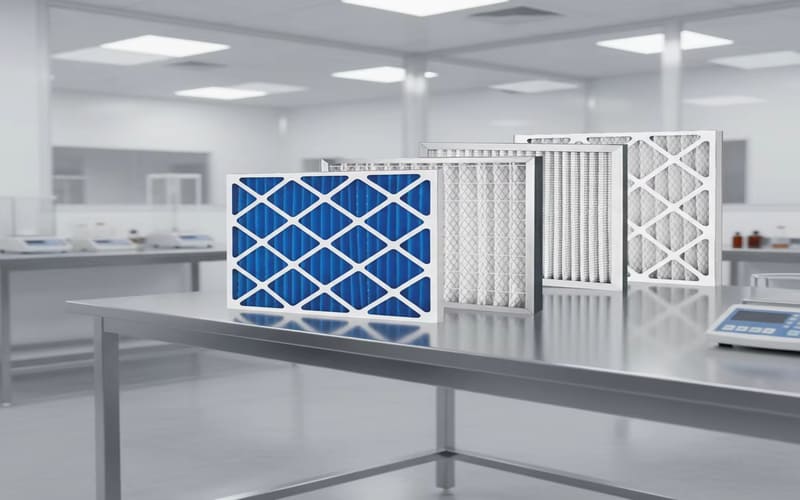
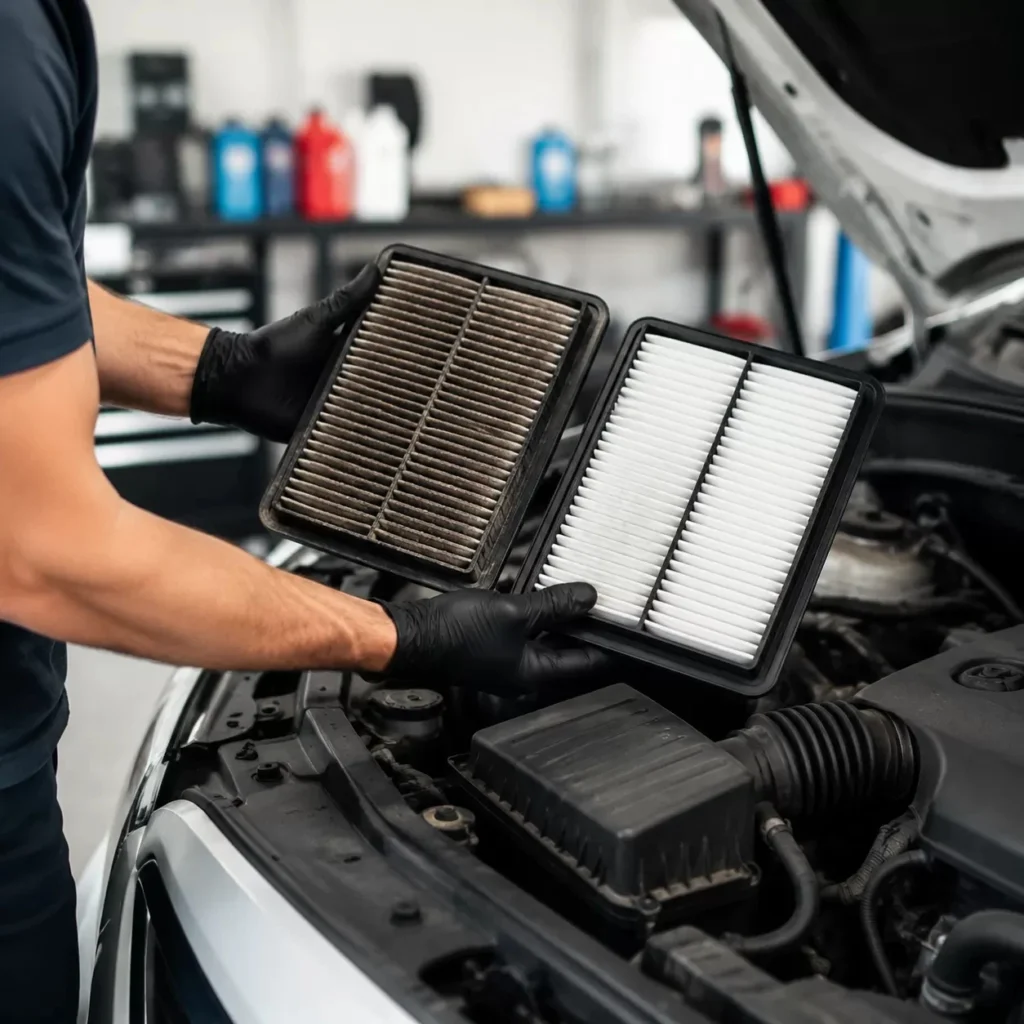
Before identifying the warning signs of a bad filter, you need a baseline. A brand-new engine air filter or HVAC filter features crisp, white or off-white clogged-free pleats. The sealing gasket is flexible, and the overall structure is perfectly straight to ensure optimal, reduced airflow-free performance.
The Tell-Tale Visual Signs of a Clogged Filter
When a filter goes bad, it doesn’t just look old—it fundamentally changes. Here is what to look for during automotive maintenance or home checks:
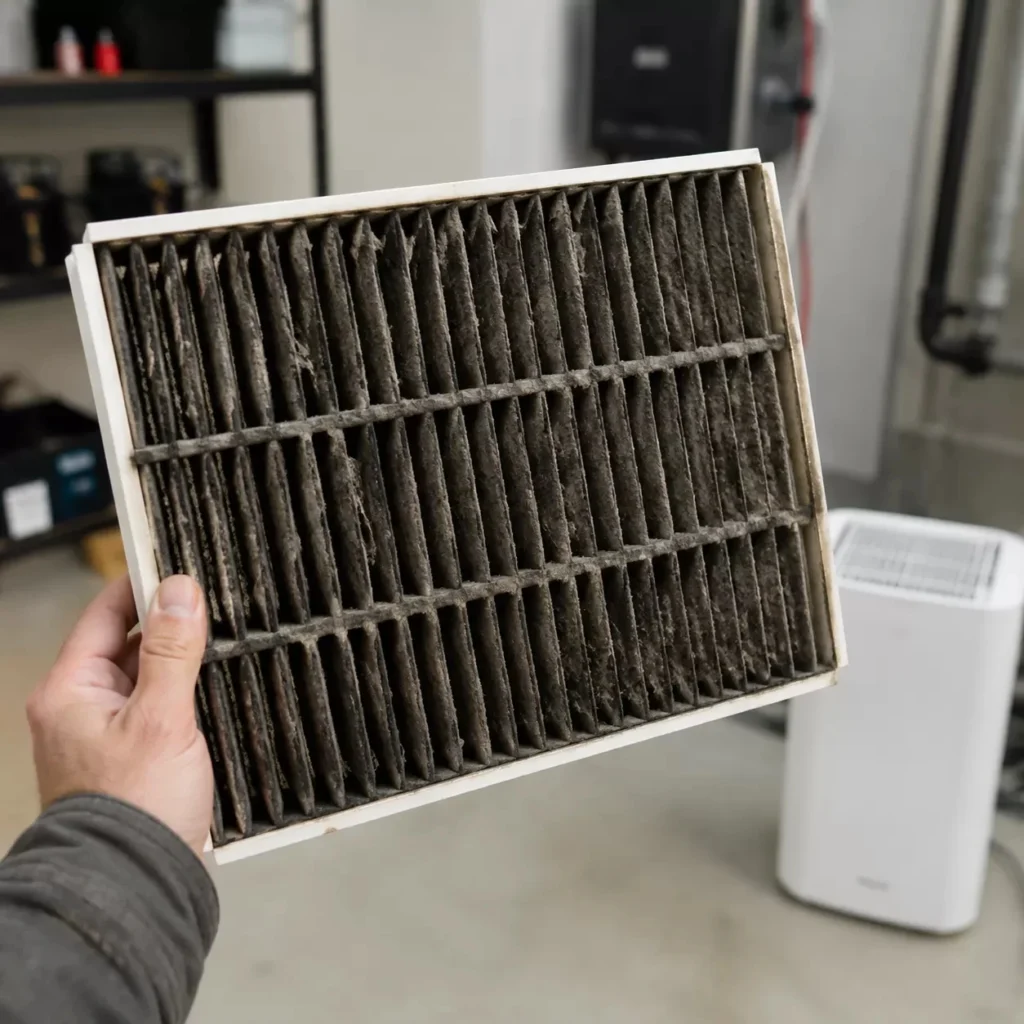
- Color Shifts: A dirty engine air filter loses its white hue quickly. Look for a dark gray or black appearance, or a dark brown appearance buried deep within the folds.
- Debris Accumulation: Check between the pleats. If you see visible dirt and debris, dead bugs, leaves, or a layer of heavy dust buildup, the filter is maxed out.
- Structural Damage: A failing filter will show wavy, collapsed, or tearing pleats. If the filter is warped, dirty air bypasses it entirely and heads straight into your engine combustion chamber or living space.
The HVAC Variant
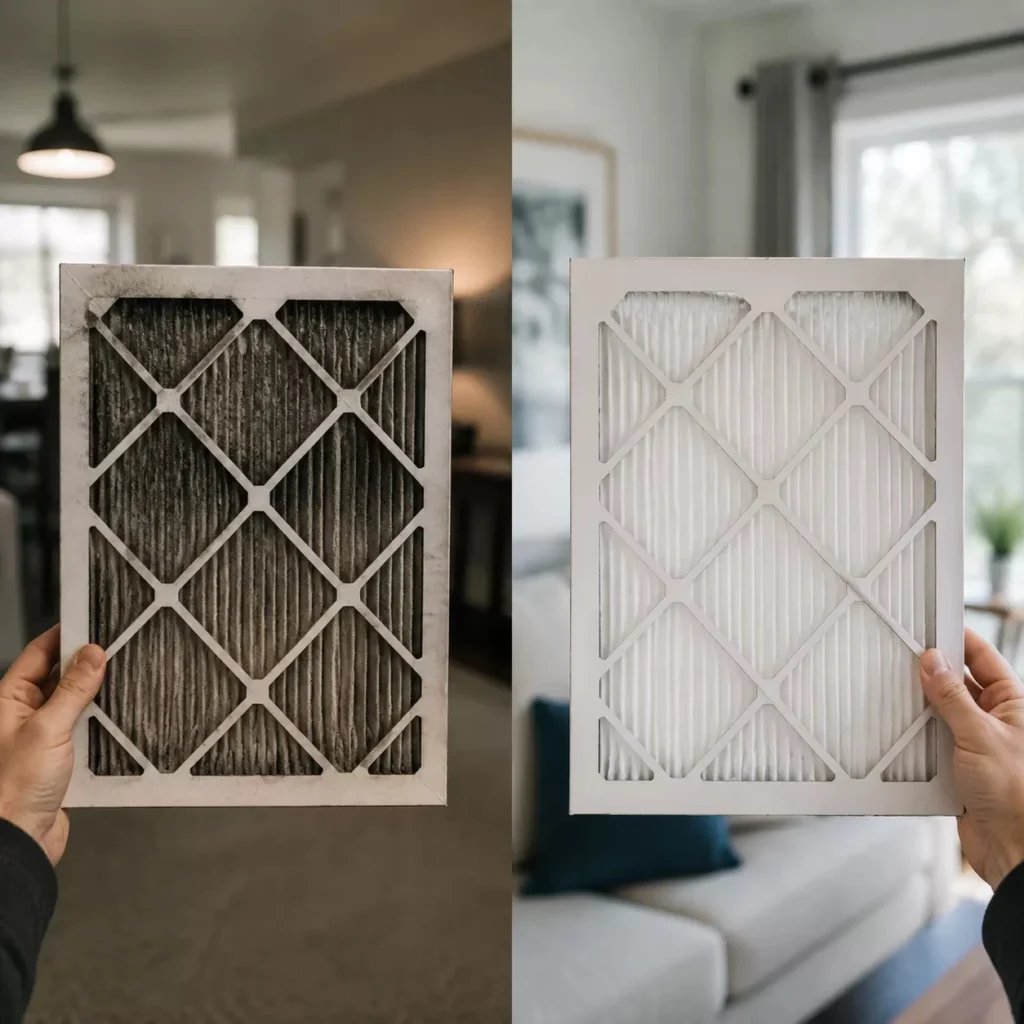
For home systems, HVAC filter signs look slightly different. Instead of road grime, look for a thick layer of matted lint, pet dander, and fine dust buildup blanketed across the surface. If the filter looks like a grey wool blanket, it is suffocating your system and dropping your airflow to dangerous levels.
| Filter State | Visual Appearance | Airflow Status |
|---|---|---|
| New / Clean | Bright white, straight pleats, no debris | 100% Unrestricted |
| Needs Replacement | Dark gray, clogged pleats, matted lint | Severely reduced airflow |
The 10-Second Diagnostic: The Light Test
You don’t need fancy diagnostic equipment to check the health of your air filter. As a manufacturer, our go-to quick check is the classic light test. It is the fastest, most reliable way to see if fine dust buildup and clogged pleats are choking your system, whether you are dealing with an engine intake or an HVAC filter.
Step-by-Step Instructions
- Remove the filter: Ensure your vehicle engine or HVAC system is completely turned off before removing the filter from its housing.
- Find a strong light source: Hold the filter up to a bright work light, a high-powered flashlight, or direct sunlight.
- Pass the light through: Shine the light directly through the back of the filter (the clean side) toward your eyes.
- Inspect the pleats: Look closely at the gaps between the folds to see how much light actually makes it through the material.
Interpreting Results
- Bright, consistent light: If the light shines through easily, your filter is clean and is maintaining proper airflow.
- Dim or blocked light: If the light is faint or completely blocked, you are looking at a dirty engine air filter or a clogged HVAC filter. Heavy dust buildup and matted lint are blocking the pathways.
When light can’t pass through, air can’t either. If your filter fails this simple test, it is time to replace your filter to restore peak performance and protect your machinery.
Beyond Looks: Performance Warning Signs of a Bad Air Filter
Sometimes you don’t even need to look at a filter to know it is failing. When a filter gets choked up, your machinery and systems will start screaming for help through clear performance drops. Whether it is your car engine or your home AC, a clogged filter suffocates the system, triggering noticeable warning signs.
Automotive/Engine Symptoms
A dirty engine air filter restricts the clean air supply required for proper combustion. When your engine is starved of oxygen, you will quickly notice a drop in drivability and efficiency.
- Sluggish Vehicle Acceleration: You step on the gas, but the car hesitates or feels powerless. Restricted airflow prevents the engine from getting the oxygen it needs to rev up efficiently.
- Misfires and Rough Idling: A poor air-to-fuel ratio means there is too much fuel and not enough air in the engine combustion chamber. This causes incomplete combustion, leading to spark plug fouling, engine vibrations, or a rough idle.
- The Check Engine Light: Modern vehicles use sensors to monitor airflow. When a clogged filter chokes the intake, it frequently triggers the dashboard check engine light.
HVAC System Symptoms
In a home or commercial building, a blocked HVAC filter restricts airflow, forcing the equipment to work twice as hard to move air through the property.
- Weak Airflow From Vents: If the air coming out of your registers feels like a gentle whisper instead of a strong breeze, a clogged filter is the likely culprit.
- Short Cycling: Because the system cannot breathe, heat builds up near the furnace coils (or ice forms on the AC coils). This forces the system to shut down prematurely and turn back on rapidly, causing massive wear and tear.
- Skyrocketing Energy Bills: When a system operates under constant strain, it consumes significantly more electricity to maintain your target temperature.
If you are noticing these system strains in your home heating or cooling setup, it is highly recommended to learn how to clean air conditioner filter units properly or swap them out entirely to prevent complete system failure.
Why You Shouldn’t Postpone Replacement
Leaving a dirty engine air filter or a clogged HVAC filter in place is a recipe for expensive repairs. As a manufacturer, we see firsthand how delaying basic automotive maintenance drags down your entire system’s efficiency.
The Cost of Neglect
When you ignore the warning signs of a bad filter, you pay for it at the pump and at the mechanic.
- Engine Strain: A choked filter disrupts the ideal air-to-fuel ratio inside the engine combustion chamber. This forces your engine to work harder, dropping your vehicle acceleration and wasting fuel.
- System Burnout: In your home or office, heavy dust buildup forces HVAC blowers to run constantly, leading to short-cycling and premature equipment failure.
- Compounded Expenses: A cheap, timely swap prevents the need to troubleshoot more severe issues, like uncovering why your air filter turns black due to environmental pollutants or mechanical malfunctions.
The Clean Air Advantage
Choosing to replace your air filter on time guarantees a clean air supply, optimal airflow, and peak performance. It keeps your machinery running smoothly, protects internal components from abrasive fine dust, and slashes your monthly energy and fuel utility bills immediately.
Maintenance Milestones: When to Replace Your Filter
Waiting for a filter to completely choke out your system is a costly mistake. As an established air filter manufacturer and supplier, we recommend sticking to a firm preventative schedule rather than waiting for catastrophic failure. Timely replacement keeps your machinery running efficiently and your indoor air clean.
Engine Air Filters
For standard automotive maintenance, a dirty engine air filter should typically be replaced every 12,000 to 15,000 miles. However, your driving environment dictates the true lifespan:
- Commuting & Highways: Stick to the standard 15,000-mile mark.
- Dusty, Rural, or Construction Zones: Inspect every 5,000 miles and replace immediately if you notice heavy dust buildup.
- Small Engine Equipment: For specialty gear, check specific guides like our breakdown on maintaining a lawn mower air filter to avoid engine choking.
HVAC Filters
Residential and commercial HVAC systems require regular attention to maintain proper air-to-fuel ratios in furnaces and optimal airflow in AC units.
| Environment Type | Recommended Replacement Interval |
|---|---|
| Vacation Homes / Single Occupant | Every 6 to 12 months |
| Standard Suburban Home | Every 90 days |
| Homes with Pets or Allergies | Every 30 to 60 days |
| Commercial Buildings (AHUs) | Every 3 to 6 months (Depending on MERV rating) |
Never let matted lint and fine dust compromise your system. Regular replacement protects your equipment, slashes utility bills, and ensures a constant clean air supply.