If you are trying to shield your home from seasonal allergies, persistent dust, or wildfire smoke, you have likely run into one specific recommendation over and over again: get a HEPA filter air purifier.
But what actually happens inside these machines? And is the hype justified?
Most people think of a pleated mechanical air filter as a simple net that catches passing dust. In reality, a True HEPA system relies on advanced physics to capture airborne particles as small as 0.3 microns with a staggering 99.97 percent efficiency. It is the gold standard for transforming poor indoor air quality into a safe breathing space.
Whether you are looking for portable air cleaners for your bedroom or trying to understand how these systems compare to a standard HVAC air filter, getting the right information is crucial for your health.
In this ultimate guide, we will break down exactly how High Efficiency Particulate Air technology works, what it can actually trap, and how Komtfil engineers these filters to deliver pristine, breathable air.
What is a HEPA Filter Air Purifier and How Does It Actually Work?
When it comes to safeguarding indoor air quality, you have likely heard about high-efficiency particulate air—better known as HEPA. As a specialized pleated mechanical air filter manufacturer, we design these systems to tackle the invisible threats lurking in your breathing space. But what is a HEPA filter air purifier exactly, and how does it clean your air so effectively?
At its core, a True HEPA filter is a dense mat of randomly arranged glass or synthetic fibers. Unlike simple screens that act like a sieve, this intricate, multi-layered maze forces air through twisting pathways to trap airborne particles without restricting airflow.
The 0.3 Microns Benchmark
The gold standard of any certified True HEPA filter is its ability to capture at least 99.97 percent of particles that are 0.3 microns in size. Why this specific number?
- The MPPS: 0.3 microns is known as the Most Penetrating Particle Size.
- The Sweet Spot: Particles larger than this are too bulky to dodge the fibers, while smaller particles move erratically enough to get caught easily.
- The Ultimate Test: Because 0.3 microns is the hardest size to trap, a filter’s efficiency at this benchmark guarantees it performs even better on both larger dust and microscopic particulate matter.
| Particle Size | Target Contaminants | Capture Efficiency |
|---|---|---|
| > 0.3 microns | Pollen, pet dander, large dust | > 99.97% |
| 0.3 microns | Smoke particles, heavy metallic dust | Exactly $99.97% |
| < 0.3 microns | Viruses, bacteria, ultrafine dust | > 99.97% |
The Three Core Mechanisms of Particle Capture
HEPA filters do not just wait for dust to run into them. They utilize three distinct physical principles to pull microscopic pollutants out of the air stream:
- Impaction: Large, heavy airborne particles travel in a straight line, fail to navigate the twists and turns of the fiber maze, and crash directly into the filter walls.
- Interception: Mid-sized particles follow the airflow around the fibers but pass just close enough for their edges to touch the synthetic matrix, sticking to it instantly.
- Diffusion: The smallest microscopic particles (like viruses and bacteria) are so light that they collide with gas molecules, moving in a chaotic zigzag pattern called Brownian motion. This erratic wandering slows them down and inevitably drives them right into a fiber.
What Can a True HEPA Filter Capture?
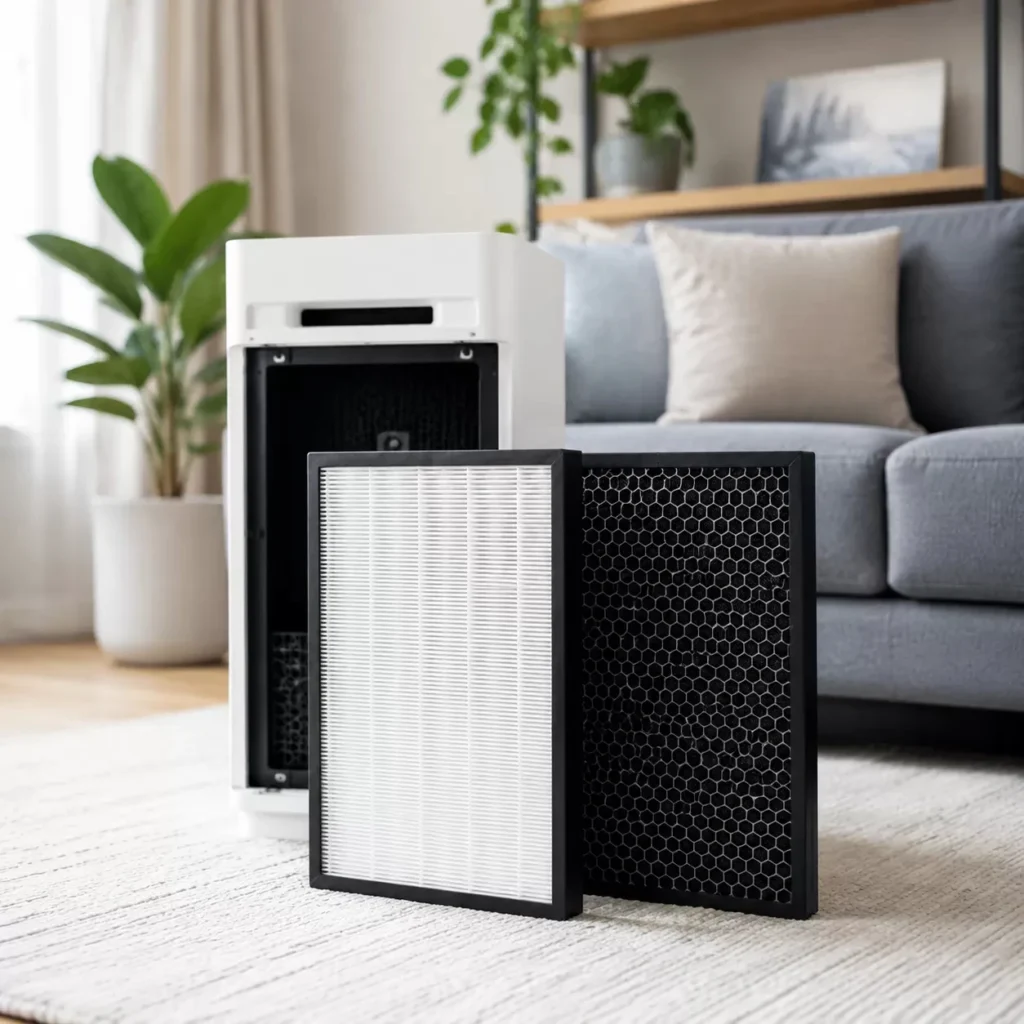
True HEPA filters are the gold standard for trapping airborne particles, but understanding their exact capabilities helps you get the most out of your air purification system.
Target Pollutants Removed by HEPA Filtration
A certified True HEPA filter removes 99.97% of particulate matter down to 0.3 microns, making it incredibly effective against a wide range of indoor air pollutants.
- Seasonal Allergens: Quickly traps pollen, dust mites, and mold spores to provide immediate allergy relief.
- Pet Dander: Captures microscopic skin flakes and hair shed by pets before they settle on surfaces.
- Wildfire Smoke and PM2.5: Filters out fine combustion particles, ash, and dangerous haze during high-smoke events.
- Biological Threat Factors: Snags airborne bacteria and viruses that hitch a ride on larger moisture droplets.
The Limitations: Why HEPA Alone Fails at Gas Filtration
While a standalone HEPA filter is a powerhouse for physical particles, it has a major blind spot: gases, odors, and chemical fumes. Because volatile organic compounds (VOCs), formaldehyde from furniture, cooking odors, and pet smells exist as individual molecules smaller than 0.3 microns, they pass right through the microscopic weave of a standard mechanical filter.
The Multi-Stage Solution: Particle and Gas Defense
To achieve true full-spectrum purification, we engineer multi-stage systems. By pairing our high-efficiency particulate media with an advanced carbon filter, we create a comprehensive shield for your indoor air quality. The HEPA layer locks down 99.97% of physical debris, while the activated carbon layer adsorbs the hazardous gases, toxic chemicals, and unpleasant odors that a standalone filter misses.
True HEPA vs. Other Filter Types: Making the Right Choice
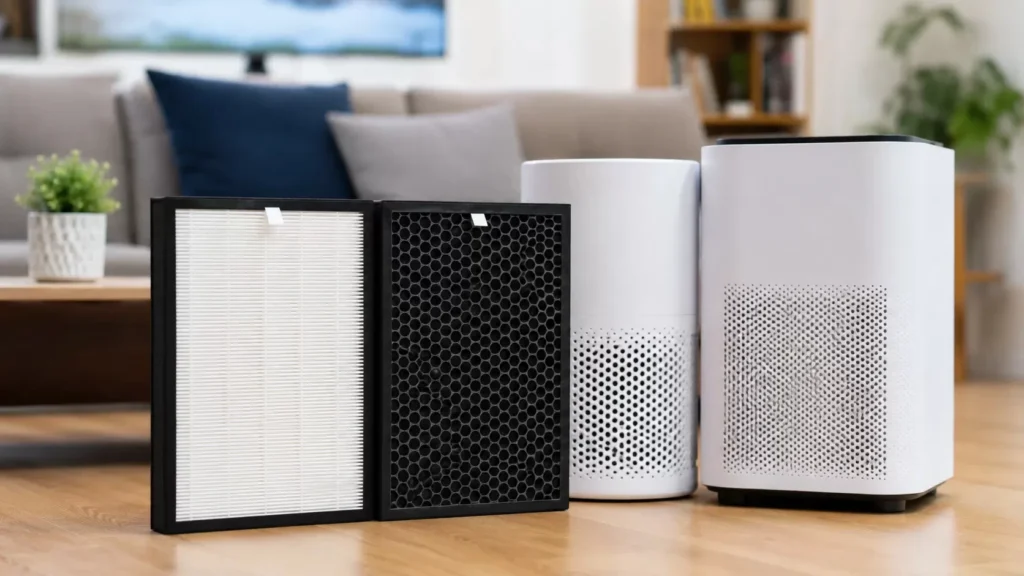
Choosing the right filtration system is the difference between breathing clean air and simply moving dust around. As a manufacturer, I see many consumers get tripped up by marketing jargon that sounds official but lacks the certification to back it up.
True HEPA vs. “HEPA-Type”
Don’t be fooled by labels like “HEPA-like” or “HEPA-type.” These are often used for filters that fail to meet the rigorous 99.97 percent efficiency standard. While they might look similar, their fiber density is lower, allowing a significant amount of particulate matter to pass right back into your room. Always look for the True HEPA designation to ensure you are getting a certified pleated mechanical air filter capable of stopping microscopic pollutants.
Mechanical Filtration vs. Electrostatic Air Purifiers
We prioritize mechanical filtration because it is reliable and safe. Electrostatic air purifiers use ionization to charge particles so they stick to metal plates or walls. However, this process can produce ozone, a lung irritant that actually degrades indoor air quality. A True HEPA filter uses physical mechanisms to trap contaminants without releasing harmful byproducts, making it the superior choice for bedrooms and nurseries.
Portable Air Cleaners vs. HVAC Air Filters
A common question is whether you should upgrade your central furnace filter or buy a standalone unit. While a high MERV rating filter for your furnace can help protect your equipment, most residential systems aren’t powerful enough to pull air through a thick HEPA media without causing motor strain.
| Feature | Portable Air Cleaners | Whole-House HVAC Filters |
|---|---|---|
| Filtration Level | True HEPA (99.97%) | Typically MERV 8-13 |
| Ozone Risk | None (Mechanical) | None (unless Ionized) |
| Best For | Targeted rooms, allergies, smoke | Protecting HVAC hardware |
| Mobility | High | Fixed |
If you are trying to decide between these setups, understanding the differences between air filters and air purifiers is essential. For most homes, portable air cleaners equipped with True HEPA are the most effective way to eliminate localized triggers like pet dander and wildfire smoke quickly.
The Importance of a Sealed System and Multi-Stage Filtration
The Bypass Problem in Air Purifiers
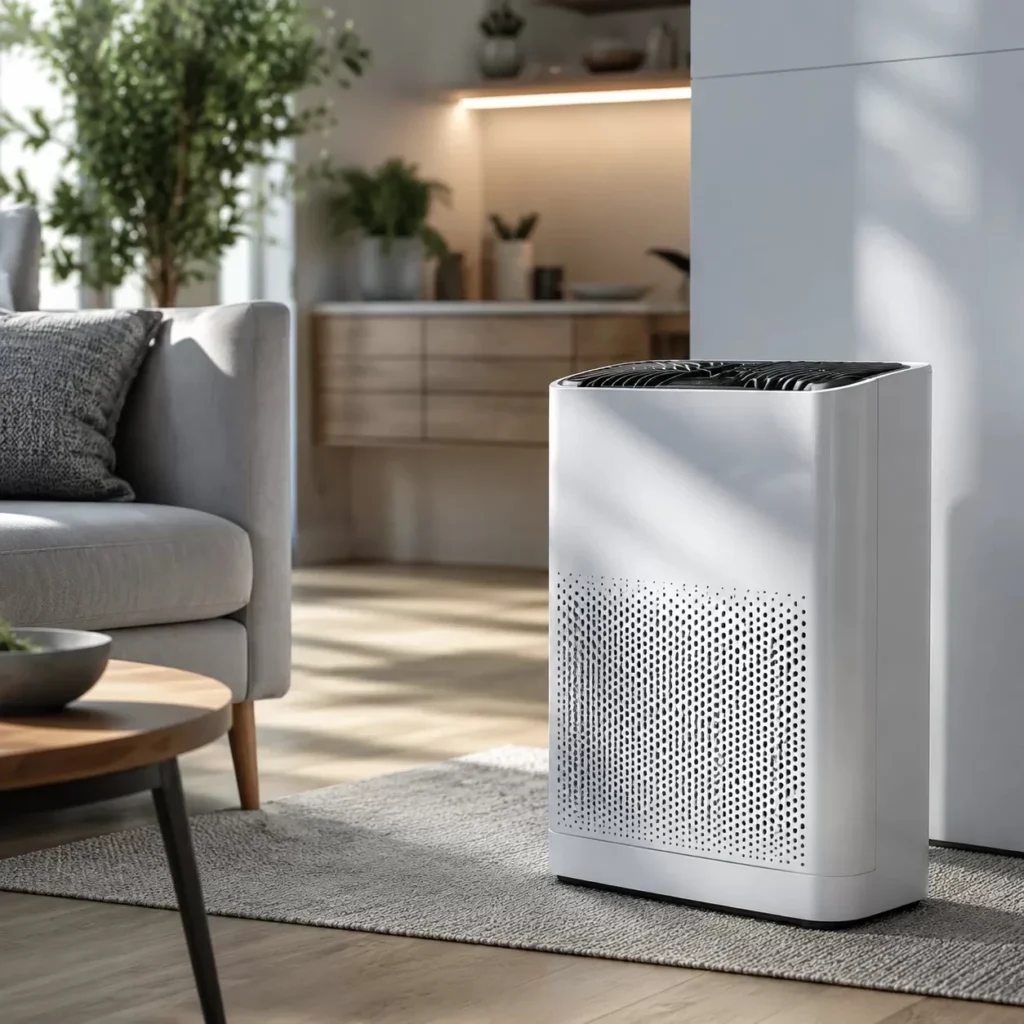
Even the highest-grade True HEPA filter is useless if the air can bypass it. In poorly designed portable air cleaners, unsealed gaps around the filter housing allow dirty air to escape back into the room without ever touching the filter media. This leakage defeats the purpose of buying a high-efficiency particulate air system, as airborne particles and particulate matter simply take the path of least resistance through the cracks.
The Pre-Filter: First Line of Defense
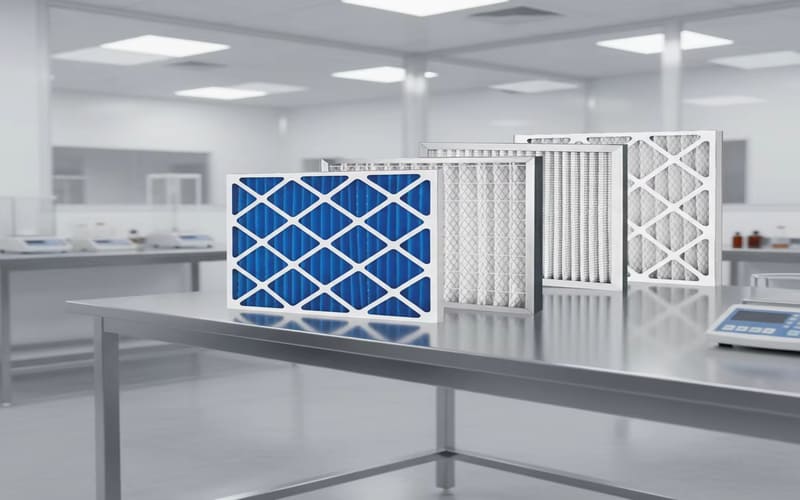
To get the most out of a pleated mechanical air filter, multi-stage filtration is non-negotiable. A dedicated pre-filter serves as the initial barrier, capturing large debris like pet hair, lint, and heavy dust clusters. By trapping these macro-pollutants early, it prevents premature clogging of the dense HEPA matrix. To maximize your system’s efficiency, knowing how to clean an air filter step-by-step to keep the pre-filter clear is essential for maintaining steady airflow and prolonging the life of the primary filter.
The Komtfil Advantage
At Komtfil, we engineer our replaceable filters with zero-tolerance rubber seals. Our tightly sealed filtration technology eliminates the bypass problem entirely. This commercial-grade design guarantees that 100% of the processed airflow is forced directly through the certified True HEPA media, delivering maximum protection for your indoor air quality.
Maintenance Guide: Maximizing the Lifespan of Your Filter
Knowing When to Replace Your HEPA Filter
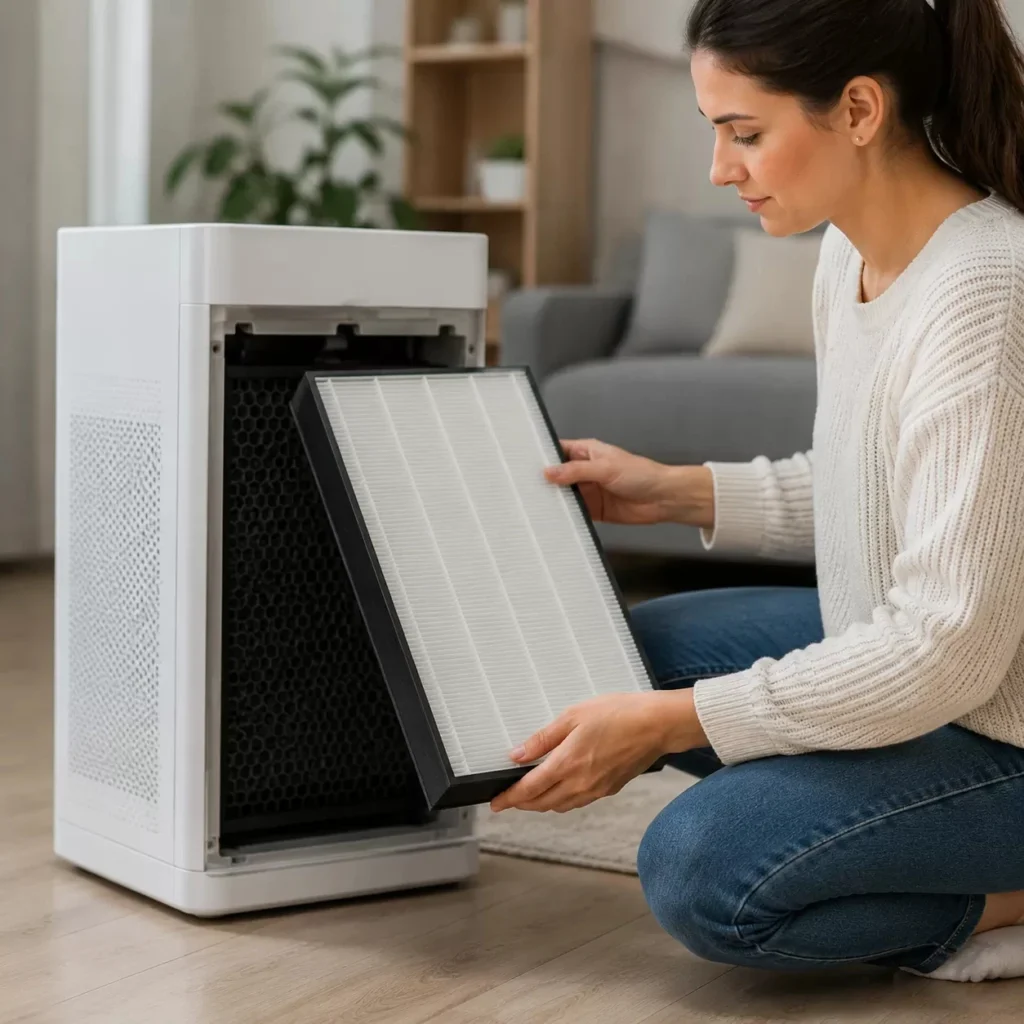
A high-efficiency particulate air filter does not work forever. Over time, airborne particles like pet dander, mold, and wildfire smoke clog the microscopic pathways. You can easily spot a saturated filter by checking for distinct visual signs and performance drops:
- Dark Discoloration: The filter media changes from bright white to a dark gray or brown.
- Reduced Airflow: Your portable air cleaners will blow less air, even on the highest setting.
- Lingering Odors: A stale, musty smell indicates the filter matrix is completely full.
- Increased Noise: The purifier motor works harder, creating a louder humming sound to push air through the blockages.
Can You Wash a HEPA Filter?
No, you should never wash a standard True HEPA filter. Unless a filter is explicitly labeled by the manufacturer as washable, exposing a pleated mechanical air filter to water will permanently ruin it. Washing destroys the randomly arranged fiber matrix, stretches the microscopic gaps, and completely eliminates the 99.97 percent efficiency standard against 0.3 micron particles. Once the structural integrity is compromised, dangerous particulate matter passes right through the machine and back into your room, severely lowering your indoor air quality. For a deeper breakdown of how different filter designs handle moisture and maintenance, read our guide on washable vs disposable air filters.
Best Practices for Replaceable Filters
To protect your indoor air quality and keep your system running efficiently, you must stick to a routine maintenance schedule. Proper care ensures optimal airflow and extends the life of your premium filter components.
| Component | Maintenance Action | Frequency |
|---|---|---|
| Pre-Filter | Vacuum or wash off heavy dust and hair | Every 2–4 weeks |
| True HEPA Filter | Complete replacement with new certified media | Every 6–12 months |
| HVAC Air Filter | Inspect and replace to prevent system strain | Every 3 months |
Always clear the dust off your pre-filter regularly. This simple step keeps heavy debris from choking the main filter, saving you money and keeping your air completely clean.
Frequently Asked Questions About HEPA Filter Air Purifiers
How long does a True HEPA filter last before replacement?
On average, a True HEPA filter lasts between 6 to 12 months in standard residential settings. However, the exact lifespan depends entirely on your indoor air quality and how often you run your portable air cleaners. If you live in an area prone to wildfire smoke, or if you share your home with multiple pets, you may need to replace the filter closer to the 6-month mark. To maximize the longevity of your main filter, we design our systems with a sacrificial pre-filter that captures large dust particles before they can clog the delicate pleated mechanical air filter matrix.
Do HEPA filters protect against viruses and bacteria?
Yes, high-efficiency particulate air filtration is highly effective at capturing airborne pathogens. While individual viruses can be smaller than 0.3 microns, they rarely travel alone; they typically bind to larger respiratory droplets and liquid aerosol particles when expelled into the air. Certified True HEPA media traps these moisture droplets with 99.97 percent efficiency. For a deeper look at how these filters compare to gas-phase filtration technologies, you can read our breakdown on HEPA vs. carbon filters to understand how different layers tackle different airborne threats.
Can a HEPA air purifier help with asthma and pet allergies?
| Allergen Type | How HEPA Helps | Expected Relief |
|---|---|---|
| Pet Dander | Traps microscopic skin flakes and dried saliva. | Significant reduction in sneezing and eye irritation. |
| Pollen & Mold | Captures seasonal outdoor spores that drift inside. | Fewer morning allergy flare-ups. |
| Dust Mites | Filters out waste particles and debris from fabrics. | Lowered frequency of nighttime asthma triggers. |
A dedicated room air purifier is one of the most effective tools for managing asthma and allergy symptoms. By continuously drawing in stagnant indoor air and pushing it through a sealed, high-efficiency filter, it rapidly strips out the microscopic particulate matter that triggers respiratory inflammation. For specialized commercial or residential setups, exploring custom panel HEPA filters can help you establish a reliable, clean-air zone that keeps chronic allergens at bay.