Understanding MERV Ratings (Minimum Efficiency Reporting Value)
When you are trying to upgrade your indoor air quality (IAQ), the first term you will run into is MERV. As a manufacturer of high-performance air filters, we know how confusing these industry terms can be for homeowners and building managers alike. Let’s break down exactly what this rating means for your air quality and your HVAC system.
What is a MERV Rating?
MERV stands for Minimum Efficiency Reporting Value. It is a standardized rating system that measures a filter’s ability to capture airborne particles. Created by ASHRAE, the MERV scale gives us a clear, universal metric to grade filtration efficiency. The higher the number, the tighter the filter weave, and the smaller the micron size it can successfully trap.
How MERV Filters Work
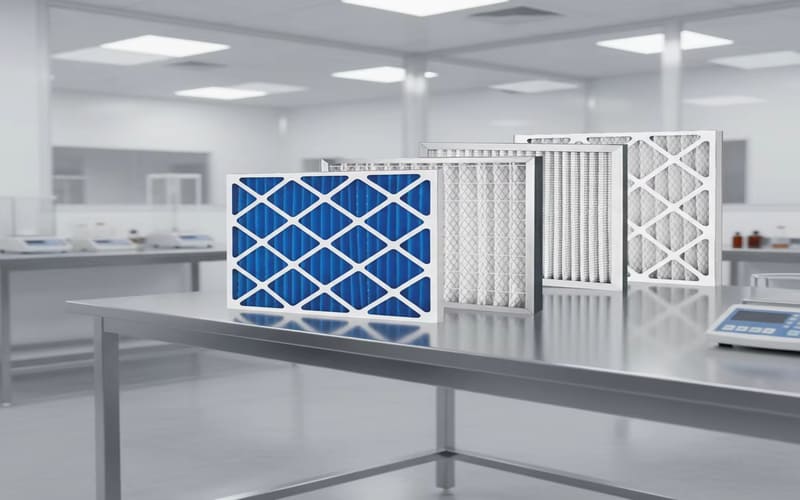
Most standard MERV filters are designed as pleated filters. By folding the filter media into pleats, we drastically increase the surface area available to catch dust, pollen, and pet dander. As air flows through your residential HVAC or commercial buildings, the filter captures particles via three main methods:
- Impaction: Large particles crash directly into the filter fibers.
- Interception: Mid-sized particles graze the fibers and get stuck.
- Diffusion: Tiny particles move erratically and eventually collide with the filter material.
The MERV Scale Breakdown
The MERV scale ranges from 1 to 16 for standard HVAC systems. Here is a quick breakdown of what different ratings actually capture:
| MERV Rating | Typical Target Particles | Common Applications |
|---|---|---|
| MERV 1–4 | Large dust mites, pollen, sanding dust | Basic residential window units |
| MERV 5–8 | Mold spores, pet dander, cement dust | Standard residential HVAC systems |
| MERV 9–12 | Lead dust, legume dust, auto emissions | Superior residential & commercial buildings |
| MERV 13–16 | Virus capture, smoke particles, bacteria | Hospitals, surgery centers, premium IAQ upgrades |
Why MERV 13 is the Industry Sweet Spot
If you are looking to protect your space from modern air quality threats, MERV 13 is the absolute sweet spot. It provides the perfect balance between high-level filtration efficiency and manageable airflow resistance.
- Advanced Protection: It is highly effective at virus capture, trapping microscopic airborne particles, wildfire smoke, and bacteria.
- System Friendly: Unlike specialized medical-grade filters, a well-engineered MERV 13 pleated filter delivers clean air without creating an excessive pressure drop that could strain your standard furnace blower motor.
Understanding HEPA Filters (High-Efficiency Particulate Air)
What is a True HEPA Filter?
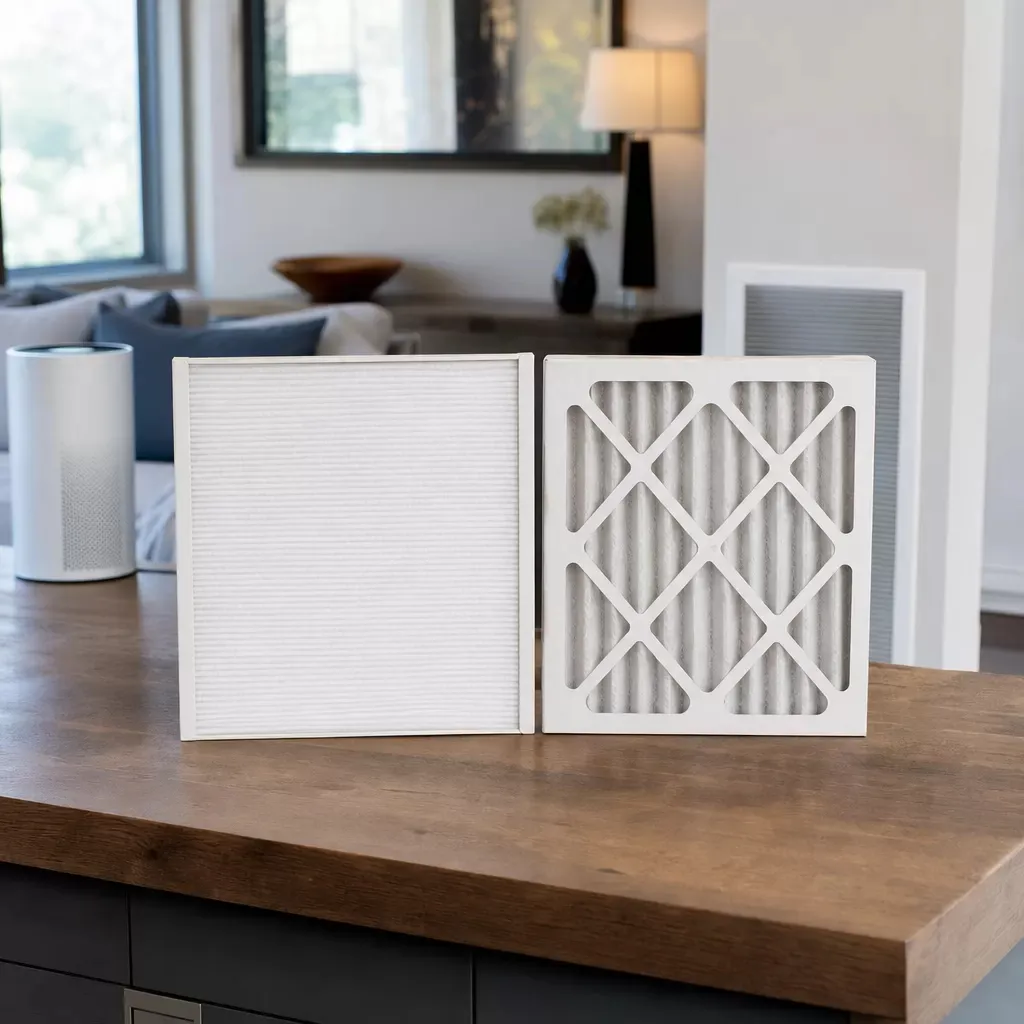
When we manufacture air purification solutions, a True HEPA filter represents the gold standard of filtration efficiency. To qualify as a True HEPA filter, the media must trap a staggering 99.97% of airborne particles as small as 0.3 microns. This includes microscopic threats that standard furnace filters simply cannot catch, such as bacteria, virus capture particles, and ultra-fine smoke particles.
The Science of HEPA Filtration
Unlike standard pleated filters that act like simple sieves, HEPA filtration relies on a complex web of randomly arranged fiberglass fibers. It forces airborne contaminants through three distinct physical mechanisms to achieve maximum particle removal:
- Interception: Larger particles, like pollen and dust mites, follow the airflow line and collide directly with the fibers, getting stuck instantly.
- Impaction: Mid-sized particles, including heavy pet dander and mold spores, cannot navigate the dense fiber matrix due to inertia. They crash straight into the fibers and are trapped.
- Diffusion: The smallest microscopic particles (under 0.1 microns, such as viruses) bounce around erratically in a zigzag motion called Brownian motion. This erratic path guarantees they eventually collide with a fiber and stick.
Where HEPA Shines
Because HEPA media creates significant airflow resistance, it is rarely used directly inside a standard residential HVAC system. Instead, HEPA shines in dedicated air purifiers, specialized medical facilities, and industrial cleanrooms.
For targeted areas or specialized equipment, we design high-efficiency mini-pleat HEPA filters to deliver maximum indoor air quality (IAQ) upgrades. These filters excel in environments that demand total control over allergens, wildfire smoke, and deep-level biological contaminants.
Side-by-Side Comparison: MERV vs. HEPA
When comparing MERV vs. HEPA filters, the main difference comes down to filtration efficiency and target particle size. While MERV filters are the standard for most central HVAC setups, True HEPA filters represent the ultimate tier for standalone air purification and specialized critical environments.
Filtration Efficiency Performance Breakdown
To understand how these options protect your indoor air quality, we can look at how they capture airborne particles across different micron sizes.
| Filter Type / Rating | Efficiency Rating (0.3–1.0 Microns) | Efficiency Rating (1.0–3.0 Microns) | Efficiency Rating (3.0–10.0 Microns) | Primary Target Pollutants |
|---|---|---|---|---|
| MERV 8 | < 20% | 20% – 49% | ≥ 70% | Dust mites, pollen, large dust particles, lint |
| MERV 11 | 20% – 34% | ≥ 65% | ≥ 85% | Pet dander, auto emissions, mold spores |
| MERV 13 | ≥ 50% | ≥ 85% | ≥ 90% | Bacteria, virus capture carrier droplets, smoke particles |
| True HEPA | ≥ 99.97% | ≥ 99.97% | ≥ 99.97% | Microscopic allergens, ultra-fine dust, viruses, smoke |
While high-efficiency pleated filters like a MERV 13 air filter do an excellent job capturing most residential HVAC contaminants, they allow a percentage of sub-micron particles to pass through. A True HEPA filter seals the gap completely, stopping 99.97% of even the smallest 0.3-micron particles. However, this extreme trapping power requires a massive trade-off in airflow resistance, which dictates where and how you can safely install them.
The Critical Factor: Airflow Resistance & Static Pressure
When upgrading furnace filters to improve indoor air quality, many homeowners overlook how a filter impacts the HVAC system itself. High-efficiency filtration involves a direct tradeoff with airflow resistance and static pressure. Understanding this balance is essential to protect equipment while maintaining clean air.
The Danger of “Too Dense” Filters
Thicker, more tightly woven filters trap smaller airborne particles, but they also act as a barrier to moving air. If a filter is too dense for the system’s blower motor, it restricts the volume of air passing through the ductwork. This restriction strains the entire setup, leading to reduced comfort, uneven temperatures, and potential system failure.
Understanding Pressure Drop
Pressure drop refers to the loss of air pressure as it forces its way through the pleated filters. Every HVAC system is engineered to handle a specific amount of resistance, measured as static pressure.
- Low Pressure Drop: Allows smooth, continuous airflow, keeping energy bills low.
- High Pressure Drop: Forces the blower motor to work twice as hard to push the same volume of air.
HVAC Compatibility Risks
Running a system with excessive static pressure introduces major operational risks:
- Overheating: Furnaces can overheat and trigger a safety shutoff.
- Coil Freezing: Air conditioners can experience frozen evaporator coils due to insufficient airflow. If this happens, you should check for restrictions immediately; however, never attempt to run the system completely empty. For a breakdown on these risks, see our guide on running an air conditioner without a filter.
- Motor Burnout: Blower motors running under constant strain fail prematurely, leading to expensive repairs.
Why Most Residential HVAC Systems Cannot Run Pure HEPA Filters
Standard residential HVAC systems are simply not built to handle the extreme airflow resistance of a True HEPA filter.
| Filter Type | Typical Resistance (Static Pressure) | Compatibility |
|---|---|---|
| Standard MERV 8-13 | Low to Moderate (0.15–0.30 in. w.g.) | Ideal for Residential HVAC |
| True HEPA Filter | Exceptionally High (1.0 in. w.g. or more) | Requires Commercial/Specialized Systems |
Because True HEPA media is designed for maximum particle removal down to the smallest micron size, its dense structure creates a massive pressure drop. Dropping a standard HEPA filter directly into a residential furnace slot will choke the airflow, spiking energy consumption and risking immediate system damage.
Application Guide: Which Filter Do You Need?
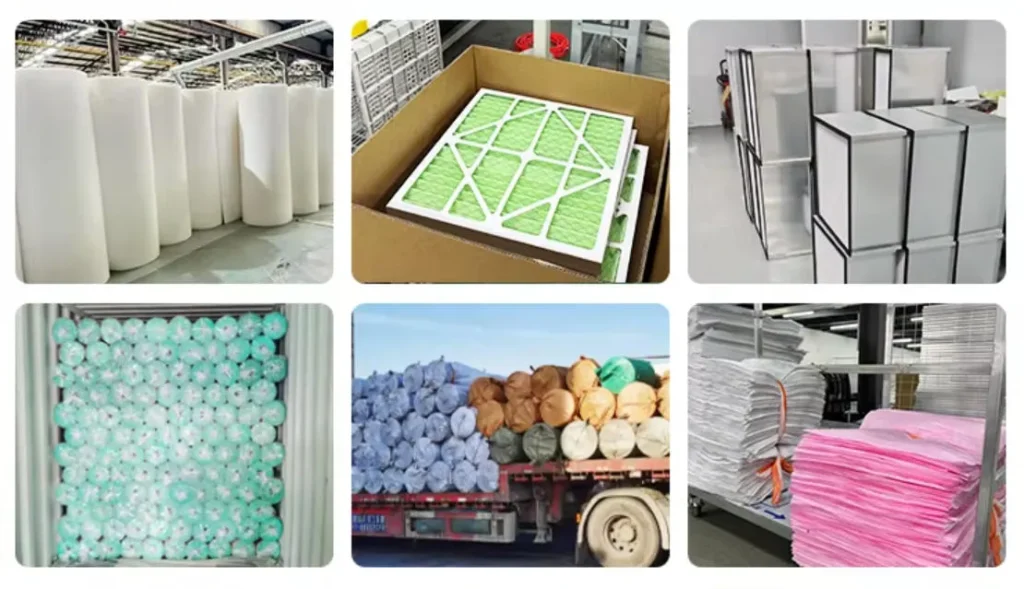
Choosing between MERV and HEPA filters isn’t about finding the “best” overall filter—it is about finding the right match for your specific system capability and air quality goals. As a manufacturer, we see many property owners make the mistake of over-filtering, which accidentally damages their equipment.
Here is how to choose the right setup for your space, or you can check out our comprehensive guide on which MERV rating filter you should use for a deeper dive into residential systems.
| Feature / Needs | MERV Filters (Up to MERV 13) | True HEPA Filters |
|---|---|---|
| Primary Use Case | Standard home HVAC & commercial buildings | Air purifiers, hospitals, & cleanrooms |
| Target Particles | Dust, pollen, pet dander, mold spores | Bacteria, viruses, smoke, ultra-fine dust |
| System Compatibility | Fits standard furnace and AC filter slots | Requires dedicated, high-pressure equipment |
| Airflow Impact | Low to moderate resistance | Extremely high static pressure resistance |
When to Choose MERV Filters
Standard pleated MERV filters are the backbone of everyday indoor air quality (IAQ). You should stick with a MERV filter if:
- You are filtering a standard residential HVAC system or furnace.
- Your main goals are removing common allergens like dust mites, pollen, and pet dander.
- You want to protect your HVAC components from dust buildup without restricting airflow.
- You opt for a MERV 13 filter to get the maximum possible balance of virus capture and system safety without overloading your blower motor.
When to Choose HEPA Filters
True HEPA filters are specialized tools designed for critical contamination control. Choose HEPA filtration if:
- You are running standalone air purifiers or localized clean air stations.
- High-risk occupants need strict protection against ultra-fine airborne particles, smoke particles, and pathogens.
- You operate commercial medical facilities, laboratories, or industrial manufacturing spaces designed to handle extreme resistance.
The “Hybrid” Defensive Strategy
For the ultimate clean air setup in homes and offices, we highly recommend a hybrid approach.
Don’t force a standard HVAC system to breathe through a dense HEPA filter. Instead, install a high-quality MERV 13 pleated filter in your central furnace or AC unit to capture the bulk of daily dust and allergens. Then, deploy standalone True HEPA air purifiers in high-traffic rooms or bedrooms to scrub out the microscopic viruses and smoke. This multi-layered strategy gives you medical-grade filtration efficiency without risking a system breakdown.
Maintenance & Best Practices
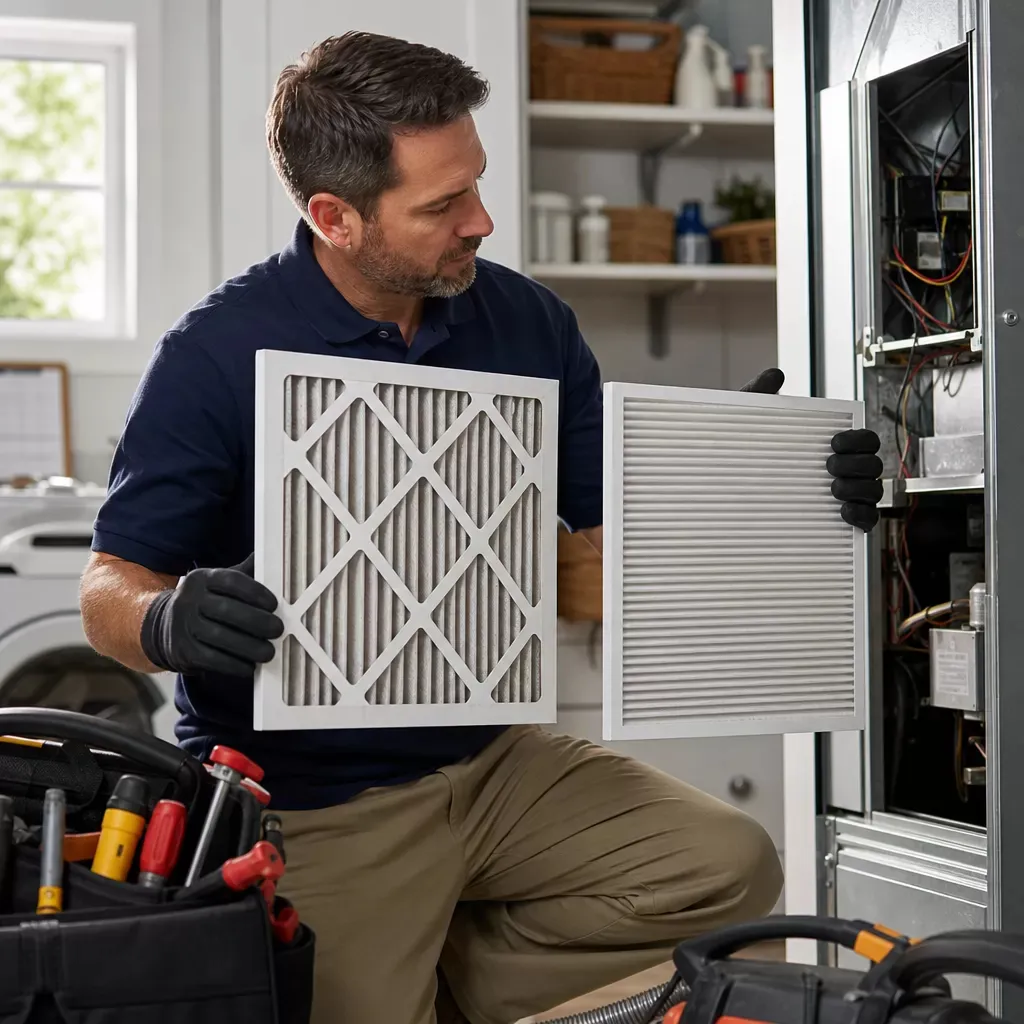
Keeping your indoor air quality at its peak requires more than just buying the right filter. Regular maintenance ensures your HVAC system runs efficiently while preventing airborne particles from bypassing your filtration setup.
Replacement Timelines
Filter lifespans depend heavily on the filter type, thickness, and your environment. Standard pleated filters used in residential HVAC systems typically need replacement every 2 to 3 months. However, if you have pets or suffer from severe allergies, changing them every 30 to 60 days is ideal.
For heavy-duty systems or commercial buildings using thick MERV 13 media filters, replacement intervals can extend from 6 to 12 months. True HEPA filters in dedicated air purifiers generally last 1 to 2 years, though pre-filters must be cleaned or replaced more frequently to maintain optimal airflow.
Sizing and Sealing
A filter can only capture dust mites, pollen, and mold spores if air actually passes through it. Choosing the correct furnace filters requires checking the exact nominal and actual dimensions printed on your current filter slot.
- Avoid Gaps: Even a quarter-inch gap allows unfiltered air to bypass the media, lowering your overall filtration efficiency.
- Check the Seal: Ensure the filter fits snugly within the housing cabinet. Use weatherstripping or foam tape if necessary to create an airtight seal.
- Directional Airflow: Always install the filter with the arrows pointing toward the blower motor to prevent excessive airflow resistance and structural damage to the pleats.
Frequently Asked Questions (FAQs)
Can I put a HEPA filter in my standard home HVAC system?
No, you should not install a True HEPA filter directly into a standard residential HVAC system. Standard furnace blowers are not designed to handle the extreme airflow resistance created by the dense material of a HEPA filter. Doing so severely restricts airflow, chokes your system, and can lead to a cracked heat exchanger or a frozen AC coil. For standard systems, it is much safer to upgrade to high-efficiency pleated filters like MERV 12 filters to improve indoor air quality without risking equipment damage.
Is MERV 13 enough to protect against viruses and wildfire smoke?
Yes, a MERV 13 filter is highly effective as a primary defense line. It captures up to 84% of airborne particles in the 0.3 to 1.0 micron size range, which includes smoke particles, virus carriers, and fine bacteria. While it does not offer the 99.97% total particle removal of a HEPA filter, MERV 13 provides the optimal balance of filtration efficiency and healthy static pressure for modern home and commercial HVAC systems during wildfire seasons.
How often should I change my MERV vs. HEPA filters?
Filter replacement timelines depend entirely on the thickness and the specific environment:
- Standard MERV Filters (1-inch to 2-inch): Change every 60 to 90 days.
- Deep-Pleated MERV Filters (4-inch to 5-inch): Change every 6 to 9 months.
- True HEPA Filters (In dedicated air purifiers): Change every 6 to 12 months, though the accompanying carbon pre-filters should be swapped every 3 to 6 months.
Will a higher MERV rating burn out my furnace blower motor?
It can if your system is not rated for it. Moving from a cheap fiberglass filter to an extremely restrictive MERV 14 filter or higher creates a massive pressure drop. The blower motor has to work twice as hard to pull air through the dense pleats, causing it to overheat and eventually burn out. Always check your HVAC manufacturer’s maximum static pressure limit before upgrading to higher filter ratings.