Can I Use a Shop Vac Without a Filter?
The Direct Answer for Quick Cleanup
The short answer is yes, but only under specific conditions. Running a wet-dry vacuum without a filter is perfectly safe when you are sucking up water or large, heavy debris. However, if you are cleaning up fine dust, sawdust, or drywall debris, removing the filter is a major mistake. Doing so will immediately blow those tiny particles right back into your room through the exhaust air, ruining your air quality and potentially causing permanent motor damage.
Understanding the Core Purpose of Your Shop Vac Filter
A shop vac filter serves as the primary line of defense for your vacuum’s engine. As a leading manufacturer of high-performance vacuum cleaner accessories, we design these filters to trap everything from coarse wood shavings to microscopic airborne particles.
- Motor Protection: The filter blocks debris from entering the vacuum motor assembly, preventing overheating and mechanical failure.
- Air Filtration: It ensures that the air pushed out of the exhaust is clean, keeping your workshop, garage, or job site safe to breathe.
- Suction Maintenance: High-quality cartridge filter options and a paper filter bag work together to maintain optimal suction power by preventing debris clogs.
| Cleanup Type | Filter Required? | Recommended Filter Type |
|---|---|---|
| Liquid Cleanup / Sucking up Water | No | Foam sleeve only (removes ridges) |
| Coarse Debris (Wood chips, gravel) | Optional | Standard cartridge filter |
| Fine Dust (Drywall, soot, ash) | Yes (Strictly Required) | HEPA Cartridge + Paper filter bag |
When It Is Safe to Run a Shop Vac Without a Filter
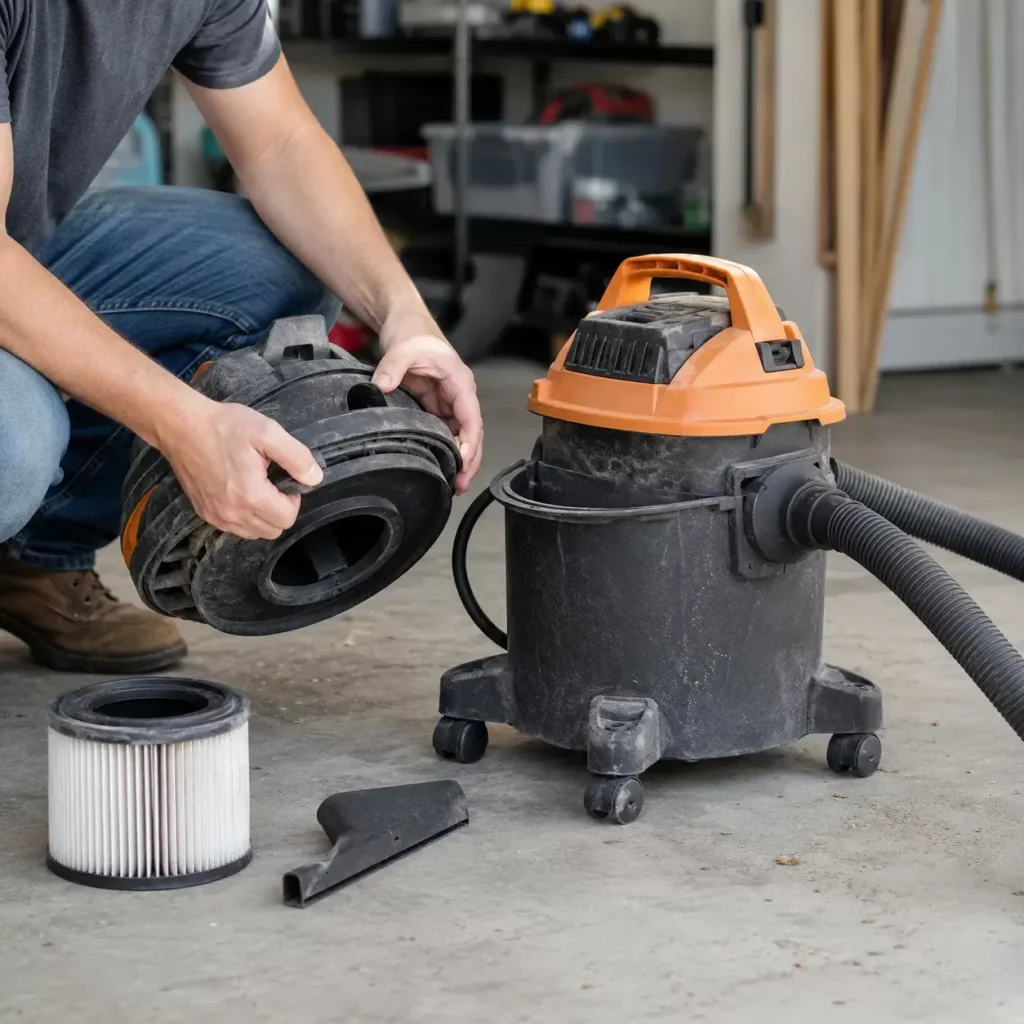
While keeping a filter inside your wet dry vacuum is the standard rule of thumb, there are specific situations where removing it is not just safe—it is actually the right way to operate the machine. Running without a filter is all about matching the cleanup job to the right physical environment.
Picking Up Large Debris and Wood Shavings
When you are cleaning up a messy workshop filled with large wood shavings, heavy gravel, or chunky debris, you can safely remove the cartridge filter.
- Why it works: Massive chunks of debris are too heavy to be airborne and bypass the motor housing. They drop straight to the bottom of the canister.
- The benefit: Removing the filter prevents bulky wood chips from instantly clogging the pleats, maintaining maximum suction power throughout your heavy-duty cleanup.
Note: Only do this if the debris is completely free of fine dust. If your wood shavings are mixed with fine sawdust or drywall dust, you must keep the filter in to protect the vacuum motor.
Sucking Up Water and Wet Spills
For liquid cleanup, taking out your standard paper filter bag or cartridge filter is highly recommended.
- Preventing filter damage: Sucking up water through a standard paper filter will instantly ruin it, causing the material to tear, clog, and harbor mold.
- Optimal workflow: When clearing flooded floors, blocked sinks, or large wet spills, remove the dry filter entirely to maximize airflow.
- Pro-Tip: For the best results and to protect the internal float valve from floating debris, switch to a dedicated foam sleeve designed specifically for wet pickups.
The Hidden Risks of Operating a Shop Vac Without a Filter
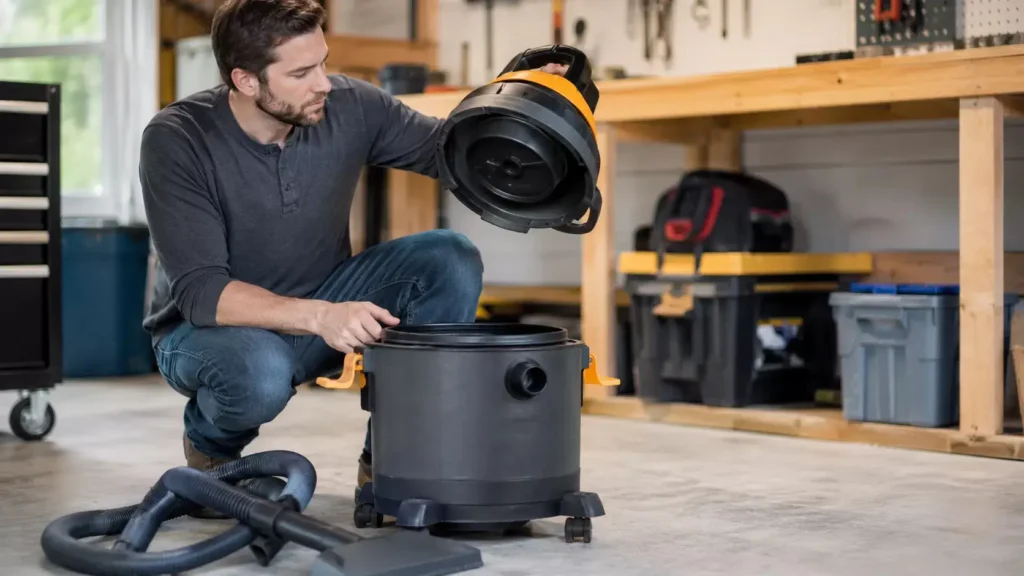
Skipping the filter might seem like a quick shortcut, but running a wet-dry vacuum completely bare during dry cleanups comes with serious consequences. Doing this risks ruining the machine and polluting the workspace.
Potential Damage to the Vacuum Motor
The primary danger of running a shop vac without a filter is immediate motor damage. When there is no barrier, fine dust and abrasive debris are sucked directly into the motor housing. These tiny particles build up on the moving parts, causing friction, overheating, and eventual motor failure. For heavy-duty setups or industrial environments, using a dedicated dust collector filter is the only way to prevent airborne grit from destroying the mechanical components.
Blowing Dust and Allergens Back into the Air
Without a filter to trap small particles, a shop vac essentially becomes a dust blower. The vacuum sucks debris off the floor and blasts the fine dust straight out of the exhaust air port. This ruins the local air quality, spreading drywall dust and allergens all over the room. Instead of cleaning, the vacuum ends up recirculating harmful particles that are hazardous to breathe.
Voiding Your Manufacturer’s Warranty
Operating a wet-dry vacuum incorrectly is a fast track to voiding the manufacturer’s warranty. Most brands explicitly state that operating the unit without the proper vacuum cleaner accessories—specifically the cartridge filter during dry use—misuses the machine. If the motor burns out because it choked on debris, the manufacturer will not cover the replacement costs.
How to Properly Configure Your Vac for Wet vs. Dry Use
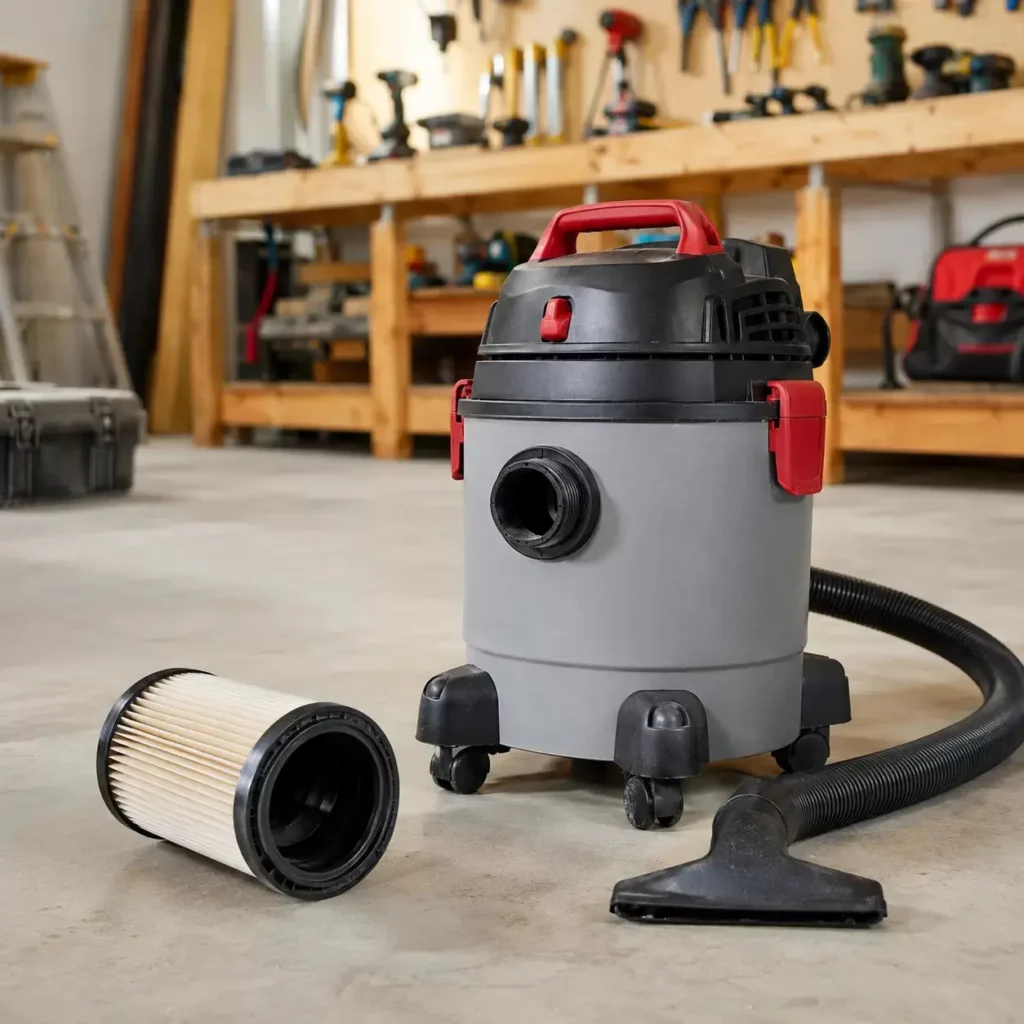
Getting the most out of your wet-dry vacuum comes down to setup. If you mix up the configuration, you risk ruining your motor or creating a dusty mess in your workspace.
When to Use a Cartridge Filter and Dust Bag Together
For everyday dry cleanups, maximum filtration is your best friend. Combining a cartridge filter with a high-quality paper filter bag offers the ultimate defense against fine dust.
- Drywall Dust and Ash: These tiny particles easily pass through standard filters. A dual-defense setup traps them completely.
- Easier Disposal: The dust bag collects the bulk of the debris, keeping your main filter clean and extending its lifespan.
- Saves the Motor: Double filtration ensures zero airborne debris slips into the motor housing.
If you regularly handle heavy-duty debris cleanups, investing in heavy-duty bag filters is the smartest way to protect your equipment and keep your air clean.
Switching to a Foam Sleeve for Wet Pickups
When it is time for liquid cleanup, you must change your setup. Standard paper filters degrade and clog instantly when exposed to water.
- Remove the Dry Filter and Bag: Take out the cartridge filter and any paper collection bags completely.
- Slide on the Foam Sleeve: Install a dedicated foam sleeve over the filter cage. This sleeve stops large debris in the water from entering the pump mechanism while letting the liquid pass safely.
- Monitor the Float Valve: The internal float mechanism will rise as the tank fills, automatically cutting off suction power when full to prevent overflow.
Maintaining Your Vacuum for Maximum Suction and Longevity
Regular upkeep ensures your Ridgid shop vac or any other brand maintains peak performance for years.
| Maintenance Task | Frequency | Benefits |
|---|---|---|
| Tap out dry filters | After every heavy use | Restores airflow and suction power |
| Wash the foam sleeve | After every wet cleanup | Prevents mold, mildew, and foul odors |
| Check the exhaust air path | Monthly | Prevents overheating and motor damage |
| Inspect tank seals | Bi-annually | Ensures a tight vacuum seal with no suction loss |
Improvised Filters and Frequently Asked Questions
Can You Use a Sock or Cloth as a Temporary Filter?
Using a sock, t-shirt, or cloth as a temporary wet-dry vacuum filter is a bad idea. While it might seem like a quick fix to stop large particles, these household fabrics do not have the right material density to trap fine dust. They will restrict airflow, cause overheating, and strain the vacuum motor. Even worse, tiny debris will pass right through the cloth and shoot straight into your indoor air. For proper air quality and safety, always stick to certified washable vs disposable air filters designed specifically for vacuum filtration.
What Happens If You Run a Shop Vac Without a Bag?
Running a shop vac without a paper filter bag is perfectly fine for large debris, but it creates a massive mess with fine dust. Without a bag, materials like drywall dust, ash, and sawdust will coat the inside of your tank, clog your primary cartridge filter instantly, and kill your suction power. If you bypass both the bag and the filter, that fine dust will blow right through the exhaust air, ruining your room’s air quality and potentially causing permanent motor damage.
How Do You Know When to Replace Your Shop Vac Filter?
Knowing when to swap out your filter keeps your machine running at peak performance. Replace your shop vac filter immediately if you notice these warning signs:
- Loss of Suction Power: Your vacuum isn’t picking up debris as it used to, even after shaking off the dust.
- Dust Exhaust: You see visible clouds of blowing dust coming out of the exhaust port during use.
- Physical Damage: The paper pleats are torn, the rubber seals are cracked, or the foam sleeve is crumbling.
- Persistent Odors: The filter smells musty or burnt, indicating deep clogs or mold growth from previous liquid cleanups.