Phase 1: Sensory Signs & Structural Red Flags (The Visual Walkthrough)
Before unboxing an indoor air quality monitor or buying a specialized air quality test kit, we always tell our clients to look at the immediate environment. Your home and your body constantly drop hints that the air is compromised. A visual and sensory walkthrough is the fastest way to spot early warning signs before deploying advanced air sensors.
Physical Symptoms as Biological Indicators
Your body often reacts to poor IAQ long before mechanical sensors trigger an alarm. If you or your family experience sudden, unexplained health shifts when entering a specific room, it is time to pay attention.
- Respiratory Irritation: Frequent sneezing, coughing, or a dry throat that mysteriously clears up when you leave the house.
- Sinus Flare-ups: Chronic congestion, headaches, or runny noses that align with seasonal HVAC usage.
- Eye and Skin Irritation: Dry, itchy eyes or sudden skin rashes often triggered by airborne irritants.
The Ambient Environment
The general atmosphere of a room tells a distinct story. Stagnant air and lingering smells are classic indicators that your ventilation is failing to cycle out everyday pollutants.
- Persistent Odors: Musty smells, chemical fumes from new furniture, or cooking odors that trap themselves in the living space for days.
- Stuffy, Heavy Air: A noticeable lack of airflow, which usually points to a dangerous buildup of CO2 (carbon dioxide).
- Accumulated Dust: Thick layers of dust settle on surfaces shortly after cleaning, signaling high levels of airborne particulate matter.
Moisture & Structural Indicators
Excess moisture is the primary breeding ground for biological hazards. Structural red flags are clear signals that your building envelope is trapping harmful elements.
| Structural Red Flag | Potential IAQ Threat | Immediate Action |
|---|---|---|
| Visible Mold or Mildew | Spores causing severe mold contamination | Wipe down with cleaner and drop humidity levels immediately. |
| Condensation on Windows | High indoor humidity and poor air exchange | Increase ventilation and check for localized leaks. |
| Peeling Paint or Wallpaper | Hidden moisture pockets inside walls | Hidden moisture pockets inside the walls |
Phase 2: What You Are Actually Testing For (The Invisible Targets)
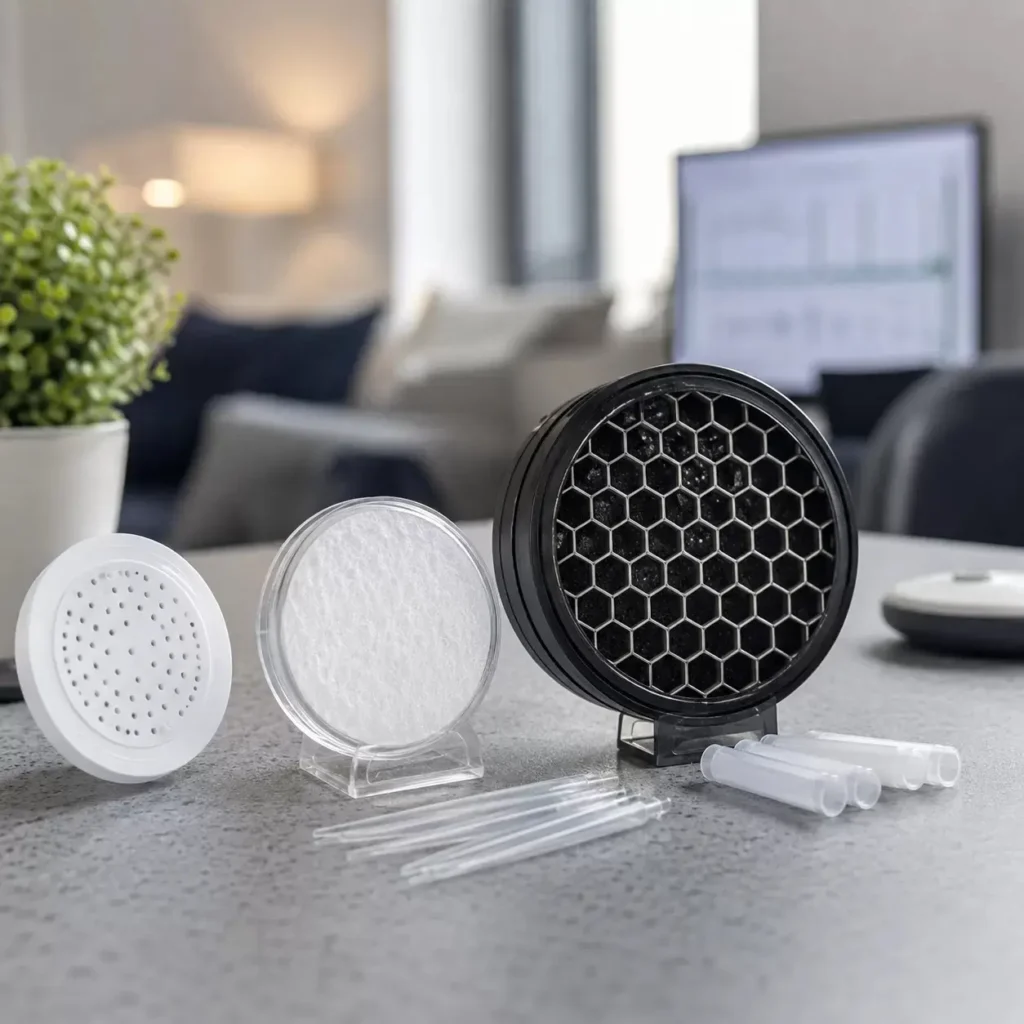
To effectively improve your indoor air quality, you must first identify the invisible, airborne threats lurking in your living space. Broadly speaking, we categorize these threats into particulate matter, chemical vapors, gases, and natural geological hazards.
Particulate Matter (PM2.5 and PM10)
Particulate matter refers to microscopic solids or liquid droplets suspended in the air.
- PM10 (Coarse Particles): Includes dust, pollen, and mold spores. These irritate your eyes, nose, and throat.
- PM2.5 (Fine Particles): Derived from combustion, smoke, and cooking. These particles bypass your body’s natural filters, embedding deep into the lungs and entering the bloodstream.
Consistently high PM2.5 levels often point to inefficient filtration, meaning it might be time to investigate what is the best air filter for your specific HVAC system to capture these microscopic irritants.
Chemical Off-Gassing & Volatile Organic Compounds (VOCs)
Volatile organic compounds (VOCs) are carbon-based chemicals that evaporate at room temperature. Common culprits include:
- Formaldehyde: Found in pressed-wood furniture, carpets, and glues.
- Household Cleaners: Solvents, paints, and disinfectants that release harsh chemical vapors.
- New Building Materials: The classic “new house smell” is actually the mass off-gassing of synthetic materials.
Gaseous Household Toxins
Beyond particulates and chemicals, colorless and odorless gases pose severe daily health risks:
- Carbon Monoxide (CO): A lethal byproduct of malfunctioning gas appliances, furnaces, or attached garages.
- Carbon Dioxide (CO2): A direct indicator of poor ventilation. High CO2 levels cause drowsiness, headaches, and cognitive decline.
Environmental Baselines
Your immediate indoor climate directly dictates how toxins behave. Monitoring your environmental baselines is crucial:
- Relative Humidity: Maintaining levels between 30% and 50% is critical. High humidity triggers rapid mold propagation and dust mite growth.
- Temperature: Elevated temperatures accelerate the off-gassing rate of VOCs and formaldehyde from furniture and building materials.
Geogenic Hazards
Geogenic hazards are naturally occurring, earth-born risks that seep into your home from the ground up. The primary threat here is radon gas. This radioactive, invisible gas enters homes through foundational cracks and is the second-leading cause of lung cancer globally. Testing for radon requires specialized detectors, as standard air sensors cannot detect it.
Phase 3: Step-by-Step Diagnostic Methods to Test Your IAQ
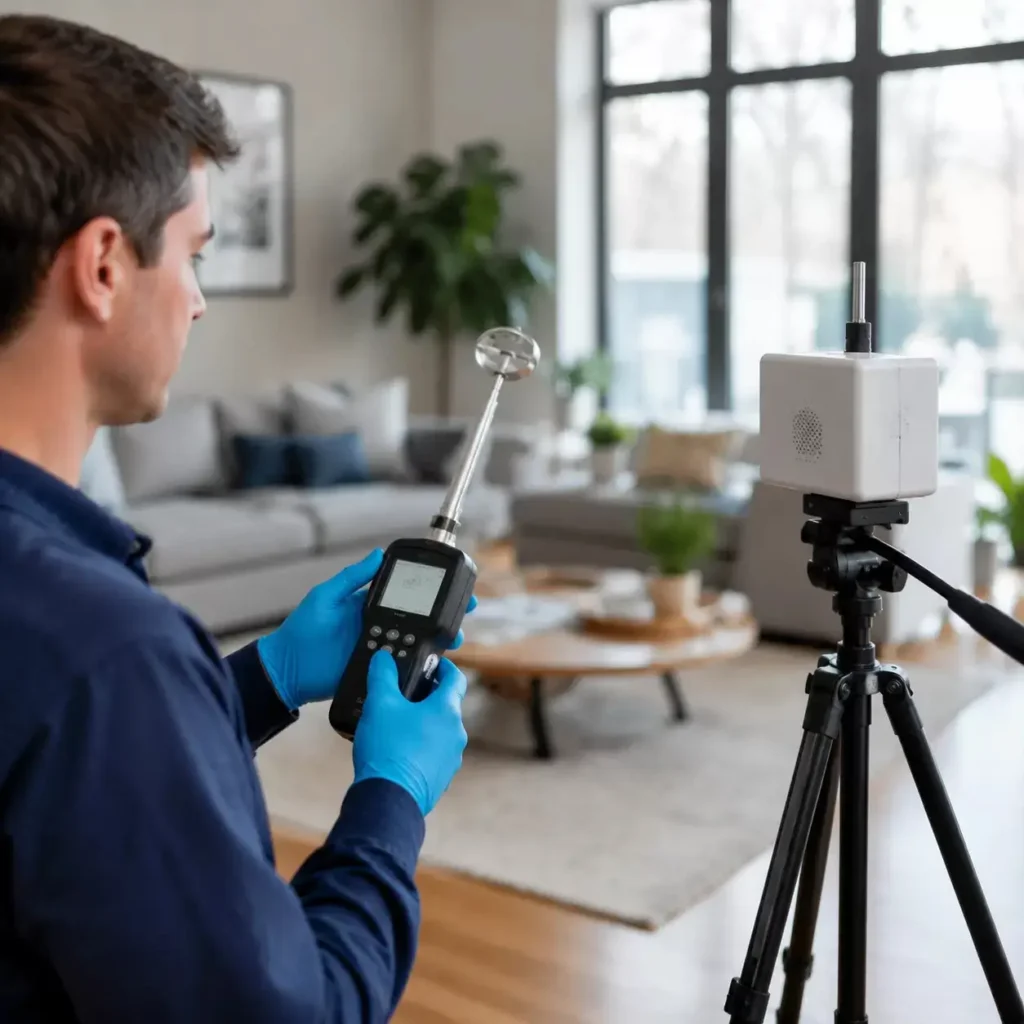
To accurately evaluate the air inside your home, you need a systematic approach. Relying on guesswork leaves you exposed to invisible threats. We recommend three primary diagnostic methods to test your indoor air quality, ranging from real-time tracking to specialized laboratory analysis.
Method A: Deploying Continuous Electronic Air Sensors & Monitors
For daily peace of mind, an electronic indoor air quality monitor is your best first line of defense. These smart devices run 2026/7 to track shifting environmental baselines and provide immediate alerts when pollution spikes.
- Real-Time Tracking: High-grade air sensors constantly measure tracking variables like temperature, humidity, and CO2 (carbon dioxide) levels.
- Pollutant Spikes: Monitors catch immediate surges in particulate matter and volatile organic compounds (VOCs) caused by cooking, cleaning, or external smog.
- Data Logging: Most modern air pollution monitors sync with mobile apps, allowing you to identify historical trends and pinpoint exactly when your air quality dips.
Method B: Utilizing Targeted Mail-In Air Quality Test Kits
When you suspect a specific toxic element that an electronic sensor cannot detect, a physical air quality test kit is required. These kits are designed for deep-dive sampling and professional lab verification.
| Test Kit Type | Target Pollutant | How It Works |
|---|---|---|
| Radon Gas Charcoal Canister | Radon | Left in the lowest level of the home for 48–96 hours, then sealed and mailed to a lab. |
| Formaldehyde Badge | Formaldehyde | Clips to a wall to absorb ambient chemical emissions from furniture and building materials over a set period. |
| Bioaerosol Pump / Swab | Mold & Allergens | Pulls a specific volume of air through a cassette to trap mold spores for microscopic analysis. |
Using a comprehensive home air check kit bridges the gap between digital monitoring and molecular science, giving you definitive proof of what is lingering in your living space.
Method C: Invoking Professional IAQ Environmental Audits
If your DIY testing reveals persistent issues or if you are dealing with unexplained, chronic health symptoms, it is time to bring in a certified professional. A comprehensive environmental audit uncovers hidden system failures that basic tools miss.
- Advanced Diagnostics: Professionals use commercial-grade equipment to hunt down localized toxic sources deep within wall cavities or crawlspaces.
- HVAC Assessment: Technicians inspect your entire ventilation framework to ensure your system draws enough fresh outdoor air and handles the structural pressure correctly.
- Tailored Solutions: An expert audit delivers a personalized roadmap for remediation. They will evaluate your existing setup, checking if a standard upgrade is enough or if your system requires high-efficiency upgrades like those detailed in our guide on pleated vs fiberglass air filters to properly capture fine particles and allergens.
Phase 4: Understanding Regulatory Standards & EPA Requirements
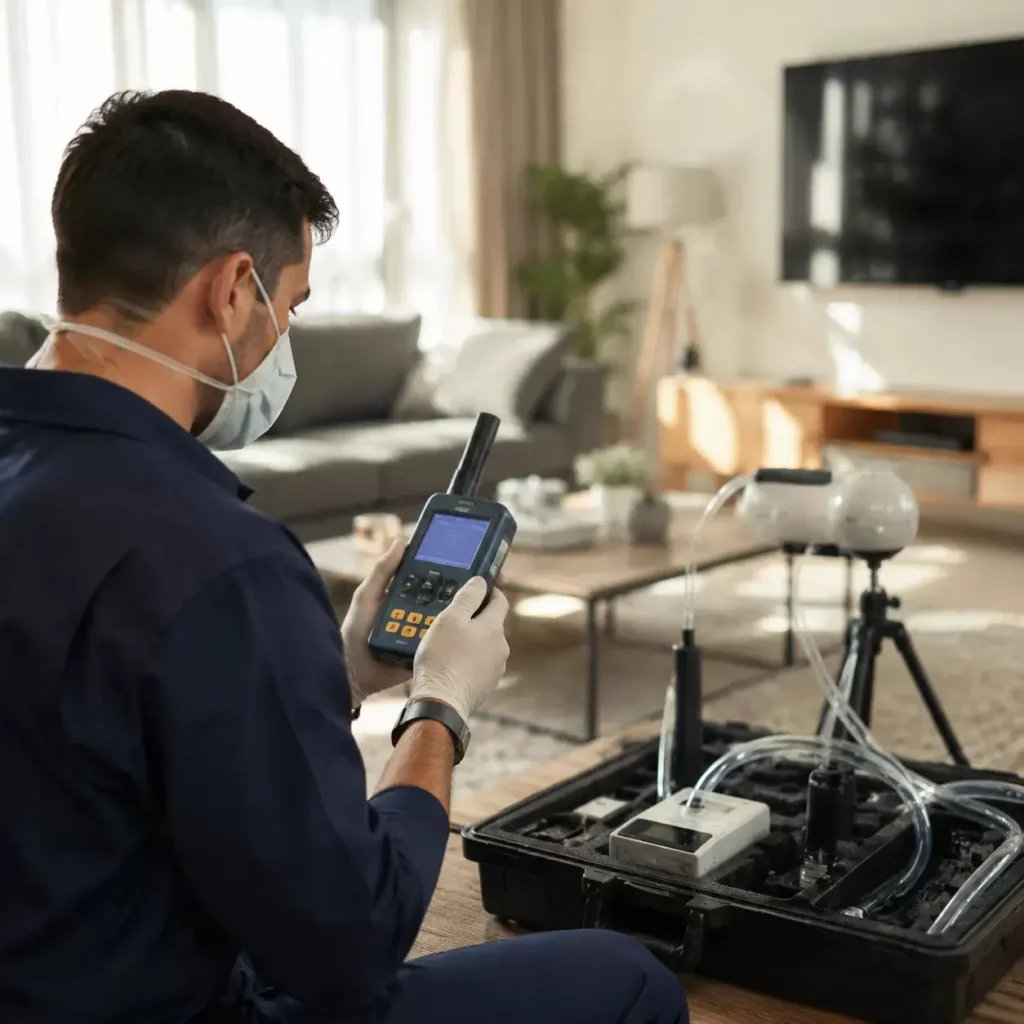
Managing indoor air quality (IAQ) requires shifting from guesswork to concrete data. The U.S. Environmental Protection Agency (EPA) and organizations like ASHRAE have established strict benchmarks to define what constitutes truly safe indoor air.
The Benchmarks
To maintain a healthy living or working environment, your indoor air should consistently meet or exceed established safety thresholds.
| Pollutant / Metric | Safe Target Level | Primary Source |
|---|---|---|
| Particulate Matter (PM 2.5) | Below 12 µg/m³ (Annual Average) | Combustion, dust, outdoor smog |
| Volatile Organic Compounds (VOCs) | Below 300 ppb | Paints, cleaners, cheap synthetic filters |
| Carbon Dioxide (CO2) | Below 800 ppm | Human respiration, poor ventilation |
| Radon | Below 4.0 pCi/L | Geogenic soil gas |
EPA & Public Health Directives
The EPA warns that indoor air can be two to five times more polluted than outdoor air. Long-term exposure to elevated particulate matter and volatile organic compounds (VOCs) is directly linked to chronic respiratory illness and headaches. Standard fiberglass filters fail to capture these microscopic chemical hazards. To actively mitigate these risks, upgrading to specialized filtration is essential. Implementing targeted options like HEPA vs carbon filters allows you to trap both physical particles and invisible chemical off-gassing effectively.
The Ventilation Metric
Data shows that filtration and ventilation must work together. ASHRAE recommends a baseline ventilation rate of 15 to 20 cubic feet per minute (CFM) per person in residential spaces.
- Low Ventilation (CO2 > 1000 ppm): Causes drowsiness, heavy air, and localized pollutant buildup.
- High Ventilation + Poor Filtration: Pulls outdoor allergens, dust, and wildfire smoke directly into your property.
- The Solution: Balance fresh outdoor air intake with high-efficiency mechanical filtration to capture incoming tracking pollutants before they circulate.
From Diagnosis to Action: Upgrading Your Air Infrastructure with Komtfil
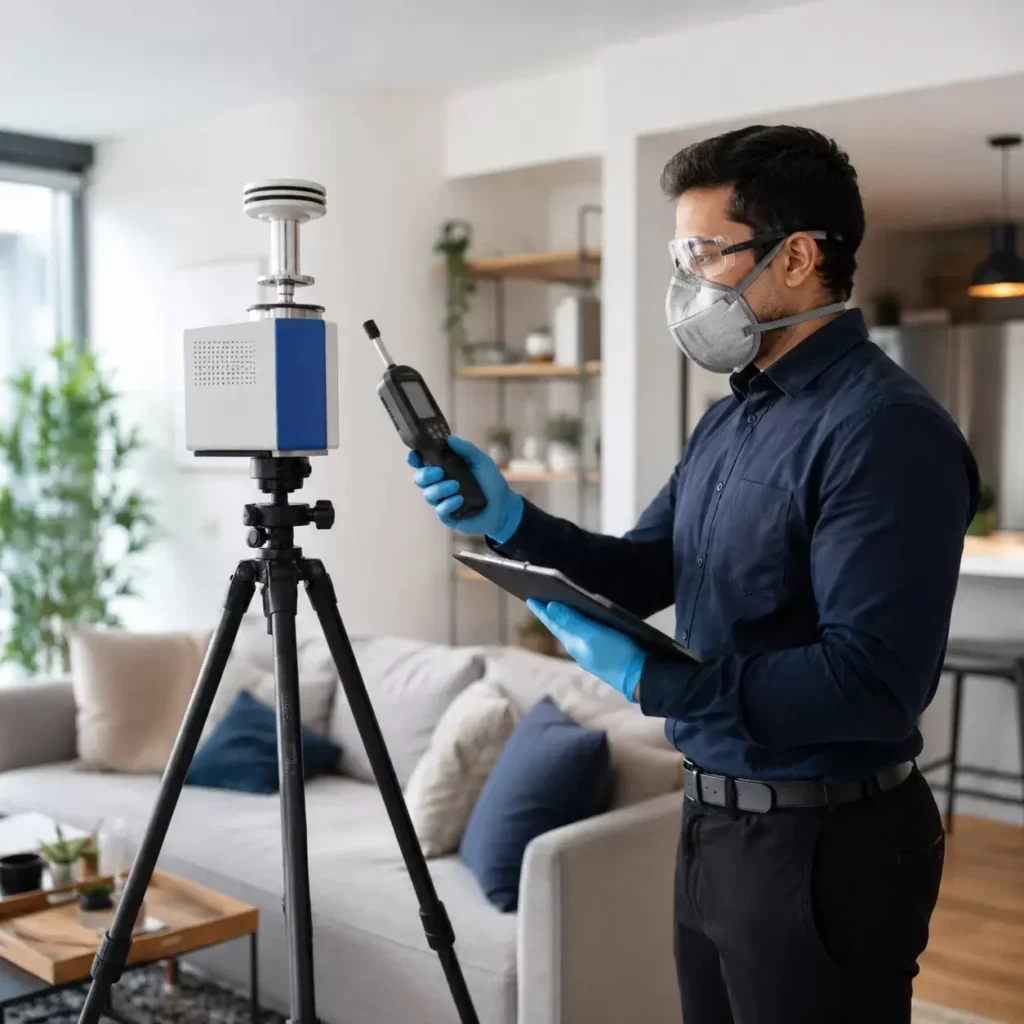
Identifying what is in your air is only the first step. Once you map out your indoor air quality problems, you need to transition from testing to active mitigation. We design modern air infrastructure strategies to neutralize airborne threats systematically through engineering controls rather than guesswork.
The Strategy of Source Control
The absolute most effective way to improve indoor air quality is to eliminate individual sources of pollution or reduce their emissions. This means sealing off old materials, choosing zero-VOC building components, and storing household chemicals in detached outdoor spaces. Source control stops the accumulation of particulate matter and chemical vapors before they ever enter your breathing zone.
Strategic Mechanical Ventilation
When source control is not enough, dilution is necessary. Strategic mechanical ventilation introduces clean, treated outdoor air to flush out stagnant indoor pollutants like carbon dioxide and lingering gaseous toxins. Utilizing energy recovery ventilators (ERVs) allows you to swap bad indoor air for fresh outdoor air without sacrificing your climate-conditioned energy efficiency.
Advanced HVAC Filtration (The Komtfil Advantage)
Your central HVAC system is the primary heart of your indoor environment. Standard low-MERV fiberglass filters only catch large dust bunnies, completely ignoring the microscopic particulate matter like PM2.5 that penetrates deep into your lungs.
| Microscopic Airborne Threats | PM10 / Pollen → PM2.5 / Smoke → VOCs |
| Filtration Layer | komtfil Advanced Multi-Layer Defense • Low-Resistance Structure • Balanced Electret Media |
| Final Output | Purified Breathing Zone |
Our advanced HVAC filtration upgrades utilize specialized, low-resistance synthetic media that acts like a magnet for ultra-fine debris. By balancing high-efficiency particulate capture with low pressure drop, Komtfil filters clean your air without straining your system blower. If you are balancing multi-stage setups, understanding the specific mechanics of an air filter vs air purifier ensures you deploy the right tool for both heavy particulate capture and standalone air scrubbers.
Dynamic Purification
For spaces with localized high-pollution loads—such as kitchens, basements prone to mold spores, or workshops—dynamic localized air purification provides the final layer of security. Combining your central HVAC filtration with active, continuous carbon adsorption and true HEPA filtration captures the volatile organic compounds and fine chemical odors that ventilation alone leaves behind.
Frequently Asked Questions (FAQs)
What are the first signs of poor indoor air quality?
Your body usually sounds the alarm first. You might experience frequent headaches, unexplained fatigue, dry eyes, or a scratchy throat that clears up when you leave the building. Physically, the home itself will show signs like persistent musty odors, stagnant air, rapid dust buildup on surfaces, and condensation on windows.
Can I test for mold and radon with the same kit?
No. Mold and radon are completely different environmental hazards that require specialized collection methods. Mold testing captures biological spores via settling plates or air cassettes. Radon testing relies on charcoal canisters or alpha-track detectors to measure radioactive gas decay. You must buy separate, dedicated setups for each hazard to get accurate data.
How often should I test my indoor air quality?
You should run a comprehensive check annually, ideally during seasonal transitions when your home is sealed tight. However, you need to test immediately if you remodel, buy new furniture, notice mystery leaks, or suffer from persistent, unexplained allergies. For peace of mind, running a continuous indoor air quality monitor tracks your baselines 24/7.
Do standard HVAC filters protect against VOCs?
Standard fiberglass or low-efficiency pleated filters do absolutely nothing against volatile organic compounds (VOCs) or chemical gases. They only catch dust and large lint. To trap chemical off-gassing and odors, you need a filter upgraded with activated carbon. For airborne particles, upgrading to advanced options like the MERV 8 vs MERV 11 air filters guide for home HVAC helps you choose the right baseline efficiency to balance airflow and particle capture.