Air Filter Basics: What is MERV 13 and Why Does CFM Matter?
Maintaining clean indoor air quality while protecting your heating and cooling equipment requires balancing two critical factors: filtration efficiency and home ventilation airflow. As a premium manufacturer, we design our filtration solutions to deliver the ideal balance between removing microscopic particles and maintaining system performance.
Defining MERV 13 and Its Filtration Efficiency
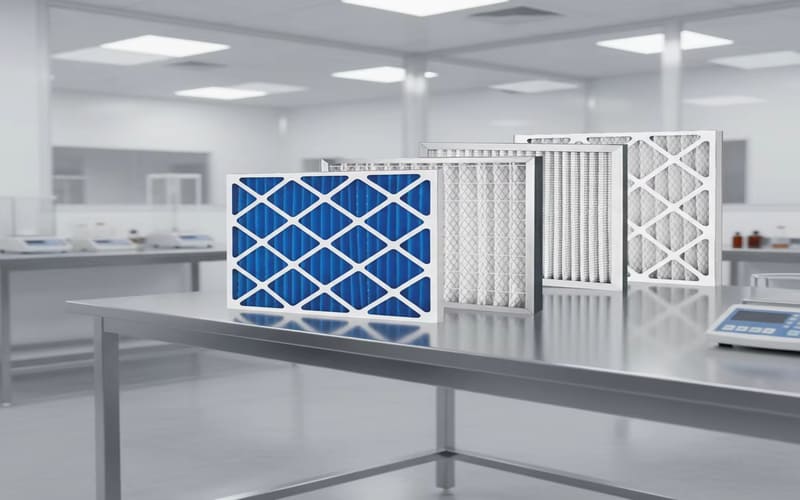
MERV, or Minimum Efficiency Reporting Value, measures a filter’s ability to capture particles of various sizes. A MERV 13 furnace filter operates at a high tier of residential particle filtration.
- 0.3 to 1.0 Micron Size: Captures greater than 50% of microscopic particles like bacteria, smoke, and virus carriers.
- 1.0 to 3.0 Micron Size: Captures greater than 85% of airborne contaminants, including mold spores, pet dander, and dust mite debris.
- 3.0 to 10.0 Micron Size: Captures 90% or more of larger particles like pollen and household dust.
This high level of filtration efficiency is ASHRAE-recommended for reducing airborne allergens and significantly upgrading indoor air quality (IAQ) in residential settings.
Understanding CFM in Home Ventilation
CFM stands for Cubic Feet per Minute, which is the standard measurement for air velocity and volume moving through your HVAC system. It indicates how much air the system fan can circulate every 60 seconds.
| Concept | System Impact | Why It Matters |
|---|---|---|
| High CFM | Proper air circulation | Even temperatures, fresh indoor air, and efficient heating/cooling cycles. |
| Low CFM | Restricted home ventilation | Strained system fan, frozen AC coils, higher energy bills, stagnant air. |
Every HVAC system is engineered for a specific cubic feet per minute target. When you introduce a high-efficiency pleated filter, it naturally creates a barrier. Achieving the best MERV 13 filter CFM efficiency means choosing a filter engineered to trap tiny contaminants without suffocating your system’s airflow.
The High-Efficiency Dilemma: Airflow Resistance vs. Particle Filtration
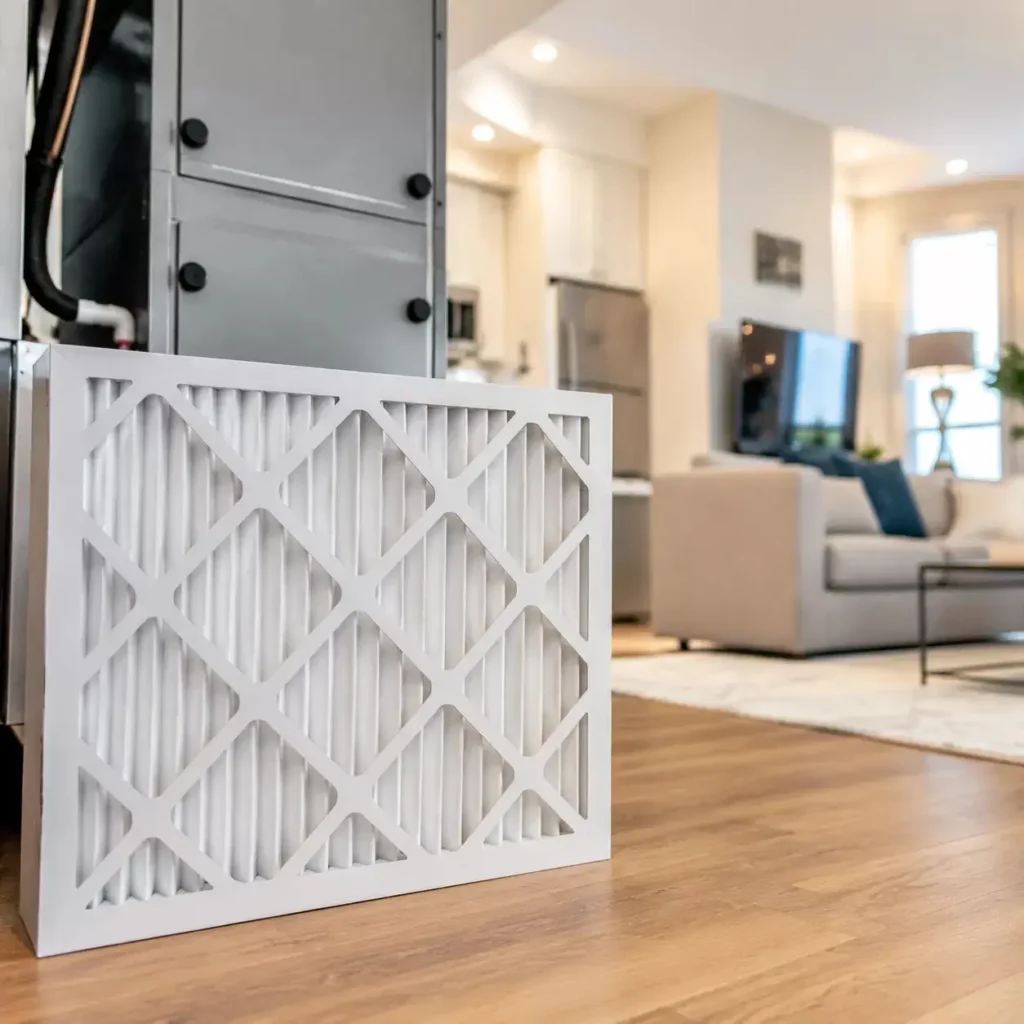
When upgrading to the best MERV 13 filter CFM efficiency, homeowners often face a balancing act between capturing tiny airborne particles and maintaining strong airflow. A standard high-efficiency furnace filter captures smaller contaminants, but the denser material naturally restricts how easily air moves through your HVAC system. Finding the sweet spot between high-level particle filtration and optimal home ventilation is critical for both indoor air quality and equipment longevity.
Understanding Pressure Drop and Static Pressure
Every time your system fan forces air through a pleated filter, it encounters resistance. This resistance creates a pressure drop, which directly impacts the total static pressure within your ductwork.
- Static Pressure: The resistance or friction operating against the air moving through the system.
- Pressure Drop: The difference in air pressure before and after the air passes through the filtration media.
A slight pressure drop is completely normal. However, a massive spike in resistance forces your HVAC system to work twice as hard to maintain comfortable indoor temperatures. To prevent system strain, it is helpful to review a MERV ratings and pressure drop chart to ensure your equipment can handle the increased resistance without sacrificing efficiency.
What Happens When Your HVAC System Suffers from Low CFM?
When a filter restricts airflow too severely, your system’s cubic feet per minute (CFM) drops below safe operational levels. Operating a residential HVAC system with chronically low CFM triggers a chain reaction of costly mechanical issues:
- Short Cycling: The system overheats or overcools rapidly, causing it to turn on and off frequently, which spikes energy bills.
- Frozen Evaporator Coils: In cooling mode, low air velocity prevents proper heat transfer, causing moisture on the coils to freeze solid.
- Heat Exchanger Cracking: In heating mode, inadequate airflow traps excessive heat inside the furnace, leading to premature structural failure.
- Blower Motor Burnout: The system fan must pull harder to draw air through the restriction, shortening the lifespan of the motor.
Engineering the Solution: How Komtfil Maximizes MERV 13 CFM Efficiency
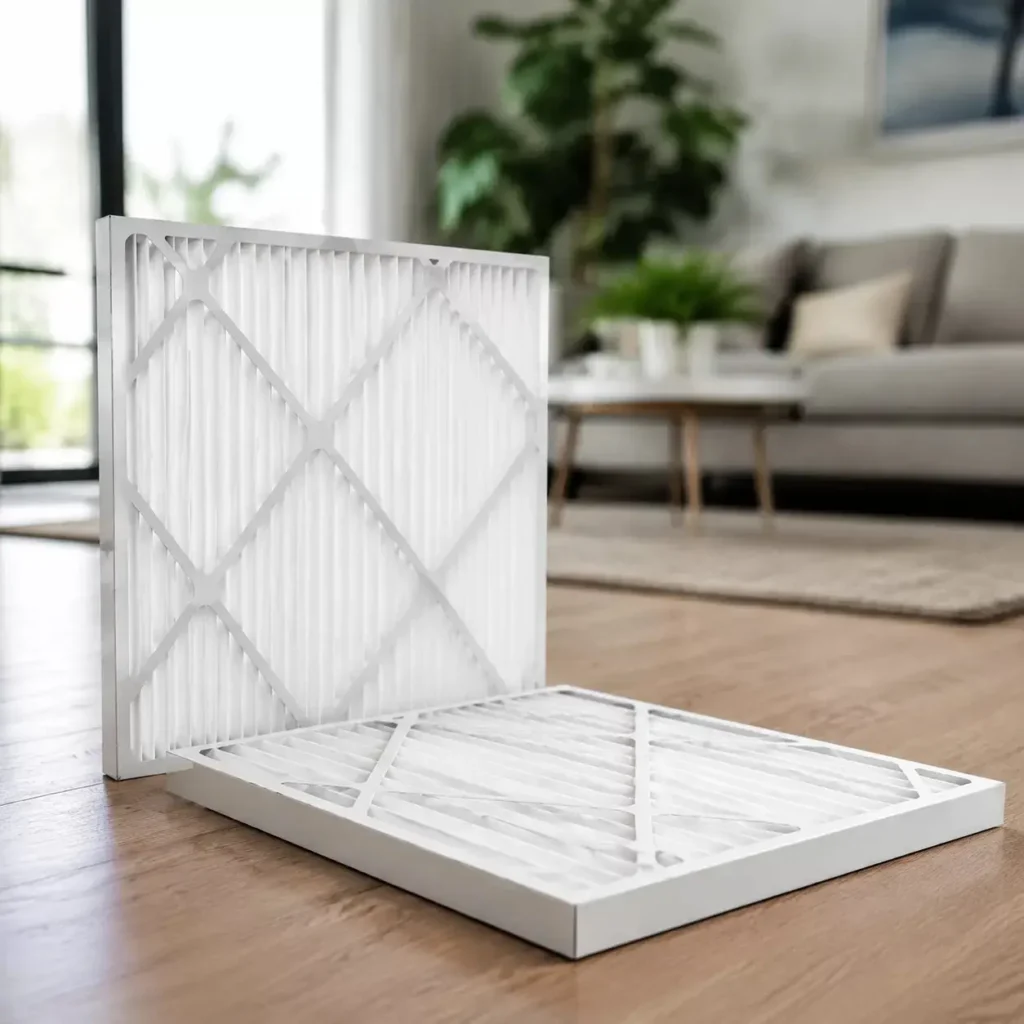
We engineer our filters to solve the classic airflow bottleneck. Achieving the best MERV 13 filter CFM efficiency requires balancing a high level of particle filtration with the unrestricted movement of air through your HVAC system. By rethinking traditional filter construction, we ensure your home enjoys pristine air quality without putting unnecessary strain on your system fan.
The Power of Advanced Pleated Filter Design
Our advanced pleated filter architecture is specifically built to combat high static pressure. By significantly increasing the surface area of the filter media, we lower the initial pressure drop across the system.
- More Surface Area: Maximizes the contact zone for capturing dust, pollen, and smoke.
- Lower Resistance: Decreases the workload on your furnace filter or AC blower.
- Consistent Volumetric Flow: Maintains a steady stream of cubic feet per minute (CFM) to preserve balanced home ventilation.
Electrostatic Media Technology
We utilize a specialized electrostatic charge within our synthetic vs fiberglass air filter materials. This charge acts like a magnet for airborne contaminants. Instead of relying solely on a dense mechanical mesh that suffocates airflow, our electrostatic media pulls microscopic irritants down to the sub-micron size out of the air stream while keeping the pathways wide open for optimal air velocity.
Finding the Right Dimensions: 1-Inch vs. 4-Inch Deep Pleated Upgrades
Choosing the correct filter depth plays a massive role in maintaining indoor air quality (IAQ) and system health in residential settings.
| Filter Depth | Airflow Performance | Average Lifespan | Best Used For |
|---|---|---|---|
| 1-Inch Pleated | Standard resistance; requires precision engineering to maintain high CFM. | 3 months | Standard residential HVAC slots with tight spacing. |
| 4-Inch Deep Pleated | Ultra-low resistance; drastically increases surface area for maximum CFM efficiency. | 6 to 9 months | Systems modified for deep media cleaners or dedicated air cleaner cabinets. |
Upgrading to a thicker, deep-pleated filter is one of the most effective ways to satisfy ASHRAE-recommended ventilation rates while keeping system restriction to an absolute minimum.
System Compatibility: Can You Handle the Best MERV 13 Filter CFM Efficiency?
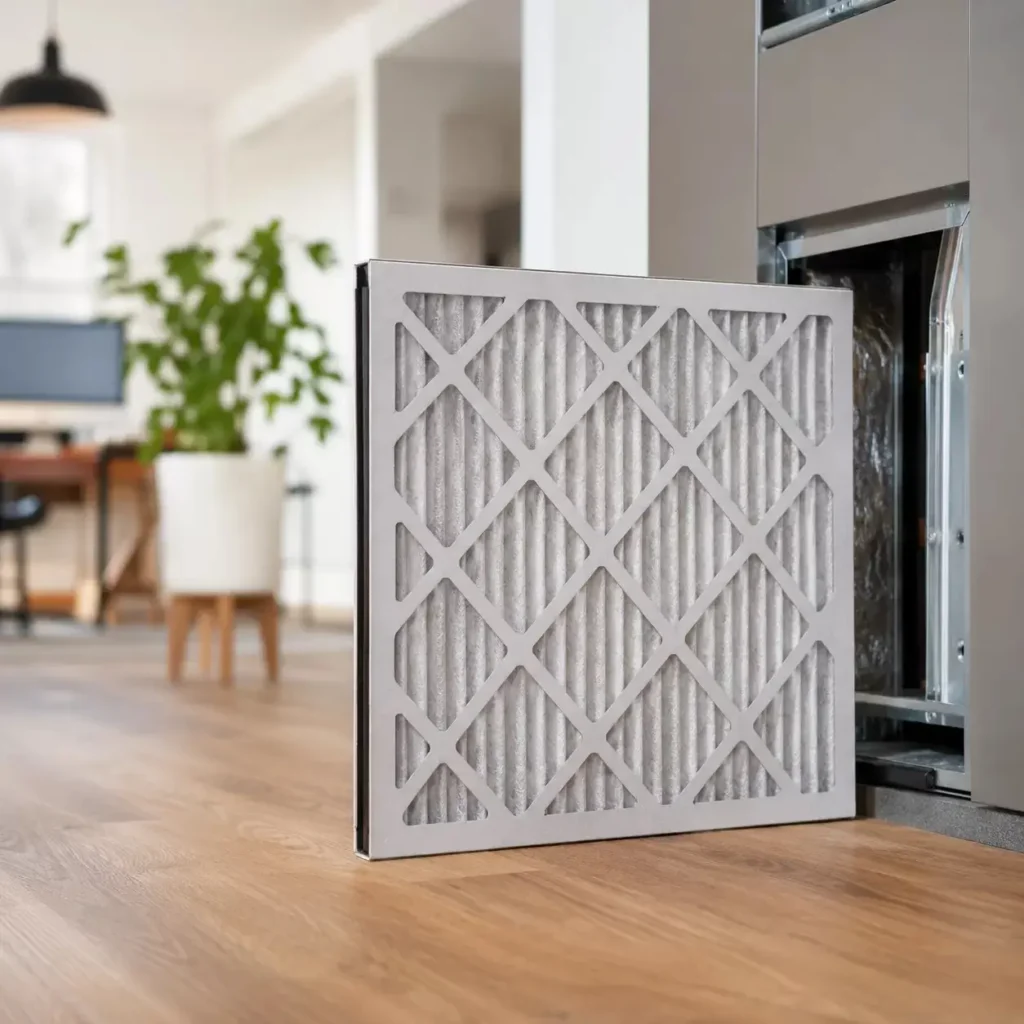
Before upgrading your furnace filter, you must ensure your HVAC system can handle the increased resistance without choking your airflow. High filtration efficiency is excellent for indoor air quality (IAQ), but it requires a careful balance to maintain optimal home ventilation.
Calculating Your System’s CFM Needs
To get the best MERV 13 filter CFM efficiency, your system fan must move enough air against the filter’s static pressure.
- The Golden Rule: A standard HVAC system typically requires 400 CFM per ton of cooling capacity.
- The Velocity Check: Higher efficiency filters cause a higher pressure drop. If your system’s air velocity drops too low, it can freeze coils or overheat heat exchangers.
- Sizing Matters: Increasing the filter surface area (like switching to a deeper pleated option) reduces resistance and keeps your cubic feet per minute within safe limits.
Cross-Referencing Alternative Rating Scales
When shopping for a high-efficiency pleated filter, you will encounter different industry metrics. Use this quick reference table to align our MERV 13 upgrades with major retail ratings:
| MERV Rating | 3M Filtrete (MPR) | Home Depot (FPR) | Main Target |
|---|---|---|---|
| MERV 13 | MPR 1900 to 2200 | FPR 10 (Premium) | Micron-sized particles, smoke, and allergens |
If you are currently using a lower-tier retail brand, check out our guide to 3M Filtrete air filters to see exactly how our commercial-grade media delivers superior particle filtration with less airflow restriction in residential settings.
When to Consult a Professional HVAC Technician
Pro Tip: If your system is over 10–15 years old, its fan motor might not be rated for the static pressure of a standard MERV 13 upgrade.
Have a certified HVAC technician check your system’s Total External Static Pressure (TESP) if you notice:
- Significantly weaker airflow from your supply vents.
- The HVAC system is cycling on and off too quickly (short-cycling).
- Whistling or straining noises coming from the filter grille or blower compartment.
Airflow Maintenance: Tips to Keep Your CFM Optimal Over Time
Maintaining optimal home ventilation requires a proactive approach to airflow maintenance. When you upgrade to a high-efficiency furnace filter, your system fan has to work harder to pull air through the denser pleated filter media. To prevent an unnecessary increase in static pressure and keep your cubic feet per minute (CFM) at peak performance, regular upkeep is non-negotiable.
- Monitor Pressure Changes: A visual inspection every month helps you catch heavy dust buildup before it triggers a severe pressure drop.
- Keep Vents Clear: Ensure all supply and return registers throughout your residential settings are completely unblocked by furniture or drapes to maintain balanced system pressure.
- Inspect the System Fan: Dust accumulation on the blower wheel blades reduces air velocity and cuts down your overall CFM efficiency. Clean the blades annually.
If you are currently using lower-rated filters and notice your system struggling with airflow even when clean, it might be time to review your filtration strategy. Check out our guide on MERV 11 air filters to understand how different efficiency levels impact system resistance.
The Lifecycle of a High-Capacity MERV 13 Filter
The best MERV 13 filter CFM efficiency is achieved when the filter is replaced before it becomes completely choked with microscopic airborne particles. While standard thin filters need a swap every 30 to 90 days, a high-capacity, deep-pleated MERV 13 filter is engineered to hold a significantly higher volume of dust, lint, and pet dander before experiencing a critical drop in airflow efficiency.
| Filter Thickness | Average Lifespan | Clean Airflow Resistance | Dust Holding Capacity |
|---|---|---|---|
| 1-Inch Pleated | 2–3 Months | Moderate | Standard |
| 4-Inch Deep Pleat | 6–9 Months | Low (Excellent CFM) | High |
An advanced MERV 13 filter relies on its unique structural design to maintain low resistance over a longer lifespan. As the media captures particles down to the sub-micron size, the overall filtration efficiency actually increases slightly, but so does the resistance. Swapping out the filter at the recommended intervals protects your HVAC system from short-cycling, keeps your indoor air quality high, and ensures your home ventilation system operates at maximum efficiency.