Types of Car Air Filters: Engine vs. Cabin Air Filter
Modern vehicle maintenance relies on two distinct filtration systems: the engine air filter and the cabin air filter. While both trap airborne contaminants, they serve entirely different systems within your automobile.
What Is an Engine Air Filter?
An engine air filter guards your vehicle’s power plant. Located in the engine bay, its primary job is to strain dust, dirt, sand, and road debris out of the intake air before it reaches the combustion chamber. Clean air is essential for proper fuel combustion, maintaining horsepower, and preventing premature engine wear.
What Is a Cabin Air Filter?
A cabin air filter protects the internal environment of your vehicle. Installed within the HVAC system, it cleans the air entering the interior through heating, ventilation, and air conditioning vents. High-quality cabin filters block airborne pollen, dust mites, smog, spores, and odors to ensure a healthy breathing environment for drivers and passengers.
Key Differences in Function and Location
Understanding the structural and functional differences between these two filters helps streamline routine vehicle service and routine parts replacement.
| Feature | Engine Air Filter | Cabin Air Filter |
|---|---|---|
| Primary Target | Vehicle engine and intake manifold | Passenger cabin and HVAC system |
| Standard Location | Under the hood inside the air intake box | Behind the glove compartment or under the dashboard |
| Performance Impact | Affects acceleration, mileage, and engine life | Affects air conditioning airflow, defrosting, and cabin smell |
| Trapped Contaminants | Road dirt, bugs, leaves, sand | Pollen, dust, exhaust soot, allergens |
How Much Does Air Filter Replacement Cost?

When asking how much does it cost to change air filter components in your car, the total generally ranges from $35 to $100 per filter at a standard repair shop. As an air filter manufacturer, we build premium filters that deliver maximum engine and cabin protection while keeping total vehicle maintenance costs predictable.
Average Engine Air Filter Replacement Cost
The average engine filter replacement cost usually falls between $35 and $90 when handled by a professional technician.
- Standard Parts: $15 to $40 for an OEM-quality engine filter.
- Professional Service: Labor is minimal because engine filters sit in an accessible housing under the hood.
- Performance Filters: High-flow or washable performance filters increase the initial parts estimate to $60–$150, but they offer longer service life.
Average Cabin Air Filter Replacement Cost
Having a professional replace a cabin filter costs roughly $40 to $95. Knowing how much a cabin air filter should cost ensures you get fair pricing when bringing your car in for service.
- Standard Cabin Filter: $15 to $35 for baseline particulate filtration.
- HEPA & Activated Carbon Filters: $25 to $50 for multi-layer filtration that traps airborne allergens and neutralize odors.
- Labor Variability: Some cabin filters sit deep behind the glovebox, pushing mechanic fees higher due to extra disassembly time.
Cost Breakdown: Parts vs. Labor
Labor costs represent a major portion of auto repair pricing for simple routine maintenance. Understanding the baseline air filter price helps you decide whether to pay for shop labor or perform a quick DIY replacement.
| Filter Type | Parts Estimate | Mechanic Labor Fees | Total Average Repair Cost |
|---|---|---|---|
| Engine Air Filter | $15 – $40 | $20 – $50 | $35 – $90 |
| Cabin Air Filter | $15 – $35 | $25 – $60 | $40 – $95 |
| Both Filters (Combined) | $30 – $75 | $45 – $110 | $75 – $185 |
Handling the replacement yourself eliminates shop labor rates entirely, allowing you to pay only for high-grade filtration materials.
Factors Influencing Air Filter Replacement Costs
When evaluating how much does it cost to change air filter components, several key variables determine your final bill.
Filter Material and Type (Standard, HEPA, Performance)
As an air filter manufacturer, we build filters using different media depending on driver needs, which directly impacts the overall air filter price:
- Standard Paper / Cellulose: The most affordable option for standard vehicle maintenance ($10–$25).
- Activated Carbon & HEPA: Upgraded cabin filter options that block microscopic allergens, smoke, and odors ($20–$45). Comparing carbon vs standard air filters helps clarify why higher filtration efficiency carries a slight price premium.
- High-Performance / Reusable: Washable synthetic engine air filter media designed for high airflow ($50–$100+).
To choose the right media for your vehicle, explore our breakdown of types of air filters explained.
Vehicle Make, Model, and Accessibility
Filter housing location dictates how quickly a technician can complete the swap. Difficult access directly increases labor costs:
- Standard Passenger Cars: Accessible clip-on housings under the hood or behind the glove box allow simple 5-minute swaps.
- Luxury & Specialty Vehicles: Dual air intake systems or crowded engine bays require panel removal, driving up mechanic fees.
Dealership vs. Independent Repair Shop Rates
Where you take your vehicle significantly shifts your overall auto repair pricing:
| Service Venue | Average Labor Rate | Parts Used | Cost Level |
|---|---|---|---|
| Dealership Cost | $120 – $220+ / hour | Factory OEM Parts | Highest total car service cost |
| Independent Repair Shop | $80 – $140 / hour | OEM or Quality Aftermarket | Moderate replacement price |
DIY vs. Professional Air Filter Replacement
Deciding between doing it yourself or visiting a repair shop comes down to cost and convenience. As an air filter manufacturer, we design our filters for hassle-free installation, making this one of the easiest DIY maintenance tasks for any vehicle owner.
Cost Savings of DIY Replacement
Taking the DIY route eliminates shop labor costs entirely. Professional mechanics and dealerships usually charge $50 to $100+ total for an air filter replacement, with labor taking up a significant portion of that bill.
By purchasing the part directly and swapping it yourself, your total air filter price drops to just $15 to $35. That puts an instant $35 to $70 back in your pocket for less than fifteen minutes of simple work.
Step-by-Step DIY Replacement Process
Replacing standard engine and cabin filters requires no specialized mechanics or technical skills:
- Locate the Filter Housing: Find the black plastic box under your hood (for engine filters) or behind the glove compartment (for cabin filters).
- Open the Housing: Unfasten the metal clips, or remove the handful of screws securing the box cover.
- Swap the Filter: Pull out the old, dirty filter, clear out any loose leaves or debris from the housing, and drop in the new filter in the exact same orientation.
- Secure the Cover: Fasten the clips or screws back in place.
For a complete walkthrough on tools and vehicle-specific tips, follow our detailed guide on how to change your car’s air filter.
Time Required to Change an Air Filter
DIY replacement requires minimal downtime compared to sitting in a shop waiting room:
- Engine Air Filter: 5 to 10 minutes (usually tool-free).
- Cabin Air Filter: 10 to 15 minutes (may require a simple screwdriver to drop the glove box).
How Often Should You Replace Your Air Filter?
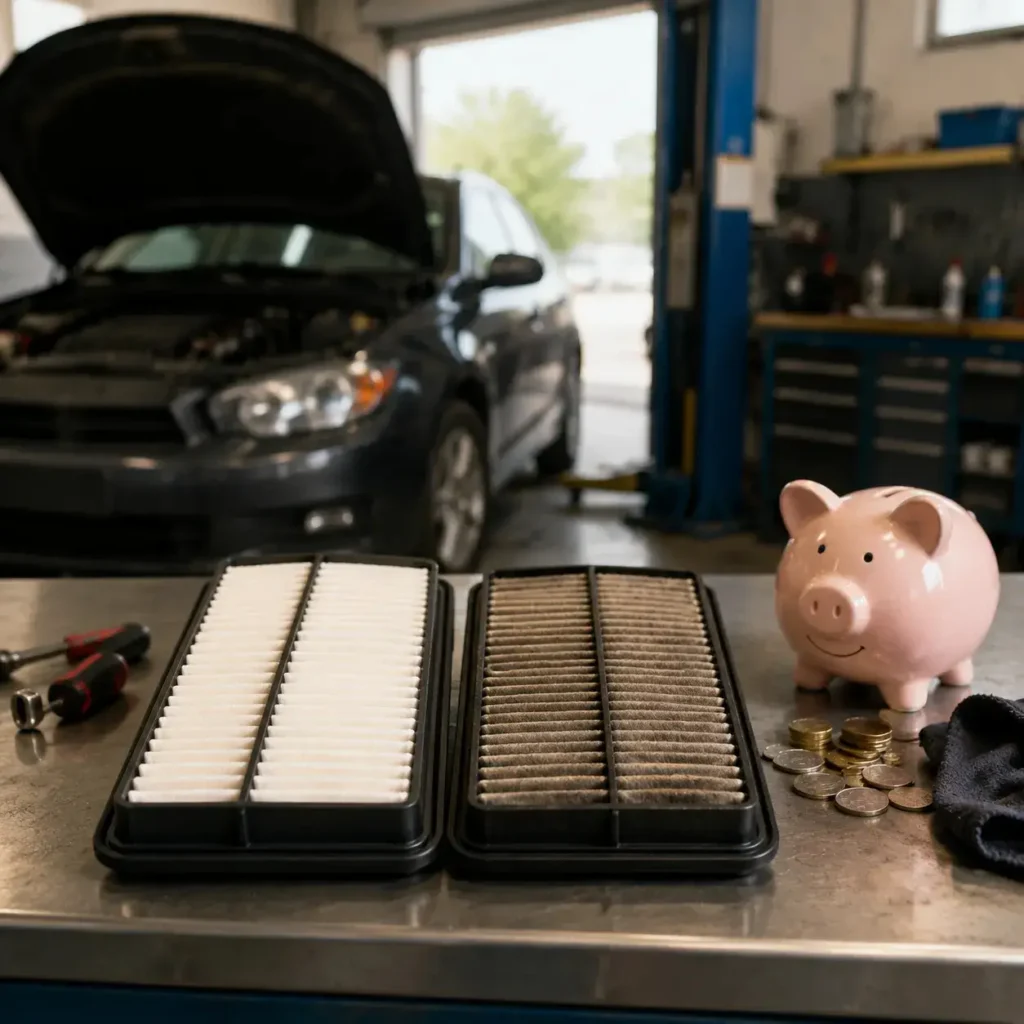
Staying on top of your filter replacement interval is essential for maintaining peak engine performance and clean cabin air. Sticking to a consistent mileage schedule prevents unnecessary component wear and keeps overall vehicle maintenance manageable.
Recommended Engine Air Filter Service Intervals
We recommend inspecting your engine air filter during every routine car maintenance check and following these standard replacement guidelines:
- Standard Driving Conditions: Replace every 15,000 to 30,000 miles (or every 12 to 24 months).
- Severe Driving (Dirt/Gravel Roads): Replace every 10,000 to 15,000 miles.
- Heavy City Commuting: Replace every 15,000 miles due to frequent idling and exhaust soot.
Recommended Cabin Air Filter Service Intervals
For optimal interior climate airflow and passenger comfort, cabin filter maintenance should follow these intervals:
- Standard Service Schedule: Replace every 12,000 to 15,000 miles (or once per year).
- High-Pollution or High-Pollen Areas: Replace every 8,000 to 10,000 miles (or twice annually).
Neglecting this service restricts HVAC performance. While some drivers wonder if you can run without a cabin air filter, doing so allows dust and debris to build up inside your vehicle’s climate system, leading to unpleasant odors and expensive blower motor failures.
Environmental Factors That Affect Filter Lifespan
Driving conditions heavily dictate how quickly filter media saturates:
| Environmental Factor | Impact on Lifespan | Primary Filter Affected |
|---|---|---|
| Dusty or Unpaved Roads | Cuts service life by up to 50% from heavy dirt buildup | Engine & Cabin Air Filter |
| Urban Traffic & Smog | Soot accumulation restricts airflow ahead of schedule | Cabin Air Filter |
| High Pollen & Agricultural Areas | Organic matter coats pleated media, reducing HVAC output | Cabin Air Filter |
| Wildfire Smoke & Industrial Ash | Microfine particles saturate paper layers rapidly | Engine & Cabin Air Filter |
Signs Your Air Filter Needs to Be Replaced
Ignoring dirty air filters leads to bigger problems down the road. Catching the warning signs early during routine car maintenance prevents costly engine repairs and keeps your cabin air clean.
Symptoms of a Clogged Engine Air Filter
A dirty engine filter starves your motor of oxygen. Watch out for these common bad air filter symptoms:
- Sluggish Acceleration: Your vehicle hesitates or feels sluggish when pressing the gas pedal.
- Reduced Fuel Economy: The engine burns extra fuel to make up for restricted air intake.
- Check Engine Light: Airflow sensors detect imbalance and trigger a dashboard warning light.
- Engine Misfires: Unburnt fuel soot fouls the spark plugs, causing a rough idle.
- Dirty Filter Appearance: The filter media looks dark, gray, or caked with debris instead of clean white.
Symptoms of a Failing Cabin Air Filter
A clogged cabin filter compromises comfort and air quality inside the vehicle. Common warning signs include:
- Weak Vent Airflow: Significantly reduced air volume coming through your dashboard vents.
- Musty Odors: Stale, moldy smells blowing into the cabin whenever the fan turns on.
- Poor Climate Control: A clogged setup makes heating and cooling inefficient, showing how drastically a dirty cabin air filter can affect AC performance.
- Noisy Fan Operation: Whistling or straining sounds coming from the HVAC blower motor.
- Window Fogging: Defrosters take longer to clear glass because restricted airflow cannot clear cabin humidity properly.