Why a Wet HVAC Air Filter Is a Problem
A wet HVAC air filter is more than a minor inconvenience; it is a critical system failure warning. As an air filter manufacturer, we engineer filtration media to capture airborne particulates under dry conditions. When moisture infiltrates the AC filter, it compromises the entire system, degrading indoor air quality and threatening mechanical performance.
Risks of Mold and Bacteria Growth
A damp air filter creates the perfect breeding ground for environmental hazards. Because filtration media traps dust, pollen, and organic matter, a wet filter combined with dark HVAC ductwork triggers rapid microbial proliferation.
- Mold Growth: Spores can develop within 24 to 48 hours of moisture exposure.
- Airborne Contamination: As the blower motor runs, it distributes mold spores and bacteria throughout the property.
- Health Hazards: This moisture buildup severely compromises indoor air quality, triggering allergies, asthma, and respiratory issues.
Reduced Airflow and System Efficiency
Water fills the microscopic pores in the filter media, creating a physical barrier that restricts airflow.
- Increased Resistance: Static pressure rises significantly as the system struggles to pull air through wet fibers.
- Restricted Airflow: The HVAC unit must work twice as hard to maintain target temperatures, leading to short-cycling.
- Energy Spikes: This strain dramatically reduces system efficiency, resulting in higher monthly utility bills and unnecessary wear on the blower motor.
Potential Damage to Your HVAC Unit
Ignoring a wet air filter can lead to catastrophic mechanical failure and expensive water damage repairs.
| Impacted Component | Direct Consequence of a Wet Filter |
|---|---|
| Evaporator Coil | Restricted airflow causes temperatures to drop, leading to a frozen evaporator coil. |
| System Blower | The motor overheats due to excessive static pressure and resistance. |
| Ductwork & Surroundings | Excess moisture pulls through the filter, causing rust in the cabinet and water damage to nearby drywall. |
Common Causes of a Wet Air Filter
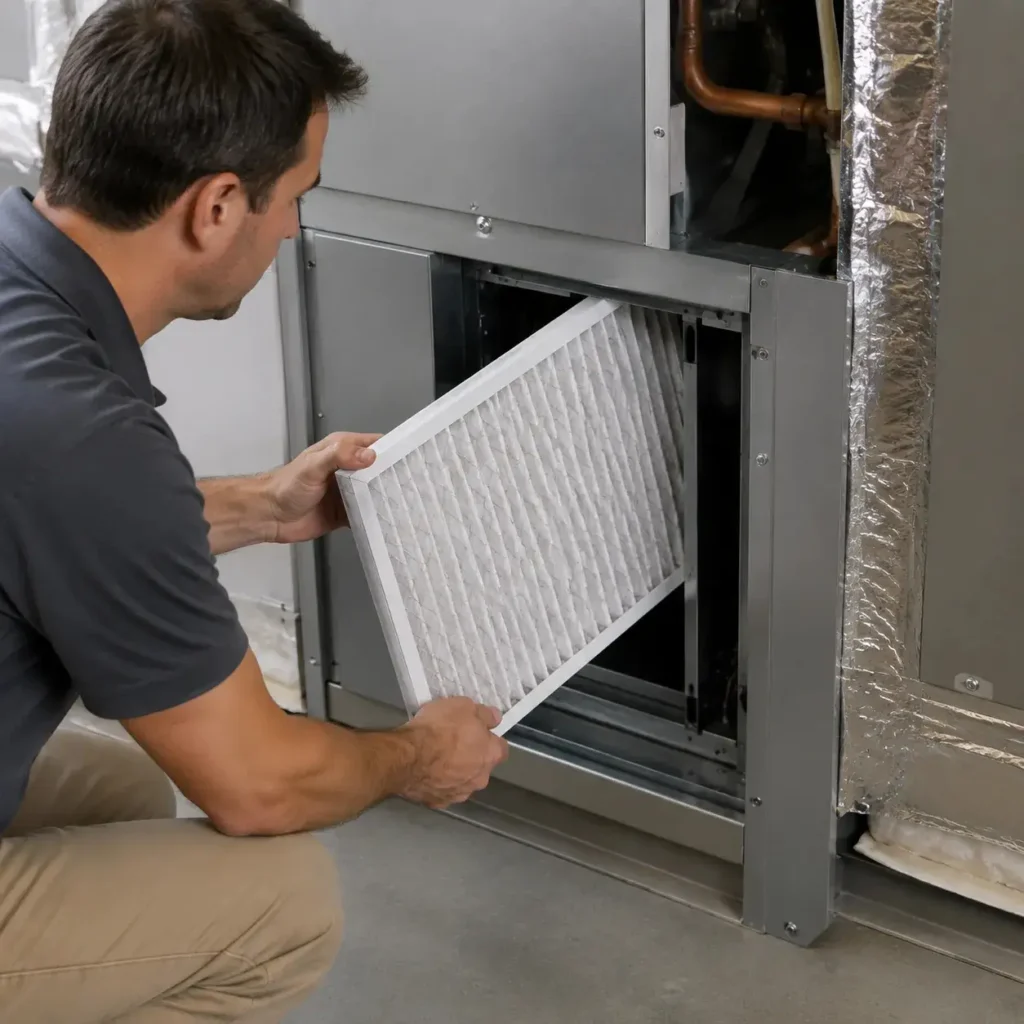
Finding moisture in your HVAC system is a clear sign that something is off. As an air filter manufacturer, we know that a wet filter cannot do its job properly. To learn how to avoid a wet air filter in an HVAC system, you first need to understand exactly where the moisture is coming from.
Clogged Condensate Drain Lines
Your air conditioner pulls an incredible amount of moisture out of the air during normal operation. This water is supposed to flow out of your home through a dedicated line. However, a drain line blockage caused by algae, dirt, or mold buildup will back up the system, forcing water to overflow straight onto your AC filter.
Overflowing or Damaged Drain Pans
Directly beneath your indoor coils sits the condensate pan. Over time, these pans can corrode, crack, or suffer from a damaged drain fitting. When the drip pan fails, water leaks directly into the blower compartment, soaking through the filter material and ruining its structural integrity.
Frozen Evaporator Coils Dripping Water
A frozen evaporator coil is a major culprit behind sudden water damage. If your system suffers from restricted airflow, the coil temperature drops below freezing, causing ice to build up. When that ice melts during the system’s off-cycle, a massive amount of water drops all at once, bypassing the condensation pan entirely.
Incorrect Filter or System Installation
Sometimes the issue comes down to human error. An incorrect installation of either the HVAC unit itself or a poorly fitted filter can alter the natural flow of condensation. If you are unsure about the orientation of your current setup, it is crucial to review a proper HVAC installation guide to ensure air and moisture are moving in the right direction.
Refrigerant Leaks and High Humidity
A coolant leak lowers the pressure inside your system, which directly causes the coils to freeze up and drip. When you pair a low refrigerant level with extreme moisture buildup from high indoor humidity, your HVAC system simply cannot manage the water volume, resulting in a soaked air filter and compromised indoor air quality.
Immediate Steps to Take for a Wet Filter
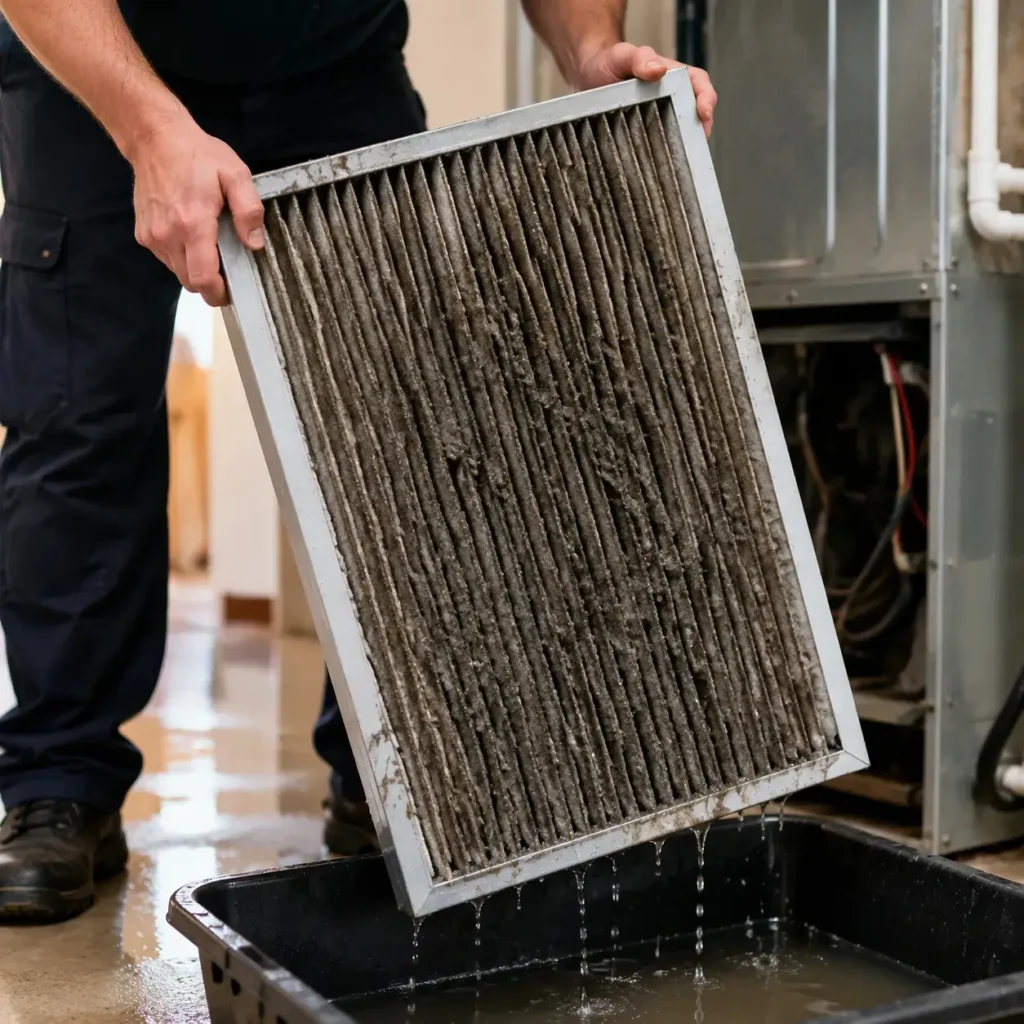
If you discover moisture inside your system, you need to act fast to protect your equipment and indoor air quality. Knowing how to avoid wet air filter in HVAC system issues starts with immediate damage control.
Turn Off Your HVAC System Immediately
The moment you notice a damp or soggy AC filter, shut down the entire system at the thermostat or the main circuit breaker. Running a system with a wet filter creates severely restricted airflow, which puts massive strain on your blower motor and can cause the air conditioner to overheat or freeze up completely. Turning it off prevents further mechanical strain and stops the spread of moisture.
Remove and Safely Dispose of the Wet Filter
Carefully slide the saturated filter out of its slot. Do not attempt to dry it out or reuse it, as fiberglass and cardboard filters lose their structural integrity when wet. A damp environment triggers rapid mold growth and bacterial colonies, which will ruin your indoor air quality if reintroduced to the airflow. Bag the wet filter immediately and throw it away. If your system is experiencing issues from a lack of air movement prior to this, you might notice other signs your HVAC filter is clogged during removal.
Inspect the Surrounding Area for Standing Water
Check the entire filter housing, the condensate pan, and the floor around the indoor unit. Look closely for a drain line blockage or a cracked drain fitting that could be directing water toward the filter slot. Wipe down any pooling water or moisture buildup inside the cabinet with a clean towel to prevent rust and mold from taking hold while you begin the troubleshooting guide process.
How to Prevent a Wet Air Filter in Your HVAC System
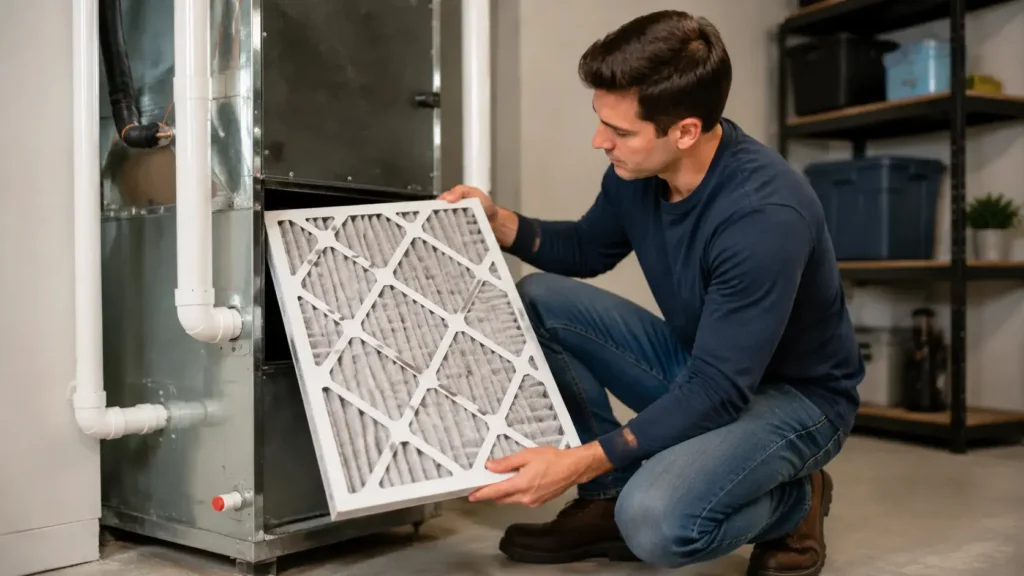
Preventing moisture buildup in your AC filter requires a proactive approach. As an air filter manufacturer, we know that keeping your system dry is the best way to ensure clean indoor air quality and peak equipment performance.
Clear and Maintain the Condensate Drain Line
A clogged drain line is the most common culprit behind a wet air filter. To prevent water damage, flush your condensate drain line with vinegar or warm water every few months to clear out algae and sludge. For stubborn drain line blockage, use a wet-dry vac to suction out debris from the outside drain fitting. Keeping this pathway clear ensures water flows away from your system rather than backing up into your filter housing.
Ensure Proper Filter Placement and Size
Incorrect installation or using the wrong filter size can create gaps that alter airflow and cause condensation to pool where it shouldn’t. Always double-check your system’s manual to ensure you are buying the correct dimensions. If you are unsure how to read your current filter measurements, check out our guide on how to measure your air filter size to get a perfect, snug fit. A properly seated filter prevents restricted airflow and minimizes the risk of coming into contact with a dripping condensate pan.
Schedule Regular Professional HVAC Maintenance
While routine DIY checks go a long way, scheduling professional maintenance once or twice a year is vital. A certified HVAC contractor can inspect deep inside the system to check for coolant leaks, test the drip pan, and ensure the frozen evaporator coil issues don’t catch you by surprise. Regular tune-ups catch minor system flaws before they turn into major water issues.
DIY Fixes vs. When to Call a Professional
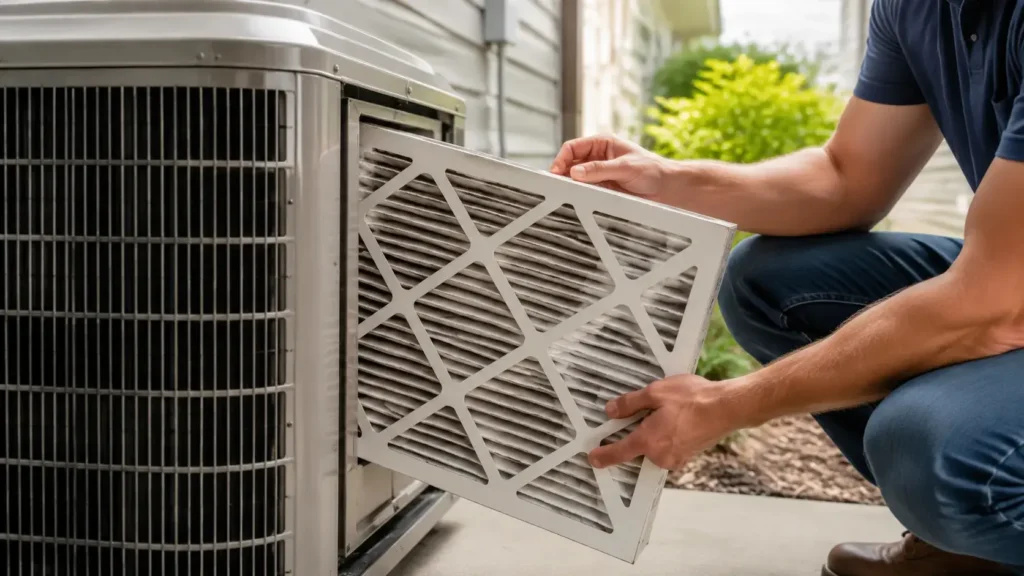
Managing moisture issues in your heating and cooling system doesn’t always require an expensive service call. As an air filter manufacturer, we know that basic maintenance can resolve many issues, but knowing your limits saves you from costly water damage.
Troubleshooting Tasks Homeowners Can Do
Before you call in an HVAC contractor, you can safely handle a few basic troubleshooting steps yourself:
- Inspect and Replace the AC Filter: A dirty or clogged filter restricts airflow, which leads to system freezing. Check your filter monthly. If it’s already warped or ruined by moisture, you need a fresh replacement.
- Clear the Drain Line Blockage: If you see water pooling around the indoor unit, find your condensate drain line. Using a wet/dry vacuum on the outdoor opening can often pull out clogs caused by algae or sludge.
- Clean the Drip Pan: Wipe out the condensation pan under your evaporator coil. Ensure it isn’t rusted through and that the drain fitting is tight and clear of debris.
Signs You Need a Certified HVAC Technician
Some issues require specialized tools and expert training. Shut down your system and call a certified technician if you notice any of these warning signs:
- Refrigerant or Coolant Leak: If you notice ice on your system along with a sweet or chemical smell, you likely have a coolant leak. Adding refrigerant requires a licensed professional.
- Persistent Frozen Evaporator Coil: If your coil keeps freezing over even after you change to a clean filter, a deeper airflow, or a mechanical issue is at play.
- Electrical Hazards: If water has dripped onto electrical components, control boards, or wiring, do not attempt a DIY fix.
- Incorrect Installation: If your ductwork or unit was improperly installed, it will continually suffer from moisture buildup and restricted airflow until the physical setup is corrected.
Frequently Asked Questions About Wet HVAC Filters
Can I dry out a wet air filter and reuse it?
No, you should never try to dry out a wet AC filter and put it back in your system. As an air filter manufacturer, we know firsthand how moisture damages the structural integrity of filter media. Cardboard frames will warp, and the pleated material will degrade, leading to restricted airflow or gaps that let dust bypass the filter entirely.
More importantly, a damp filter is a breeding ground for mold growth and bacteria. Reusing it will ruin your indoor air quality and spread mold spores throughout your home. If your filter gets wet, discard it immediately and replace it with a fresh one. If you find yourself frequently dealing with a damp system, you might wonder if you can just leave it out temporarily, but running your air conditioner without a filter carries severe risks for your equipment.
How do I know if my condensate drain is clogged?
A drain line blockage usually leaves behind several obvious warning signs. Keep an eye out for these common symptoms:
- Standing water: Water pooling in the condensation pan or drip pan underneath your indoor unit.
- Musty odors: A damp, moldy smell coming from your air vents when the system runs.
- System shutdowns: Many modern AC units feature a safety float switch on the drain fitting that shuts the system down completely if water backs up.
- Water damage: Unexplained water stains on the drywall or ceiling near your HVAC closet or attic unit.
Can a wet filter cause my air conditioner to freeze up?
Yes, a wet filter can absolutely cause a frozen evaporator coil. When an air filter becomes saturated with water, it blocks normal airflow through the system. This severe lack of airflow prevents the evaporator coil from absorbing enough heat from your indoor air.
As a result, the temperature of the coil drops below freezing, causing the normal moisture buildup on the coil to turn into ice. A frozen system cannot cool your home effectively and can lead to a costly liquid coolant leak if left unaddressed.