You pop the hood for routine maintenance, check the intake housing, and suddenly find yourself wondering: Why is there oil in my air filter?
It’s a frustrating and concerning discovery. As a mechanic who has diagnosed countless engines, I know that spotting oil where it doesn’t belong can instantly trigger panic about expensive repairs.
But don’t stress just yet. You’re in for a treat because I’ve put together a complete guide to help you pinpoint exactly what’s going wrong under the hood.
Some culprits are incredibly simple, like a clogged PCV valve. Others, like excessive engine blow-by or worn piston rings, require a bit more attention. They are all covered here.
In this post, you’re going to learn how your engine air filter works, the top signs you have oil in your air filter, and exactly what to do if you find oil in your air intake, step by step.
Let’s dive right in.
Understanding Your Car’s Air Filter System
As a leading air filter manufacturer, we know that a clean, dry filtration system is non-negotiable for peak engine performance. If you find yourself asking, “Why is there oil in my air filter?” understanding the baseline mechanics of your vehicle’s air intake is the vital first step toward a solution.
How an Engine Air Filter Works
The engine air filter is your vehicle’s primary line of defence. Its sole purpose is to guarantee that only purified, unrestricted air enters the combustion chamber.
- Traps Harmful Debris: It actively captures dust, dirt, pollen, and road debris before they can penetrate the air intake.
- Optimises Airflow: It regulates the precise volume of oxygen required for an efficient, powerful fuel burn.
- Defends Engine Internals: By blocking abrasive particulates, it prevents catastrophic damage to delicate engine components.
Why Oil Belongs in the Engine, Not the Intake
Motor oil is engineered strictly for lubrication, friction reduction, and heat dissipation deep within the engine block. It has absolutely no place inside the air filter housing.
- Distinct Functions: Oil lubricates moving parts like pistons and crankshafts. The intake system is designed exclusively for dry air.
- Controlled Ventilation: A healthy, positive crankcase ventilation system utilises a PCV valve to safely route combustion gases back into the engine. It is explicitly designed to keep liquid oil out of the intake.
- The Warning Sign: When liquid oil or heavily vaporised oil breaches this barrier and saturates your filter, it suffocates the engine. Oil in the air intake is never normal; it is a direct symptom of internal pressure imbalances or mechanical failure.
Signs You Have Oil in Your Air Filter
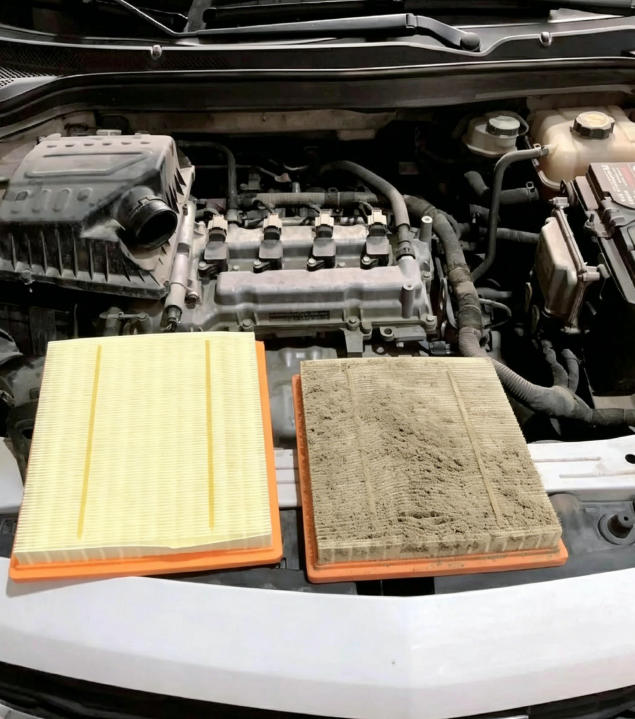
Spotting trouble early saves engines. If you are asking why there is oil in my air filter, the first step is recognising the symptoms before minor ventilation issues escalate into major internal engine problems. Here is what to look out for.
Visibly Dirty or Oily Air Filter
The most direct sign is what you find when you open the hood. As an air filter manufacturer, we know exactly what a normal, end-of-life filter should look like compared to one that has been compromised by fluid.
- Inspect the air filter housing: Open the box and look for dark, greasy residue pooling at the bottom of the intake track.
- Check the filter media: A standard used filter is dry, grey, and dusty. An oil-soaked filter feels slimy, heavy, and smells strongly of engine oil.
Just as we see in household systems where a dirty air filter can cause your AC not to cool due to severe airflow restriction, a grease-clogged engine filter completely suffocates your vehicle’s air intake.
Check Engine Light Illuminates
Engines rely on precise data to run. When vaporised oil travels backwards into the intake system, it creates immediate electronic chaos.
- Sensor Interference: Oil mist coats the sensitive wire of the Mass Air Flow (MAF) sensor, preventing it from measuring incoming air accurately.
- Dashboard Warnings: This bad data immediately triggers your vehicle’s check engine light.
If your dashboard lights up and you discover a wet, dirty air filter under the hood, your car’s computer is actively warning you that the engine cannot breathe properly.
Noticeable Loss of Engine Power
Combustion requires a massive, uninterrupted flow of oxygen. When oil blocks the filter pleats, engine performance drops off a cliff. You will feel this directly behind the wheel.
- Sluggish Acceleration: Stepping on the gas pedal feels unusually heavy, and the car responds slowly.
- Rough Idling: The vehicle may stutter, shake, or feel like it wants to stall when stopped at a red light.
- Misfires and Poor Mileage: The engine runs “rich” (too much fuel, not enough air), which tanks your fuel economy and causes rough running conditions.
Top Causes of Oil in the Air Filter
As an air filter manufacturer, we often hear from drivers surprised to find their engine’s breathing system soaked in oil. Finding oil in this area is a strong indicator of internal engine problems rather than a flaw with the filter itself. When the system operates correctly, oil stays in the crankcase. When things go wrong, excess pressure forces that oil outward. Here are the most common culprits.
Clogged Positive Crankcase Ventilation (PCV) Valve
The positive crankcase ventilation (PCV) valve is a small, inexpensive, yet vital emissions control device. Its job is to route unburned blow-by gases and vaporised oil safely from the crankcase back into the engine’s air intake to be burned off.
When you have a blocked PCV system, the normal flow stops. Here is what happens next:
- Pressure Spikes: The trapped gases cause extreme crankcase pressure.
- Reverse Flow: With nowhere else to go, the pressure forces engine oil backwards through the vacuum line or breather filter.
- The Result: The oil deposits directly into your air filter housing, ruining the filter.
Regular maintenance usually prevents valve clogs, but a stuck PCV valve is often the first thing a mechanic will check when oil appears in the intake.
Excessive Engine Blow-By
Engine blow-by occurs when the explosive force of combustion pushes fuel, air, and moisture past the pistons and down into the crankcase. While a very small amount of blow-by is normal in any internal combustion engine, excessive blow-by is a major mechanical issue.
When too much combustion gas leaks downward, it completely overwhelms the crankcase ventilation system. This massive surge in pressure displaces the oil resting in the oil pan, vaporising it and forcing it up into the air intake tract.
Worn Piston Rings or Cylinder Walls
Excessive blow-by doesn’t happen on its own; it is almost always the direct result of serious wear and tear inside the engine block.
- Piston Ring Wear: The metal rings around your pistons are designed to seal the combustion chamber. Over time, these rings lose their tension or break.
- Cylinder Wall Wear: The metal walls of the cylinders can become scored or smoothed out over tens of thousands of miles, destroying the tight seal required for healthy compression.
When these components fail, the high-pressure gases from the combustion chamber easily bypass the pistons. The resulting blow-by carries a heavy mist of oil right into the intake system. If your filter is completely saturated with oil and grime, you might be wondering why is my air filter black; a combination of heavy dirt and oil blow-by is a primary reason for this dark, sludgy appearance.
Blocked Oil Passages and Sludge Build-Up
Engine oil is designed to flow smoothly through precise channels to lubricate moving parts. However, if a vehicle frequently misses routine oil changes, the old oil breaks down, oxidises, and bakes into a thick, tar-like substance.
This sludge buildup restricts fluid movement, leading to clogged oil passages. When the oil cannot drain back down to the oil pan fast enough, it begins to pool in the upper cylinder head. As the engine runs, the built-up pressure pushes this pooled oil out through the crankcase breather hoses directly onto the air filter. Keeping up with your oil change intervals is the easiest way to prevent sludge from forming and destroying your engine’s internal airflow.
Other Potential Culprits for Oily Air Intakes
Beyond standard internal engine problems, we often see a few other reasons why oil ends up where it shouldn’t. If your crankcase ventilation system is working perfectly, the issue might be hiding elsewhere in your intake system.
Pre-Oiled Aftermarket Air Filters
Sometimes, the oil inside your air filter housing comes directly from the filter itself. Many reusable performance filters require a light coating of oil to trap fine dust and debris.
- Over-Oiling: If you apply too much oil during routine cleaning, the engine’s vacuum pulls that excess fluid directly into the air intake.
- Sensor Issues: This rogue oil frequently coats the mass airflow sensor, which will quickly trigger a check engine light and cause rough idling.
- Smart Sourcing: To avoid messy intake issues, we always recommend sourcing your parts from the best air filter manufacturers who design filters optimised for proper airflow without relying on heavy oil coatings.
Failing Turbocharger or Supercharger Seals
If you drive a vehicle with forced induction, turbocharger issues are a frequent source of oily intakes. Turbos and superchargers rely heavily on pressurised engine oil to keep their bearings lubricated and cool.
- Leaking Seals: When the internal seals wear out, oil pushes past them and leaks directly into the intake tract.
- Blow-Back: This vaporised oil is blown through the intercooler piping and can eventually pool near the air filter housing.
- Warning Signs: If failing turbo seals are the culprit, you will typically notice thick blue smoke coming from your exhaust and a severe drop in boost pressure.
What to Do If You Find Oil in Your Air Intake
As an air filter manufacturer, we know that spotting oil where it doesn’t belong is stressful. If you find a dirty air filter soaked in oil, you need to act fast to prevent serious internal engine problems.
Diagnosing the Exact Source of the Leak
First, pinpoint where the oil is coming from. Don’t just guess; look at the evidence to find the root cause.
- Check for a blocked PCV system: A failing valve traps air, creating high crankcase pressure that forces oil backwards.
- Inspect the vacuum line: Look for fresh oil trails leading directly to the intake.
- Look for severe engine wear: Piston ring wear often leads to heavy engine blow by, pushing exhaust gases and oil mist up top.
- Rule out other parts: Look for heavy sludge buildup under the oil cap or investigate potential turbocharger issues if your vehicle is equipped with one.
Cleaning the Air Intake Housing
Before installing new replacement parts, you must clean up the existing mess to protect the new components.
- Remove and discard the ruined filter.
- Use a mass airflow sensor cleaner or safe degreaser to thoroughly wipe down the air filter housing and the entire air intake tube.
- Make sure all vaporised oil and sticky residue are completely gone so your new filter stays dry and breathes easily.
Replacing the Air Filter and PCV Valve
Never try to save or wash an oil-soaked paper filter. It will choke your engine.
- Swap the engine filter: Install a brand-new, high-quality filter. While you are handling routine filter maintenance, it is also a great time to check and replace your cabin air filters to ensure the air inside your vehicle’s cabin stays fresh and clean.
- Change the PCV valve: Even if you aren’t 100% sure it’s broken, replacing a cheap PCV valve is your best insurance against future oil blow-back.
When to Consult a Professional Mechanic
Sometimes, the issue goes beyond simple DIY fixes and basic maintenance. Seek expert help if:
- The check engine light stays illuminated even after you replace the valve and clear the codes.
- You still experience poor performance or suspect a severe crankcase air leak.
- You suspect major internal engine damage causing persistent blow-by that a simple breather filter or valve replacement can’t fix.