What is a MERV Rating?
MERV stands for Minimum Efficiency Reporting Value. It is the universal industry standard used to evaluate the overall effectiveness of air filters. When comparing MERV 8 vs MERV 11, understanding this baseline is the first step in optimising your HVAC systems. As a premier manufacturer of MERV8 and MERV11 filters with over 20 years of B2B production experience, we engineer our air filtration solutions to meet exact performance and compliance specifications.
How the MERV Scale Works
The MERV rating chart measures a filter’s ability to capture particles ranging from 0.3 to 10 microns. The standard scale ranges from 1 to 16, dictating the specific particle size a filter can successfully trap.
- Ratings 1-4: Provide basic filtration, primarily catching large dust and lint to protect HVAC equipment.
- Ratings 5-12: Target a smaller micron range, effectively trapping pollen capture, pet dander, and finer airborne contaminants.
- Ratings 13-16: Deliver superior filtration for commercial and healthcare environments, capturing microscopic pathogens.
In our state-of-the-art ISO6-rated testing laboratory, we rigorously evaluate every filter model. This guarantees that our custom and OEM filters deliver accurate particle capture and reliable service life under precise environmental controls.
Why Filter Ratings Matter for Indoor Air Quality
Selecting the correct filter rating directly dictates both the indoor air quality (IAQ) of a facility and the operational health of the climate control equipment. A precisely chosen MERV rating ensures a safe environment by aggressively removing harmful airborne contaminants.
Key reasons accurate filter ratings are critical for your projects:
- Occupant Health: Protects allergy sufferers and building occupants from harmful industrial particulates and biological allergens.
- System Performance: Balances high-efficiency particle capture with acceptable pressure drop. This prevents dangerous airflow restriction that can burn out residential blowers and commercial ECM motors.
- Energy Efficiency: The right filter rating optimises airflow, reduces mechanical strain, and lowers long-term energy costs.
Understanding MERV 8 Air Filters
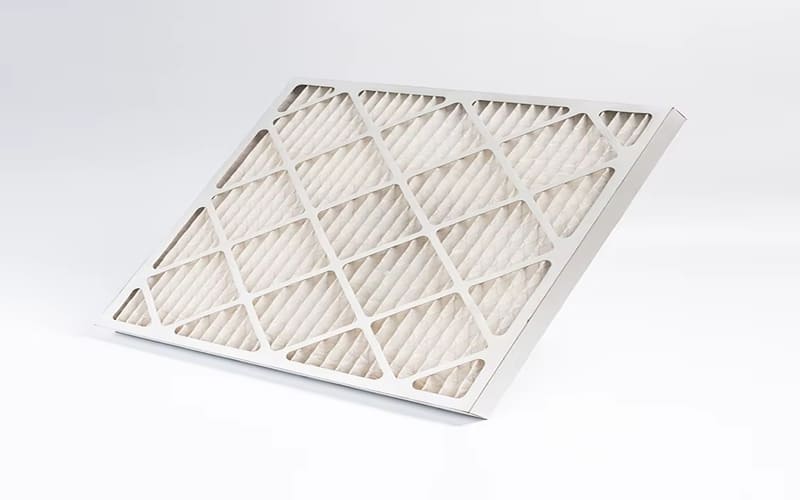
As a leading manufacturer with over 20 years of experience, we specialise in producing high-quality MERV 8 air filters designed for reliability and cost-effectiveness. These filters serve as the standard baseline for many commercial and residential HVAC systems, providing a balance between air clarity and system protection. By utilising automated production lines, we ensure our MERV 8 air filter options remain affordable while meeting strict performance standards.
Particles Captured by MERV 8
A MERV 8 rating indicates that the filter is highly effective at capturing larger airborne contaminants. It is designed to trap at least 70% of particles in the 3.0 to 10.0 micron range. This provides essential basic filtration for everyday environments.
- Dust and lint
- Pollen capture
- Dust mite debris
- Large mold spores
Pros and Cons of MERV 8
Choosing the right filter involves weighing performance against operational costs. Our engineering team often recommends MERV 8 for clients prioritising energy efficiency and system longevity.
- Pros:
- Low Pressure Drop: These filters offer minimal airflow restriction, which prevents strain on residential blowers and industrial fans.
- Cost-Effective: Due to our large-scale raw material procurement, we provide these at a relatively low cost.
- Equipment Protection: Effectively keeps dust from accumulating on sensitive HVAC components.
- Cons:
- Limited Fine Particle Capture: Not ideal for capturing pet dander, smoke, or bacteria.
- IAQ Limitations: May not be sufficient for allergy sufferers or specialised medical environments.
Ideal Use Cases for MERV 8 Filters
We manufacture these filters for a wide range of applications where standard air quality is the goal. Because we offer full OEM and custom manufacturing services, we can adapt these filters to any specific equipment dimensions or housing requirements.
- Standard Office Buildings: Keep indoor air quality (IAQ) stable without increasing utility bills.
- Residential HVAC Systems: Perfect for homes without pets or severe respiratory concerns.
- Industrial Pre-filtration: Used as a primary stage to protect more expensive HEPA or secondary filters in complex systems.
- Commercial Retail Spaces: Provides a clean environment for customers while maintaining high airflow.
Understanding MERV 11 Air Filters
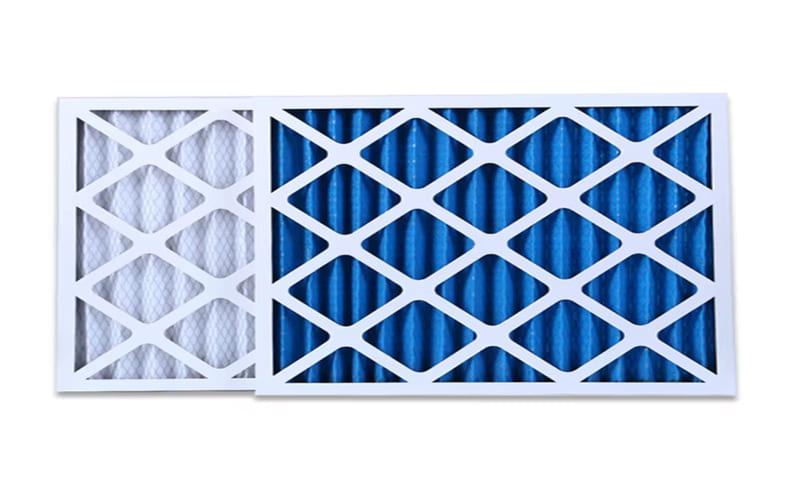
As a dedicated manufacturer of MERV 11 filters, we know exactly what it takes to elevate indoor air quality. A MERV 11 rating represents a significant upgrade from basic filtration, providing enhanced protection against finer airborne contaminants. We produce these filters using advanced automated equipment, ensuring you receive high-quality, reliable products at an affordable price, backed by our rigorous ISO6-rated laboratory testing.
Particles Captured by MERV 11
MERV 11 filters are engineered to trap smaller particles, specifically targeting the 1.0 to 3.0 micron range. Our custom and OEM MERV 11 solutions are highly effective at blocking:
- Pet dander and microscopic allergens
- Fine dust and lint
- Auto emissions and smog
- High-efficiency pollen capture
Pros and Cons of MERV 11
Evaluating the trade-offs is essential when outfitting your HVAC systems with new media.
Pros:
- Drastically improves indoor air quality, making it an excellent choice for allergy sufferers.
- Keeps HVAC coils and internal components clean from fine particle buildup, promoting energy efficiency.
- Highly cost-effective when leveraging our large-scale production and rapid 12-day delivery capabilities.
Cons:
- Introduces a higher pressure drop compared to lower-tier filters.
- Can cause airflow restriction in older systems that lack modern ECM motors or robust residential blowers. If your facility’s system is designed to handle higher resistance and you require even stricter environmental control, transitioning to MERV 12 filters provides the next level of particulate capture.
Ideal Use Cases for MERV 11 Filters
We supply MERV 11 filters to a diverse range of global industries. They are the ideal solution for commercial office buildings, light industrial facilities, and residential spaces that demand superior air quality. Whether you need standard configurations or specialised contract manufacturing, our engineering team guarantees your MERV 11 filters will perfectly match your specific operational requirements.
MERV 8 vs. MERV 11: Head-to-Head Comparison
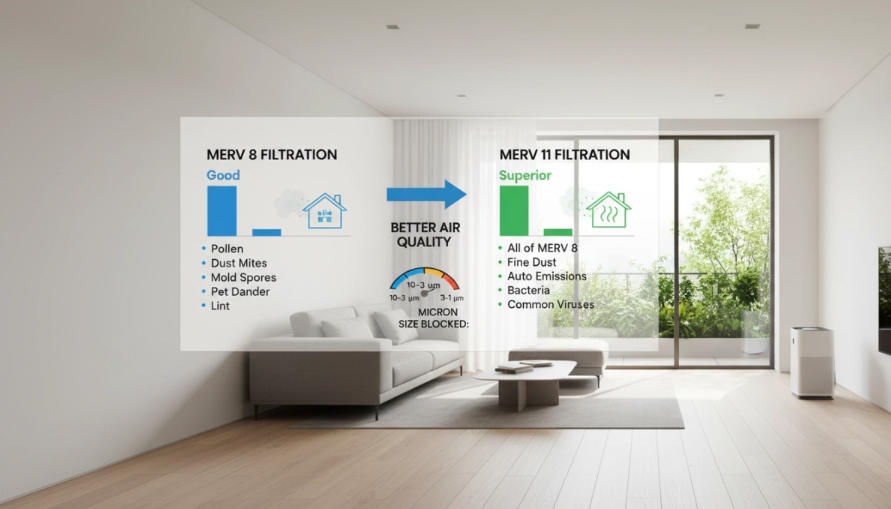
Choosing between MERV 8 and MERV 11 involves balancing air purity with system performance. As a manufacturer with over 20 years of experience, we produce both options to meet specific B2B and residential requirements, ensuring each filter undergoes rigorous testing in our ISO6-rated laboratory.
Filtration Efficiency and Particle Size
The primary difference lies in the micron range each filter can capture. While both handle basic filtration, MERV 11 provides a significant step up for indoor air quality.
- MERV 8: Captures 70% to 85% of particles sized 3.0 to 10.0 microns. It is highly effective against dust and lint, dust mites, and large pollen.
- MERV 11: Captures over 85% of particles in the 3.0 to 10.0-micron range and more than 65% of fine particles sized 1.0 to 3.0 microns. This includes pet dander, auto emissions, and finer airborne contaminants.
Airflow Resistance and Pressure Drop
Every filter creates some level of airflow restriction, known as pressure drop. It is vital to match the filter to your HVAC system’s capacity to avoid straining the motor.
| Feature | MERV 8 | MERV 11 |
|---|---|---|
| Airflow Resistance | Low | Moderate |
| Pressure Drop | Minimal impact on most systems | Noticeable; requires stable HVAC health |
| System Compatibility | Ideal for older units and standard blowers | Best for newer systems with high-efficiency motors |
Cost and Value Differences
We leverage automated production and large-scale raw material procurement to keep our prices competitive for both ratings.
- MERV 8 Value: This is the most affordable price point for routine maintenance. It offers excellent protection for the HVAC equipment itself by preventing dust buildup on coils without a high investment.
- MERV 11 Value: While the unit cost is slightly higher, it provides superior value for environments requiring higher IAQ standards, such as offices or homes with allergy sufferers.
When deciding on the right specifications, it is also helpful to understand what size air filter you need to ensure a perfect seal, as even a high MERV rating cannot compensate for a poor fit. Whether you require standard sizes or a custom manufacturing solution, we provide a 100% satisfaction guarantee on all MERV 8 and MERV 11 orders.
Does MERV 11 Restrict Airflow Too Much?
We often hear concerns from facility managers about whether a higher MERV rating will “choke” their HVAC system. The reality is that while a higher rating means denser filtration media, modern systems are usually designed to handle the transition if the filters are manufactured correctly.
Understanding HVAC Pressure Drop
Pressure drop is the resistance the air encounters as it passes through the filter. As a manufacturer with over 20 years of experience, we focus on optimising the pleat density in our MERV 11 filters to keep this resistance as low as possible. In our ISO6-rated testing laboratory, we measure the initial and final pressure drop to ensure our filters provide high efficiency without forcing your fans to overwork. Excessive airflow restriction usually happens when a filter is left in place too long, not just because of its MERV rating.
Is MERV 8 Better for Older HVAC Systems?
For older units equipped with basic residential blowers, a MERV 8 filter is often the safer, more conservative choice.
- Lower Resistance: MERV 8 filters allow for easier airflow, which prevents putting too much strain on aging motors.
- Motor Protection: Older systems lack the sophisticated ECM motors found in newer models that can automatically adjust speed to compensate for pressure changes.
- Balanced Performance: If your equipment is more than 15 years old, sticking with MERV 8 ensures you maintain adequate indoor air quality without risking a system breakdown.
How to Prevent Airflow Issues
Maintaining a healthy balance between filtration and airflow comes down to smart maintenance and correct setup.
- Monitor Filter Life: We recommend checking filters every 30 to 90 days, as a clogged filter is the primary cause of pressure issues.
- Verify Orientation: Airflow must move in the direction of the arrows on the frame. Following a proper HVAC installation guide ensures that the structural wire backing supports the media against the air pressure.
- Right-Sizing: Ensure you are using the exact air filter sizes required for your housing to prevent air bypass, which can drop system efficiency.
How to Choose Between MERV 8 and MERV 11
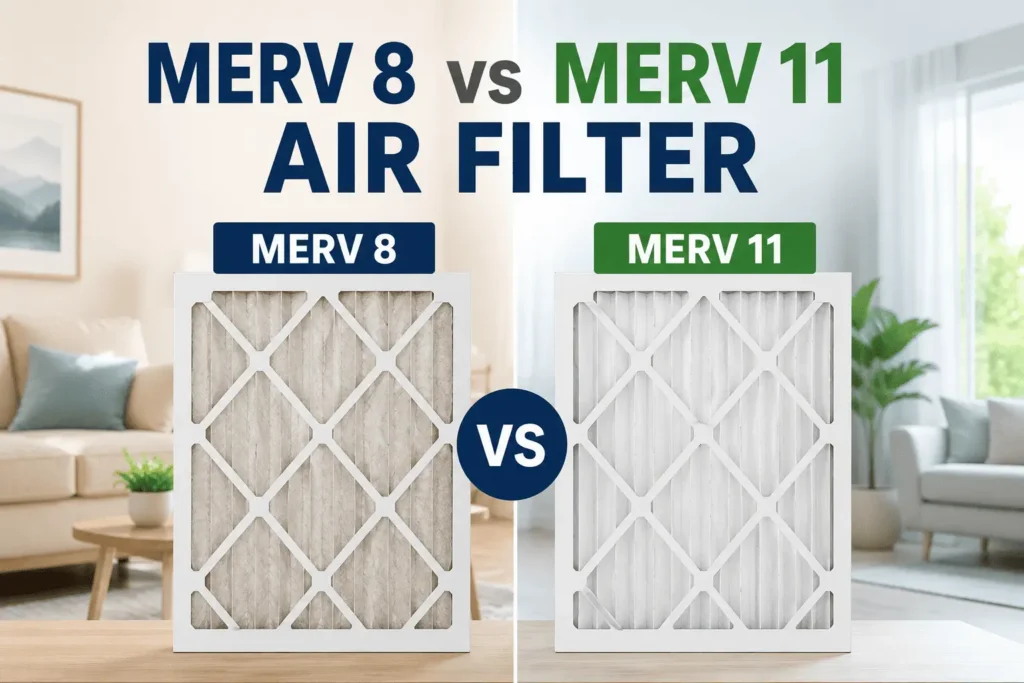
Choosing between MERV 8 and MERV 11 depends on your specific environment and the sensitivity of the occupants. As a manufacturer with over 20 years of experience, we recommend evaluating your indoor air quality (IAQ) goals against your HVAC system’s capacity.
When MERV 8 is Good Enough for Your Home
MERV 8 filters are the industry standard for basic protection. They offer a balance of affordability and efficiency, making them ideal for standard residential and commercial buildings.
- Standard Protection: Effectively captures dust, lint, and pollen.
- High Airflow: Minimal resistance ensures older HVAC systems run without strain.
- Cost-Effective: Lower price point for high-volume procurement.
When to Upgrade to MERV 11 for Allergies and Pets
If your facility or home requires a higher level of cleanliness, upgrading to MERV 11 is the right move. This rating is specifically designed to trap smaller contaminants that MERV 8 might miss. For environments requiring even more stringent air purity, such as labs or clinics, we also manufacture high-efficiency mini-pleat HEPA filter solutions to meet specialised needs.
| Feature | MERV 8 | MERV 11 |
|---|---|---|
| Pet Dander | Partial Capture | High Capture |
| Smog/Smoke | Low Efficiency | Improved Capture |
| Airflow | Excellent | Moderate |
| Best For | Standard Offices/Homes | Allergy Sufferers/Pets |
Consulting an HVAC Professional
Before switching to a higher MERV rating, verify your system’s pressure drop limits. A filter that is too restrictive can lead to increased energy costs or equipment failure. Our engineering team at Komtfil provides expert consultation and reverse engineering services to ensure your custom or OEM filters match your equipment’s exact specifications. We test every model in our ISO6-rated laboratory to guarantee performance and service life.
Maintenance Tips for Your HVAC Filters
Keeping your HVAC systems running smoothly requires regular filter maintenance. As a manufacturer with over 20 years of experience producing custom and OEM air filtration solutions, we know firsthand that neglecting maintenance ruins indoor air quality and damages equipment. Proper upkeep prevents severe airflow restriction and keeps your facility or home safe.
How Often to Replace MERV 8 vs. MERV 11 Filters
Because MERV 8 and MERV 11 filters capture different volumes of airborne contaminants, their lifespans vary. A MERV 11 filter traps much finer particles, meaning it fills up faster than a standard MERV 8.
- MERV 8 Filters: Typically need replacement every 2 to 3 months. They handle basic dust and lint efficiently without clogging too quickly.
- MERV 11 Filters: Usually require replacement every 1 to 2 months. Because they are designed to protect allergy sufferers by catching pet dander and fine dust, they restrict airflow much sooner if left unchecked.
Knowing exactly how often to change your air filter depends heavily on your specific environment, including building occupancy, pet presence, and local pollution levels.
Signs Your Air Filter Needs Immediate Replacement
Do not wait for a strict timeline if your filter is already compromised. Look out for these warning signs to avoid a massive pressure drop in your system:
- Visible Grime: If the filter media is completely grey or black, swap it out immediately.
- Weak Airflow: Noticeably less air coming from your vents indicates severe clogging.
- Spiking Energy Bills: A choked filter forces your system to work harder, wasting electricity.
- More Dust Indoors: If surfaces get dusty quickly, your filter is no longer trapping particles effectively.
We test all our filters in an in-house ISO6-rated laboratory to guarantee maximum service life, but routine replacement is still the only way to maintain peak performance and protect your equipment.