You might already know that a clogged air filter silently drives up energy bills, tanks fuel efficiency, and triggers severe indoor allergy flare-ups.
But knowing how often to change your air filter isn’t a simple one-size-fits-all answer.
Whether you’re balancing pets and MERV ratings for your home HVAC air filter, or trying to determine the right replacement schedule for your vehicle’s engine air filter and cabin air filter, I’ve put together the ultimate practical guide.
In this breakdown, you’ll discover exact replacement timelines, critical warning signs of system strain, and simple steps to swap your filters like a pro.
Understanding Air Filter Types: Home HVAC vs. Automotive
Air filters serve as the primary defense against airborne contaminants, protecting both mechanical equipment and human health. Understanding the fundamental differences between residential and automotive filtration systems ensures optimal replacement scheduling and equipment longevity.
HVAC Air Filters for Home Heating and Cooling
Residential HVAC air filters sit directly within your home heating and cooling system return vents or air handlers. Their dual purpose is to purify indoor air and shield sensitive HVAC components from particle buildup.
- Indoor Air Quality: Traps dust, pollen, pet dander, and mold spores to reduce triggers for allergies and asthma.
- System Efficiency: Prevents dust buildup on evaporator coils and blower motors, preserving balanced airflow and low operating costs.
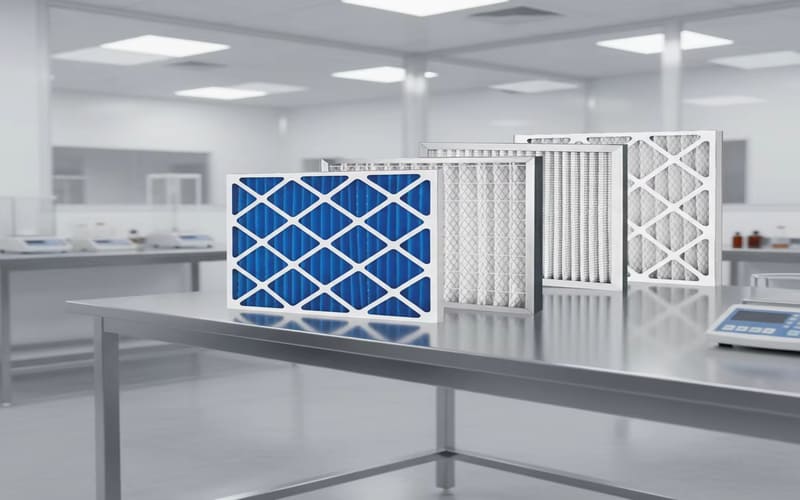
- Filter Options: Available in various MERV ratings and thicknesses, ranging from basic disposable fiberglass filters to high-efficiency pleated designs.
Engine Air Filters vs. Cabin Air Filters for Vehicles
Automotive air filtration splits into two distinct applications with separate operational roles:
- Engine Air Filters: Installed inside the engine compartment, these filters trap dirt, debris, and sand before air enters the combustion chamber. A clean engine air filter ensures optimal fuel efficiency, smooth acceleration, and long-term engine protection.
- Cabin Air Filters: Located behind the glove box or HVAC intake, cabin filters screen incoming outside air before it reaches the passenger compartment. They block road dust, pollen, exhaust odors, and environmental contaminants to maintain clean air inside the cabin.
How Often Should You Change Your HVAC Air Filter?
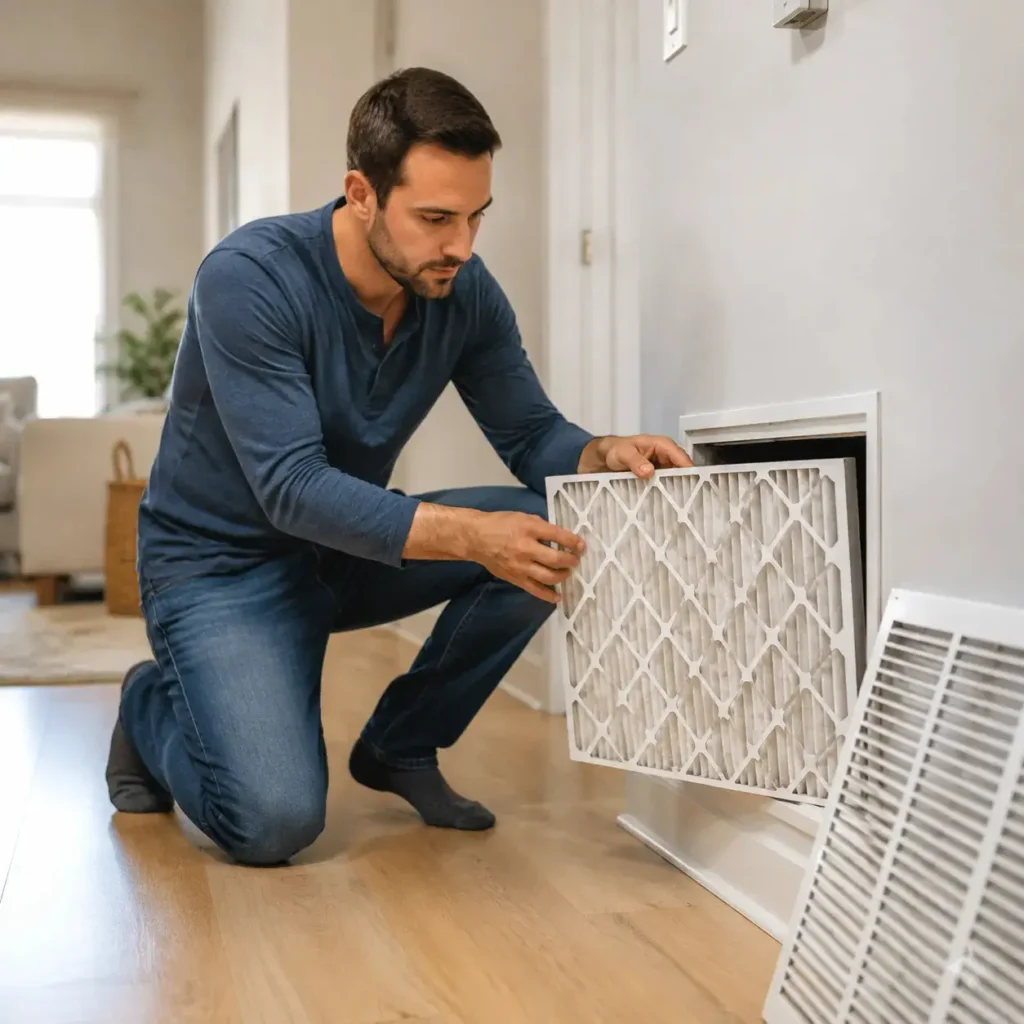
As an air filter manufacturer, we recommend checking your HVAC system filter monthly to keep your system running smoothly and maintain healthy indoor air quality. While general guidelines exist, your actual replacement frequency depends directly on your lifestyle, home occupancy, and system usage.
Standard Replacement Schedule Guidelines
For standard 1-inch disposable filter designs, use these general timelines to determine how often to change air filter units in your home:
- Vacation Homes or Single Occupants: Every 6 to 12 months
- Average Suburban Home (No Pets): Every 90 days
- Homes with One Cat or Dog: Every 60 days
- Homes with Multiple Pets or Allergies: Every 30 to 45 days
Impact of Filter Thickness and MERV Rating
Filter thickness and MERV rating dictate how much debris a filter can hold before restricting system airflow:
- 1-Inch Filters: Standard depth with minimal media capacity; requires replacement every 30 to 90 days.
- 3- to 4-Inch Filters: Offers significantly more surface area, extending lifespan to 6 to 9 months.
- 5-Inch Deep Pleated Filters: Accommodates heavy dust loading and can last up to 12 months.
Higher ratings capture much finer particles, including pet dander, mold spores, and fine dust. Upgrading to a high-efficiency option like the best MERV 16 furnace HVAC air filter for your home provides hospital-grade filtration, but requires regular routine checks to ensure dense fibers do not reduce airflow as dust builds up.
Key Factors That Affect Air Filter Lifespan
Standard replacement schedules serve as general guidelines, but your actual replacement frequency depends heavily on your daily environment. As an air filter manufacturer, we see firsthand how specific household conditions dictate how often to change air filter units to keep system efficiency at its peak and air clean.
Pets and Household Allergies
Pet hair and dander quickly clog filter media, creating heavy dust buildup that forces your HVAC system to work harder.
- Single-Pet Households: Change your filter every 60 days to manage routine shedding.
- Multiple Pets or High-Shedding Breeds: Shorten your maintenance schedule to every 30 to 45 days.
- Allergies and Asthma: If anyone in your household suffers from respiratory issues, replace filters every 30 days to maintain high indoor air quality and system airflow.
Home Size and Daily System Usage
The overall square footage of your property and daily home occupancy determine how hard your filter has to work.
- Vacation Homes: Low-occupancy spaces with minimal fan usage can stretch replacement cycles to 6 to 12 months.
- Smaller Homes & Condos: Smaller air volumes move through the system quicker, keeping filters operational for roughly 60 to 90 days.
- Continuous Fan Operation: Running your thermostat fan continuously circulates more particulate matter, requiring replacement every 30 days.
Local Outdoor Air Quality and Environment
Outdoor pollutants directly impact how quickly indoor filter media degrades.
- High-Pollen Regions: Peak spring and summer pollen seasons require monthly inspections.
- Construction Zones & Dirt Roads: Fine outdoor dust enters through open doors and windows, shortening filter lifespan by up to 50%.
- Wildfire Smoke & Soot: Environmental smoke loads filter fibers rapidly. Inspect your media frequently, and if you notice rapid darkening, inspect environmental causes for why your air filter turns black so you can prevent premature clogging.
How Often to Change Your Car Air Filter
Your vehicle relies on two distinct filters to protect engine performance and maintain air quality inside the cabin. Following a routine replacement frequency keeps repair costs low and drives performance high.
Recommended Engine Air Filter Interval
We recommend inspecting your engine air filter at every oil change and replacing it according to your routine driving environment:
- Normal Driving Conditions: Replace every 15,000 to 30,000 miles (or once every 12 months).
- Severe Driving Conditions: Replace every 10,000 to 15,000 miles if you frequently travel on dirt roads, through dusty construction zones, or in heavy stop-and-go traffic.
Always check your owner’s manual for exact manufacturer specifications. Master simple routine maintenance by learning how to change your car’s air filter right in your driveway.
Recommended Cabin Air Filter Replacement Schedule
Your cabin filter traps dust, pollen, and debris before outside air enters your climate control system.
- Standard Interval: Swap your cabin filter every 15,000 to 25,000 miles, or at least once per year.
- High Pollen & Urban Driving: Change it every 10,000 miles if you suffer from allergies or drive regularly in heavy city pollution.
Knowing how to change a cabin air filter ensures optimal heating and cooling airflow while keeping the air inside your vehicle fresh year-round.
Signs It Is Time to Change Your Air Filter
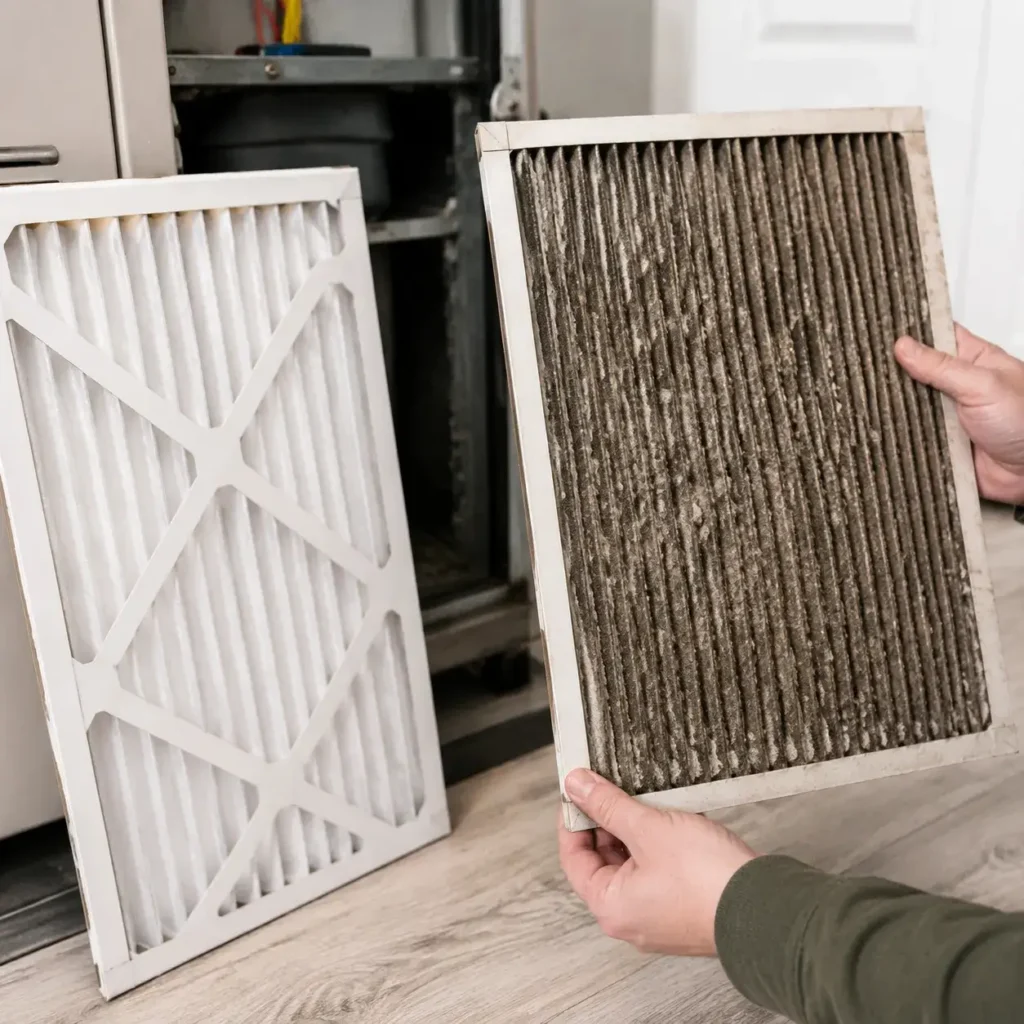
Knowing how often to change your air filter comes down to recognizing key dirty filter signs. Whether monitoring your home HVAC system or your vehicle, your equipment gives clear indicators when airflow becomes restricted.
Visible Dust Build-Up and Reduced Airflow
A quick visual inspection reveals the exact state of your filter. If the filter media turns dark gray or shows a thick layer of surface dust, it can no longer trap incoming contaminants effectively.
- Home HVAC Vents: Weak airflow coming from supply registers means your system is struggling to pull air through clogged media. Recognizing the 5 signs your HVAC filter is clogged prevents unnecessary strain on your blower motor.
- Vehicle Cabin Vents: Weak airflow from dashboard A/C or heating vents signals a restricted cabin air filter.
- Engine Bay: A dirty engine air filter packed with debris limits the oxygen supply required for optimal engine combustion.
Higher Energy Bills or Decreased Fuel Efficiency
When air filters clog, your system works twice as hard to pull the same volume of air, directly driving up operating costs.
| Application | Warning Sign | Operational Impact |
|---|---|---|
| Home HVAC | Extended heating/cooling cycles | Higher monthly energy costs |
| Vehicle Engine | Sluggish acceleration | Increased fuel consumption |
Unusual Odors and Increased Household Dust
Trapped moisture, pet dander, and debris on dirty filters create a breeding ground for stale smells and reduced indoor air quality.
- Musty Vents: A damp odor whenever your air conditioning turns on indicates mold or microbial growth on your cabin air filter or home HVAC filter.
- Frequent Dusting: If a fresh layer of dust settles on furniture shortly after cleaning, your filter has lost its holding capacity. Upgrading to high-efficiency air filters for dust control ensures fine particulate matter stays trapped inside the filter media rather than recirculating through your room.
What Happens If You Don’t Change Your Air Filter?
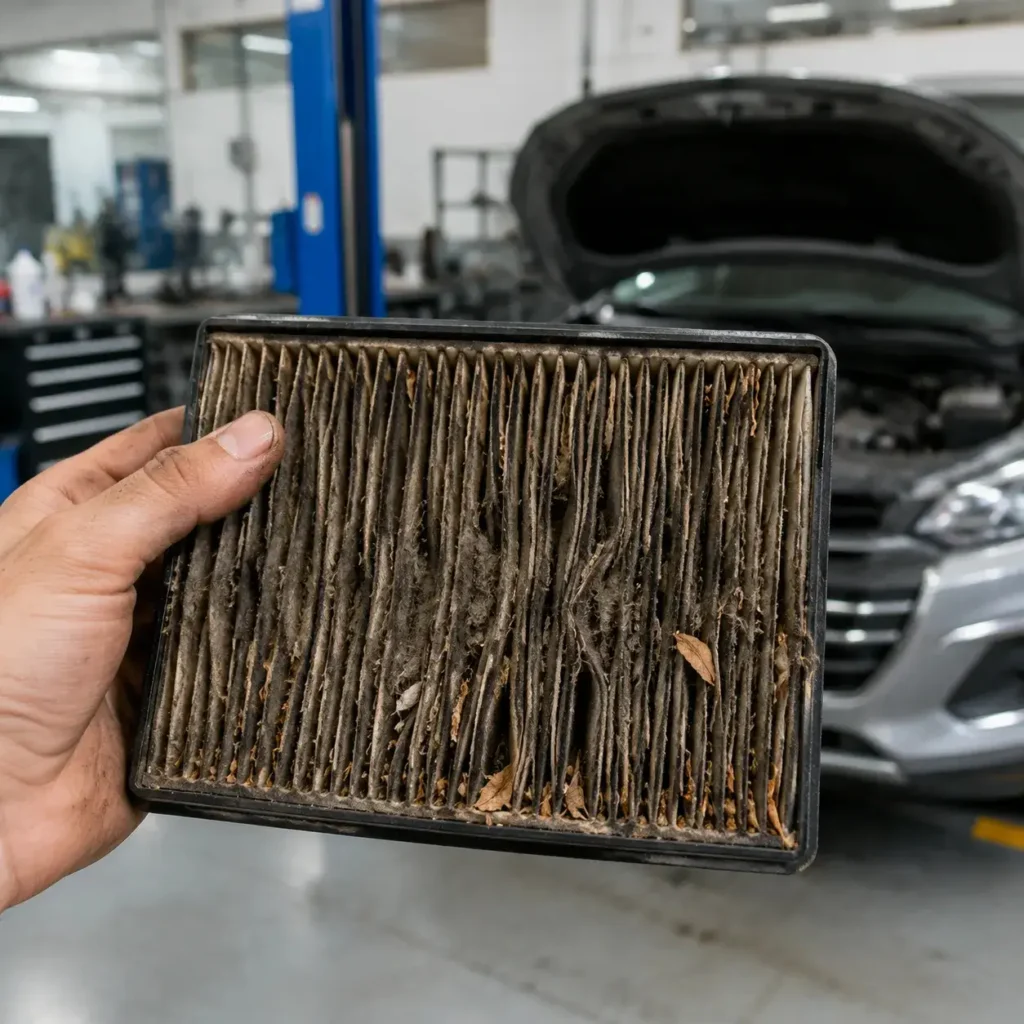
Ignoring your maintenance schedule and leaving a dirty filter in place forces your systems to work against a wall of trapped debris. As an air filter manufacturer, we see the damage neglected filters cause to both home health and mechanical performance.
Decreased Indoor Air Quality and Allergy Flare-Ups
When a disposable filter reaches full capacity, it stops trapping airborne pollutants and starts pushing them back into your living space.
- Recirculated Pollutants: Dust, pet dander, mold spores, and pollen continuously cycle through your ducts.
- Health Triggers: Poor indoor air quality directly triggers allergies and asthma symptoms, causing daily irritation, sneezing, and sinus issues.
- Airflow Contamination: If you notice persistent respiratory discomfort, learning how to test your indoor air quality can help pinpoint elevated particle levels caused by an overdue filter.
HVAC System Strain and Engine Performance Issues
A clogged filter severely restricts airflow, forcing equipment to consume significantly more power to draw air.
- HVAC System Failure: Restricted airflow makes your blower motor work overtime. This causes cooling coils to freeze, system components to overheat, and energy costs to spike. Some homeowners remove a blocked unit to restore flow, but understanding the risks of running an air conditioner without a filter underscores why installing a clean replacement is the only safe solution.
- Engine Performance Losses: A filthy engine air filter starves your engine of vital oxygen. This alters the air-fuel ratio, leading to sluggish acceleration, reduced horsepower, and poor fuel efficiency.
How to Replace Your Air Filter
Replacing your filters is one of the easiest DIY maintenance tasks you can perform to protect your equipment. Following a consistent replacement frequency keeps airflow smooth, preserves indoor air quality, and prevents unnecessary strain on your motors.
Steps to Change a Home HVAC Filter
- Turn Off System Power: Switch off your HVAC system at the thermostat or main power panel to prevent dust from getting pulled into the ductwork during the swap.
- Locate the Filter Slot: Find the filter door along the main blower unit or behind the return air vent grate on your wall or ceiling.
- Remove the Old Filter: Slide out the dirty filter, noting the airflow direction arrows printed on the cardboard frame.
- Insert the New Filter: Slide in a fresh disposable filter of the exact same size, ensuring the airflow arrows point directly toward the blower unit.
- Restore Power: Secure the access hatch and turn your heating and cooling system back on.
Steps to Change a Vehicle Engine or Cabin Filter
- Engine Air Filter:
- Pop the hood and locate the air box housing near the front of the engine bay.
- Unclip the metal fasteners or remove the housing screws.
- Remove the old element, wipe away any loose dust buildup inside the housing, and seat a high-quality filter firmly into place before securing the lid.
- Cabin Air Filter:
- Open the glove compartment (or access the panel under the dash) and release the glove box stoppers.
- Unlatch the cabin filter cover door and remove the old tray.
- Consult your owner’s manual to verify the correct airflow orientation, then slide in the new filter element. Considering how much a cabin air filter costs when installed by a dealership, doing this quick five-minute swap yourself delivers instant savings.