Understanding the Impact of Weed Smoke on Indoor Air Quality
Smoking cannabis indoors releases a dense concentration of pollutants that compromise the safety and comfort of your living environment. Unlike simple dust, weed smoke consists of a complex mixture of microscopic solids and liquid droplets that remain suspended in the air for hours, penetrating furniture, fabrics, and HVAC systems.
Particulate Matter and Respiratory Health
The primary physical threat in cannabis smoke is Particulate Matter (PM2.5). These particles are smaller than 2.5 microns, making them invisible to the naked eye but large enough to cause significant health disruptions.
- Deep Lung Penetration: PM2.5 bypasses the body’s natural filtration in the nose and throat, settling deep in the respiratory system.
- Immediate Irritants: High concentrations of smoke lead to throat irritation, coughing, and exacerbated asthma symptoms.
- Environmental Buildup: These fine particles are lightweight and can travel through small gaps in doors or windows, lingering long after the session has ended.
Volatile Organic Compounds (VOCs) and Stubborn Odors
The distinct, pungent aroma of marijuana is caused by Volatile Organic Compounds (VOCs), specifically terpenes and phenols. These are toxic gases that standard mechanical filters cannot trap.
| Pollutant Type | Impact on Indoor Environment |
|---|---|
| Terpenes | Create the “skunky” odor that permeates drywall and carpets. |
| Toxic Gases | Include benzene and formaldehyde, which are byproducts of combustion. |
| Adhesion | VOCs “stick” to porous surfaces, leading to long-term off-gassing and stale smells. |
How Cannabis Smoke Affects Shared Living Spaces
In apartments, condos, or multi-family homes, indoor smoke is rarely contained to a single room. Secondary smoke and odors migrate through shared ventilation, electrical outlets, and floorboards, creating a nuisance for others.
- Ventilation Risks: Without proper filtration, smoke follows the path of least resistance, often entering neighbors’ living areas through the HVAC system.
- Property Damage: Persistent smoke residue can yellow walls and leave a permanent scent that significantly reduces property value and is costly to remediate.
- Airflow Dynamics: Passive airflow is insufficient to clear heavy smoke; it requires active, high-efficiency filtration to prevent the accumulation of pollutants in shared environments.
Essential Filtration Technologies for Removing Weed Smoke
When figuring out how to choose a weed air filter to reduce smoke indoors, understanding the technology inside the machine is crucial. As an air filter manufacturer, we know that standard household filters simply cannot handle heavy smoke. To genuinely improve your indoor air quality, you need a system built with specific filtration technologies designed to target both particles and gases.
Activated Carbon Filters for Odor Adsorption
To eliminate stubborn marijuana odor, you must use an activated carbon air filter. Standard fabric filters cannot stop gases or smells. Activated carbon is treated to be extremely porous, allowing it to trap volatile organic compounds (VOCs) and toxic gases through a process called adsorption.
When dealing with cannabis smoke, the amount of carbon matters. A thin carbon-coated sheet will saturate quickly. For effective odor removal, look for filters containing actual carbon pellets. The heavier the carbon layer, the better the unit functions as a dedicated smoke eater.
True HEPA Filters for Capturing Smoke Particles
While carbon handles the smell, HEPA filtration handles the physical smoke. Cannabis smoke is packed with microscopic particulate matter that lingers in the air and settles on surfaces. You need high-quality air purifier filters—specifically True HEPA—to catch these pollutants.
Here is why True HEPA is non-negotiable for smoke:
- H13 Grade Efficiency: Captures up to 99.97% of airborne particles down to 0.3 microns.
- Clears the Haze: Rapidly pulls visible smoke clouds out of your living space.
- Reduces Ash: Stops fine secondary smoke dust from coating your furniture and electronics.
The Role of UV-C and PECO Technology in Air Purification
Beyond physical filters, modern air purifier technology often includes active purification methods to further clean the air.
- UV-C Lighting: This technology uses ultraviolet light to neutralize airborne bacteria, viruses, and mold spores. It is highly beneficial if you are managing air quality near a humid grow tent environment.
- PECO Technology: Photo Electrochemical Oxidation works by destroying VOCs and organic pollutants at the molecular level, rather than just trapping them in a filter medium.
While these advanced features are excellent additions for overall air health, they should always be paired with a robust combination of True HEPA and heavy activated carbon to effectively manage weed smoke.
How to Choose the Right Air Filter for Your Specific Needs
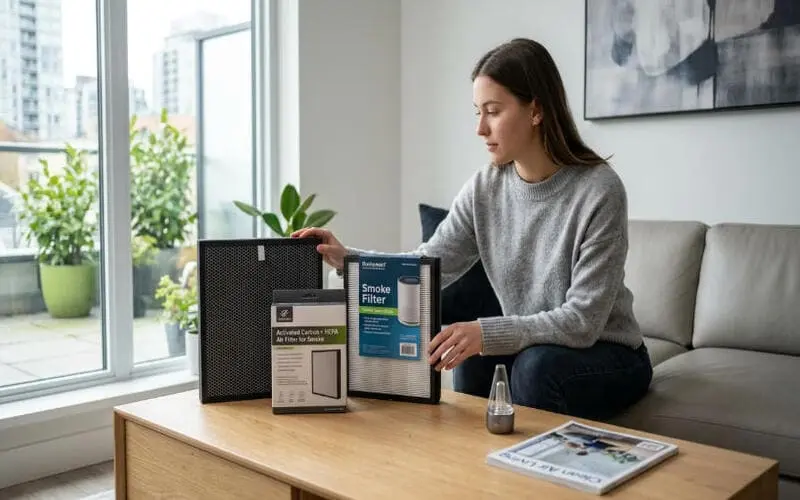
Selecting a weed air filter requires looking past the marketing and focusing on raw performance specs. I recommend focusing on three main pillars: air exchange speed, odor absorption capacity, and operational costs. If the filter isn’t sized correctly for your space, smoke will settle on your furniture before the machine can even process it.
Matching CADR Ratings to Your Room Size
The Clean Air Delivery Rate (CADR) is the most critical metric for smoke removal. It tells you exactly how many cubic feet of air the unit can scrub per minute. For cannabis smoke, you want a unit that can provide at least 5 air changes per hour (ACH). To get the best results, always check what size air filter do i need to ensure the CADR matches your specific square footage.
| Room Type | Average Sq. Ft. | Recommended Smoke CADR |
|---|---|---|
| Small Bedroom / Office | 150 – 250 | 180+ |
| Living Room / Open Plan | 350 – 500 | 350+ |
| Large Basement / Studio | 600+ | 450+ |
Evaluating the Amount of Activated Carbon
When it comes to neutralizing marijuana odor, the weight of the activated carbon is more important than the brand name. Cheap filters use a thin, carbon-coated sponge that saturates in days. For effective indoor smoke reduction, I look for “deep bed” filters containing at least 2 to 5 pounds of pelletized activated carbon. This ensures the volatile organic compounds (VOCs) responsible for that distinct “skunky” smell are actually trapped rather than just masked.
Prioritizing Noise Levels and Energy Efficiency
Since managing smoke often requires running the unit on high during a session, noise levels become a major factor. I suggest looking for units with high-efficiency EC motors, which provide better airflow with less hum.
- Noise Level: Aim for under 50dB on medium settings if the unit is in a shared living area.
- Energy Star Rating: Look for low-wattage units, as you will likely run the filter 24/7 to maintain air quality.
- Smart Sensors: High-end models include laser particulate sensors that automatically ramp up fan speed the moment they detect smoke.
If you are integrating your filtration into a home ventilation system, understanding what is a merv air filter can help you choose a replacement that balances smoke capture with HVAC system protection. High MERV ratings are excellent for particles, but they must be paired with carbon for true odor control.
Best Air Purifier Configurations for Different Scenarios
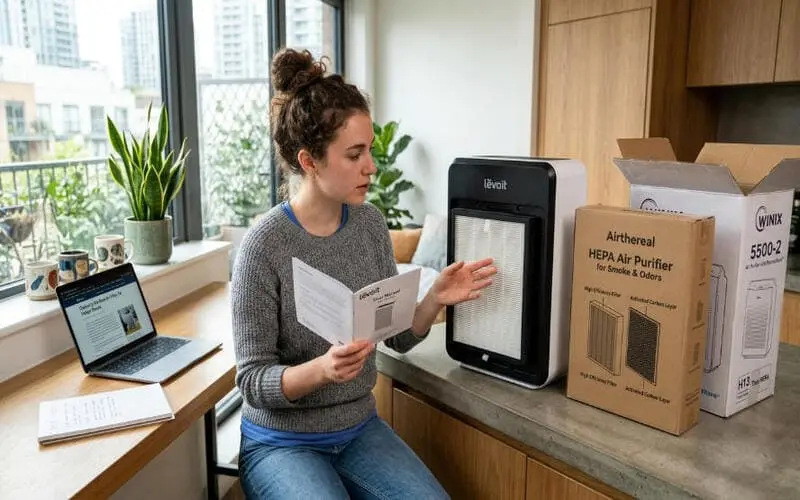
Finding out how to choose a weed air filter to reduce smoke indoors means understanding that no single setup works for every space. As an air filter manufacturer, I see firsthand how different environments demand specific filtration strategies to effectively manage cannabis smoke and maintain indoor air quality.
Solutions for Heavy Indoor Smokers
If you consume frequently, a standard purifier will quickly become overwhelmed. You need a dedicated smoke eater configuration designed to handle heavy particulate matter and dense marijuana odor.
- Massive Carbon Capacity: Look for a heavy-duty carbon air filter containing several pounds of pelletized activated carbon, rather than thin carbon-sprayed sheets. This is mandatory for absorbing high concentrations of volatile organic compounds (VOCs) and toxic gases.
- Medical-Grade Particle Capture: Pair the carbon with an H13-grade HEPA filter to trap fine ash and smoke particles down to 0.1 microns.
- High Airflow: Ensure the unit has a powerful motor to maintain high airflow, cycling the room’s air at least 4 to 5 times per hour to prevent smoke from settling into fabrics.
Managing Smoke and Odors in Multi-Pet Households
When you mix weed smoke with pet dander, your air purifier has to work double duty. Pet hair can rapidly clog expensive HEPA filtration media, reducing the system’s efficiency and lifespan.
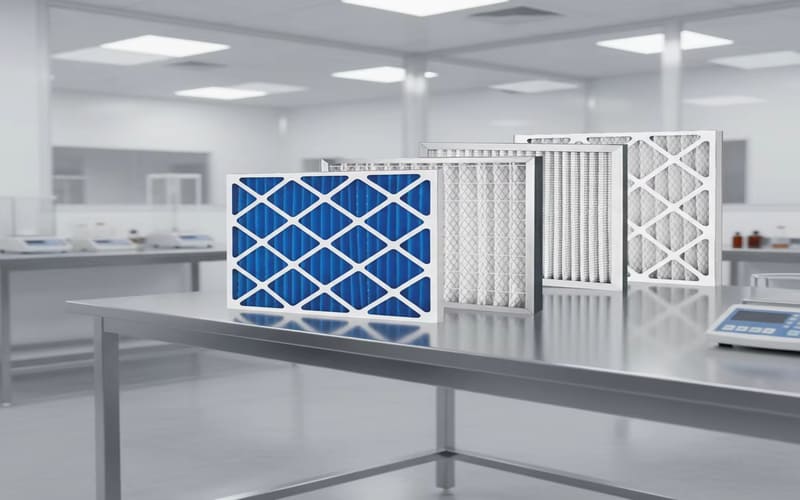
- Washable Pre-filters: Always use a unit with a fine mesh pre-filter to catch floating hair and large dust particles first.
- Dual Odor Removal: Pets and smoke both generate strong smells. A robust activated carbon stage is critical for comprehensive odor removal.
- Routine Maintenance: You will need to vacuum or wash the pre-filter weekly to keep the airflow strong and protect the inner filters from premature failure.
Choosing Filters for Small Apartments or Shared Ventilation
In compact living spaces, secondary smoke easily travels through shared walls or ductwork, causing issues with neighbors. Controlling pollutants at the source is critical here.
If your apartment connects to a centralized system, upgrading your air handling unit filters can help prevent smoke from circulating into other rooms. For the room itself, a compact standalone purifier is necessary. In extreme cases, some renters adapt an inline filter and fan combination—typically used in a grow tent—to scrub the air rapidly before it can escape the room.
Quick Reference: Ideal Configurations by Scenario
| Scenario | Primary Focus | Recommended Filter Setup |
|---|---|---|
| Heavy Smoking Room | Rapid smoke & VOC clearing | High-capacity pelletized carbon + H13 HEPA |
| Pets + Smoke | Preventing clogs & dual odors | Washable pre-filter + True HEPA + Activated Carbon |
| Small Apartments | Stopping secondary smoke leaks | Compact HEPA/Carbon unit + Upgraded HVAC filters |
| Enclosed Grow/Smoke Spaces | Maximum marijuana odor control | Inline filter with deep-bed carbon |
Maintenance and Care for Long-Lasting Air Filtration
Investing in a weed air filter to reduce smoke indoors is a smart move for your indoor air quality, but the hardware is only as good as its maintenance routine. As an air filter manufacturer, we know firsthand that neglecting filter replacements leads to lingering marijuana odor and poor airflow. Keeping your system in top shape ensures it continues acting as an effective smoke eater day in and day out.
Signs Your Carbon Filter Needs Replacement
Activated carbon is the heavy lifter for odor removal, trapping volatile organic compounds (VOCs) and toxic gases inside its porous structure. However, it eventually reaches maximum capacity. Understanding what a carbon filter is and how it works makes it clear why these filters cannot last forever. Watch for these signs that your carbon filter is saturated:
The smell returns: If you start noticing cannabis smoke odors lingering longer than usual, the carbon bed is likely full and can no longer adsorb new odors.
Reduced airflow:A heavily used filter gets clogged with sticky resin and particles, forcing the fan to work harder and noticeably dropping the volume of clean air coming out.
Time limits:Even with moderate use, most carbon filters need swapping every 3 to 6 months to remain effective against heavy smoke.
Cleaning Pre-filters to Maintain Airflow
The pre-filter is your first line of defense. It captures large particulate matter like dust, pet hair, and ash before they can clog up your expensive HEPA filtration and carbon layers.
Check bi-weekly: Inspect the pre-filter every two weeks, especially if you smoke frequently in the room.
Vacuum or wash: Most pre-filters can be gently vacuumed. If yours is a washable mesh, rinse it with water and let it dry completely before reinstalling.
Protect the core: A clean pre-filter ensures maximum airflow, allowing the finer H13-grade HEPA filters to focus strictly on microscopic smoke particles and microns.
How to Maximize Filter Lifespan and Performance
You can extend the life of your weed air filter by adopting a few simple habits during your smoke sessions.
Control the environment: Keep windows and doors closed while the purifier is running so it isn’t wasting energy trying to filter the outside air.
Adjust fan speeds: Turn the unit to its highest setting while smoking to catch secondary smoke immediately, then lower it to an auto or medium setting for continuous background cleaning.
Keep it clear: Ensure the air purifier has at least 1-2 feet of clearance on all sides. Blocking the intake or exhaust severely limits its ability to circulate air and capture pollutants.
Frequently Asked Questions About Weed Air Filters
Can an air purifier completely remove weed smell?
Yes, but it requires the right combination of technology. A standard filter won’t cut it. To fully eliminate the scent, you need a heavy-duty activated carbon filter paired with a True HEPA filter. While the HEPA captures the physical cannabis smoke particles, the carbon layer is responsible for odor removal by adsorbing the volatile organic compounds (VOCs) that carry the smell. If your device has enough carbon, it acts as a professional-grade smoke eater, leaving the air neutral and fresh.
How often should I change the filter used for smoke?
Smoke is much harder on filtration media than standard dust or pollen. The resin and tar in marijuana odor particles are “sticky” and will clog the microns of your filter much faster than usual. For consistent performance, I recommend the following:
- Heavy Users: Inspect and replace every 2–3 months.
- Occasional Users: Replace every 6 months.
- Pre-filters: Clean or replace monthly to maintain maximum airflow.
Understanding how often to change your air filter is critical because a saturated filter will eventually begin to release trapped odors back into your room, defeating the purpose of the device.
Are ozone generators safe for cannabis odor control?
I do not recommend using ozone generators in occupied living spaces. While they are powerful at neutralizing smells, ozone is a known lung irritant that can cause respiratory issues for humans and pets. For safe and effective indoor air quality management, it is much better to rely on mechanical air purifier technology.
A high-quality setup using H13-grade HEPA and a thick bed of carbon pellets is far safer and more effective for continuous use.