If you’re managing a data center, you know that protecting your equipment is critical to maintaining performance and avoiding costly downtime. But did you realize that air filters play a vital role in this? From capturing particulate matter to neutralizing gaseous pollutants, the right filtration system not only safeguards your hardware but also optimizes cooling efficiency. In this guide, you’ll learn how effective air filtration can extend the lifespan of your data center equipment, reduce operational costs, and keep your systems running smoothly—all while staying ahead in a rapidly evolving industry.
Why Data Center Equipment Requires Air Filtration
Data centers house the backbone of the digital economy, containing sensitive hardware that operates under precise environmental conditions. Without robust HVAC filtration, these facilities are vulnerable to a wide array of airborne contaminants that compromise performance. High-performance air filtration is not an optional upgrade; it is a critical safeguard for maintaining system uptime and protecting multi-million dollar investments in infrastructure.
Understanding Particulate Matter and Gaseous Pollutants
The air within a data center is often filled with invisible threats. Particulate matter (PM) and gaseous contaminants originate from both external environments and internal operations.
- Coarse Particles: Dust, skin cells, and lint that can clog cooling vents and settle on components.
- Fine Particles: Microscopic soot and smoke that can bypass standard filters and settle deep within server racks.
- Chemical Pollutants: Sulfur dioxide, nitrogen oxides, and ozone that infiltrate through ventilation systems from industrial or urban surroundings.
The Hidden Threat of Corrosion to Electronic Components
When gaseous pollutants react with humidity, they create a highly corrosive environment for sensitive hardware. Equipment corrosion is a silent killer of circuit boards and silver or copper connectors, often manifesting before visible signs appear.
| Contaminant Type | Primary Impact on Hardware |
|---|---|
| Sulfur/Chlorine | Causes “creep corrosion” on PCBs, leading to electrical shorts. |
| Particulate Buildup | Acts as an insulator, causing thermal stress and overheating. |
| Acidic Gases | Erodes delicate micro-circuitry and reduces electrical conductivity. |
Maintaining superior indoor air quality is the first line of defense against these microscopic hazards, ensuring that the internal components of servers and storage arrays remain pristine and functional.
How Air Filters Protect Data Center Equipment
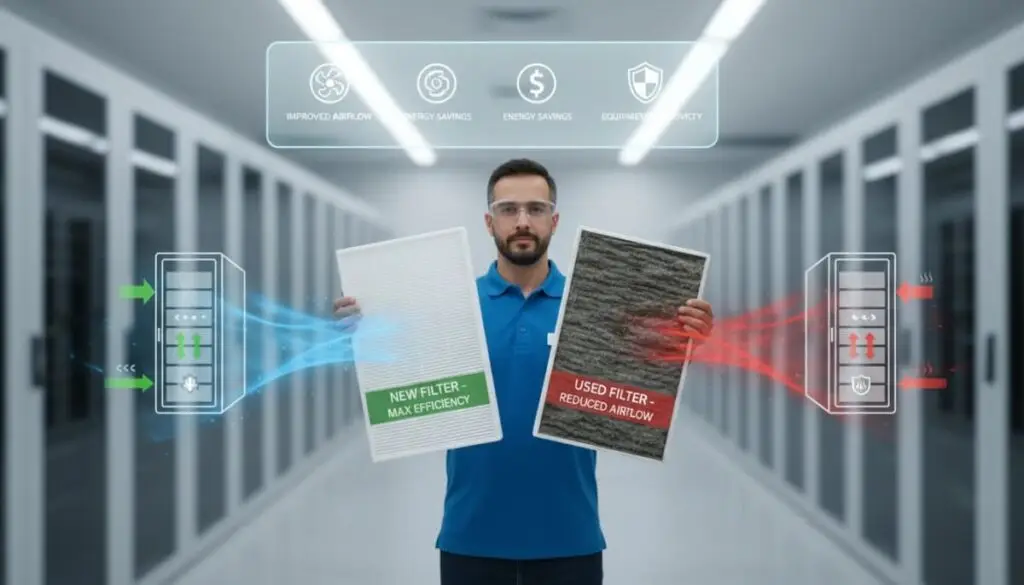
As an air filter manufacturer, we know that safeguarding your data center infrastructure requires more than just cybersecurity. Physical airborne contaminants are a massive threat to sensitive hardware. Proper HVAC filtration acts as a physical shield, stopping debris before it causes expensive equipment failures and protecting your bottom line.
Capturing Dust to Prevent Server Overheating
Particulate matter is a server’s worst enemy. When dust settles on internal microchips, it acts as an insulating blanket.
- Blocks heat dissipation: Trapped heat leads to immediate thermal stress on the processors.
- Causes sudden shutdowns: Overheating hardware will throttle or crash, destroying your system uptime.
Capturing these particles at the intake is critical. Utilizing advanced solutions like an electrostatic air filter provides a highly efficient way to pull fine dust out of the air before it ever reaches the server racks.
Neutralizing Molecular Contaminants and Corrosive Gases
Invisible threats are often the most destructive. Gaseous contaminants from nearby traffic or industrial exhaust easily infiltrate standard ventilation systems.
- Prevents circuit degradation: Gases react with indoor humidity to cause rapid equipment corrosion on delicate motherboards.
- Protects vital connections: Implementing targeted molecular air filtration absorbs these chemicals, directly extending your overall equipment lifespan.
Maintaining Optimal Airflow for Cooling Systems
Data centers run hot, and cooling systems are the lifeblood of the facility. If dirt bypasses weak filters, it lands directly on cooling coils and heat exchangers.
- Reduces HVAC strain: Clean coils transfer heat efficiently, preventing overworked compressor units and system lockups.
- Lowers energy consumption: Unrestricted, clean airflow maintains peak energy efficiency across the entire building.
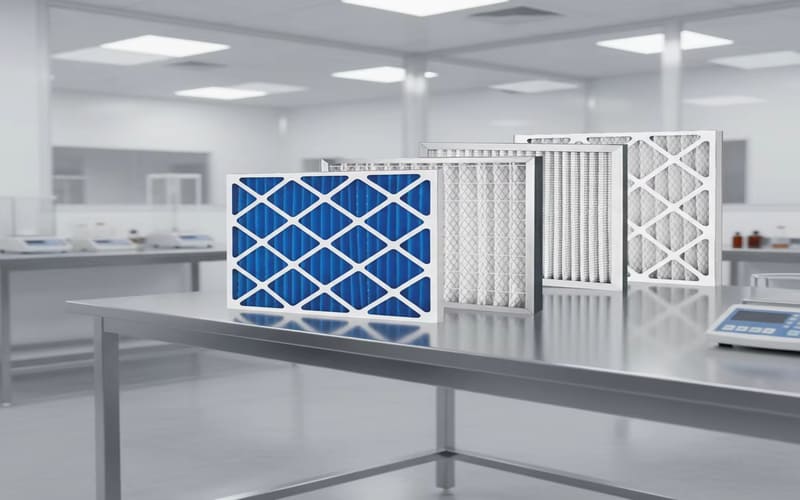
Selecting the right filter media is essential for this balance. Understanding the performance differences between pleated vs fiberglass air filters helps facility managers achieve high-efficiency particle capture while maintaining the strict airflow requirements needed to keep long-term maintenance costs low.
Core Benefits of High-Efficiency Filtration
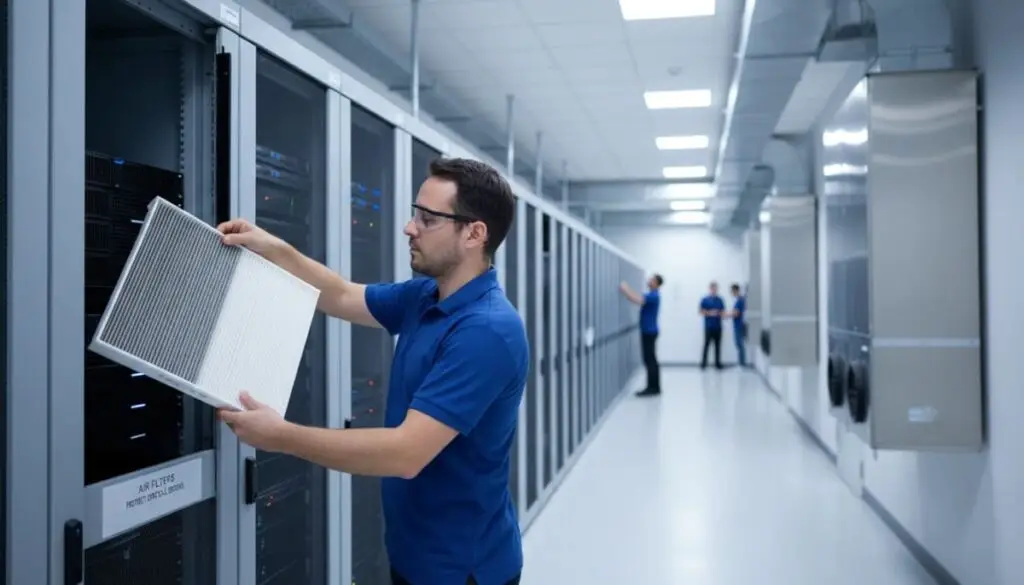
When we look at exactly how air filters protect data center equipment, the conversation always comes back to measurable ROI. Upgrading your HVAC filtration isn’t just about basic facility maintenance; it is a critical strategy for safeguarding your entire data center infrastructure from invisible threats.
Maximizing Hardware Lifespan and Reliability
Keeping airborne contaminants away from sensitive hardware directly extends equipment lifespan. When particulate matter settles on motherboards and microchips, it acts like an insulating blanket, causing severe thermal stress. Furthermore, exposure to uncontrolled gaseous contaminants accelerates equipment corrosion.
By maintaining strict indoor air quality, we ensure that servers, switches, and storage arrays run reliably for years. Utilizing advanced solutions like a mini-pleat HEPA filter guarantees that even the most microscopic particles are trapped long before they can breach your server racks.
Reducing HVAC Energy Consumption and Operational Costs
Cooling systems account for a massive portion of a data center’s operating budget. When dust and debris clog cooling coils and heat exchangers, airflow is restricted. This forces the cooling units to work overtime to maintain baseline temperatures.
Implementing high-efficiency filtration prevents this buildup, significantly reducing HVAC strain and improving overall energy efficiency.
Cost-Saving Impacts of Proper Filtration:
- Lower Energy Bills: Clean coils transfer heat faster, dropping daily energy consumption.
- Fewer Replacements: Protecting internal HVAC components means fewer expensive part replacements.
- Optimized Airflow: Fans don’t have to spin at maximum capacity to push air through the facility.
| Operational Metric | Standard/Dirty Filtration | High-Efficiency Filtration |
|---|---|---|
| HVAC Strain | High (Restricted Airflow) | Low (Smooth Airflow) |
| Energy Efficiency | Poor | Optimal |
| Maintenance Costs | Frequent & Expensive | Predictable & Low |
Preventing Unplanned Downtime and Revenue Loss
In our industry, downtime is the ultimate enemy. A single thermal shutdown or short circuit can cost thousands of dollars per minute in lost revenue and SLA penalties. High-grade filtration drastically cuts down the risk of sudden equipment failures caused by overheating or chemical damage. By keeping the air pristine, we protect critical system uptime, eliminate emergency repair scenarios, and keep long-term maintenance costs firmly under control.
Ideal Types of Air Filters for Data Centers
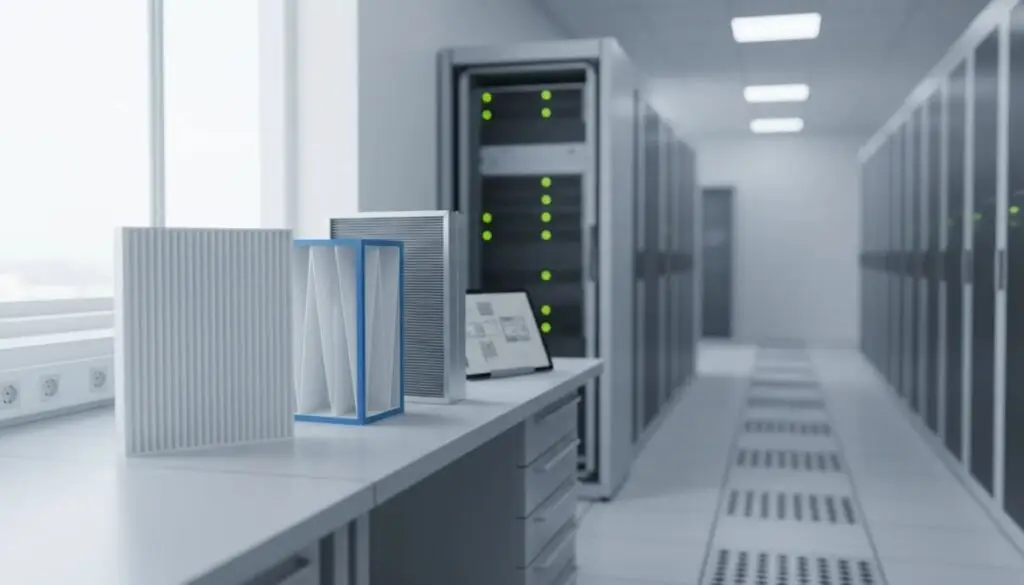
Choosing the right filtration setup is a strategic decision for any facility manager. We design our solutions to handle the unique challenges of high-density computing environments where even microscopic debris can cause a catastrophic failure.
Particulate Filters for General Ventilation
These filters are the first line of defense against airborne contaminants like dust, pollen, and lint. For most data centers, a two-stage particulate approach is the industry standard:
- Pre-filters: Usually MERV 8 to 11, these catch larger debris to extend the life of more expensive downstream filters.
- High-Efficiency Filters: MERV 14 or higher filters are used to trap fine particulate matter that could otherwise settle on sensitive hardware and cause thermal stress.
Molecular Filters for Chemical and Gas Adsorption
In industrial zones or heavy traffic areas, particulate filters aren’t enough. Gaseous contaminants like sulfur dioxide and nitrogen oxides can bypass standard media and lead to rapid equipment corrosion. We provide molecular air filtration solutions that use specialized chemical media to neutralize these corrosive gases before they reach your server racks.
Multi-Stage Filtration Systems for Comprehensive Protection
The most resilient data center infrastructure relies on multi-stage systems. By combining particulate and molecular stages, you ensure maximum system uptime and protect your cooling coils from fouling. As one of the best air filter manufacturers, we emphasize that a balanced system reduces HVAC strain and keeps maintenance costs predictable. This comprehensive approach is the only way to guarantee long-term reliability for high-value electronic components and sensitive hardware.
Best Practices for Data Center Air Quality Management
As an air filter manufacturer, we know that installing high-quality filters is only half the battle. To truly maximize how air filters protect data center equipment, facility managers must implement a proactive, ongoing management strategy.
Adhering to Industry Indoor Air Quality (IAQ) Standards
Data center infrastructure relies on strict indoor air quality standards to function reliably. Following global guidelines, such as those set by ASHRAE, ensures your environment stays within safe operating limits.
- Control Particulates: Keep particulate matter strictly regulated to prevent thermal stress on sensitive hardware.
- Limit Gases: Maintain hard caps on gaseous contaminants to stop chemical reactions on exposed circuit boards.
- Optimize HVAC Filtration: Align your filtration efficiency with industry baselines to guarantee maximum system uptime and energy efficiency.
Monitoring Corrosion Risks and Contaminant Levels
You cannot manage what you do not measure. Continuous air quality monitoring is critical for catching sudden spikes in airborne contaminants before they lead to catastrophic equipment failures.
By deploying real-time sensors throughout the facility, you can track humidity, temperature, and chemical concentrations. This data-driven approach stops equipment corrosion before it starts and prevents unnecessary HVAC strain caused by sudden environmental shifts.
Establishing an Effective Filter Maintenance Schedule
Even top-tier molecular air filtration systems will fail without proper upkeep. A rigid maintenance schedule keeps energy consumption low and protects vital components like cooling coils and heat exchangers from clogging.
When it is time to swap out saturated units, facility teams often need to manage waste efficiently, making it important to know if your air filters are recyclable to handle disposal properly. Staying on top of replacements directly lowers long-term maintenance costs and extends overall equipment lifespan.
Key Maintenance Steps:
- Track Pressure Drop: Monitor airflow resistance to know exactly when a filter is nearing the end of its life.
- Routine Visual Inspections: Check filter housings regularly for bypass leaks or physical damage.
- Scheduled Replacements: Never wait for a filter to completely fail. Swap them out based on data and scheduled intervals to maintain uninterrupted protection.
The Future of Data Center Filtration
As technology rapidly evolves, how air filters protect data center equipment must also advance. We are an air filter manufacturer, and we see firsthand that the next generation of data center infrastructure requires smarter, more resilient filtration solutions to handle extreme processing loads while maintaining pristine indoor air quality.
Adapting Airflow for High-Density AI Data Centers
The explosive growth of AI and machine learning means server racks are packed tighter and running hotter than ever before. This high-density environment creates intense thermal stress on sensitive hardware. To maintain system uptime and prevent equipment failures, cooling systems must move massive volumes of air without pulling in harmful airborne contaminants.
Adapting to these high-density demands requires specific filtration upgrades:
- High-Capacity Airflow: Utilizing a HEPA filter cassette allows facilities to trap microscopic particulate matter without choking the high-velocity air needed to cool AI processors.
- Protecting Core Components: Keeping cooling coils and heat exchangers completely free of dust ensures that liquid cooling and advanced HVAC systems operate at peak capacity.
- Targeted Contaminant Control: Deploying molecular air filtration alongside standard filters to neutralize gaseous contaminants that thrive in high-heat environments.
Balancing Energy Efficiency with Optimal Protection
Maximum protection should not result in skyrocketing power bills. The future of HVAC filtration lies in striking the perfect balance between high-efficiency particle capture and low energy consumption. Restrictive filters cause severe HVAC strain, forcing cooling fans to work harder, which ultimately drives up maintenance costs and shortens equipment lifespan.
To achieve true energy efficiency while safeguarding hardware, modern facilities are focusing on:
- Low-Pressure-Drop Media: Advanced filter designs that reduce air resistance, cutting down the energy required to push air through the system.
- Smart Air Quality Monitoring: Using real-time sensors to track particulate and gas levels, allowing operators to change filters based on actual need rather than a rigid calendar schedule.
- Integrated Solutions: Combining particulate and gas-phase filtration to protect against both dust and equipment corrosion in a single, energy-friendly footprint.