7 Signs Your Furnace Filter Needs Changing
Is your home feeling a bit stuffy, or have your utility costs spiked out of nowhere? As experts in HVAC filters, we know that a clogged filter is often the hidden culprit behind system inefficiency. If you notice any of the following red flags, it’s time for an air filter replacement.
Visible Dirt and Dust Buildup
The most obvious sign is visible dirt. Pull out your filter and inspect the surface. If the material shows heavy discoloration—turning gray or brown—it is loaded with trapped particles and can no longer do its job.
Rapidly Increasing Energy Bills
A dirty air filter restricts airflow, forcing your system to work overtime to circulate heat. If you see a sudden jump in your energy bills, your furnace is likely burning extra fuel to push air through a thick layer of dust buildup.
Reduced Airflow and Cold Air Pockets
When air can’t pass through the filter easily, you’ll notice weak pressure coming from your vents. This leads to cold air pockets and uneven temperatures throughout your home, significantly lowering your heating efficiency.
Unexplained Dust Accumulation
If you find yourself dusting your furniture every single day, your filter has likely reached its capacity. When a filter is full, it can no longer capture airborne debris, allowing pet dander and dust to settle all over your living space.
Burning Smells or Foul Odors
A clogged filter can cause the furnace to overheat, leading to a distinct burning smell. Additionally, trapped moisture and debris in the filter can create foul odors that circulate every time the heat kicks on.
Short Cycling
Does your system turn on and off every few minutes? This is called short cycling. It happens when a restricted filter causes the heat exchanger to overheat, triggering a safety shut-off to prevent mechanical failure.
Flare-ups in Health Issues
Your filter is your first line of defense against indoor pollutants. If family members are experiencing sudden health issues, increased allergies, or asthma flare-ups, it is a clear sign that your filter is failing to remove allergens from the air.
| Sign | Impact on System | Priority Level |
|---|---|---|
| Gray/Brown Color | Reduced filtration | High |
| High Power Bills | Wasted money | Medium |
| Weak Airflow | Poor comfort | High |
| Short Cycling | Potential system damage | Urgent |
Why Regular Furnace Filter Maintenance Matters
Maintaining a clean furnace filter is the simplest yet most critical task for any homeowner. It is the first line of defense for your indoor environment and the mechanical integrity of your heating system.
The Role of a Furnace Filter in Your Home
A furnace filter serves a dual purpose: protecting your family and your equipment. As air circulates through your HVAC system, the filter traps airborne contaminants such as dust, pollen, pet dander, and mold spores. By capturing these particles, the filter ensures that the air being pushed into your living spaces is clean and breathable, significantly improving indoor air quality.
The Hidden Costs of Neglecting Filter Replacement
Ignoring a dirty air filter leads to consequences that hit your wallet harder than the cost of a replacement. When a filter is clogged, your system must work twice as hard to pull air through the debris.
- Skyrocketing Energy Bills: Decreased efficiency means your unit runs longer, consuming more electricity or gas.
- Frequent Repairs: Restricted airflow causes internal components to overheat, leading to mechanical failure.
- Reduced Lifespan: A neglected system may fail years earlier than one that is properly maintained.
How a Clean Filter Protects Your HVAC System
A fresh filter ensures optimal heating efficiency by allowing unrestricted airflow. This prevents the “stress” that typically leads to a cracked heat exchanger or a burnt-out blower motor.
| Feature | Clean Filter Impact | Dirty Filter Impact |
|---|---|---|
| Airflow | Strong and consistent | Weak and restricted |
| System Strain | Minimal; components run cool | High; risk of overheating |
| Energy Usage | Optimized and low | Excessive and costly |
| Component Wear | Standard aging | Accelerated degradation |
By prioritizing air filter replacement, you are investing in the longevity of your HVAC unit and ensuring your home remains a sanctuary of clean, comfortable air.
How Often Should You Change Your Furnace Filter?
The Standard Recommended Timeframes
As a dedicated furnace filter manufacturer, we know that timing is everything when it comes to air filter replacement. For standard 1-inch pleated filters, a good rule of thumb is to swap them out every 90 days. However, if you are using basic fiberglass filters, you will need to replace them every 30 days to maintain optimal airflow. Keeping up with this schedule is the easiest way to prevent a dirty air filter from straining your system.
Impact of Pets and Allergies on Filter Lifespan
Pets and respiratory health change the timeline completely. Shedding fur, pet dander, and outdoor allergens quickly pack the filter fabric, cutting down its operational lifespan.
- One Pet: Change your filter every 60 days.
- Multiple Pets or Allergy Sufferers: Change your filter every 30 to 45 days to prevent health issues and dust buildup.
Seasonal Considerations: Winter vs. Summer Usage
Your HVAC filters do the heavy lifting during peak weather seasons. In the dead of winter and the height of summer, your system runs almost continuously, meaning it traps twice as much airborne debris. We recommend checking the filter monthly during these high-use periods. During the mild spring and autumn months, system usage drops, allowing you to stretch the replacement interval a bit longer.
How Filter Thickness and Material Affect Replacement Frequency
Not all filters are built the same, and thickness plays a massive role in how often to change them. Thicker media filters have more surface area to trap dust without restricting airflow.
| Filter Thickness | Recommended Replacement Interval |
|---|---|
| 1-inch filter | Every 1 to 3 months |
| 3 to 4-inch filter | Every 6 to 9 months |
| 5-inch filter | Every 9 to 12 months |
The material matters just as much as the size. Upgrading from a basic fiberglass mesh to a high-efficiency pleated option alters how your system breathes. To find the right balance between longevity and performance for your home, check out our guide on which MERV rating filter should you use for home air quality to optimize your heating efficiency.
How to Locate and Inspect Your Furnace Filter
Where to Find the Filter in Your HVAC System
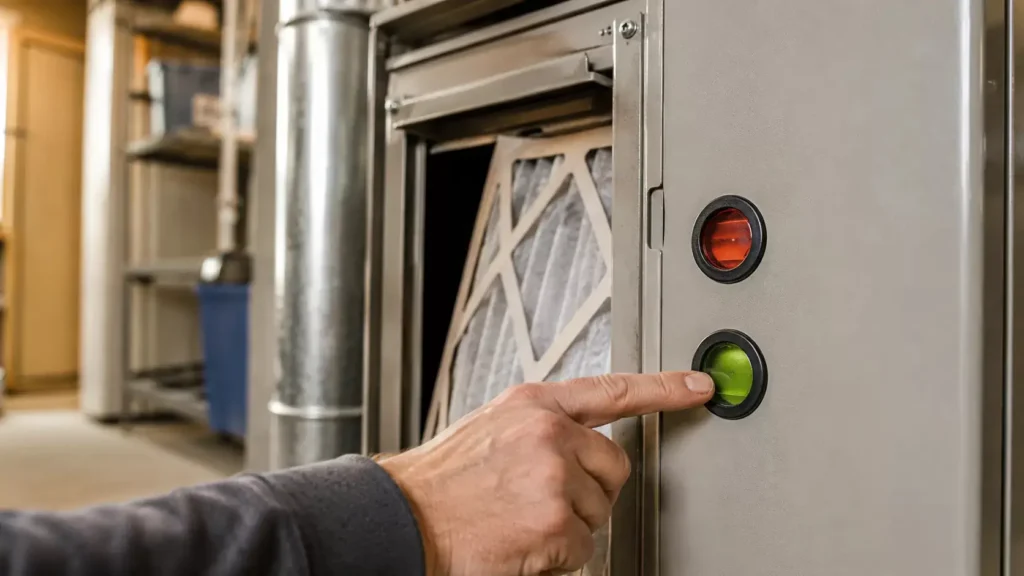
Finding your furnace filter depends entirely on your home’s setup. In most standard configurations, you can locate the filter slot right where the return air duct connects to the main furnace unit. Look for a narrow metal slot cover or an open track between the blower chamber and the return ductwork. If your heating system is installed in a tight utility closet or an attic, the filter might actually be placed behind the central return air grille on your wall or ceiling rather than inside the furnace itself.
Determining Which Way the Airflow Arrow Should Point
Once you find the filter, paying attention to its orientation is critical for proper heating efficiency. Every standard HVAC filter features a printed arrow on the outer frame indicating the direction of the air current. This arrow must always point toward the furnace blower motor and away from the return air duct. Installing it backward restricts airflow and forces your system to work twice as hard. For a detailed breakdown of this step, check out our proper HVAC installation guide to ensure your system runs efficiently.
The Visual Test: What Does a Ready-to-Replace Filter Look Like?
Performing a quick visual test is the easiest way to answer the question: how can I tell if my furnace filter needs changing? Pull the filter completely out of its housing and hold it up to a bright light source.
- Clean Filter: Light passes through easily, and the material looks white or off-white.
- Dirty Filter: A thick layer of dust buildup, pet dander, and visible dirt completely blocks the light.
If the surface shows heavy gray or brown discoloration, it is a definitive replacement sign. To help you diagnose your filter’s condition accurately, you can review our guide on what a bad air filter looks like to prevent unnecessary wear on your HVAC system.
Step-by-Step Guide to DIY Furnace Filter Replacement
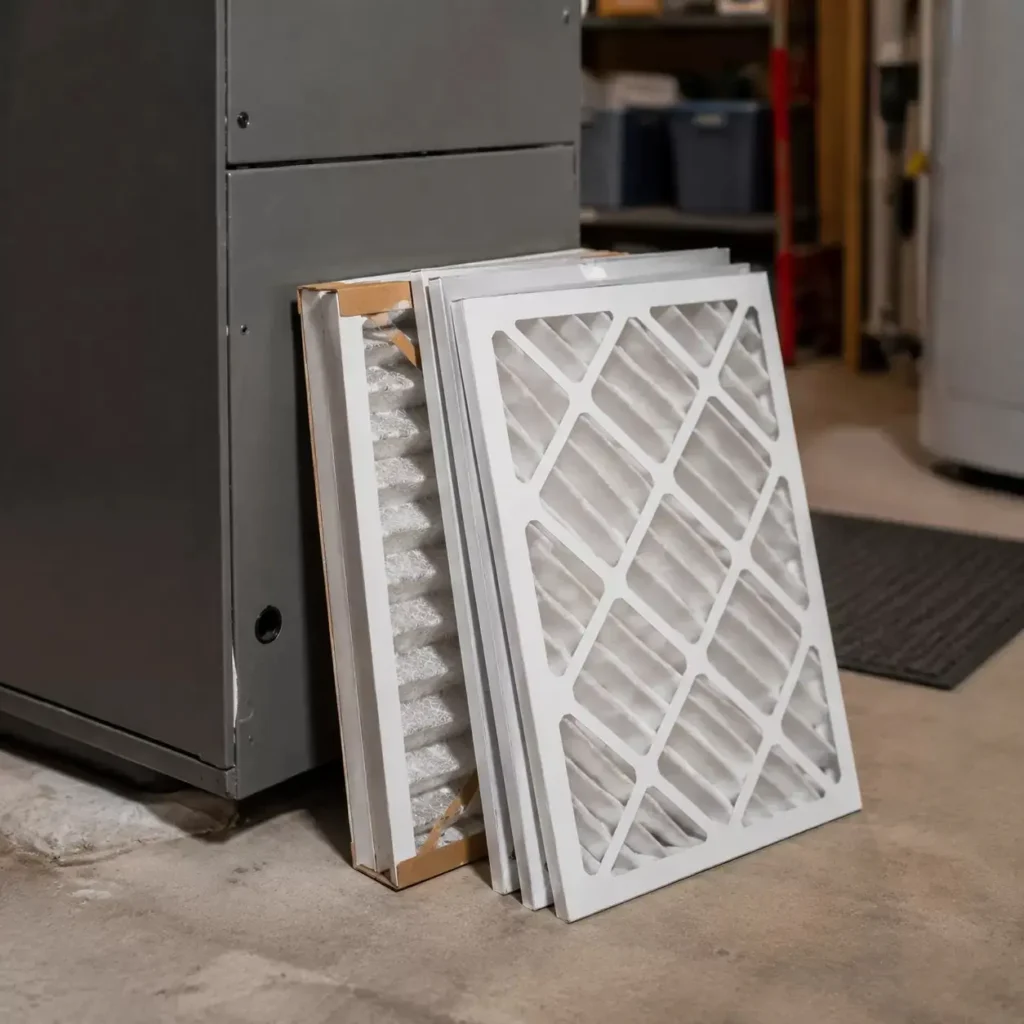
Safety Precautions to Take Before Starting
Before touching your HVAC system, safety comes first. Always turn off the power to your furnace at the thermostat and the main breaker panel. A running system can pull loose debris into the blower motor during an air filter replacement, causing costly damage or creating a safety hazard.
Tools and Materials Needed for the Job
You do not need a garage full of tools for a routine furnace filter replacement. Keeping these few items on hand makes the process seamless:
- A new, correctly sized replacement furnace filter.
- A permanent marker to write the installation date on the filter frame.
- A heavy-duty trash bag for the dirty air filter to prevent dust buildup from spreading in your home.
- Work gloves to protect your hands from sharp metal edges on the furnace housing.
How to Change the Filter Correctly
- Shut down the system: Ensure the furnace is completely powered off.
- Locate the filter slot: Remove the access panel or slide the old filter out of its slot.
- Check the airflow direction: Note the direction of the arrows on the old filter before removing it.
- Bag the old filter: Carefully slide the clogged filter into a trash bag to contain the visible dirt and pet dander.
- Prep the new filter: Write the current date on the edge of your new filter.
- Insert the new filter: Slide the fresh filter into place, ensuring the airflow arrows point toward the furnace blower motor.
- Restore power: Replace the access panel and turn the system back on.
Common Installation Mistakes to Avoid
Critical Reminder: Installing a furnace filter backward restricts airflow, strains the blower motor, and drastically reduces heating efficiency. Always double-check that the airflow arrow points toward the furnace unit, not away from it.
Another frequent mistake is choosing the wrong material for your system’s specifications. If you are undecided on the best option for your household, weighing pleated vs. fiberglass air filters can help you avoid buying a restrictive or inefficient filter. Never force a filter that is the wrong size into the slot; gaps allow dust and debris to bypass filtration entirely, leading to system clogs and poor indoor air quality.
How to Choose the Right Replacement Furnace Filter
Finding the right replacement furnace filter ensures your home stays comfortable and your heating system runs efficiently. Choosing the wrong size or filtration level can restrict airflow, increase energy bills, or fail to trap airborne particles.
Understanding MERV Ratings and Air Filtration Levels
Minimum Efficiency Reporting Value (MERV) ratings measure a filter’s ability to capture particles. Ratings range from 1 to 16 for residential HVAC systems. While a higher rating traps smaller particles, it also increases airflow resistance. Balancing filtration needs with system compatibility is key. For standard homes, a MERV 11 air filter offers an excellent balance, trapping pet dander, pollen, and dust without straining the furnace.
| MERV Rating | Filtration Level | Best Used For |
|---|---|---|
| MERV 1–4 | Low | Basic dust protection, minimal filtration. |
| MERV 5–8 | Medium | Standard residential use, captures lint and mold spores. |
| MERV 11–13 | High | Superior residential filtration, traps pet dander, smog, and bacteria. |
| MERV 14–16 | Maximum | Hospital-grade filtration, requires high-airflow HVAC systems. |
Finding the Correct Dimensions and Size for Your Unit
Furnace filters must fit snugly to prevent air from bypassing the filtration media. To find the correct size, check the frame of the existing filter for the printed dimensions (Length x Width x Thickness).
- Nominal Size vs. Actual Size: The size printed on the filter label is the nominal size, which is rounded up for easy shopping. The actual size is measured precisely with a tape measure and is usually about $1/4$ to $1/2$ inch smaller than the nominal size. Always buy based on the nominal dimensions listed on the unit.
- Common Thicknesses: Residential filters are typically 1 inch thick, but high-efficiency media slots can accommodate 4-inch to 5-inch deep pleated filters.
Fiberglass vs. Pleated vs. HEPA Filters
The material composition of your air filter replacement directly impacts your indoor air quality and heating efficiency.
- Fiberglass Filters: These are inexpensive, flat, disposable filters. They protect the furnace’s mechanical parts from large dust clumps but do almost nothing to improve indoor air quality. They require monthly replacement.
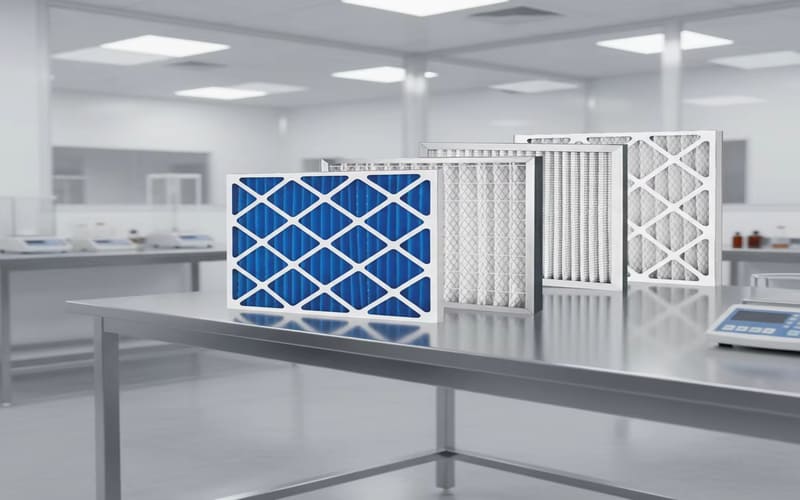
- Pleated Filters: Made from cotton or synthetic folds, these filters provide a larger surface area to capture dust buildup and pet dander. They offer better filtration and last between 90 days to 6 months. When deciding on the right level of protection, comparing options like a MERV 11 vs. MERV 13 air filter helps determine the right balance between clean air and optimal airflow.
- HEPA Filters: High-Efficiency Particulate Air filters trap 99.97% of airborne particles down to 0.3 microns. True HEPA filters are highly restrictive and generally require specialized whole-house filtration systems rather than a standard furnace slot.