Introduction to Microns and Air Quality
Maintaining superior indoor air quality begins with understanding the invisible threats circulating in our environment. As a professional air filter manufacturer, we recognize that the effectiveness of any air purifier or HVAC system is dictated by its ability to trap airborne particles of varying sizes. The micron rating serves as the essential benchmark for filtration performance, directly influencing the particulate concentration within a living or working space.
What is a Micron?
A micron, or micrometer, is a unit of measurement equal to one-millionth of a meter. To understand the scale of these airborne particles, consider these comparisons:
- Human Hair: 50 to 70 microns in diameter.
- Pollens: 10 to 100 microns.
- Pet Dander: 0.5 to 100 microns.
- Smoke and Viruses: Often less than 1 micron.
Most hazardous inhalable particles are invisible to the naked eye, making the technical specifications of a filter’s particle diameter capture rate the most critical factor in air safety.
Why Micron Sizes Matter for Indoor Air
The size of a particle determines how long it stays airborne and how deeply it can penetrate the human respiratory system. While larger particles settle quickly on surfaces, smaller contaminants remain suspended in the air for hours or even days.
- Suspension: Smaller particles are subject to Brownian motion, keeping them afloat and increasing the risk of inhalation.
- Health Impact: Particles smaller than 10 microns can bypass the body’s natural defenses, while those under 2.5 microns can reach the deep alveolar regions of the lungs.
- Filtration Integrity: Selecting a filter with the correct micron rating ensures that specific pollutants are effectively removed, preventing the recirculation of harmful matter.
By focusing on precise micron-level filtration, we provide the technology necessary to manage indoor air quality and protect occupants from a wide spectrum of microscopic threats.
Understanding Particulate Matter (PM)
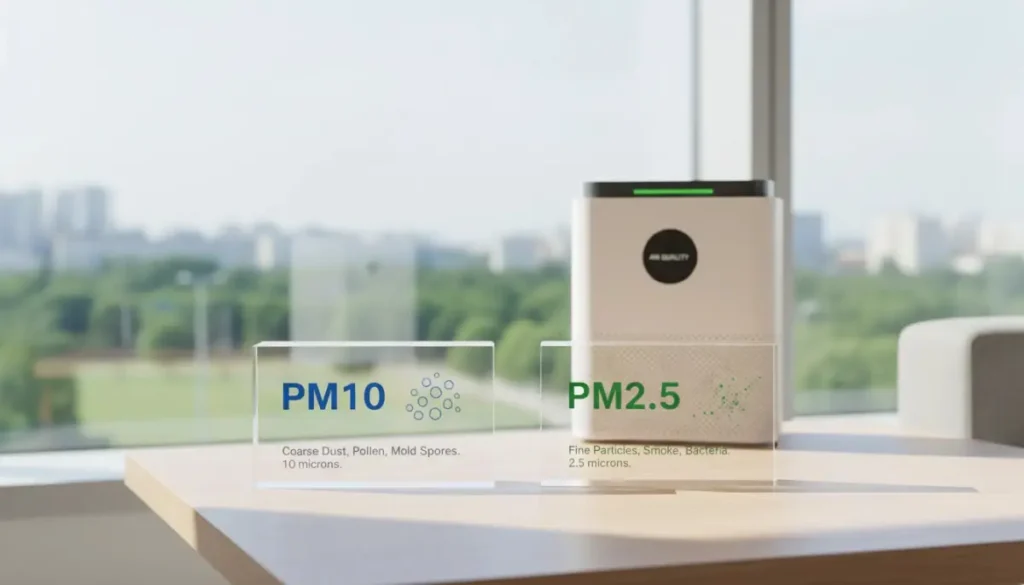
Particulate matter, or PM, is the sum of all solid and liquid particles suspended in the air. In our manufacturing experience, we categorize these by size because the diameter determines how long they stay airborne and how deep they can penetrate the human body. When discussing the micron rating for air filters, understanding these specific categories is the first step toward cleaner air.
The Difference Between PM10 and PM2.5
The numbers 10 and 2.5 refer to the maximum particle diameter in microns. While both are invisible to the naked eye, their behavior in your living space and their interaction with filtration media differ significantly.
| Particle Type | Diameter | Common Examples | Behavior |
|---|---|---|---|
| PM10 | ≤ 10 microns | Dust, pollen, mold spores | Settles relatively quickly; trapped by nose and throat |
| PM2.5 | ≤ 2.5 microns | Smoke, bacteria, combustion particles | Stays airborne for days; reaches deep lung tissue |
Health Impacts of Microscopic Particles
The smaller the particle, the bigger the health risk. Inhalable particles like PM10 can irritate your eyes and throat, but PM2.5 is the primary concern for long-term health. These fine particles can bypass the body’s natural defenses, entering the lungs and even crossing into the bloodstream.
- Respiratory Issues: Aggravation of asthma, bronchitis, and severe lung irritation.
- Cardiovascular Stress: Increased risk of heart attacks and strokes due to systemic inflammation.
- Long-term Exposure: Permanent reduction in lung function and chronic respiratory disease.
To effectively capture these threats, understanding the difference between pleated vs fiberglass air filters is essential, as basic filters often lack the density required to trap high concentrations of PM2.5. We prioritize high-efficiency media in our designs to ensure these microscopic threats are neutralized before they can impact your health.
Decoding Micron Ratings for Air Filters
As an air filter manufacturer, we know that understanding the micron rating for air filters requires a study of particles and how they behave in the air. A micron rating simply tells you the size of the airborne particles a specific filter can effectively trap. To keep indoor air quality high, you need to know exactly what these numbers mean.
How Air Filter Micron Ratings are Measured
We determine a filter’s capturing efficiency through rigorous testing. By pushing air filled with a known particulate concentration through the filter media, we can measure exactly what gets trapped and what escapes.
Here is how the measurement process works:
- Particle Diameter Testing: We introduce particles of varying sizes into the airflow.
- Counting the Escapes: Sensors measure the number of particles that successfully pass through the filter.
- Calculating Efficiency: The percentage of trapped particles establishes the filter’s rating.
If you are outfitting a standard residential or commercial HVAC system, learning what a MERV air filter is will help you understand how these laboratory measurements translate into practical, everyday air quality control.
Nominal vs. Absolute Micron Ratings
When sourcing ambient air filters or highly specialized sterile air filters, you will encounter two distinct types of ratings. Knowing the difference prevents you from buying the wrong product for your specific needs.
- Nominal Micron Rating: This represents an average capturing efficiency. For example, a filter with a nominal rating of 5 microns might capture anywhere from 50% to 90% of particles that size. It serves as a general guideline for standard air filtration.
- Absolute Micron Rating: This is a strict guarantee. An absolute rating means the filter is tested and proven to capture at least 99.9% of particles at that specific size. This level of precision is mandatory in environments where controlling high particulate concentration levels is critical.
Comparing Air Filter Types by Particle Capture
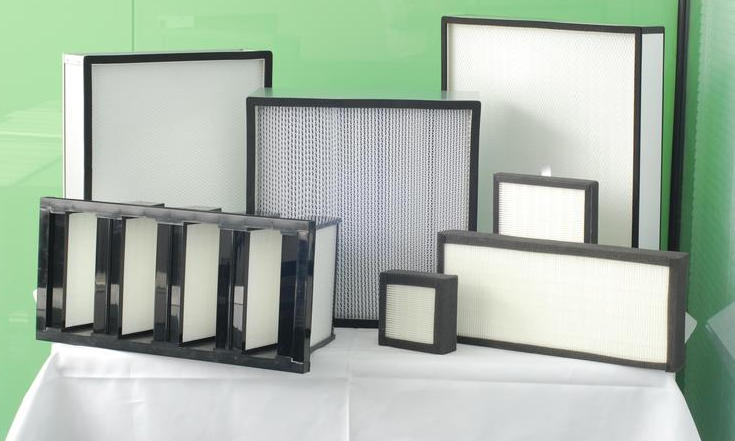
Choosing the right filter depends entirely on the size of the airborne particles you need to trap. As an air filter manufacturer, we categorize filters based on their ability to maintain indoor air quality by removing specific particle diameters from the airstream.
Standard HVAC Filters and MERV Ratings
Most residential and commercial systems rely on the MERV (Minimum Efficiency Reporting Value) scale. This rating tells you how well a filter traps particulate matter ranging from 0.3 to 10 microns.
- MERV 8: These are entry-level filters designed to catch large inhalable particles like dust, lint, and pollen. A MERV 8 air filter is a solid choice for basic protection of your HVAC equipment.
- MERV 11-13: These filters offer higher capturing efficiency. A MERV 11 air filter is significantly better at reducing the particulate concentration of smaller triggers like pet dander, smoke, and smog.
- Application: These are typically used as ambient air filters in homes and offices where the goal is general cleanliness rather than total sterilization.
HEPA Filters for Ultrafine Particles
When you need to eliminate the smallest threats, standard HVAC filters aren’t enough. This is where HEPA (High-Efficiency Particulate Air) technology becomes essential.
- The 0.3 Micron Benchmark: HEPA filters are tested against PM0.3, which is widely considered the most penetrating particle size (MPPS). Particles at this size are the hardest to catch because they are small enough to weave through fibers but large enough not to be easily trapped by diffusion.
- True HEPA Designation: To meet strict EPA specifications, a filter must capture 99.97% of particles at 0.3 microns. This makes them the gold standard for an air purifier used in medical settings or high-sensitivity environments.
- Sterile Air Filters: In labs or hospitals, we use these to ensure airborne particulate matter is virtually non-existent, providing a level of protection that standard nominal micron rating filters simply cannot match.
Practical Steps to Improve Indoor Air Quality
Selecting the Right Air Purifier
As an air filter manufacturer, we know that achieving excellent indoor air quality requires more than just running a standard HVAC system. When selecting an air purifier, the primary goal is to effectively lower PM concentration levels in your specific environment. You need to look past the marketing claims and focus on the capturing efficiency of the unit.
To make the best choice for your space, keep these core factors in mind:
- Target the right particle diameter: If you are dealing with ultrafine inhalable particles like PM2.5 or PM0.3, look for a unit with a true HEPA designation rather than settling for a basic nominal micron rating.
- Match the room size: Always check the Clean Air Delivery Rate (CADR) to ensure the purifier is powerful enough to cycle the air in your room multiple times an hour.
- Plan for maintenance: A purifier is only as good as its filter. Understanding whether you can clean your air purifier filters or if they require strict replacement will help you maintain consistent airborne particulate matter removal over time.
Managing Humidity and Ambient Airflow
Filtration is only one half of the equation; environmental control is the other. The way airborne particles behave in your home or facility is heavily influenced by moisture and air movement. High humidity causes particulate matter to clump together and settle on surfaces before your ambient air filters have a chance to pull them in. On the flip side, air that is excessively dry allows dust and allergens to remain suspended in the breathing zone for much longer.
Here is how to manage your environment for maximum filtration efficiency:
- Balance indoor humidity: Keep your moisture levels between 30% and 50%. This sweet spot prevents mold growth while keeping particles light enough to be drawn into your filtration system.
- Boost ambient airflow: Keep furniture and curtains away from vents and air purifiers. Unrestricted circulation is necessary to push stale, particle-heavy air through the filters.
- Keep filters clear: A loaded filter chokes your system’s airflow and drastically reduces its ability to capture contaminants. Knowing exactly how to clean your air filter step-by-step ensures your system maintains optimal pressure and continues to protect your indoor air quality without straining the fan motor.