Understanding Air Filter Sizes: Nominal vs. Actual Dimensions
Choosing the right air conditioner filter or furnace filter requires understanding how HVAC dimensions work. A common mistake is buying a replacement filter based on a single set of numbers, only to find it does not fit your system. Air filters always have two sets of dimensions: nominal and actual.
What Is Nominal Size?
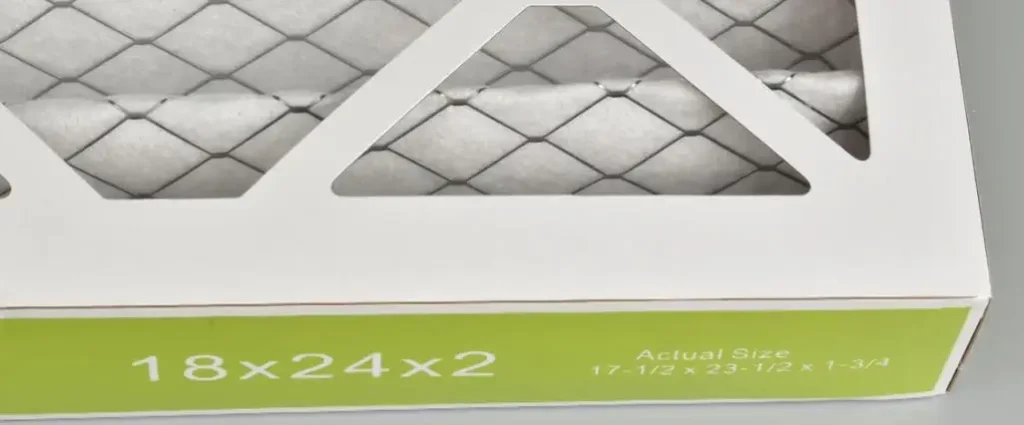
The nominal size is the printed dimension you see labeled on the side of most retail air filters. It is a rounded-up whole number used by manufacturers for quick identification and marketing.
- Purpose: Simplifies the shopping experience.
- Format: Expressed as Length x Width x Depth (e.g., 20 x 20 x 1 inches).
- Location: Printed in bold text on the filter frame or casing.
What Is Actual Size?
The actual size represents the precise physical measurements of the filter down to the fraction of an inch. If you take a tape measure to the filter, these are the exact numbers you will find.
- Accuracy: Usually 1/8 to 1/4 of an inch smaller than the nominal size.
- Importance: Ensures the filter slides smoothly into the air handler slot without jamming or leaving gaps.
- Example: A 20 x 20 x 1 nominal filter may have a true actual size of 19.5 x 19.5 x 0.75 inches.
Why Do Air Filters Have Two Different Sizes?
As an experienced air filter manufacturer, we use this standard system to ensure a seamless fit within your HVAC system. The difference between the two sizes exists to accommodate the manufacturing tolerances of both the filters and the filter slots.
| Dimension Type | Definition | Measurement Accuracy | Common Example (Inches) |
|---|---|---|---|
| Nominal Size | Rounded commercial label | Rounded to the nearest whole number | 16 x 25 x 1 |
| Actual Size | True physical dimensions | Precise to the exact fraction | 15.5 x 24.5 x 0.75 |
If furnace filters were made to the exact nominal whole numbers, they would be too tight for the intake vent or slot, causing the frame to bend, buckle, and fail during operation.
How to Measure Your Air Filter Step-by-Step
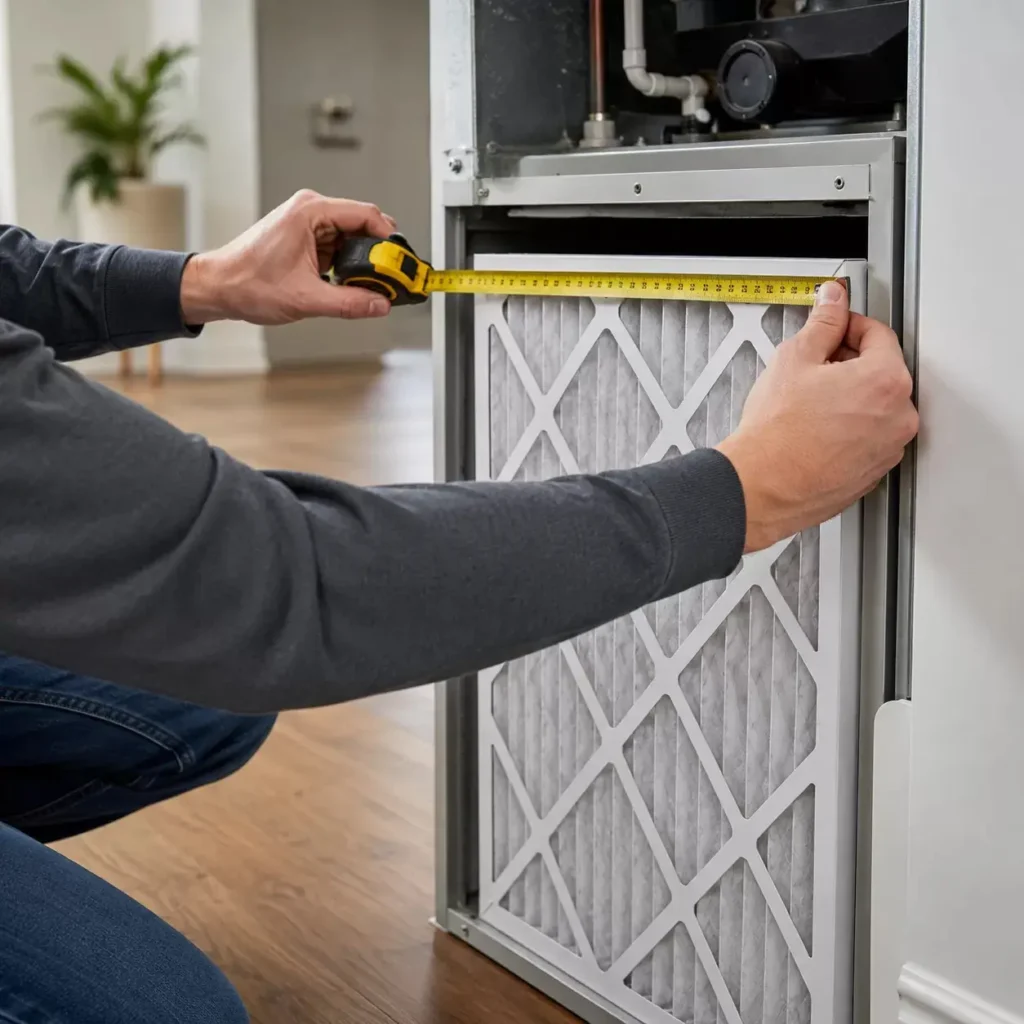
Getting the right replacement filter doesn’t have to be guesswork. If your current air conditioner filter or furnace filter fits well, but the size printed on the cardboard frame is missing or smudged, you can easily find the exact dimensions yourself. Grab a tape measure and follow these simple steps to get an accurate measurement.
How to Measure the Length and Width
When you look at an air filter, the length and width make up the face of the filter that covers the duct opening.
- Step 1: Lay your existing filter flat on a sturdy surface.
- Step 2: Hook your measuring tape on one side and measure across to the opposite edge to find the width. Note down the exact measurement to the nearest sixteenth of an inch.
- Step 3: Measure the adjacent side from top to bottom to find the length.
Pro Tip: In the HVAC industry, dimensions are typically listed as Length x Width x Thickness. For example, a standard size might look like 20″ x 20″ x 1″.
How to Measure the Thickness or Depth
The thickness, or depth, of your filter is crucial for a snug fit inside the filter slot or air handler. If a filter is too thick, it won’t slide in; if it is too thin, unfiltered air will bypass the media entirely.
- Step 1: Stand the filter on its edge.
- Step 2: Measure the distance from the front face of the cardboard casing to the back face.
- Step 3: Record the exact thickness. This is usually a whole number like 1, 2, or 4 inches, but the actual size is often a fraction of an inch smaller (e.g., 0.75 inches for a 1-inch nominal filter).
How to Measure if You Do Not Have an Existing Filter
If the previous tenant threw away the old filter, or if you are moving into a new property without one, you will need to measure the actual intake vent or physical slot where the filter sits.
| Step | Action | What to Look For |
|---|---|---|
| 1 | Locate the filter slot | Check the return air grille on your wall/ceiling, or the slot right next to the furnace/air handler. |
| 2 | Measure the internal opening | Run your tape measure along the inside diameter of the tracks or opening. Measure the inside length, width, and depth. |
| 3 | Subtract for clearance | Subtract roughly 1/4 inch from your exact measurements. This ensures your new filter slides into the casing easily without bending. |
If your system requires a unique shape or non-standard dimensions that you cannot find in local stores, we can manufacture high-performance custom air filters tailored exactly to your system’s specifications to keep your indoor air clean and your HVAC unit running efficiently.
Most Common Air Filter Sizes
Standard Sizes for Air Conditioners and Furnaces
HVAC systems use a wide variety of standard dimensions, but a handful of sizes cover the vast majority of residential homes. When shopping for a replacement filter, you will typically find lengths and widths ranging from 10 inches to 30 inches, with a standard thickness of 1 inch.
The most common furnace filter and air conditioner filter sizes include:
| Most Common Air Filter Sizes |
|---|
| 16x20x1 |
| 16x25x1 |
| 20x20x1 |
| 20x25x1 |
If your system requires a more unique size, such as a 10x24x1 air filter, we manufacture these specific dimensions to ensure a proper fit. Media filters for larger air handler units can also range from 2 to 5 inches in thickness to accommodate higher airflow demand.
How to Find Your Filter Size on Your Existing Unit
Finding your filter size is usually a straightforward process. Before buying a new one, check the following locations:
- The Filter Casing: Look at the plastic or cardboard frame of the filter currently inside your system. Manufacturers print the nominal size directly on the edge in bold print (e.g., 20x20x1).
- The HVAC Slot: Check the outer door or access panel of your furnace or air handler. Many systems feature a stamped metal label indicating the correct dimensions.
- The Intake Vent: If your filter sits behind a return air grille on your wall or ceiling, open the latch. The size is often printed on the inside frame of the intake vent.
If the text on your old filter has faded or isn’t listed, you can easily figure out the dimensions yourself by following our complete guide on what size air filter you need.
Does an Air Filter Have to Fit Perfectly?
Yes, it absolutely does. As an air filter manufacturer, we often see the problems caused by poor fits. Your replacement filter needs to slide into the intake vent or slot snugly, without being forced. If the dimensions are off, the filter cannot do its job, leaving your HVAC system vulnerable to dust and debris.
What Happens if You Use the Wrong Size Air Filter?
If you try to force a filter that is too large into the casing, you will bend the cardboard frame or tear the filter media. If the length, width, or thickness is too small, the filter will just rattle around loosely inside the air handler.
Using the wrong size creates immediate problems for your system. In fact, a badly fitted filter allows so much dust to pass through that it is almost as damaging as running your air conditioner without a filter entirely.
- Restricted Airflow: A bent or crushed filter blocks air from moving freely.
- System Strain: Your unit has to work much harder to push air, driving up your energy bills.
- Equipment Damage: Dirt bypassing the filter will eventually coat your blower motor and cooling coils.
The Risks of Gaps and Air Bypass
When an air conditioner filter or furnace filter is too small for its slot, it leaves open gaps around the edges. Air is lazy—it always takes the path of least resistance. Instead of pushing through the dense filter material, dirty air will just slip through the open spaces. This is known as air bypass.
The dangers of air bypass include:
- Frozen Coils: Dust bypassing the filter sticks directly to condensation on your AC coils, causing them to freeze and shut down the system.
- Poor Air Quality: Pet dander, dust, and pollen circulate right back into your living space.
- Wasted Money: Even if you invest in an excellent MERV rating filter for home air quality, open gaps render that high efficiency completely useless.
How to Choose the Right Air Filter for Your Home
Choosing the perfect replacement filter goes beyond just getting the dimensions right. To maintain great indoor air quality and protect your HVAC system, you need to balance filtration efficiency with proper system airflow.
Understanding MERV Ratings and Filter Efficiency
The Minimum Efficiency Reporting Value (MERV) scale rates how effectively an air conditioner filter or furnace filter traps airborne particles. Ratings range from 1 to 16 for residential systems. A higher rating means tighter filtration, but it also restricts airflow if your system isn’t designed for it.
| MERV Rating | Particle Trapping Capabilities | Best Suited For |
|---|---|---|
| MERV 1 – 4 | Large particles (dust, lint, pollen) | Basic filtration, low-budget systems |
| MERV 5 – 8 | Mold spores, dust mites, pet dander | Standard residential homes |
| MERV 11 – 13 | Smog, smoke, bacteria, fine droplets | Homes with pets, allergies, or asthma |
As an air filter manufacturer, we recommend checking our complete guide to MERV air filter ratings to find the exact efficiency level your specific HVAC system can handle without causing backpressure.
When to Order Custom-Sized Air Filters
While most homes use standard sizes, older HVAC units, unique air handler configurations, or custom intake vent setups often require non-standard dimensions.
You should order custom-sized filters if:
- No standard size fits: Your measuring tape shows unique dimensions that do not match any nominal size options in retail stores.
- You experience air bypass: Standard filters leave gaps larger than 1/8 inch inside the filter slot or casing, letting unfiltered air escape.
- Unique thickness requirements: Your system uses a specialized whole-number depth that isn’t readily available off the shelf.
We manufacture precision-cut custom filters to ensure a perfect, airtight fit for any non-standard slot or housing.
How Often Should You Change Your Air Filter?
Leaving a dirty filter in your system restricts airflow, spikes energy bills, and strains your air conditioner or furnace.
Pro Tip: Never wait until the filter turns completely gray or clogged to swap it out.
- Fiberglass filters (1-inch): Change every 30 days.
- Pleated filters (1-inch to 2-inch): Change every 30 to 90 days depending on pets and allergies.
- Media filters (3-inch to 5-inch): Change every 6 to 12 months.
For a deeper dive into how lifestyle factors like pets, regional climate, and occupancy affect your replacement schedule, see our breakdown on how often to change your air filter to keep your system running at peak performance.