Understanding Indoor Mold and Its Health Risks
Indoor mold is more than just an unsightly nuisance; it is a silent intruder that compromises both your living space and your physical well-being. To effectively protect your home, it is essential to understand how this organism thrives and the potential dangers it poses to your family.
What Is Mold and How Does It Spread?
Mold is a type of fungus that plays a natural role in breaking down organic matter outdoors. However, when it takes root indoors, it becomes a major threat to indoor air quality.
- The Germination Trigger: Mold thrives in warm, damp, and humid environments. Excess moisture from plumbing leaks, high humidity, or poor ventilation provides the perfect breeding ground.
- The Spreading Mechanism: Mold reproduces by releasing microscopic airborne mold spores into the air. These tiny, invisible particles drift through your living spaces, landing on damp surfaces like drywall, wood, carpet, or grout to start new colonies.
- The Hidden Threat: Even if you cannot see visible surface mold, millions of spores can actively circulate through your home’s air and HVAC system.
Common Health Risks of Mold Exposure
Inhaling or touching mold spores can trigger a range of adverse health effects, particularly affecting your respiratory health. When spores are inhaled, they act as irritants and allergens.
| Severity | Common Symptoms | Affected Groups |
|---|---|---|
| Mild to Moderate | Nasal congestion, coughing, sneezing, wheezing, and skin irritation. | Sensitive individuals and those with seasonal allergies. |
| Severe | Acute asthma attacks, chronic sinus infections, and shortness of breath. | Asthmatics, children, the elderly, and immunocompromised individuals. |
| Toxic Exposure | Chronic fatigue, headaches, and persistent respiratory issues. | Anyone exposed to high concentrations of toxic mycotoxins (like black mold). |
Addressing airborne spores before they settle and multiply is a crucial step in safeguarding your home’s air quality and protecting your family from an ongoing allergic reaction.
Do Air Purifiers Help With Indoor Mold?
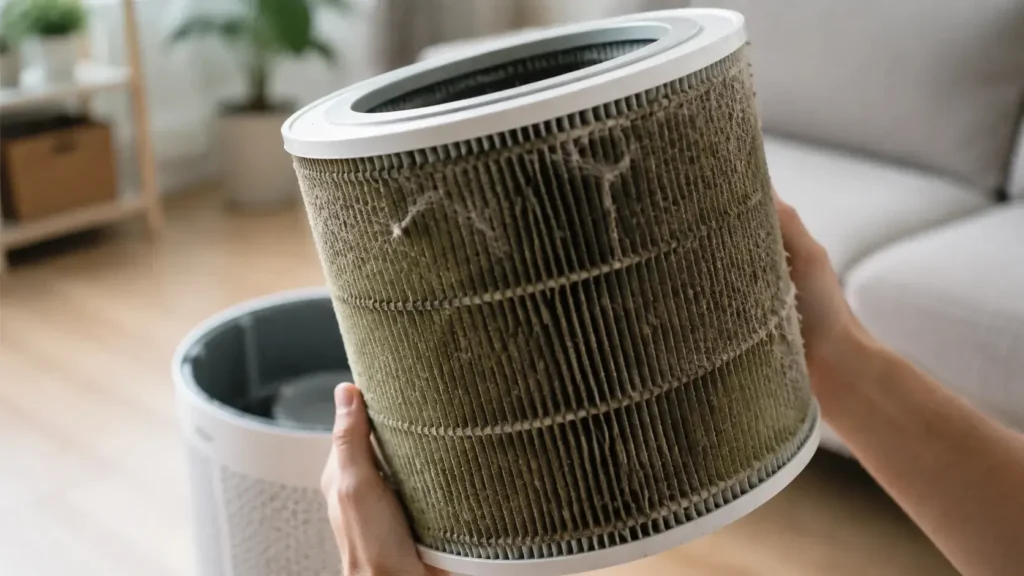
When clients ask us if air purifiers help with indoor mold & mildew growth, we always give them a realistic, science-backed answer. While they are incredibly powerful tools for cleaning your breathing zone, they are not a magic cure-all for an active infestation.
The Short Answer: Yes, for Airborne Spores
Yes, air purifiers absolutely help, but specifically by targeting airborne mold spores. Mold reproduces by releasing millions of microscopic spores into the air. A high-quality air purifier pulls these floating particles out of circulation, preventing you from inhaling them and stopping them from spreading to new surfaces.
What Air Purifiers Can Do for Mold
- Capture Floating Spores: They trap microscopic mold spores before they can land, colonize, and multiply on damp surfaces.
- Protect Respiratory Health: By removing airborne allergens, they significantly reduce the risk of allergic reactions, coughing, and sneezing.
- Filter Ultra-Fine Particles: To do this effectively, understanding what is a HEPA filter in air purifiers is essential, as these certified filters are designed to capture 99.97% of particles as small as 0.3 microns.
- Neutralize Musty Odors: Units equipped with activated carbon filters absorb the volatile organic compounds (VOCs) that cause that classic damp, earthy smell.
What Air Purifiers Cannot Do for Existing Mold
- Cannot Kill Surface Mold: If mold is already growing on your walls, drywall, or bathroom tiles, a purifier cannot physically scrub or remove it.
- Cannot Solve Moisture Issues: Mold requires water to survive. Purifiers do not lower indoor humidity or fix plumbing leaks.
- Cannot Replace Remediation: For large-scale black mold or active mold growth, you must physically clean, disinfect, and dry the area to completely eliminate the colony.
How Air Purifiers Capture and Destroy Mold
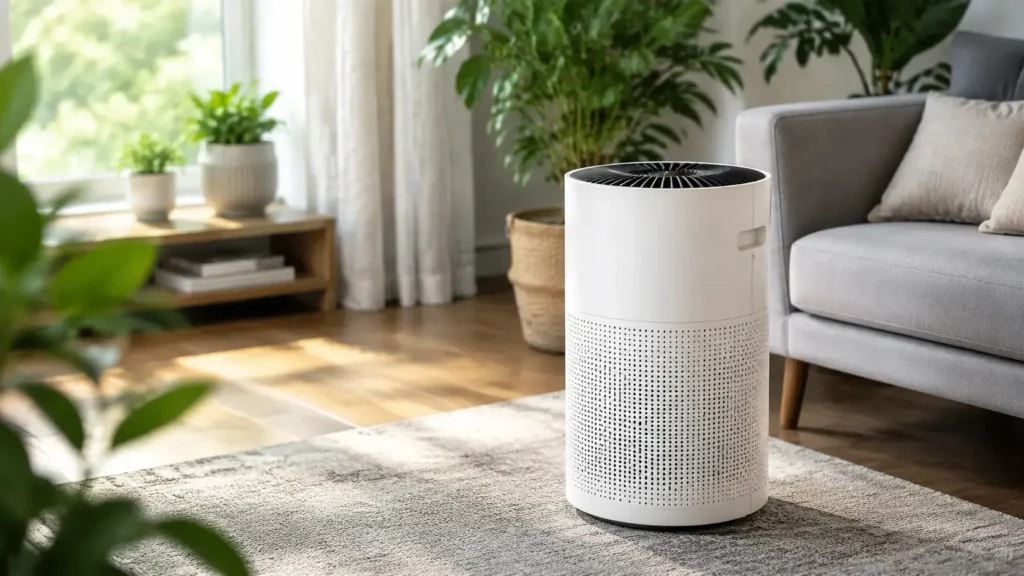
As an air purifier filter manufacturer, we know exactly what it takes to pull microscopic threats out of your breathing zone. Capturing mold isn’t about guesswork; it relies on high-grade material science and target-specific filtration technologies.
True HEPA Filters: The Gold Standard for Spores
When it comes to physical mold spore removal, a true HEPA filter is your absolute best line of defense. Mold spores typically range in size from 3 to 100 microns, while a certified True HEPA filter is rated to trap 99.97% of airborne particles as small as 0.3 microns.
- Physical Trap: Spores traveling through your indoor air quality system get permanently snared in the dense, fibrous maze of the HEPA media.
- Prevents Spreading: By capturing these reproductive cells, the filter stops them from landing on damp surfaces and starting new colonies.
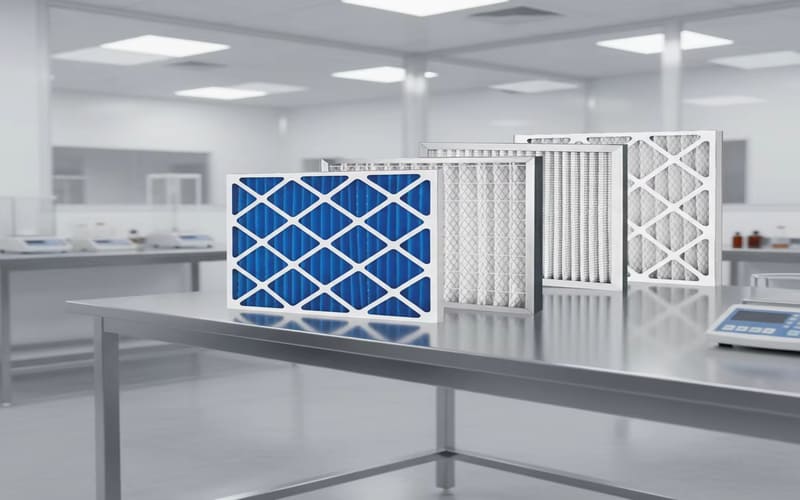
- Filter Guide: To get a better grasp of how these media classes differ, check out our comprehensive guide to air filter types and ratings.
Activated Carbon Filters: Eliminating Musty Odors
While HEPA filters excel at trapping physical particles, they cannot stop gases, VOCs, or the distinct, musty smells associated with mold and mildew. This is where an activated carbon filter becomes essential.
- Adsorption Process: Odor molecules physically bond to the vast network of microscopic pores in the charcoal.
- Neutralizes Smells: It actively strips the “basement smell” out of the air rather than just masking it with artificial fragrances.
- Carbon vs. Standard: If you want to see how carbon media stacks up against basic filtration, we break down the mechanics in our comparison of carbon vs. standard air filters.
UV-C Light and PECO Technology: Destroying Mold DNA
For those looking to go beyond trapping, some advanced air purifiers utilize secondary technologies to neutralize mold at a cellular level.
- UV-C Radiation: Ultraviolet light sanitization targets the DNA and RNA of airborne mold spores as they pass through the chamber, rendering them sterile and unable to reproduce.
- PECO (Photoelectrochemical Oxidation): This technology uses a light-activated catalyst to trigger a chemical reaction on the filter surface, breaking down mold organic matter into harmless water and carbon dioxide byproducts.
How to Choose the Best Air Purifier for Mold
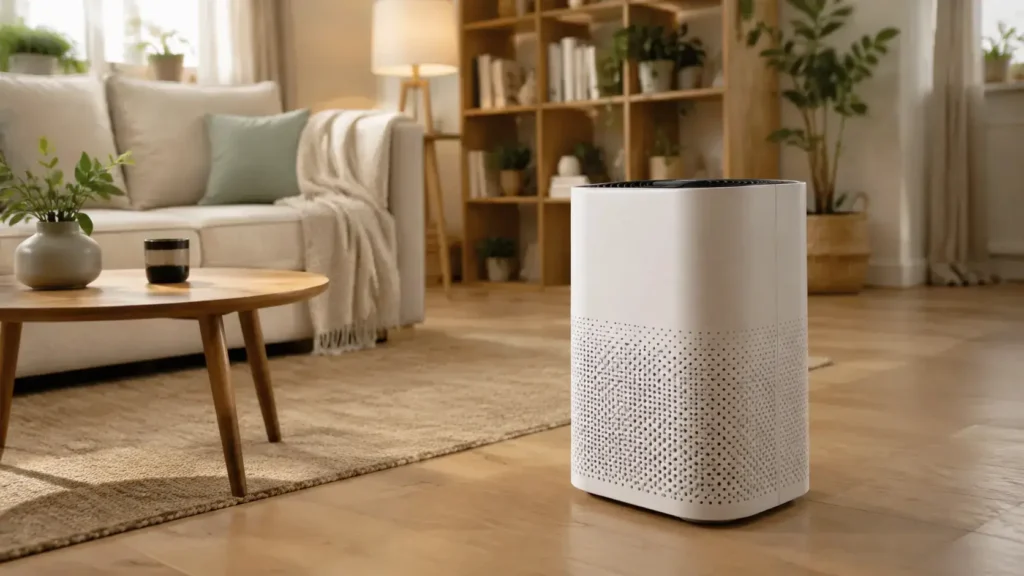
Selecting the right air purifier to combat airborne mold spores requires focusing on a few critical performance metrics. As an experienced air purifier filter manufacturer, we know that the wrong equipment won’t just fail to clean your air—it will waste your money.
To help you make the right choice, we have broken down the core specifications you must evaluate before making a purchase.
Look for True HEPA Filtration
When targeting microscopic mold spores, there is no substitute for a True HEPA filter. Cheap, generic filters simply cannot trap particles as small as mold spores.
- 99.97% Efficiency: True HEPA filters capture particles down to 0.3 microns, which easily traps mold spores (typically ranging from 3 to 100 microns).
- Avoid “HEPA-type” Filters: These are marketing gimmicks that do not meet the strict efficiency standards of True HEPA.
- Filter Replacements: High-performing filters must be swapped regularly to remain effective. Knowing how often to change your air purifier filter ensures your system continues to capture mold spores without restricting airflow.
Check the Clean Air Delivery Rate (CADR)
The Clean Air Delivery Rate (CADR) measures how quickly an air purifier cleans the air in a specific room. The higher the CADR rating, the faster the unit filters out airborne mold spores, dust, and pollen.
| Pollutant Target | Recommended CADR Rating | Why It Matters |
|---|---|---|
| Pollen & Large Spores | 200+ | Quickly captures heavy particles before they settle on surfaces. |
| Dust & Medium Particles | 150+ | Keeps general airborne debris from accumulating. |
| Smoke & Tiny Spores | 100+ | Filters out ultra-fine irritants and persistent odors. |
To get the most out of your system, look for a CADR rating that is at least two-thirds of your room’s square footage.
Match the Purifier to Your Room Size
An air purifier can only do its job if it is rated for the space it is in. Matching the unit to your square footage coverage ensures the air is cycled frequently enough to prevent spore buildup.
- Small Rooms (Up to 150 sq. ft.): Best for bathrooms or small offices where localized moisture is common.
- Medium Rooms (150 to 350 sq. ft.): Ideal for standard bedrooms and kitchens.
- Large Rooms (350+ sq. ft.): Required for open-concept living rooms and basements where mold risks are highest.
Pro Tip: Always buy a unit rated slightly larger than your actual room size. Running a larger purifier on a lower, quieter speed setting is much more efficient than running a small unit on high constantly.
Comprehensive Tips to Prevent and Control Mold Growth
While air purifiers do an excellent job of filtering airborne mold spores, they cannot solve the root cause of the problem: moisture. As an air purifier filter manufacturer, we know that true mold prevention requires a proactive approach to moisture control. To keep your home healthy and your indoor air quality high, you must combine air filtration with active moisture management.
Here are the most effective ways to prevent and control indoor mold growth.
Keep Indoor Humidity Levels Low
Mold thrives in damp environments. To stop mold from taking hold, you must control the humidity levels inside your home.
- Target Ideal Humidity: Keep your indoor relative humidity between 30% and 50%. You can easily monitor this with an inexpensive hygrometer.
- Use Dehumidifiers: In naturally damp areas like basements, crawlspaces, or poorly ventilated rooms, run a dehumidifier to extract excess moisture from the air.
- Run Your Air Conditioner: Air conditioning units naturally remove moisture from the air as they cool. To keep your AC running efficiently and prevent dust and mold from building up in your system, make sure you don’t run the system with a dirty or clogged filter. If you suspect your system is struggling, check out these signs your HVAC filter is clogged to keep your air flowing freely.
Ensure Proper Ventilation and Fix Leaks
Stagnant air and hidden water leaks are the primary catalysts for active mold growth. Improving airflow and addressing plumbing issues quickly will deny mold the moisture it needs to survive.
- Ventilate High-Moisture Areas: Always run exhaust fans in the bathroom during and after showers, and in the kitchen while cooking. Ensure these fans vent outside, not into your attic.
- Fix Leaks Immediately: Regularly check under sinks, around toilets, and near your water heater. Repair plumbing leaks, roof leaks, and damp foundation walls immediately.
- Maintain Your HVAC System: Mold can easily grow inside ductwork if moisture accumulates. Never run your heating and cooling system without a proper air filter, as this allows dust and spores to settle directly on the wet coils. If you are tempted to run your system during a filter change, read up on why you shouldn’t run an air conditioner without a filter to avoid serious mold and system damage.
Clean, Dry, and Disinfect Wet Areas Promptly
When spills or floods happen, time is your biggest enemy. Mold spores can begin to colonize damp surfaces in as little as 24 to 48 hours.
- Dry Wet Spots Fast: If carpets, drywall, or furniture get wet from a spill or leak, dry them completely within 24 to 48 hours. Use wet-dry vacuums, fans, and dehumidifiers to speed up the process.
- Disinfect Hard Surfaces: Clean non-porous surfaces like tile, glass, and metal with soap and water, or a commercial mold cleaner. For persistent surface mold, use a solution of water and detergent or commercial disinfectants.
- Discard Moldy Porous Materials: Materials like ceiling tiles, drywall, and carpets that have been soaked and cannot be dried quickly usually cannot be fully salvaged. It is safest to remove and replace them to prevent deep-seated mold remediation issues later.
Frequently Asked Questions About Mold and Air Purifiers
Where is the best place to put an air purifier for mold?
To maximize mold spore removal, place your air purifier in high-moisture areas where mold is most likely to thrive, such as basements, kitchens, or bathrooms.
- Give it space: Keep the unit at least 2 to 3 feet away from walls or furniture to allow 360-degree airflow.
- Elevate it: Placing the purifier on a table or shelf can help it capture airborne mold spores that float at breathing level.
- Target the source: Position it close to damp areas, but keep it safe from direct water splashes.
Do air purifiers kill mold or just trap it?
Most standard purifiers equipped with a true HEPA filter only trap mold spores; they do not kill them. Because these microscopic spores are physically captured in the dense fibers, they eventually die from a lack of moisture.
Since these active spores remain trapped on the physical media, you might wonder if you can clean air purifier filters to wash them away. However, attempting to wash or vacuum a standard HEPA filter can damage the delicate fibers and release trapped spores back into your breathing zone. To actually destroy the biological structure of mold, you need specialized technologies like UV-C light or PECO filtration.
Can an air purifier help with ongoing, active mold issues?
No, an air purifier cannot resolve active mold growth on physical surfaces.
While high-efficiency air filtration is excellent at cleaning the air and protecting your respiratory health, it cannot penetrate drywall, wood, or carpet where mold is actively feeding. An air purifier should be used as a secondary defense to catch floating spores after you have fixed the water leak, lowered the humidity, and physically scrubbed the surface mold.