Can a Dirty Air Filter Cause an Engine Misfire?
A dirty air filter directly causes engine misfires. Internal combustion engines require a precise balance of clean air and fuel to generate power. When dirt, pollen, and road debris clog the engine filter, the engine starves for oxygen, triggering car misfire symptoms like sputtering, jerking, and sudden power drops.
How Airflow Restriction Causes Engine Misfires
Restricted airflow impairs combustion before the cycle even begins. As an air filter manufacturer, we design filtration media to deliver maximum air volume while trapping micro-contaminants. When a filter becomes saturated:
- Air Intake Drops: Reduced airflow prevents the required volume of oxygen from entering the intake manifold.
- Vacuum Strain Increases: The engine struggles to draw sufficient air through clogged filtration layers.
- Ignition Fails: The spark plug fails to ignite the dense, oxygen-starved charge in the cylinder, causing a misfire.
The Impact of an Imbalanced Air-Fuel Mixture
Gasoline engines require a strict stoichiometric air fuel ratio (ideally 14.7 parts air to 1 part fuel) for complete combustion. A clogged filter severely disrupts this balance.
| Fuel Mixture Condition | Airflow Status | Engine Impact |
|---|---|---|
| Optimal Ratio | Unrestricted, clean airflow | Smooth idling, complete fuel burn |
| Rich Air Fuel Mixture | Choked airflow, standard fuel delivery | Engine hesitation, unburnt fuel, misfires |
When airflow drops, the Engine Control Module (ECM) will adjust the injection of fuel quantities based on sensor data.
Fouled Spark Plugs and Incomplete Combustion
A rich mixture leads directly to incomplete combustion. Because there is insufficient oxygen to burn the injected fuel, excess raw gas remains inside the cylinder.
- Soot Accumulation: Unburnt gas leaves dark combustion chamber deposits across internal components.
- Spark Plug Fouling: Heavy carbon soot coats the spark plug electrode, shorting out the electrical current.
- Persistent Cylinder Misfires: Once spark plug deposits form, the cylinder will continually misfire until the clogged filter is replaced and the plugs are serviced.
Key Symptoms of a Dirty Engine Air Filter
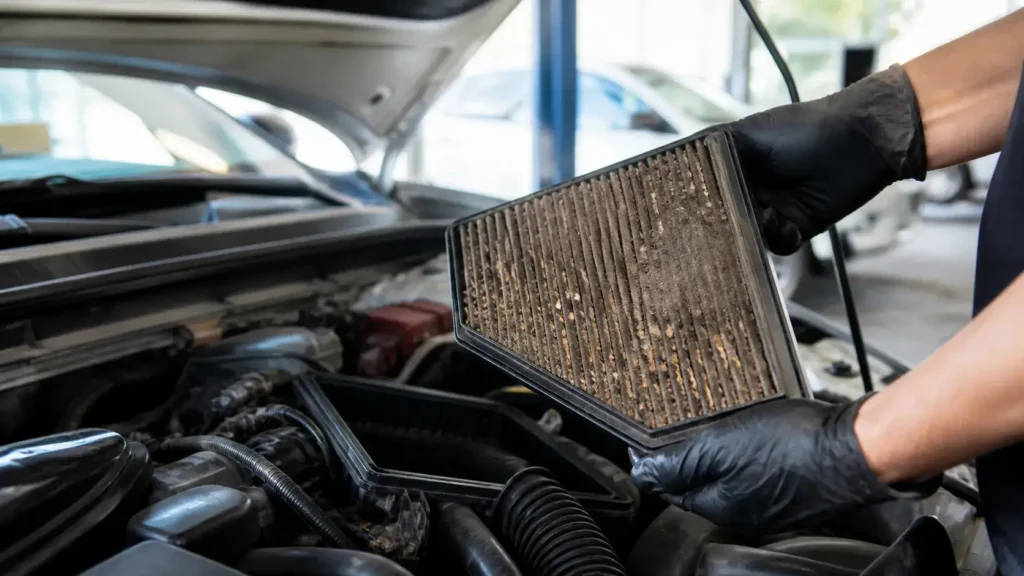
Recognizing the warning signs of a clogged filter early prevents severe engine wear and performance drop. As filter manufacturers, we regularly observe how severe dirt accumulation starves the engine and causes ignition issues.
Engine Misfiring and Rough Idling
When a clogged engine air filter limits fresh air intake, the engine runs on an excessively rich air fuel mixture. This surplus of gasoline leads to rough idling, engine shaking, and classic car misfire symptoms. Understanding why an air filter turns black helps you spot heavy dirt and carbon accumulation before unburnt fuel damages your spark plugs.
Check Engine Light Triggered by Airflow Issues
Severe restricted airflow throws off system sensor readings. When intake oxygen levels drop significantly, the onboard computer detects incomplete combustion and illuminates the check engine light to warn of an imbalanced air-fuel ratio.
Loss of Horsepower and Poor Acceleration
Your engine requires a continuous stream of oxygen to generate power efficiently. Reduced horsepower: The engine feels sluggish when climbing hills or hauling heavy loads. Poor acceleration: Noticeable delay in throttle response when pressing the gas pedal.
Reduced Fuel Efficiency and Black Exhaust Smoke
Incomplete combustion forces unburnt fuel out through the exhaust system, creating visible signs and waste. Black smoke exhaust: Soot and dark smoke exiting the tailpipe from burning raw gas. Reduced fuel economy: Rapid drop in miles per gallon due to wasted, unburnt fuel. Fuel odor: Strong smell of raw gasoline near the exhaust pipe while idling.
How a Dirty Air Filter Affects Engine Performance
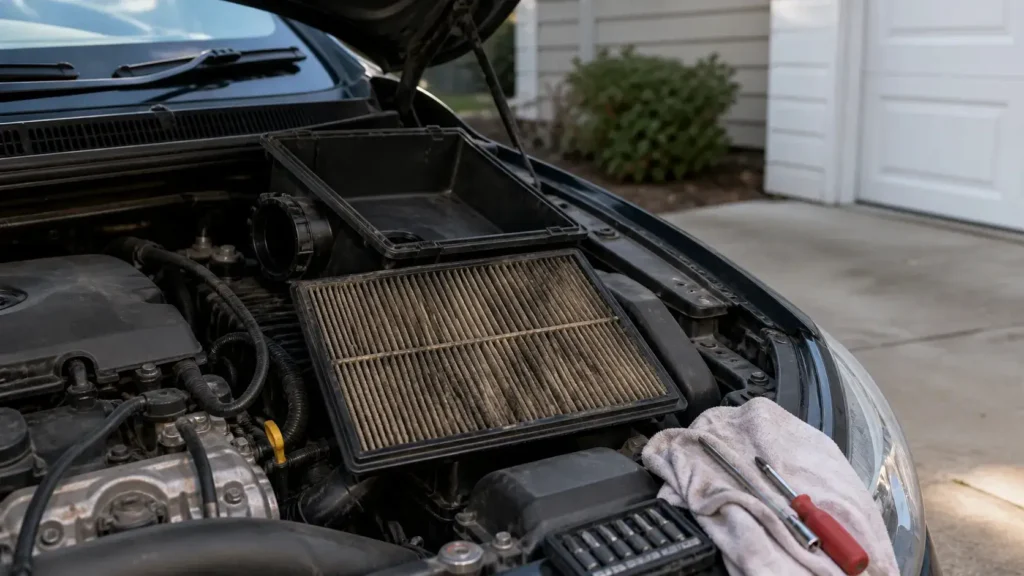
A clogged engine air filter disrupts the balance your engine needs to run smoothly. By restricting incoming air, a dirty filter forces the engine to work harder, triggering a noticeable engine performance drop and setting off a chain reaction of mechanical issues.
Contaminated Mass Air Flow (MAF) Sensor Operations
When an air filter becomes severely clogged or compromised, fine dust particles and debris bypass the media and coat the delicate wires of the mass air flow sensor.
- Incorrect Readings: A dirty MAF sensor sends inaccurate airflow data to the engine control unit (ECU).
- Fuel Imbalance: The ECU miscalculates the air-fuel ratio, often injecting too much fuel and causing a rich air-fuel mixture.
- Engine Hesitation: Incorrect sensor data leads to sluggish throttle response, engine hesitation, and car misfire symptoms.
Maintaining proper filter media integrity and understanding how airflow direction matters ensures contaminants never reach sensitive electronic sensors.
Unusual Engine Noises and Sputtering
Air starvation directly impacts combustion stability. When your engine cannot draw enough clean air, you will notice distinct auditory signals:
- Sputtering and Coughing: The engine struggles to maintain consistent idle speeds, resulting in rough idling and sputtering.
- Popping Sounds: Incomplete combustion creates popping or snapping noises inside the intake manifold or cylinders.
- Vibrations: Unbalanced firing order caused by restricted airflow produces unusual engine noises and severe shaking throughout the vehicle frame.
Unburnt Fuel and Exhaust Pipe Flames
When air is limited, the fuel inside the combustion chamber cannot burn completely. This excess unburnt fuel leaves the combustion chamber and enters the exhaust system.
- Exhaust Backfires: Raw fuel ignites inside the hot exhaust manifold or tailpipe, causing loud pops or visible exhaust flames in extreme cases.
- Component Damage: Unburnt fuel overheats the catalytic converter and fouls the oxygen sensor, leading to expensive secondary repairs.
- Black Smoke Exhaust: Dark smoke exits the tailpipe, signalling wasted fuel, reduced fuel economy, and severe combustion imbalance.
Standard Air Filter Replacement Intervals
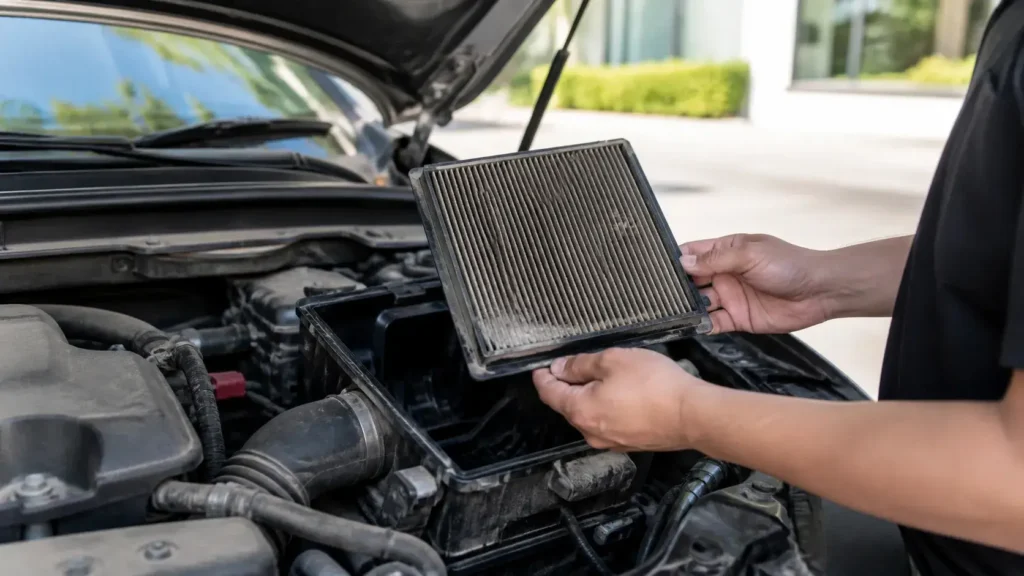
As air filter manufacturers, we generally recommend swapping out your engine air filter every 12,000 to 15,000 miles, or at least once a year. However, maintenance schedules depend heavily on your vehicle model and daily driving habits. If you prefer handling basic maintenance yourself, knowing how to change your car’s air filter makes it easy to stop restricted airflow before it causes engine misfires.
Signs Your Air Filter Needs Immediate Replacement
Waiting for a scheduled service interval isn’t always safe. Replace a clogged engine air filter immediately if you notice any of these red flags:
- Visual Discoloration: Dark gray, brown, or black debris packed deep inside the filter pleats.
- Engine Hesitation: Sputtering or lagging power when pressing the gas pedal.
- Check Engine Light: Dashboard warnings triggered by a rich air-fuel mixture or airflow sensor faults.
- Reduced Fuel Economy: Unexplained drops in gas mileage due to incomplete combustion.
Driving Environments That Clog Filters Faster
Certain driving conditions force your filter to capture debris at twice the normal rate. Inspect your engine air filter every 5,000 miles if you regularly face:
| Environment | Impact on Air Filter | Recommended Action |
|---|---|---|
| Unpaved & Dirt Roads | Heavy dust rapidly blocks filter pleats. | Inspect monthly; replace early. |
| Heavy Traffic & Cities | Soot, exhaust fumes, and smog build up quickly. | Check at every oil change. |
| Construction Zones | Airborne grit cuts off air supply to the combustion chamber. | Replace twice a year. |
| Dry, Arid Climates | Constant dust and sand accelerate clogging. | Inspect every 5,000 miles. |
How to Troubleshoot and Fix an Air Filter Misfire
If you suspect restricted intake air is triggering an engine misfire, troubleshooting is straightforward. We always recommend starting with a simple visual check before moving on to component replacements or deeper diagnostic work.
Inspecting Your Engine Air Filter for Dirt and Debris
To determine if restricted airflow is behind your car misfire symptoms, inspect your air intake system with these steps:
- Locate the Air Box: Open the hood and find the plastic air filter housing near the engine intake manifold.
- Remove the Filter: Unclip or unbolt the housing cover and carefully lift out the filter element.
- Perform the Light Test: Hold the filter up to a bright light source. If light cannot pass through the paper pleats, or if you notice heavy grime, leaf buildup, and oil accumulation, the filter is severely clogged.
Replacing a Clogged Engine Air Filter
Performing an engine air filter replacement takes less than ten minutes and requires minimal tools:
- Clean the Air Box: Wipe away any loose dust or grit inside the lower housing so dirt does not drop directly into the intake duct.
- Install the New Filter: Drop the fresh filter in, ensuring the rubber perimeter seal sits completely flush around the housing edges to prevent unfiltered air leaks.
- Secure the Cover: Reattach the clips or tighten the housing bolts firmly.
- Dispose Properly: After replacing the filter, check how air filters can be recycled or properly disposed of to keep vehicle maintenance eco-friendly.
When to Visit a Professional Mechanic
If you replace the filter but continue to experience rough idling, power hesitation, or a flashing check engine light, the issue has likely impacted downstream engine parts:
- Contaminated MAF Sensor: Fine dirt particles may have bypassed a degraded filter, coating the mass air flow sensor wire and causing incorrect fuel delivery signals.
- Fouled Spark Plugs: Running a rich mixture from lack of air often coats spark plug tips in heavy soot, causing persistent misfires until the plugs are cleaned or replaced.
- Diagnostic Scanning: A qualified technician can scan OBD-II trouble codes to check whether oxygen sensors, ignition coils, or fuel injectors need further attention.