You might think popping any replacement bag into your vacuum is enough to keep your home’s air clean. But are all vacuum bags HEPA filters?
The short answer is no, and assuming they are could mean blowing microscopic dust and allergens right back into your living space.
While standard paper bags only catch coarse dirt, true HEPA vacuum bags feature multi-layer synthetic filtration engineered to trap 99.97% of particles down to 0.3 microns. However, just using a high-efficiency bag doesn’t guarantee full protection if your machine lacks a sealed HEPA system or leaks air around the housing.
In this guide, you’ll learn how HEPA vacuum bag filtration actually works, how to spot deceptive HEPA-type labels, and how to select the right OEM or off-brand replacement bags to protect your motor and boost your indoor air quality.
Are All Vacuum Bags HEPA Filters?
No, not all vacuum bags are HEPA filters. Most standard vacuum bags are constructed from single-layer paper or basic woven material designed only to hold visible debris, allowing microscopic allergens to recirculate into the air.
The Difference Between Standard and HEPA Vacuum Bags
Standard and HEPA vacuum bags differ fundamentally in material quality, structural layers, and filtration efficiency.
| Feature | Standard Vacuum Bags | HEPA Filter Vacuum Bags |
|---|---|---|
| Material Construction | Single or double-layer paper | Multi-layer synthetic melt-blown non-woven fabric |
| Filtration Efficiency | Traps particles down to 10–50 microns | Traps 99.97% of particles down to 0.3 microns |
| Target Pollutants | Large dust, hair, grit, visible dirt | Dust mites, pet dander, pollen, mold spores, fine dust |
| Edge Sealing | Basic cardboard flange | Rubberized gasket with sealed seam welding |
What Defines a True HEPA Filter Bag?
A True HEPA filter bag must meet strict international filtration standards (such as EN1822 or ASME) to guarantee air purification.
- 0.3-Micron Standard: Retains at least 99.97% of airborne particles sized 0.3 microns in diameter.
- Electrostatic Fiber Layering: Uses electrostatically charged micro-fibers to attract and bind microscopic dust.
- Airtight Rubber Seal: Includes a precision collar seal to prevent dust leakage around the inlet.
Common Misconceptions About Vacuum Bag Filtration
- “All synthetic cloth bags are HEPA filters.” Material appearance does not equal performance; only certified multi-layer media provides true HEPA filtration.
- “HEPA bags suffocate motor airflow.” High-efficiency synthetic bags maintain optimal airflow and suction power better than clogging paper bags.
- “Paper bags adequately trap household allergens.” Basic paper bags permit fine dust mites, spores, and pollen to blow straight through the exhaust.
Does Using a HEPA Bag Mean You Have Full HEPA Filtration?
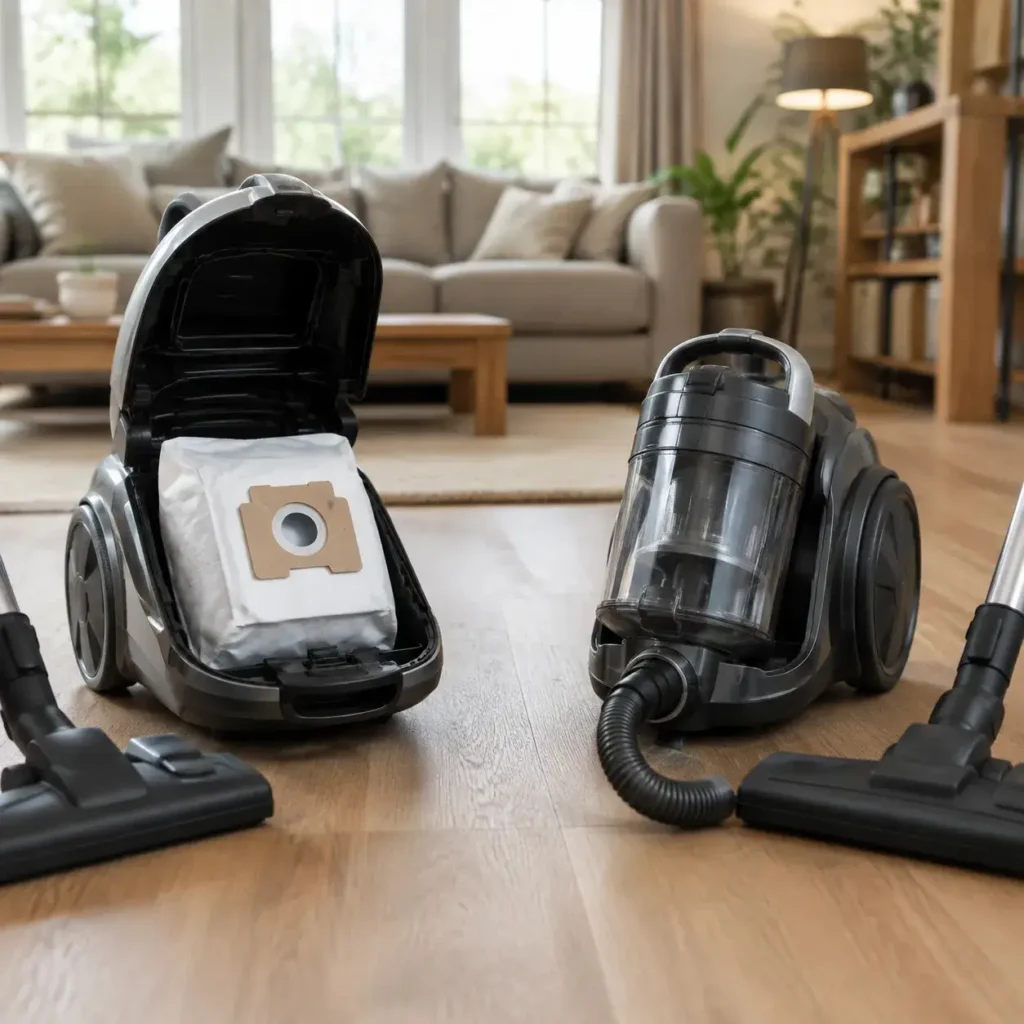
Simply popping a high-efficiency bag into your vacuum cleaner does not automatically guarantee full system-level filtration. While a high-quality dust bag traps fine particle retention inside, unfiltered air can easily escape if the machine itself is not properly engineered.
HEPA Filter Bags vs. Sealed HEPA Vacuum Systems
There is a major difference between using high-performance filter media and operating a completely sealed vacuum system.
- HEPA Filter Bag: Traps dust, pollen, and microscopic debris within its multi-layer synthetic cloth structure.
- Sealed HEPA Vacuum System: Features airtight rubber seals and gaskets along every housing joint, hose connection, and latch to guarantee zero air leaks.
While putting a HEPA filter in any vacuum upgrades initial dust containment, unsealed vacuums allow contaminated air to blow right past the bag and back into your room.
The Impact of Air Leaks on Overall Filtration Efficiency
Air leaks drastically compromise your vacuum’s cleaning performance and indoor air quality. When dirty air bypasses the primary filter bag through casing gaps, several critical issues occur:
- Escaped Allergens: Microscopic dust mites and pet dander blow back into the surrounding air.
- Lost Suction Power: Cracks and loose seals cause severe air pressure drops, reducing effective vacuum airflow at the cleaning head.
- Declined Filtration Standard: Even if your bag meets a strict HEPA filtration standard, an unsealed housing drops overall system efficiency well below true HEPA performance.
The Role of Secondary Motor and Exhaust Filters
Achieving complete allergen reduction requires a multi-stage approach rather than relying solely on the main dust bag.
| Filter Location | Primary Function | Impact on Performance |
|---|---|---|
| Pre-Motor Filter | Traps heavy debris before air hits the motor | Protects motor life and maintains steady suction power |
| HEPA Exhaust Filter | Captures carbon motor dust and residual fine particles | Ensures ultra-clean exhaust air before it exits back into your living space |
As a specialized vacuum bag filter manufacturer, we engineer multi-layer filtration bags to work seamlessly alongside secondary motor and exhaust filters for complete allergen containment.
How HEPA Vacuum Bags Trap Dust and Allergens
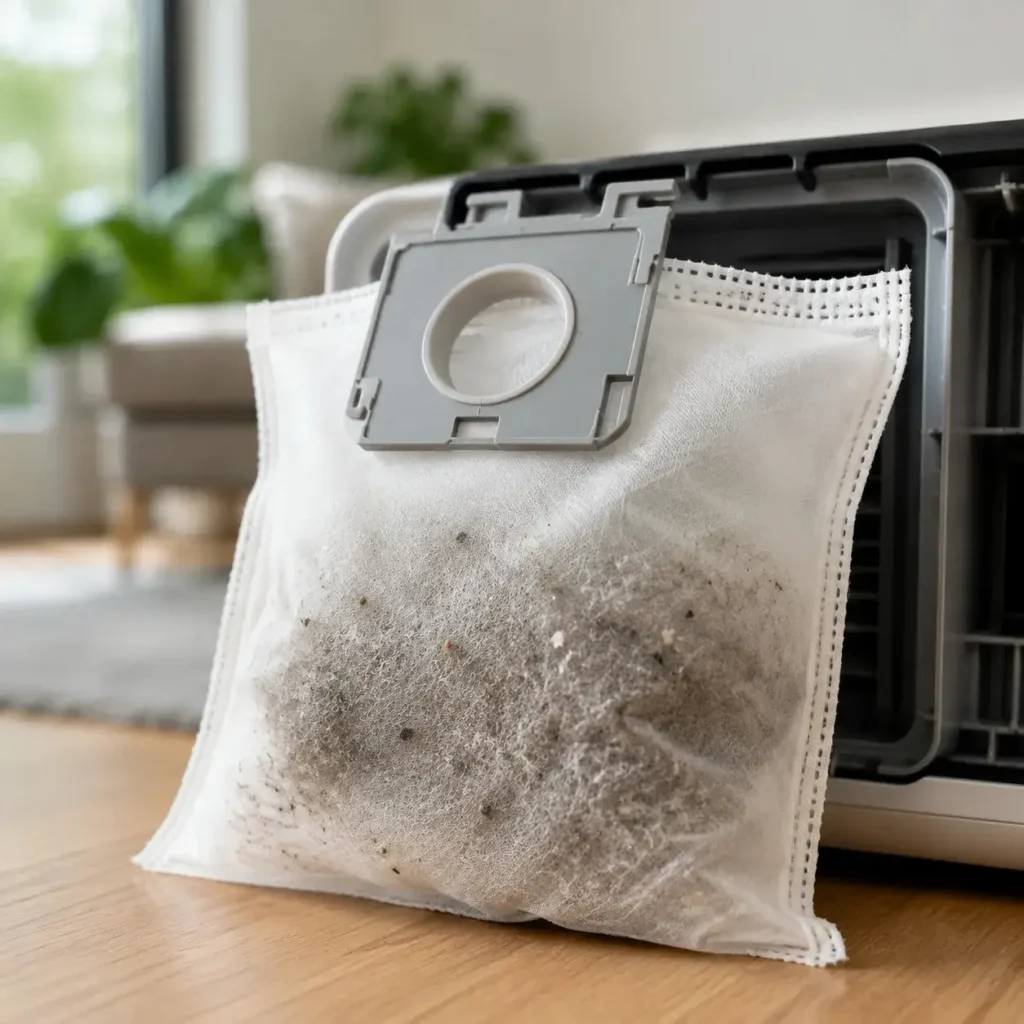
I design HEPA vacuum bags to capture microscopic pollutants before they can blow back into your breathing space. Rather than relying on simple paper barriers, true HEPA filtration relies on engineered fiber matrices that lock away fine dust and micro-allergens.
Filtration Material Layers and Micron Ratings
Standard paper vacuum bags easily burst or leak tiny dust particles. To achieve true HEPA performance, I manufacture synthetic cloth bags using multi-layer filtration media built for high-efficiency retention:
- Spunbond Outer Layer: Blocks larger debris, hair, and coarse dirt while protecting inner media from tearing.
- Melt-Blown Microfiber Core: The critical barrier that traps particles as small as 0.3 microns with a 99.97% efficiency rate.
- Electrostatic Charge: Attracts airborne micro-debris magnetically to lock in particles without clogging the airflow immediately.
- Inner Protective Layer: Retains structural integrity against dampness or sharp object punctures.
Particle Retention Capabilities for Fine Dust and Pet Dander
Fine particle retention depends on how tightly woven these synthetic fibers are. True HEPA vacuum bags stop microscopic irritants that pass straight through standard bags:
- Pet Dander & Pollen: Trapped deep within the microfiber web to prevent indoor allergy flare-ups.
- Dust Mite Debris & Mold Spores: Sealed permanently inside the bag structure during cleanup.
- Ultra-Fine Construction Dust: Prevented from passing into the vacuum motor or exhausting into your living areas.
Impact on Vacuum Airflow and Suction Power
Denser filtration media inherently create air resistance. When comparing filters for resistance and efficiency, balancing fine particle retention with steady suction power requires precise material engineering.
High-quality synthetic HEPA bags distribute air evenly across their entire surface area. This design prevents premature clogging, allowing your vacuum to maintain peak suction power and strong motor cooling even as the bag fills to capacity.
HEPA Bagged vs. HEPA Bagless Vacuums
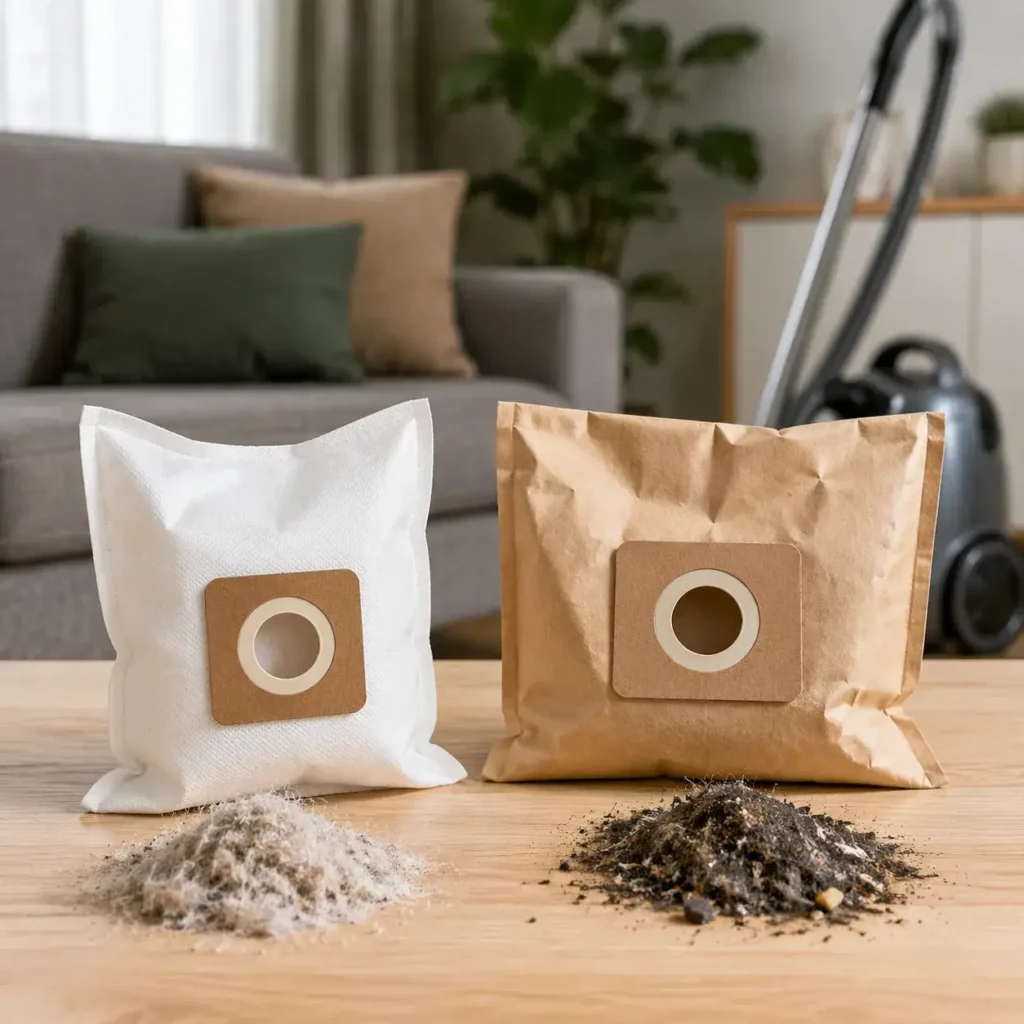
When evaluating floor care equipment, people often ask me: are all vacuum bags HEPA filters? The short answer is no—standard paper bags let microscopic debris escape easily. However, a vacuum built with true HEPA filtration standards and multi-layer synthetic bags delivers a far cleaner, healthier environment than most bagless vacuums on the market.
Allergen Exposure Risks During Dust Disposal
The biggest flaw in bagless vacuums occurs during dust bin disposal. Unlatching a dust cup releases a visible plume of fine particle dust, dust mites, and pet dander back into your breathing space, instanty lowering your indoor air quality.
- HEPA Bagged Systems: Feature self-sealing collars that lock in debris permanently. You discard the bag without coming into contact with captured contaminants or kicking up dust clouds. To keep your cleaning routine environmentally friendly, review our guide on whether air filters are recyclable and how to dispose of them.
- Bagless Systems: Force you to dump, tap, or manually pull tangled hair and fine dust out of the canister, exposing sensitive allergy sufferers to concentrated air pollutants.
Long-Term Suction Performance and Filter Maintenance
Maintaining strong airflow and consistent suction power requires reliable filter upkeep, but the daily workload differs substantially between these designs.
| Performance Metric | HEPA Bagged Vacuums | Bagless Vacuums |
|---|---|---|
| Maintenance Effort | Simple swap when full; no messy filter washing required. | Frequent washing, drying, and unclogging of cyclonic filters. |
| Airflow Stability | Sustains high vacuum airflow until the bag is nearly filled. | Suction drops quickly as fine dust coats primary filter screens. |
| Motor Protection | High fine particle retention keeps dust completely out of the motor. | Ultrafine particles breach secondary filters, causing motor wear. |
Understanding component lifespans helps maintain peak machine efficiency—take a look at our breakdown on which type of air filter will last the longest to optimize your vacuum maintenance.
Which System Better Improves Indoor Air Quality?
A sealed HEPA bagged vacuum is the clear winner for allergen reduction. While bagless vacuums boast HEPA exhaust filters, unsealed motor housings, and leaky canister seams allow unfiltered air to bypass the filter completely. A dedicated HEPA synthetic cloth bag captures particles down to 0.3 microns at the source, preventing fine dust from recirculating through your home.
Types of HEPA Vacuum Bags Available
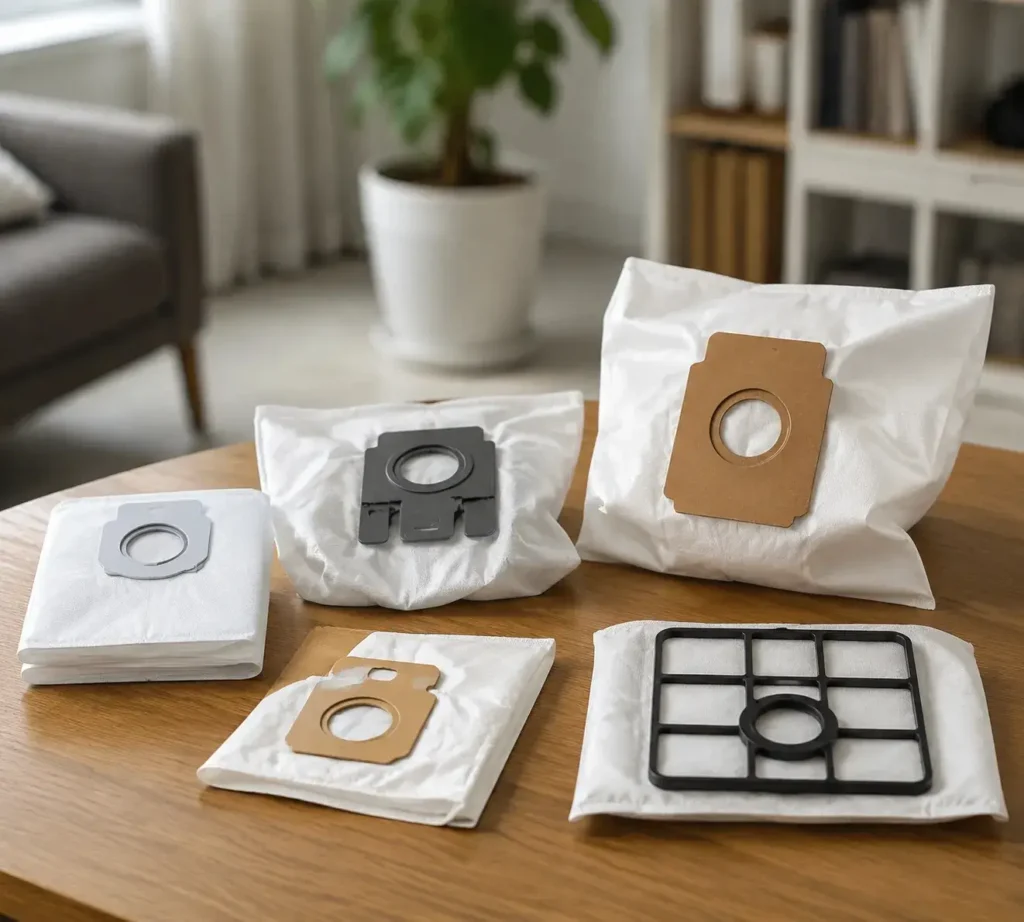
Choosing the right high-efficiency bags depends on your machine’s design, cleaning demands, and allergy concerns. As a dedicated filter manufacturer, we produce distinct styles engineered to maintain optimal vacuum airflow while locking in microscopic debris. Understanding what bag filters are used for makes it easy to select the right setup for your home or business.
Universal vs. Model-Specific Replacement Bags
- Model-Specific Bags: Engineered for exact canister or upright models. Custom mounting collars ensure a flush, airtight seal that prevents dust leakage and protects your motor.
- Universal Bags: Built with adaptable intake rings to fit multiple brands and standard sizes. They offer versatile, budget-friendly replacement options, provided the intake seal is seated correctly.
Self-Sealing vs. Open-Ring Bag Designs
- Self-Sealing HEPA Bags: Utilize an integrated sliding flap or spring-loaded shutter that closes the bag upon removal. This traps dust mites, pollen, and fine ash inside, preventing allergen clouds during disposal.
- Open-Ring Bags: Feature standard cardboard collars without an automatic closing valve. While economical, they require manual care during bag changes to prevent trapped dust from spilling back into the room.
Comparing collar seals alongside standard types of air filter ratings and uses helps ensure your complete system maintains high indoor air quality.
Odor-Trapping and Specialty Filter Bags
- Activated Charcoal Bags: Integrate an active carbon layer into the multi-layer filtration material to absorb stubborn pet odors and organic smells.
- Multi-Ply Synthetic Cloth Bags: Made from tear-resistant spunbond polypropylene layers that offer high fine particle retention and superior puncture resistance over paper bags.
- Anti-Microbial Treated Bags: Coated with active agent barriers to prevent mold spores and bacteria from multiplying inside the bag during extended use.
OEM vs. Off-Brand HEPA Vacuum Bags
Choosing between Original Equipment Manufacturer (OEM) dust bags and generic off-brand replacements comes down to filtration reliability and machine protection. While aftermarket options promise lower price tags, material quality directly affects how well your vacuum captures fine dust.
Filtration Efficiency and Material Quality Comparison
As a vacuum bag filter manufacturer, we design high-efficiency bags to meet strict particle retention standards. Premium OEM and high-grade generic HEPA bags use multi-layer synthetic cloth to capture microscopic allergens, whereas cheap off-brand alternatives rely on thin paper materials that rip easily and leak dust back into the air.
| Feature | Premium / OEM HEPA Bags | Low-Cost Off-Brand Bags |
|---|---|---|
| Material Build | Multi-layer melt-blown synthetic fabric | Single or double-ply paper |
| Particle Retention | Traps 99.97% down to 0.3 microns | Allows fine dust and pollen to escape |
| Sealing Quality | Heavy-duty rubber gaskets or self-sealing valves | Flimsy cardboard collars prone to gap leaks |
| Durability | Tear-resistant against sharp debris | Prone to bursting under strong suction |
Airflow Impact and Motor Protection
Filtration efficiency must be balanced with consistent air circulation. Low-quality off-brand bags often clog prematurely, causing extreme airflow resistance that starves the suction motor and leads to overheating.
Understanding airflow balance—much like analyzing a MERV ratings and pressure drop chart in HVAC filtration—shows that proper media design maximizes dust capture without choking your system. High-quality synthetic bags maintain steady vacuum airflow while keeping abrasive grit out of the motor housing.
Cost Differences vs. Long-Term Performance
Off-brand dust bags offer small upfront savings, but they introduce hidden long-term costs that outweigh the discount:
- Motor Longevity: Subpar bags let abrasive dust bypass the bag collar, grinding down motor bearings and causing premature failure.
- Secondary Filter Costs: Dust leakage forces exhaust filters and pre-motor filters to clog faster, requiring frequent, expensive replacements.
- Indoor Air Quality: Inefficient bags recirculate fine particles, frustrating efforts to maintain high indoor air quality.
Investing in certified HEPA vacuum bags protects your machinery while delivering consistent suction power and clean exhaust air.
How to Choose and Maintain the Right HEPA Vacuum Bag
Identifying Certified HEPA vs. HEPA-Type Labels
Not all high-efficiency dust bags meet strict air quality standards. Wording like “HEPA-Type,” “HEPA-Style,” or “99% Filtration” are marketing labels with no regulated performance rating. To protect your home from fine dust and allergens, look for certified HEPA filters that explicitly guarantee 99.97% retention of particles as small as 0.3 microns.
- True Certified HEPA: Independently tested to capture 99.97% of fine particles down to 0.3 microns.
- HEPA-Type / HEPA-Like: Unregulated materials that capture only 80% to 90% of larger particles.
- Multi-Layer Synthetic Construction: Offers high efficiency fine particle retention while preventing bag tears.
Checking Vacuum Model Compatibility and Seal Quality
High-grade filter material is useless if dirty air leaks around the bag connection. A poor seal allows dust mites and dander to bypass the filtration layer entirely, blowing allergens back into your living space.
| Seal Feature | Standard Requirement | Performance Benefit |
|---|---|---|
| Collar Design | Heavy-duty cardboard or molded plastic | Maintains structural shape under high suction |
| Inlet Gasket | Thick rubber membrane seal | Prevents fine dust from leaking around the intake tube |
| Disposal Flap | Integrated self-sealing closure | Traps dirt inside the bag during bag removal |
Recommended Replacement Frequency for Peak Performance
Overfilling a vacuum bag chokes airflow, overloads the motor, and reduces overall suction power. As a general rule, replace filter bags when they are 2/3 full rather than waiting for them to pack completely tight.
- Regular Homes: Change the bag every 1 to 2 months.
- Homes with Pets or Allergies: Change every 3 to 4 weeks to prevent odor buildup and maintain optimal indoor air quality.
- Construction Fine Dust: Replace immediately after vacuuming drywall dust, sawdust, or ash, as micro-particles clog air pores rapidly.