Every homeowner or property manager faces the same routine chore: staring at the HVAC vent and wondering if it’s time for a replacement.
But let’s be honest—constantly swapping out your air conditioner filter is a hassle you’d rather avoid.
You want to know exactly which type of furnace filters will maximize your air filter lifespan, protect your indoor air quality, and reduce that tedious replacement frequency.
The quick answer? While cheap fiberglass filters give out after just 30 days, deep-pleated media filters and robust HEPA filters can push through months—or even years—of continuous service without strangling your home ventilation.
But longevity depends on a delicate balance of durability, MERV rating, and design.
At Komtfil, we’ve engineered filtration solutions that solve this exact puzzle, delivering maximum efficiency without forcing you into an aggressive replacement schedule.
The Science of Filter Longevity: What Determines Lifespan?
When you want to know which type of air filter will last the longest, you have to look at the engineering behind it. As a manufacturer, we design filters based on how much debris they can hold before choking your HVAC system. Air filter lifespan isn’t random; it is dictated by physical design, material science, and airflow dynamics.
Surface Area vs. Thickness
The physical dimensions of a filter directly impact its durability and dust-holding capacity.
- Surface Area: Pleated filters outperform flat designs because folding the material creates more surface area. More area means more room to capture dust, extending the replacement frequency.
- Thickness: A standard 1-inch furnace filter has limited holding capacity. Deep media filter options (4 to 6 inches thick) contain massive amounts of material, allowing them to last up to a year without restricting home ventilation.
Material Composition
The raw materials we use determine how well a filter holds up over time under constant airflow.
- Fiberglass Filters: Made from spun glass. They have low structural integrity and clog quickly, serving only as a basic barrier.
- Synthetic Polymers: Used in high-quality pleated filters. These fibers are resilient, resist moisture, and maintain their shape over months of use.
- Electrostatic Media: Uses charged fibers to attract particles. While highly efficient initially, the static charge diminishes as dust coats the surface, altering the replacement schedule.
The Airflow Balance (The MERV Dilemma)
Choosing a filter requires balancing indoor air quality with system health. This is where the MERV rating (Minimum Efficiency Reporting Value) becomes critical.
- High MERV Ratings: Filters with higher MERV ratings have tighter weaves to catch smaller allergens.
- The Dilemma: Tighter weaves restrict airflow faster. If a high-efficiency filter lacks adequate surface area, it will clog rapidly, forcing an early replacement to prevent damage to your air conditioner filter system. Maximize thickness and pleat count to achieve both high efficiency and a long air filter lifespan.
Comprehensive Breakdown of Air Filter Types & Lifespans
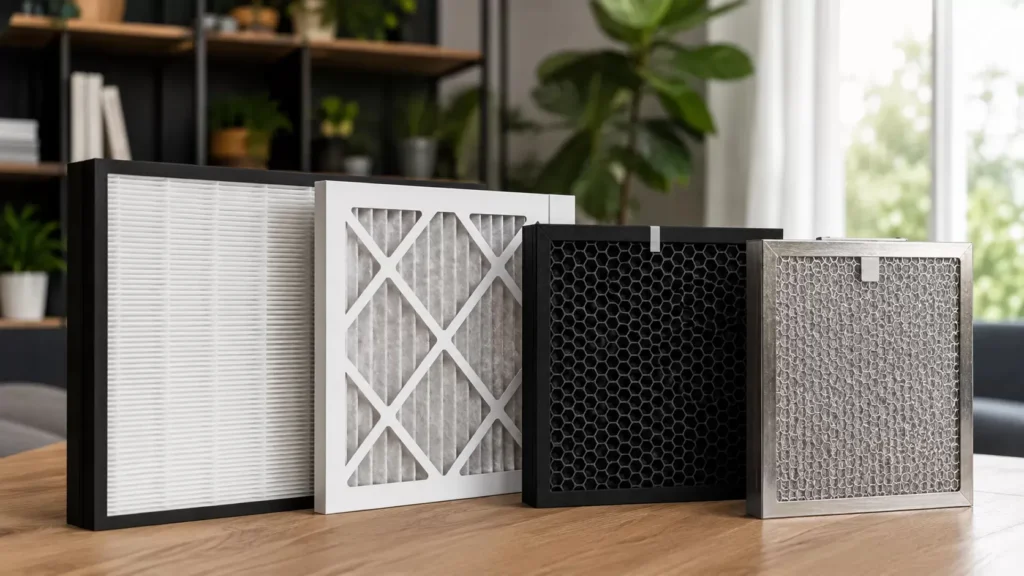
When evaluating air filter lifespan, different designs offer drastically different results. As an air filter manufacturer, we engineer these systems to balance material durability with structural design, directly impacting how long they last in your HVAC system.
Fiberglass Filters (The Baseline)
Fiberglass filters are the absolute bare minimum for HVAC protection. Built with a thin layer of spun glass, their primary job is to stop large debris like lint and hair from damaging your equipment, rather than improving indoor air quality. Because they have zero dust-holding capacity, their replacement frequency is incredibly high—they clog rapidly and must be tossed every 30 days.
Standard Pleated Filters (The Household Standard)
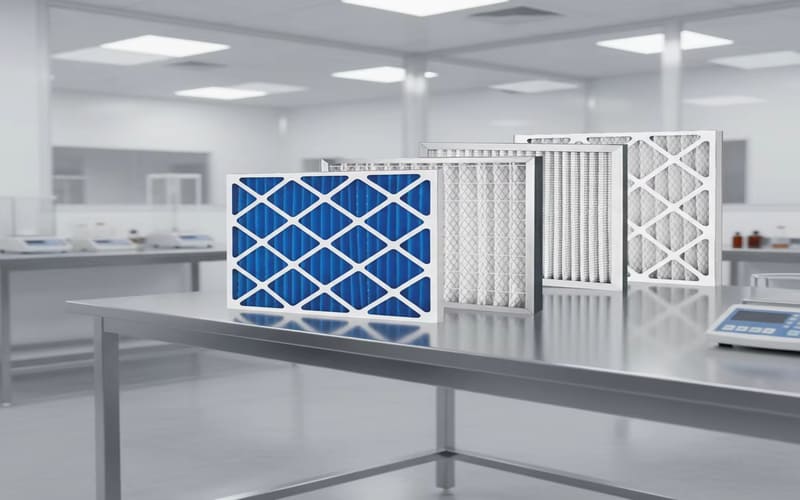
Standard pleated filters utilize a folded synthetic or cotton blend material. This pleated design drastically increases the overall surface area, allowing them to capture smaller allergens like dust mites and pollen without immediately choking home ventilation airflow. For a standard 1-inch or 2-inch variant, you can expect a reliable air filter lifespan of 60 to 90 days. When choosing between these two entry-level options, understanding the structural differences in pleated vs fiberglass air filters helps clarify why surface area matters so much for longevity.
Electrostatic Filters (The Reusable Contender)
Electrostatic filters use self-charging cotton or polyurethane fibers to attract airborne particles like a magnet. While they are marketed as a permanent solution because they are washable, their durability comes with a catch. They do not need to be replaced every few months, but they require intensive maintenance, demanding a thorough washing and complete drying cycle every 30 days to maintain their filtration efficiency.
Deep-Pleated Media Filters (The Residential Longevity Winner)
If you want the longest-lasting residential option, a deep-pleated media filter wins by a landslide. These filters are typically 4 to 5 inches thick. Because the deep pleats pack a massive amount of surface area into a single framework, they store an immense volume of dust and particles before causing any drop in system performance. A high-quality media filter easily boasts an air filter lifespan of 6 to 12 months, making it the ultimate “set-it-and-forget-it” choice for home furnace filters and air conditioner filter slots designed to accommodate them.
HEPA Filters (The Industrial/Specialized Gold Standard)
HEPA filters represent the peak of filtration efficiency, capturing 99.97% of particles down to 0.3 microns. Because the fiberglass microfiber mat is so dense, they create significant airflow resistance and is rarely used in standard residential HVAC systems without modifications. In specialized medical and industrial setups, a HEPA filter lasts anywhere from 12 to 18 months due to the sheer volume of material used in its construction.
Specialty Commercial Filters (Bag Filters & V-Cell Filters)
For large-scale commercial and industrial HVAC systems, standard filters simply cannot handle the sheer volume of air moving through the system. This is where high-capacity options come into play:
- Bag Filters: These multi-pocket filters utilize long, fabric sleeves that inflate with airflow, creating a massive surface area that extends their replacement schedule up to 6 months in heavy commercial environments.
- V-Cell Filters: Built with rigid, V-shaped mini-pleat packs, V-cell filters deliver exceptional efficiency and aerodynamic performance. Their heavy-duty construction allows them to endure harsh industrial environments for 12 to 24 months before needing a swap.
Direct Longevity Comparison Table
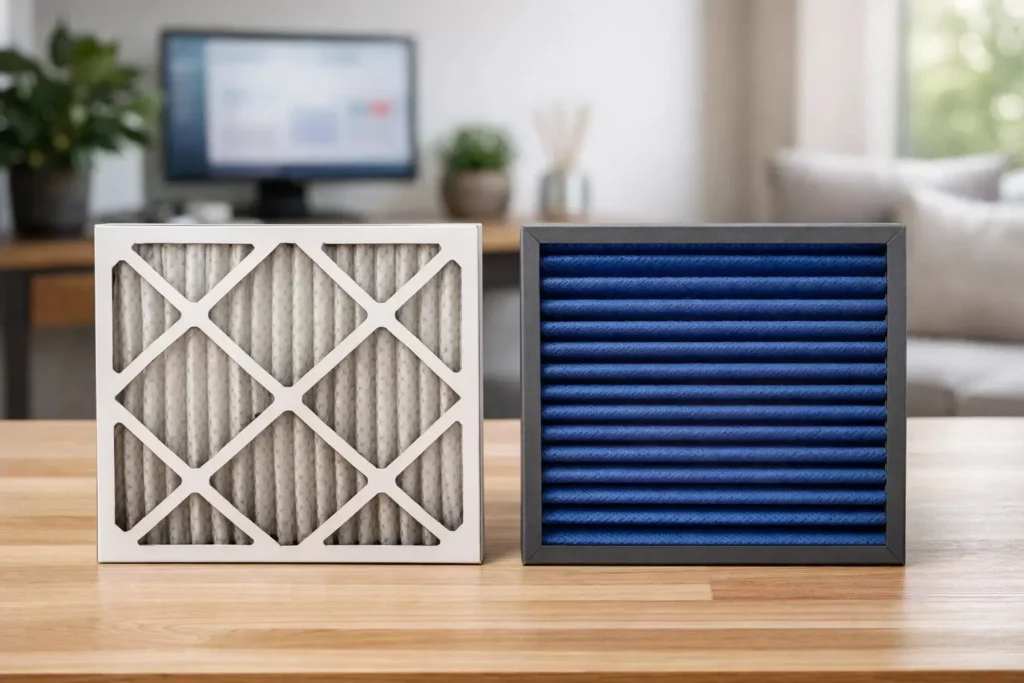
When evaluating which type of air filter will last the longest, a direct side-by-side comparison reveals how design impacts durability and replacement frequency. As an experienced air filter manufacturer, we engineered this breakdown to help you balance indoor air quality, system efficiency, and maintenance schedules.
Choosing the right option requires balancing efficiency with your system’s capabilities. For a deeper dive into choosing the right efficiency level for your home, check out our guide on which MERV rating filter should you use for home air quality.
Average Lifespan, MERV Range, and Best Use Cases by Filter Type
| Filter Type | Average Air Filter Lifespan | MERV Rating Range | Best Use Cases & Applications |
|---|---|---|---|
| Fiberglass Filters | 30 Days | MERV 1–4 | Low-budget setups, basic particle blocking, rental properties. |
| Standard Pleated Filters | 60–90 Days | MERV 5–11 | Standard residential HVAC systems, balancing dust collection and airflow. |
| Electrostatic Filters (Washable) | 5–10 Years (Requires monthly washing) | MERV 4–10 | Eco-conscious homeowners looking to eliminate recurring filter costs. |
| Deep-Pleated Media Filters | 6–12 Months | MERV 11–16 | High-traffic residential homes, pet owners, and advanced furnace filters. |
| HEPA Filters | 2–3 Years (Pre-filters changed regularly) | MERV 17–20 (Equivalent) | Hospitals, cleanrooms, and specialized air conditioner filter systems requiring maximum allergen removal. |
| Bag & V-Cell Filters | 6–12 Months | MERV 11–16 | High-volume commercial and industrial home ventilation systems. |
Note: Actual replacement frequency depends on daily usage, pet dander, and local geographic air quality.
Environmental Factors that Alter Your Replacement Schedule
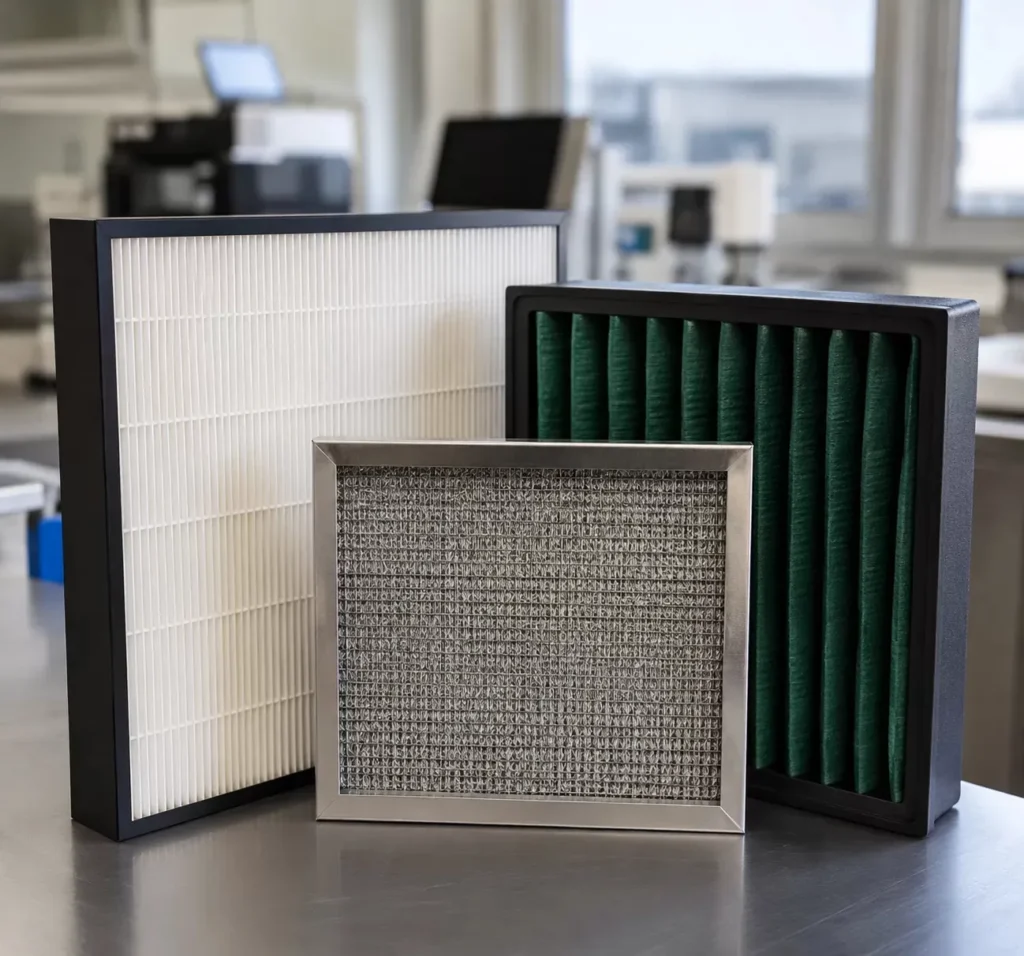
A filter’s listed durability is only a baseline. In the real world, your home’s environment dictates the actual replacement frequency. If your HVAC system works harder or processes dirtier air, even the longest-lasting media filter will cap out early to protect your indoor air quality.
Pet Ownership
Pets are the number one enemy of air filter lifespan. Shedding fur and dander quickly clog up the surface of pleated filters, drastically reducing home ventilation airflow.
- Single pet: Cuts your expected filter lifespan down by a third.
- Multiple pets: Expect to replace filters twice as often to prevent stress on your system.
Climate & Geography
Where you live heavily impacts how hard your furnace filters and air conditioner filter have to work. High-dust geographic regions, areas prone to wildfire smoke, or high-humidity zones where mold spores thrive will rapidly load a filter. In these environments, standard fiberglass filters fail almost immediately, while high-efficiency options require much closer monitoring.
HVAC Usage Habits
If your system fan is set to “On” rather than “Auto,” it runs 24/7. Continuous filtration catches more allergens, but it means you are hitting the maximum holding capacity of the filter much faster. Match your replacement schedule to your actual runtime hours, not just the calendar months.
The Illusion of “Discount Filters”
Choosing cheap discount filters to save money is a trap that hurts your efficiency and system health. Cheap, low-quality filters load up incredibly fast, forcing frequent changeouts that cost more over time. Worse, they let fine dust pass straight through, coating your HVAC coils, spiking energy bills, and permanently damaging your equipment. Investing in proper, manufacturing-grade filtration always costs less in the long run.
How to Tell When Your Filter Is Done
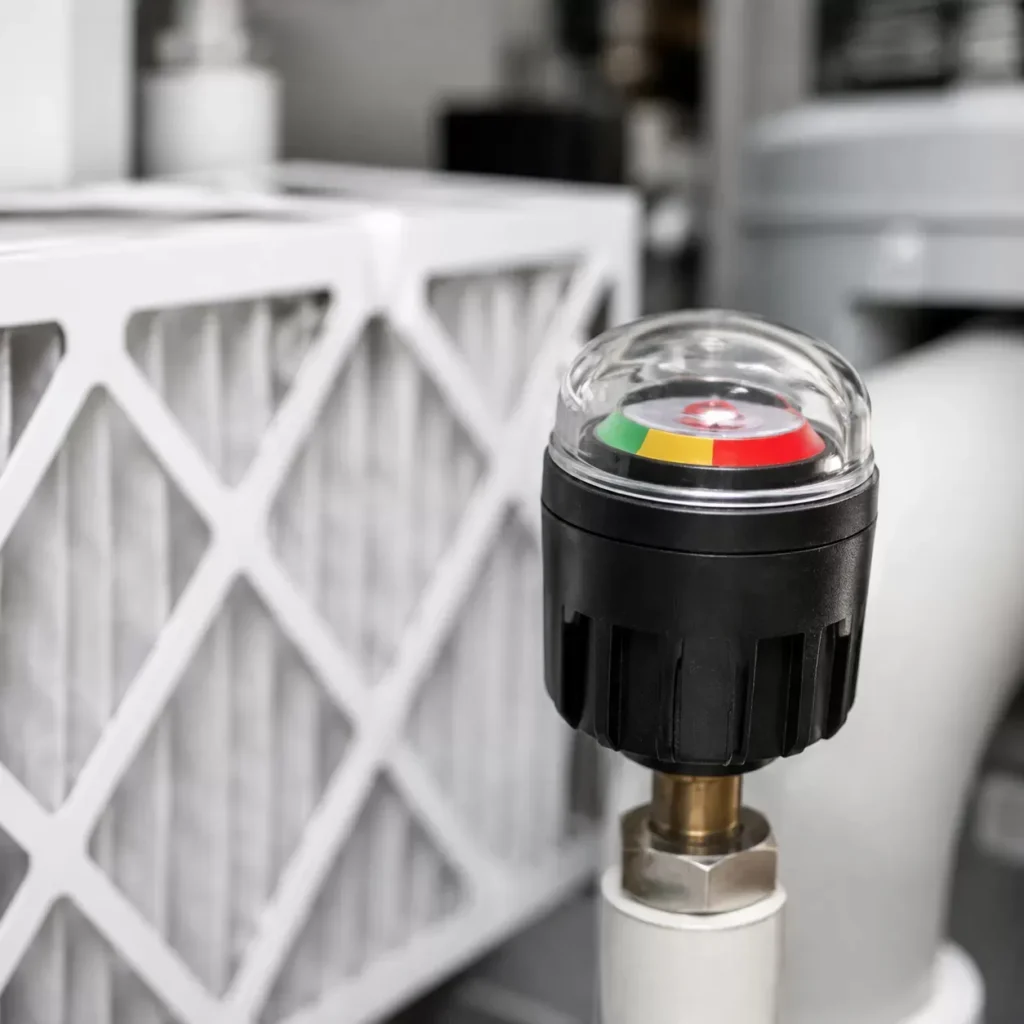
Waiting for a calendar date to replace your furnace filters or air conditioner filter can be a costly mistake. Heavy usage, pets, and seasonal changes all alter your actual replacement frequency. To keep your indoor air quality high and protect your HVAC system, rely on real-world signs rather than just the manufacturer’s deadline.
The Visual Check (The Light Test)
The absolute best way to gauge your air filter’s lifespan is the light test. Take the filter out and hold it up to a bright light or an open window. If the light cannot pass through the media filter due to a thick layer of grey dust and debris, the filter is done. A blocked filter forces your system to work twice as hard, killing its energy efficiency.
Visible Dust and Dropping Airflow
When a filter hits its capacity, it can no longer trap particles effectively. You will start to notice visible dust settling around home vents, on nearby furniture, or along the registers. At the same time, you might feel a sudden drop in home ventilation airflow. If the air blowing out of your registers feels weaker than usual, it is a clear sign that the filter is clogged and restricting the system. For a closer look at these warning signs, check out our guide on how can I tell if my furnace filter needs changing to avoid system damage.
Unexpected Spikes in Energy Bills
Your HVAC system relies on steady, unrestricted airflow to heat or cool your home. When it strains against a clogged filter, the motor runs longer and consumes significantly more electricity. If you notice an unexplained spike in your monthly utility bills, check the filter immediately. Replacing a dirty, high-resistance filter with a fresh one is the quickest way to restore system efficiency and lower your operating costs.
FAQs About Air Filter Lifespan
Which Type of Air Filter Will Last the Longest?
Deep-pleated media filters (typically 4 to 5 inches thick) last the longest, often delivering 6 to 12 months of continuous service. Because they feature a massive surface area, they trap a high volume of dust and allergens without restricting your home ventilation airflow as quickly as thinner alternatives.
What happens if you don’t change your air filter for a year?
Leaving a filter unchanged for a year severely restricts airflow, forcing your HVAC system to work twice as hard. This causes a massive spike in energy bills, triggers short-cycling, and can ultimately lead to a cracked heat exchanger or a failed air conditioner compressor. It also destroys your indoor air quality by allowing trapped dust and allergens to blow back into your living spaces. For a breakdown on safe replacement schedules, see our guide on how often to change air filters.
Do higher MERV rating filters last longer?
No, higher MERV ratings do not automatically equal a longer air filter lifespan. In fact, standard 1-inch pleated filters with a high MERV rating can clog faster because their weaves are much tighter, requiring a more frequent replacement schedule to protect your system from static pressure. To get both high efficiency and long durability, you must upgrade to a thicker, deep-pleated media filter.
Are washable electrostatic air filters worth it?
Washable electrostatic filters save money on replacements over time, but they come with a catch. They require strict monthly cleaning, can be prone to mold growth if reinstalled while damp, and generally have a lower overall efficiency for fine dust compared to disposable pleated filters. For most residential HVAC setups, a high-quality disposable pleated filter remains the better choice for convenience and air filtration quality.