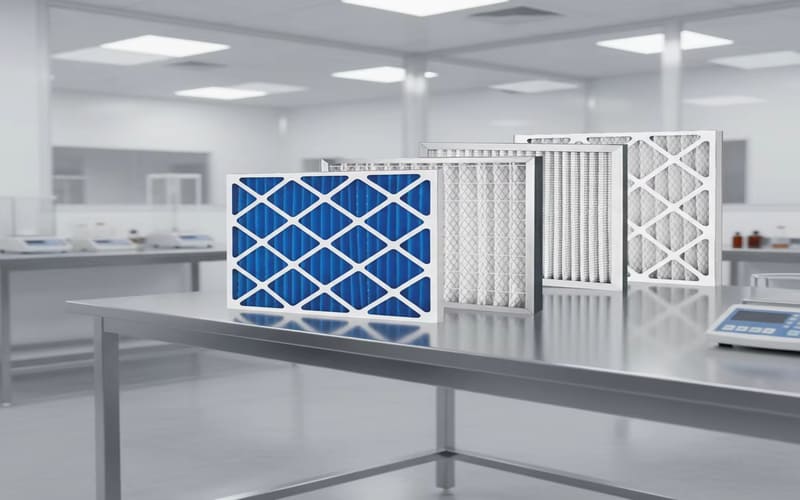
If you suffer from seasonal allergies, finding the best allergen furnace filters seems like a quick fix for your home.
But there is a massive catch most homeowners don’t realize until it’s too late: pick a filter that traps everything, and you risk choking your HVAC airflow and burning out your system’s blower motor.
So, how do you protect your lungs without destroying your furnace?
In this guide, I will break down the exact MERV ratings and industry secrets you need to get clean, sneeze-free air safely. Let’s get right into it.
Best Allergen Furnace Filters: Microparticle Capture vs. HVAC Airflow
When you suffer from seasonal allergies, your home should be a safe haven. Unfortunately, invisible airborne particles like pollen and mold spores, pet dander, and dust mites constantly circulate through your central AC and heating system. Standard fiberglass filters fail to catch these microscopic triggers, letting them bypass the system entirely and recirculate directly into your living spaces.
The Airflow Trap: Why HEPA Isn’t the Answer
It is tempting to look for the highest possible filtration rating, but true HEPA filters present a major mechanical challenge for standard residential HVAC systems.
- High Air Resistance: True HEPA filters are too dense for standard residential furnace motors.
- System Strain: Restricted HVAC system airflow forces your fan motor to work twice as hard, leading to premature wear and expensive repairs.
- Static Pressure Drop: A severe static pressure drop reduces the overall cooling and heating efficiency of your home.
Finding the Sweet Spot for Effective Allergen Reduction
The real goal is achieving high filtration efficiency without suffocating your equipment. You need a solution that balances aggressive indoor air quality (IAQ) management with healthy system performance.
| Filter Choice | Allergen Reduction | Impact on HVAC Airflow |
|---|---|---|
| Standard Fiberglass | Poor (Low protection) | None (High airflow) |
| True HEPA | Excellent (Maximum capture) | Severe Restriction (High risk of damage) |
| High-Efficiency Pleated Filters | Excellent (Targeted capture) | Minimal (Optimized for residential systems) |
As a dedicated furnace filter manufacturer, we engineer our pleated air filters to hit this exact sweet spot. By utilizing advanced electrostatic filter media, we deliver maximum allergen reduction and superior whole-house filtration efficiency without risking the health of your HVAC system.
Demystifying the Ratings: MERV vs. MPR vs. FPR for Allergy Relief
Shopping for the best allergen furnace filters usually means staring at a wall of confusing numbers and acronyms. Every brand seems to use a different scale, making it tough to figure out what actually stops indoor air quality triggers like pollen, dust mites, and pet dander.
To clear up the confusion, we broke down the three major rating systems used on pleated air filters today.
What is a MERV Rating?
MERV (Minimum Efficiency Reporting Value) is the independent industry gold standard. It measures a filter’s ability to capture airborne particles ranging from 0.3 to 10 microns.
- MERV 1–4: Provides basic HVAC system protection, trapping only large particles like lint and heavy dust. It does nothing for allergy relief.
- MERV 8: Standard residential filtration. Good for baseline dust control, but misses microscopic allergens.
- MERV 11 to MERV 13: The Golden Zone for allergy sufferers. These filters capture the vast majority of microscopic airborne particles, including mold spores, pet dander, and smoke.
Mapping the Scales: MERV vs. MPR vs. FPR
Retail brands like 3M Filtrete and Home Depot created their own proprietary scales, which often confuse homeowners trying to buy a whole-house filter. As a furnace filter manufacturer, we always recommend using a comprehensive MERV vs. FPR vs. MPR air filter ratings guide to cross-reference these retail metrics accurately.
Here is how these commercial scales map against the industry-standard MERV ratings:
| MERV Rating (Industry Standard) | 3M Filtrete MPR (Microparticle Performance Rating) | Home Depot FPR (Filter Performance Rating) | Ideal Target Allocation |
|---|---|---|---|
| MERV 8 | MPR 600 | FPR 5 | Basic Dust & Lint |
| MERV 11 | MPR 1000 – 1200 | FPR 7 | Pet Dander, Pollen, Mold Spores |
| MERV 13 | MPR 1500 – 1900 | FPR 10 | Microparticles, Smoke, Bacteria |
When shopping for the best allergen furnace filters, ignore the marketing fluff and focus on these numbers. If you need a balanced blend of high filtration efficiency and proper central AC airflow, sticking to the MERV 11 to MERV 13 range ensures you trap the bad stuff without suffocating your system.
Why MERV 11 and MERV 13 Pleated Filters Rule the Market
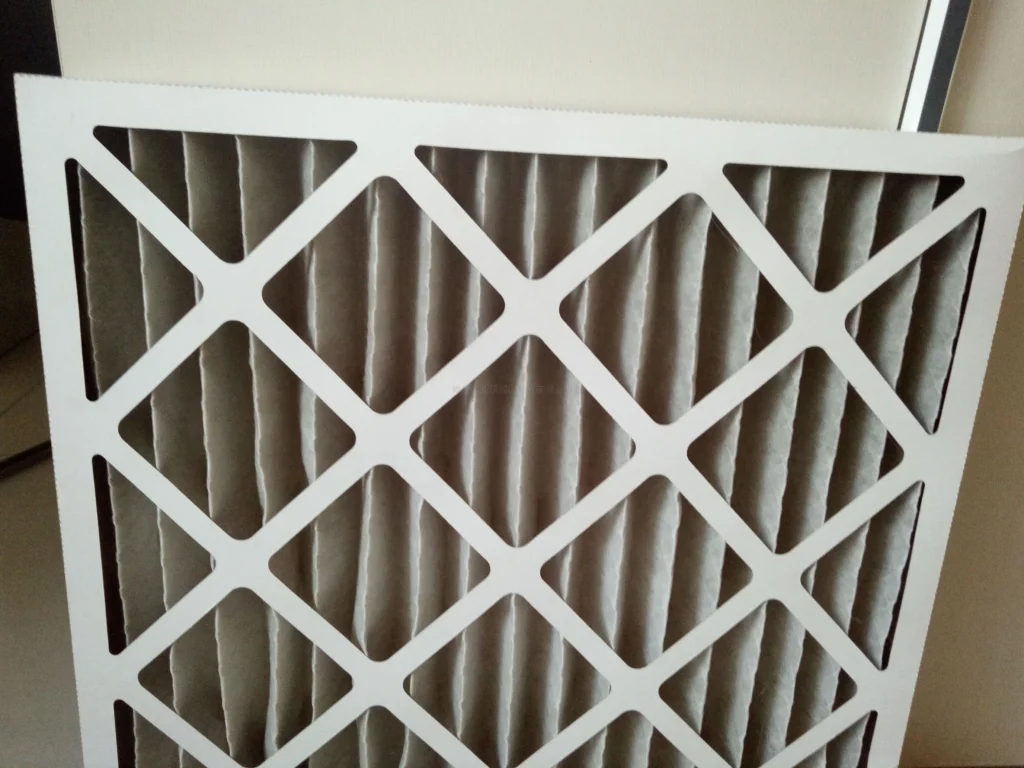
When you are looking for the best allergen furnace filters, flat fiberglass panels simply do not cut it. We design our pleated air filters to maximize surface area. By folding the filter material into a series of accordions, we significantly increase the fabric zone available to catch airborne particles. This clever engineering ensures a high dust-holding capacity, allowing the filter to trap a massive amount of debris without suffocating your HVAC system’s airflow.
Targeted Allergen Eradication
Different households face different air quality battles. That is why understanding the performance tier of your filter media is critical for real allergen reduction:
- MERV 11 Filters: This is our sweet spot for standard pet-owning homes. It actively captures medium-to-large triggers, including pollen, pet dander, and dust mites.
- MERV 13 Filters: This tier steps up your defense to an elite level. It tackles invisible microparticles, smoke, bacteria, and sneeze droplets. If you are debating between these options, our guide on when to upgrade from MERV 8 to MERV 13 filters breaks down the exact household triggers that warrant the jump.
The Komtfil Advantage
We do not just rely on mechanical blocking to clear your air. As a dedicated furnace filter manufacturer, our competitive edge lies in our advanced, synthetic electrostatic filter media.
| Filter Feature | Standard Pleated Filters | Komtfil Electrostatic Pleated Filters |
|---|---|---|
| Capture Method | Physical straining only | Physical straining + Magnetic-like static pull |
| Airflow Resistance | Increases rapidly as the filter fills | Stays low due to open fiber structure |
| Thickness | Needs extra bulk to catch small particles | Thin, high-efficiency weave |
This built-in electrostatic charge acts like a magnet, pulling microscopic allergens out of the air stream and locking them into the fibers. This allows us to deliver exceptional filtration efficiency without increasing the physical thickness of the filter, keeping your central AC or furnace running smoothly without a dangerous static pressure drop.
The Critical Factor Most Homeowners Overlook: The Perfect Seal
Even the best allergen furnace filters on the market will fail if they do not fit perfectly inside your intake grate or furnace slot. When a filter fits loosely, it creates a path of least resistance. Airflow naturally pulls through those gaps, allowing dust mites, pollen, and pet dander to slip right past the filtration media.
This issue is known as air bypass. If your indoor air quality is still suffering despite buying premium pleated air filters, a poor seal is almost always the culprit. Unfiltered airborne particles bypass the frame entirely, dirtying your HVAC system coils and circulating right back into your living spaces.
Standard vs. Custom Furnace Filter Sizes
Finding the right fit means understanding how your system handles filter depth and dimensions. While many modern homes use standard furnace filter sizes like typical 1-inch, 2-inch, or deep 4-inch media slots, older or proprietary central AC setups often demand odd dimensions like 10x24x1.
- Standard Off-the-Shelf Sizes: Usually rounded down by retail brands, leaving gaps up to a quarter of an inch.
- Proprietary HVAC Slots: Custom returns that standard retail filters simply cannot seal properly.
- The Consequence: A mere millimeter gap can reduce your whole-house filtration efficiency by up to 20%.
Bespoke Precision for Zero Air Bypass
As a dedicated air filter manufacturer, we solve this gap problem through custom manufacturing. We build filters to your exact physical specifications, ensuring a tight, friction-fit perimeter that forces 100% of the air through our high-efficiency electrostatic filter media. When you eliminate air bypass with a bespoke edge-to-edge seal, you finally get the full allergen reduction performance you pay for.
How to Choose the Best Allergen Furnace Filters for Your Home
Every home faces unique indoor air quality challenges. To get the best allergen reduction without choking your HVAC system airflow, you need to match your filter choice to your specific household needs.
Quick Selection Guide
| Household Profile | Recommended Filter Rating | Key Targets |
|---|---|---|
| Pet-Free & Light Allergies | MERV 8 or MERV 11 | Dust, lint, and initial pollen |
| Multi-Pet & Severe Allergies | MERV 11 or MERV 13 | Pet dander, dust mites, mold spores, pollen |
| Asthma or Compromised Immunity | MERV 13 or High-Efficiency Deep-Pleat | Microparticles, smoke, bacteria, sneeze droplets |
Matching Filters to Your Lifestyle
- Scenario A: The Pet-Free, Light-Allergy Home. If your home doesn’t have furry friends and your seasonal symptoms are mild, a MERV 8 or MERV 11 pleated air filter is your best bet. It captures basic airborne particles without putting unnecessary stress on your central AC or furnace motor.
- Scenario B: The Multi-Pet & Severe Seasonal Allergy Home Pets bring love, but they also bring a constant stream of pet dander and outdoor allergens. For these homes, we highly recommend a MERV 11 or MERV 13 filter. If you want to see how this impacts your furry household, check out our guide on the best furnace filters for homes with pets to keep your air clean.
- Scenario C: Homes with Asthma or Sensitive Immune Systems When respiratory health is the top priority, you need maximum filtration efficiency. A MERV 13 filter or a thicker, high-efficiency deep-pleat media filter traps the microscopic triggers that standard filters miss, delivering an asthma-friendly environment.
Maintenance Milestones: When to Swap Your Filter
Buying the best allergen furnace filters is only half the battle; you have to replace them before they clog and cause a static pressure drop.
- Peak Allergy Seasons (Spring & Fall): Replace 1-inch HVAC filters every 30 to 45 days due to heavy pollen and constant system use.
- Off-Seasons (Winter & Summer): Replace 1-inch filters every 60 to 90 days if pet dander and indoor dust mites are your only main concerns.
Engineering and Manufacturing Quality Directly Impact Your Health
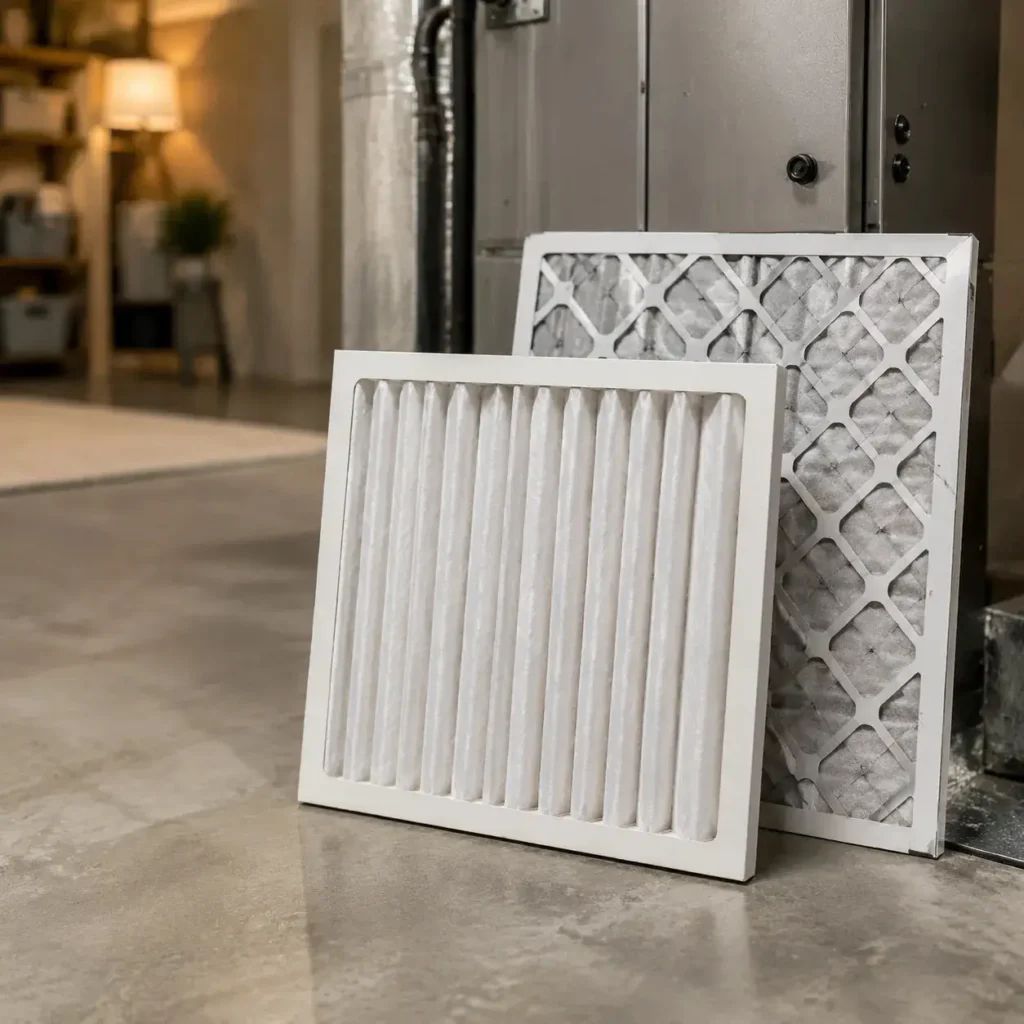
We see a lot of retail marketing fluff in the air filter industry, but real-world performance is dictated by rigorous lab testing, not catchy slogans on a box. When you are trying to capture microscopic airborne particles, the structural integrity of your filter matters just as much as the media itself. Poorly constructed filters buckle under the pressure of your central AC, creating gaps where dirty air bypasses the filtration media entirely.
The Komtfil Engineering Standard
As a dedicated furnace filter manufacturer, we control every step of the production process to ensure your indoor air quality actually improves. We don’t guess at filtration efficiency—we prove it.
- ISO Class 6 Laboratory Testing: Our pleated air filters undergo strict testing within an ISO Class 6 laboratory environment. This guarantees consistent allergen reduction and stable performance under variable temperature and humidity levels.
- Automated Production Precision: We use advanced automation to prevent pleat collapse and structural framing failures. This eliminates early air resistance spikes and protects your HVAC system’s airflow.
- Zero Air Bypass: Our frames are built to maintain a perfect, rigid seal inside your system slot so that no pollen, pet dander, or dust mites can slip around the edges.
Direct-from-Manufacturer Access
By bypassing middleman markups and retail supply chain costs, we deliver commercial-grade filtration directly to you. Whether you need standard sizes for a single retail home setup or bulk orders for high-volume multi-family distribution, buying direct ensures you get premium electrostatic filter media without the premium price tag. Investing in a well-engineered filter also extends the lifespan of your equipment; for instance, learning how HVAC air intake filters save money can help you optimize your overall home energy costs while maintaining clean air.
Frequently Asked Questions (FAQ)
Can I use a HEPA filter in my standard home furnace?
No, you should not install a true HEPA filter directly into a standard residential HVAC system. True HEPA filters are too thick and dense, which severely restricts HVAC system airflow. This restriction creates a massive static pressure drop, starving your system of air and potentially burning out the blower motor. For excellent allergen reduction without damaging your equipment, a high-quality MERV 11 or MERV 13 pleated filter is the ideal choice. If you want true HEPA filtration, you need a dedicated, standalone air purification unit or a professionally installed whole-house bypass system.
Will a higher MERV filter damage my furnace motor?
It can if you choose a rating that is too high or fail to change it regularly. While a higher MERV rating means better indoor air quality and superior capture of airborne particles, it also increases resistance to airflow. Standard 1-inch filters with high ratings can restrict your central AC or furnace motor if they get clogged. However, our advanced electrostatic filter media delivers maximum filtration efficiency with low initial resistance, protecting your motor while trapping microscopic allergens.
What is the difference between washable electrostatic filters and disposable pleated filters for allergies?
While washable filters seem convenient, they do not match the performance of disposable pleated air filters for severe allergy relief.
| Feature | Disposable Pleated Filters (MERV 11/13) | Washable Electrostatic Filters |
|---|---|---|
| Allergen Capture Efficiency | High (Traps pet dander, dust mites, pollen, and smoke) | Low to Medium (Misses smaller microparticles) |
| Airflow Maintenance | Optimized via high surface area pleats | Decreases quickly as dust cakes the surface |
| Maintenance | Quick replacement every 30–90 days | Requires washing, rinsing, and complete air-drying |
| Mold Risk | Extremely low | High if reinstalled while still damp |
How do I find out the exact size of my furnace filter?
Finding the correct furnace filter sizes for your system is simple. Check these three locations to get the right fit:
- Look at the existing filter: The nominal size (e.g., 20x25x1) is usually printed in bold numbers along the cardboard frame.
- Measure the actual slot: If there is no filter, use a tape measure to get the exact length, width, and depth of the slot.
- Check the HVAC manual: The manufacturer’s documentation will list the recommended dimensions for your specific system.
As a custom furnace filter manufacturer, we know that standard retail sizes do not fit every home. If you have an older system or a unique setup requiring specialized dimensions, you can easily explore our guide to types of air filters to better understand sizing, or look into custom-built options to ensure a perfect edge-to-edge seal with zero air bypass.