Can I Just Clean My Cabin Air Filter?
When your car starts smelling a bit musty or the AC feels weak, it’s natural to wonder: Can I just clean my cabin air filter instead of buying a new one? As a long-time manufacturer of premium car air filters, we get asked this question all the time during routine vehicle maintenance. The short answer is: it depends entirely on what your filter is made of.
The Standard Paper/Fiber Filter
Most vehicles come straight from the factory with a standard paper or fiber filter. If this is what you have, do not try to wash or clean it. * Trapped Debris: These filters use a dense, layered web of microscopic fibers designed to lock in dust and pollution deep within the media.
- Structural Damage: Shaking, vacuuming, or blasting them with compressed air destroys the delicate fiber network.
- The Big Risk: Trying to wash a paper filter with soap and water will ruin its structure completely, leading to a clogged filter and restricted airflow.
The Washable/Reusable Filter
The only exception to the rule is a specialized washable filter.
| Filter Type | Can You Clean It? | Maintenance Method |
|---|---|---|
| Standard Paper / Fiber | ❌ No | Replace with a new cabin air filter |
| Reusable Synthetic Mesh | Yes | Wash with mild detergent and water |
If you upgraded to a high-quality reusable filter, it is designed to withstand a regular wash cycle to restore your cabin comfort without degrading.
Locating Your Filter
Ready to check your filter’s condition? Finding it is usually a quick DIY task that takes less than ten minutes.
- The Glove Box: In most modern cars, the filter housing sits directly behind or underneath the glove box. You simply drop the compartment door down to access it.
- Under the Hood: On some vehicles, the housing is located near the cowl at the base of the windshield under the hood.
- Check the Manual: Always consult your vehicle’s owner’s manual for the exact location and specific instructions to safely remove the unit.
The Risks of “Just Cleaning” a Standard Cabin Air Filter
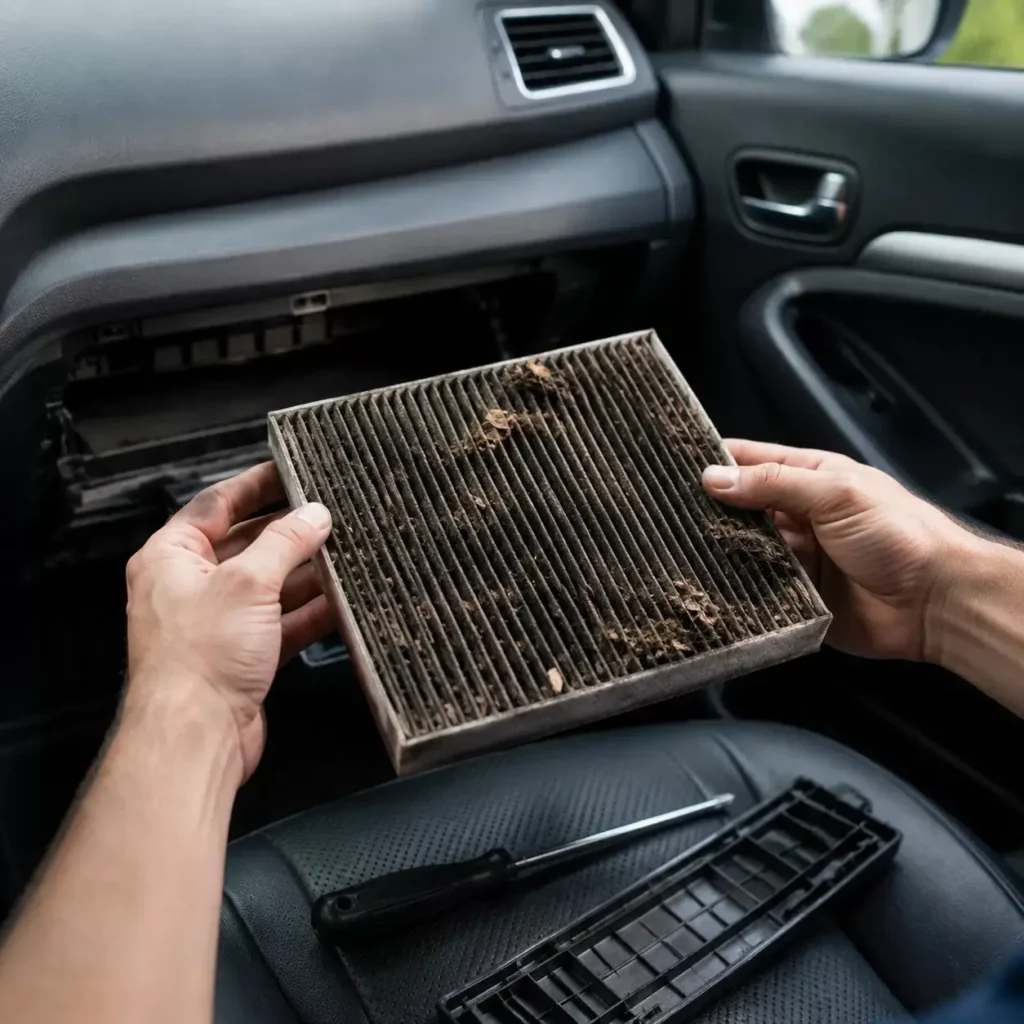
Trying to save a few bucks by shaking out a dirty filter usually backfires. Standard fiber paper filters are designed for single use. When you try to clean them instead of performing proper vehicle maintenance, you risk damaging your vehicle’s ventilation and breathing in unhealthy air.
Microscopic Traps
Vacuuming or shaking a standard car air filter only removes the large, visible debris, like leaves and twigs. The real danger comes from the microscopic dust and pollution trapped deep within the fiber layers. These tiny particles wedge themselves permanently into the filter media. A quick blast of compressed air or a session with a household vacuum will not dislodge them, leaving you with a filter that is still functionally useless.
Airflow Restriction
When you reinstall a partially clogged filter, you create a severe airflow restriction throughout your cabin. Your heating and air conditioning system has to work twice as hard to push air through the blockage. This extra strain puts massive pressure on your car air filter housing and can burn out your blower motor prematurely, turning a cheap maintenance task into an expensive repair. If you notice weak airflow, it is crucial to understand what does a cabin air filter do before letting a clogged one ruin your HVAC system.
Mold and Bacteria Growth
The biggest mistake we see drivers make is washing a standard paper filter with soap and water. Non-washable fiber filters act like a sponge but lack the materials to dry quickly. When you put a damp filter back into the dark enclosed housing, it becomes a breeding ground for mold and bacteria. Every time you turn on your AC, those harmful spores blow directly into your breathing zone, ruining your cabin comfort.
How to Safely Clean a Cabin Air Filter
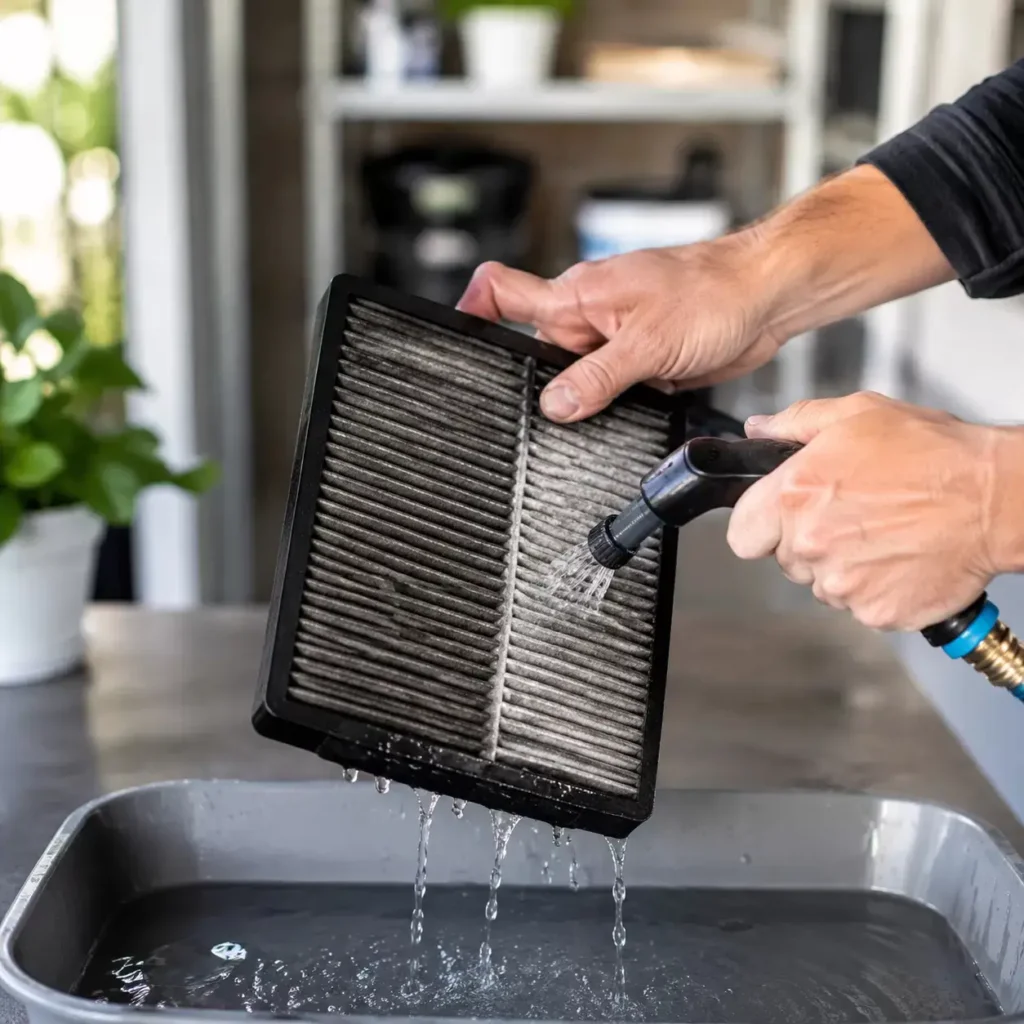
If you have a reusable filter, you can restore its performance with the right maintenance routine. However, you must handle the process carefully to avoid damaging the media or introducing moisture into your vehicle. Follow this step-by-step guide to safely remove debris and refresh your filter.
Step 1: Proper Removal and Inspection
First, locate your filter housing—usually found behind the glove box or under the hood—and carefully slide the unit out. Before doing anything else, inspect the filter under bright light. Look for structural damage like torn pleats, cracked rubber seals, or extreme debris saturation. If the structural integrity is compromised, cleaning won’t help, and you will need a new car air filter instead.
Step 2: Gentle Debris Removal
Before introducing any liquid, remove loose surface contaminants.
- Hold the filter over a trash bin and tap it gently to dislodge large leaves, bugs, and loose dirt.
- Use a handheld vacuum cleaner with a soft brush attachment to gently pull out shallow dust and pollution from the pleats.
- Never use high-pressure compressed air, as this can tear the filtering material and create invisible holes that let dust straight into your cabin.
Step 3: Washing For Washable Filters Only
Important: Only proceed with this step if your owner’s manual or the manufacturer explicitly states the filter is washable.
Submerge the filter in a mixture of warm water and a mild detergent or specialized cleaner. Gently agitate the water with your hands to loosen the deeply embedded grime. Avoid harsh chemical solvents or vigorous scrubbing, as these will degrade the specialized fibers designed for allergen reduction. Rinse the filter thoroughly with low-pressure, clean water until the runoff is completely clear. For more detailed instructions on this process, you can review our guide on how to clean an air filter step-by-step.
Step 4: The Crucial Drying Phase
| Drying Do’s | Drying Don’ts |
|---|---|
| Shake off excess water gently | Do not reinstall while damp |
| Place in a well-ventilated area | Do not use a clothes dryer or heat gun |
| Let it air dry completely for 24 hours | Do not leave it in direct, intense sunlight |
You must let the filter dry completely before putting it back into the housing. Reinstalling a damp filter into the dark, enclosed spaces of your air conditioning system creates the perfect breeding ground for mold and bacteria. This completely ruins your cabin comfort and blows musty, contaminated air directly into your breathing space. Always allow a full 24 hours for air drying to ensure total safety.
Signs Your Cabin Air Filter Can I Just Clean My Cabin Air Filter Past the Point of No Return
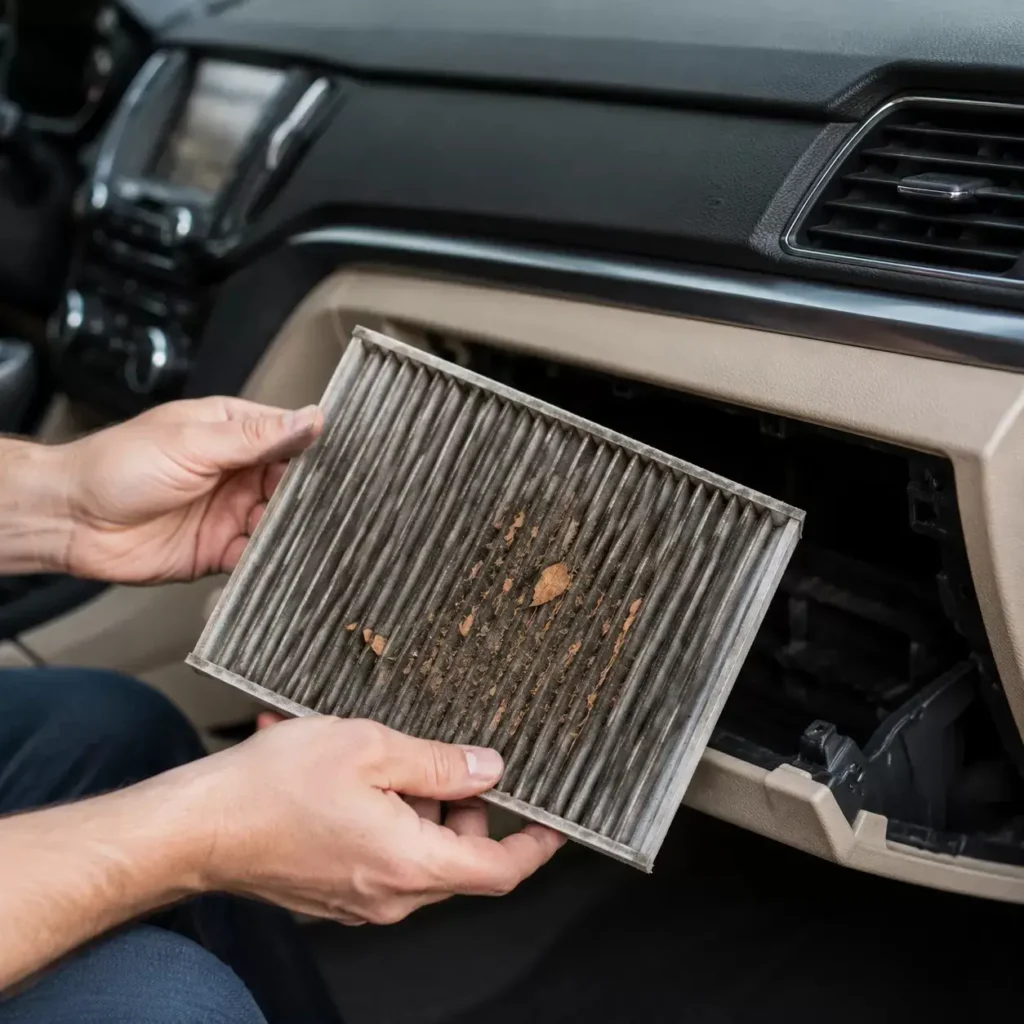
Sometimes, trying to clean a dirty filter is a losing battle. As a dedicated car air filter manufacturer, we know exactly when a filter has reached the end of its lifespan. If your filter shows any of the following warning signs, it is time to skip the cleaning and invest in a quality replacement filter.
Visual Indicators of a Ruined Filter
- Deep Discoloration: A filter that has turned dark gray or black is completely saturated with microscopic dust and pollution.
- Tears in the Pleats: Any physical damage, rips, or holes mean the filter can no longer trap contaminants, allowing dirty air straight into your vehicle.
- Caked-on Grime: If leaves, twigs, and thick sludge are permanently embedded in the material, no amount of vacuuming or washing will restore it.
Performance Symptoms in Your Cabin Comfort
- Persistent Musty Smells: If your vents blow out a foul, moldy odor every time you turn on the AC, bacteria has taken over the filter medium.
- Noisy HVAC Fan: A clogged filter forces your blower motor to work twice as hard, often causing a loud humming or whistling noise.
- Noticeable Airflow Restriction: When you turn the AC to max and only get a weak breeze, a blocked filter is heavily choking your system. This severe airflow restriction can affect your AC performance and strain your entire HVAC unit.
The Mileage Interval Check
Regardless of how clean the filter looks to the naked eye, you should generally replace it every 12,000 to 15,000 miles. Microscopic allergens, smog particles, and exhaust fumes trap themselves deep inside the fibers over time. Sticking to a strict vehicle maintenance schedule ensures optimal air quality and keeps your air conditioning system running efficiently without unnecessary strain.
Engine Air Filter vs. Cabin Air Filter: Don’t Confuse the Two
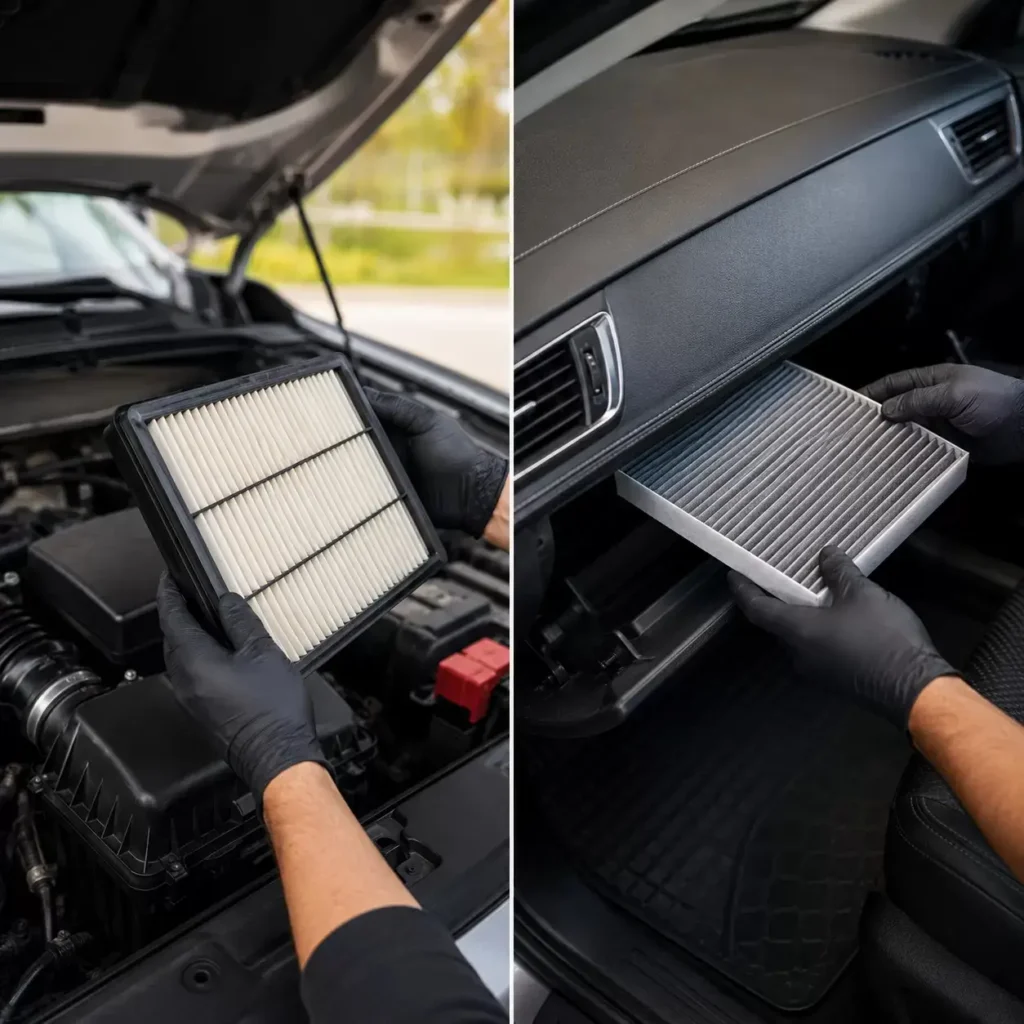
The Distinction
It is incredibly common for drivers to mix up these two components during routine vehicle maintenance, but they serve completely different masters. Your engine air filter is the gatekeeper for your motor, trapping dirt and debris before it can enter the combustion chamber and cause mechanical wear.
On the flip side, the cabin air filter is entirely dedicated to passenger health and comfort. It cleans the air blowing through your climate control vents, focusing on allergen reduction by trapping pollen, dust, and smog before you breathe it in.
Maintenance Contrast
Because they handle different types of contaminants, their upkeep varies drastically.
- Engine Filters: Deal with heavier, abrasive road debris. While some aftermarket engine filters are designed to be washed, a standard paper one is always a throwaway item.
- Cabin Filters: Trap microscopic airborne particles, odors, and moisture. Trying to clean a standard, non-washable cabin filter usually ruins its structural integrity.
When it comes to maintaining cabin comfort, swapping out a compromised unit for a fresh replacement filter is the only way to ensure your HVAC system breathes easy and your air stays pristine. Treating them the same can lead to restricted airflow and poor air quality inside your vehicle.
Why Investing in a Quality Replacement Filter Saves Money Long-Term
As a dedicated cabin air filter manufacturer, we know how tempting it is to push a dirty filter past its limit just to save a few bucks. However, trying to limp by with a temporarily cleaned unit or ignoring a clogged filter altogether will cost you significantly more down the road. Skipping out on a fresh replacement filter is a gamble that your vehicle’s mechanical components and your own health will pay for.
Protecting Your HVAC System
When your car air filter becomes completely blocked with debris, it creates a severe airflow restriction. Your vehicle’s climate control system has to work twice as hard just to push air into the cabin.
- Blower Motor Strain: This added resistance forces the blower motor to pull more current and run hotter.
- Expensive Repairs: Over time, a severely clogged filter can cause premature failure of the blower motor or the HVAC resistor, leading to hundreds of dollars in unnecessary repair bills.
Proper vehicle maintenance protects these expensive system components before they fail. If you notice your system is working too hard, it is also a good idea to check your home systems, as maintaining efficient HVAC air intake filters follows the exact same principle of saving money through better system efficiency.
Allergen Reduction and Health
The main job of a premium cabin filter is to ensure optimal allergen reduction and maintain strict air quality inside your vehicle. A fresh replacement filter acts as a barrier against:
- Pollen and spores
- Industrial smog and exhaust fumes
- Deeply embedded dust and road pollution
Reusing an old, degraded filter compromises this barrier, allowing harmful particles straight into your breathing space. For absolute cabin comfort, a new filter is essential to keep the air clean and breathable.
Affordable Peace of Mind
When you break down the numbers, trying to wash or vacuum an old, standard filter simply isn’t worth the hassle. The replacement cost of a new filter is incredibly low compared to the time-consuming and temporary nature of cleaning a worn-out one. Investing in routine automotive care gives you immediate peace of mind, ensuring your climate control runs efficiently while protecting your health for thousands of miles to come.