Ever wonder what keeps the air inside your vehicle fresh while you are stuck in bumper-to-bumper traffic? The cabin air filter is the unsung hero of your car’s ventilation system. It acts as a protective barrier, ensuring that you and your passengers breathe clean air instead of road dust and pollution.
Trapping Contaminants
As you drive, your vehicle constantly pulls in outside air to keep the cabin comfortable. A high-quality cabin air filter stops airborne debris right in its tracks. It captures dust and pollen, soot, and road grit before they can enter your passenger cabin, significantly improving car interior air quality.
Neutralizing Odors and Smog
No one wants to breathe in toxic exhaust fumes from the truck ahead. Advanced filtration systems do more than just block physical particles; they neutralize a musty, bad smell in the car, outdoor smog, and chemical odors. By utilizing premium media, these filters absorb unpleasant scents, keeping the incoming airflow fresh and clean.
Protecting Respiratory Health
For anyone suffering from asthma or seasonal allergies, passenger cabin safety is a top priority. A properly functioning filter offers massive respiratory health benefits by trapping microscopic allergens and impurities. It ensures that the air circulating through your heating and air conditioning system is safe for sensitive lungs.
Guarding Your HVAC System
Beyond protecting your health, this component safeguards your vehicle’s mechanical parts. A clogged filter forces your HVAC system’s blower motor to work twice as hard, leading to premature wear and weak airflow from vents. Keeping this filter clean maintains optimal air conditioning efficiency and prevents expensive automotive parts maintenance down the road.
Cabin Air Filter vs. Engine Air Filter: What’s the Difference?
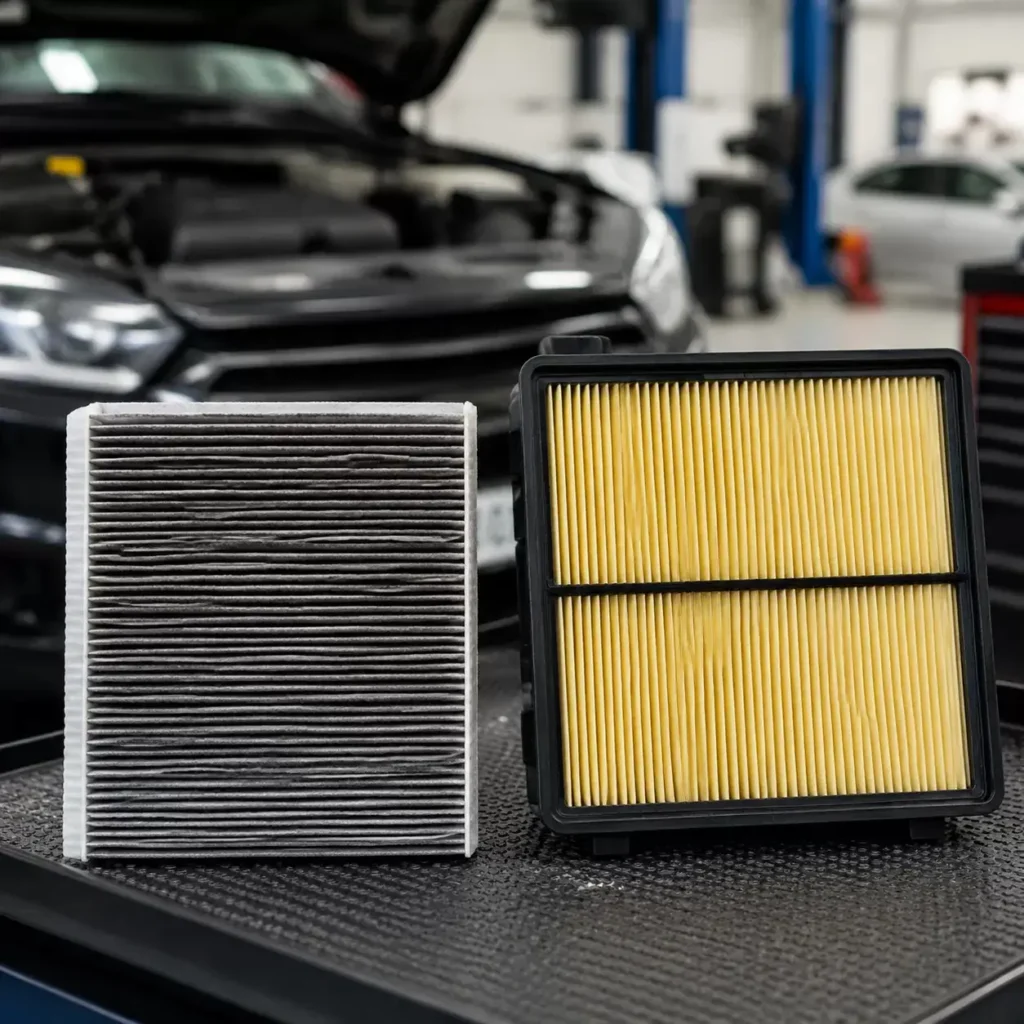
It is common to confuse these two automotive components, but they serve entirely different roles in your vehicle’s ventilation system and performance.
The Passenger Cabin Shield (Cabin Filter)
The cabin air filter is your vehicle’s passenger cabin safety shield. Its sole job is to clean the air you breathe inside the car. As a leading cabin air filter manufacturer, we design these filters to trap dust, pollen, smog, and exhaust fumes before they enter through the heating and air conditioning vents. Maintaining car interior air quality ensures comfort and provides vital respiratory health benefits for everyone inside.
The Motor’s Lungs (Engine Filter)
In contrast, the engine air filter acts as the motor’s lungs. It is located under the hood and prevents dirt, debris, and impurities from entering the engine cylinders. This filter protects mechanical automotive parts from wear, ensuring proper combustion and optimal fuel efficiency. While a clogged engine filter hurts gas mileage, a clogged cabin filter directly compromises your breathing space and AC system efficiency.
Understanding how these systems clog is essential for routine car maintenance. Just as home systems experience issues with restricted airflow, your vehicle depends heavily on clean filtration to prevent strain on vital components like the HVAC system blower motor. If you want to know how restricted filtration impacts a system, you can read about the 5 signs your HVAC filter is clogged and ways to fix to see the similarities in airflow restriction.
Comparison Table: Location, Purpose, and Impact
| Feature | Cabin Air Filter | Engine Air Filter |
|---|---|---|
| Primary Purpose | Cleans air entering the passenger cabin | Traps airborne particles such as dust, sand, and pollen, preventing them from entering the cylinder. |
| Protects | Passengers and the HVAC system | Engine components and cylinders |
| Common Location | Behind the glove box or under the dash | Inside an airbox under the hood |
| Signs of Failure | Weak airflow, musty bad smell in car | Reduced acceleration, engine misfires |
| Main Benefit | Dust and pollen reduction; clean air | Engine longevity and optimal horsepower |
5 Clear Signs Your Cabin Air Filter is Clogged or Dirty
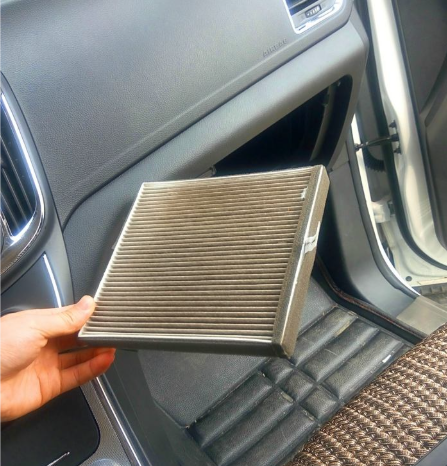
When your car’s interior air quality drops, your vehicle usually drops a few hints. A clogged ventilation system forces your climate control to work twice as hard while letting outside pollution slip right into the passenger cabin.
Keep an eye—and a nose—out for these five unmistakable signs that it is time for a replacement.
1. Reduced Airflow
If you crank up the AC or heating and only feel a weak breeze, a choked filter is the likely culprit. Over time, accumulated dust and debris block the passages, restricting the volume of air that can push through the vents and into the car.
2. Unpleasant Odors
A musty, bad smell in the car that worsens whenever the fan turns on points directly to a dirty filter. When trapped moisture mixes with captured pollen and organic matter, it creates a breeding ground for mold, blowing stale, smelly air right into your face.
3. Increased HVAC Noise
When the HVAC system blower motor has to fight against a wall of dirt to pull in fresh air, it strains the entire system. You will notice a louder hum, whistle, or laboring sound coming from your dashboard whenever the fan is running.
4. Persistent Foggy Windows
A clean filter helps manage cabin humidity. When it is heavily clogged, moisture gets trapped inside the vehicle, making it incredibly difficult for your defroster to clear away morning fog or condensation from the windshield.
5. Rapid Dust Accumulation
If you wipe down your dashboard only to find a fresh layer of dust a day later, your cabin filter has stopped doing its job. Instead of trapping airborne particles, the worn-out media allows fine dust, soot, and allergens to settle freely across your interior surfaces.
Maintenance Note: While maintaining your vehicle’s interior environment is critical, don’t overlook other filtration needs around your home or workspace. If you also manage residential or commercial air systems, understanding the differences between a washable vs disposable air filter can help you optimize efficiency and savings across all your equipment.
How Often Should You Replace Your Cabin Air Filter?
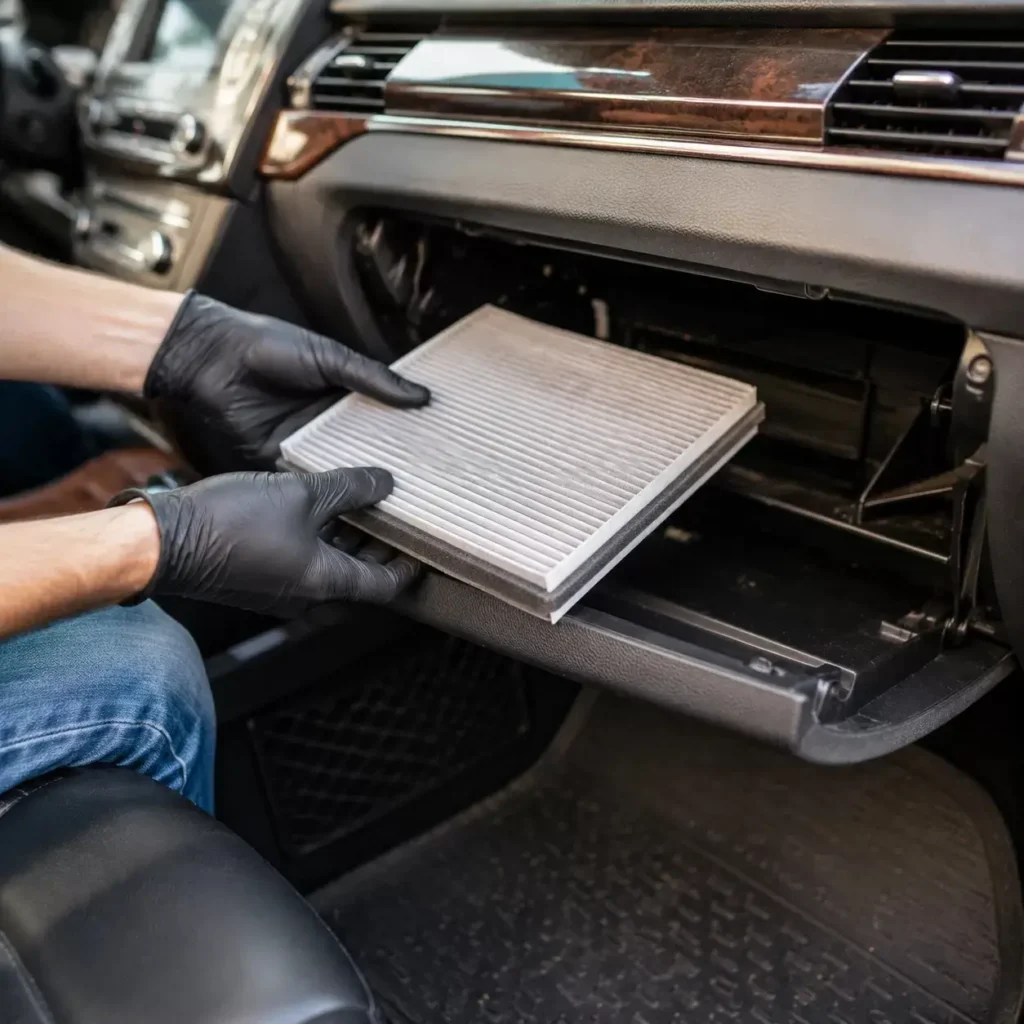
Keeping your car’s interior air quality fresh means knowing exactly when to swap out your old filter. Waiting too long strains your ventilation system and lets unwanted dust and pollen into your passenger cabin.
Standard Mileage Intervals
For most drivers, the rule of thumb is to replace your cabin air filter every 12,000 to 15,000 miles, or at least once a year. Routine car maintenance ensures consistent, clean airflow through your heating and air conditioning system. If you are wondering how these maintenance costs stack up over time, you can read about whether expensive air filters are worth it to help you choose the right replacement strategy for your budget.
Environmental Factors That Fast-Track Replacement
Standard intervals do not apply to every driving condition. Several real-world factors will force you to check and replace your filter much sooner:
- Heavy Traffic and Urban Smog: Daily commuting in bumper-to-bumper traffic exposes your vehicle to high concentrations of exhaust fumes and soot.
- High Pollen and Rural Areas: Driving through agricultural zones or heavily wooded areas clogs filtration media quickly with seasonal allergens and agricultural dust.
- Wildfire Smoke and Air Pollution: Ash and airborne particulates blind the filter surface, severely reducing AC system efficiency.
- Dirt and Gravel Roads: Off-road driving or traveling on unpaved roads kicks up heavy debris that fills the filter pleats prematurely.
How to Check and Replace a Cabin Air Filter
Regular car maintenance includes keeping your car’s interior air clean, and checking your cabin air filter is a straightforward task that you can easily do yourself. Keeping this part fresh ensures your ventilation system runs smoothly and keeps dust, smog, and allergens out of your passenger cabin.
Locating the Filter Housing
In most vehicles, the cabin air filter housing is hidden right behind the glove box. For some models, it might be located under the dashboard on the passenger side or beneath the hood near the windshield wipers. Check your owner’s manual if it isn’t immediately obvious, but the glove box location is the most common industry standard.
Step-by-Step Instructions
Replacing a dirty filter only takes a few minutes and requires no special tools. Follow these simple steps to restore weak airflow and eliminate any bad smell in your car:
- Empty and Lower the Glove Box: Open your glove box and remove all contents. Press inward on the outer sides of the glove box walls to release the stop tabs, allowing the box to swing downward completely.
- Remove the Housing Cover: Locate the rectangular plastic filter cover. Pinch the latches on the sides or undo the clips to pop the cover off.
- Slide Out the Old Filter: Pull the dirty filter straight out. Take note of the airflow direction arrows printed on the side of the filter frame so you know which way the new one goes.
- Clean the Chamber: Wipe away any loose debris, leaves, or dust inside the housing before inserting the new filter. (Note: While maintaining your car’s air filtration is simple, other filters require different care; if you ever find unexpected residue during broader vehicle maintenance, you can read about why there is oil in a car air filter to troubleshoot engine-side issues).
- Insert the New Filter: Slide your fresh Komtfil cabin air filter into the slot, making sure the airflow arrows point in the correct direction (usually downward toward the blower motor).
- Secure and Reassemble: Snap the housing cover back into place, lift the glove box until the tabs click back in, and reload your items.
Why Upgrade to a Premium Komtfil Cabin Air Filter?
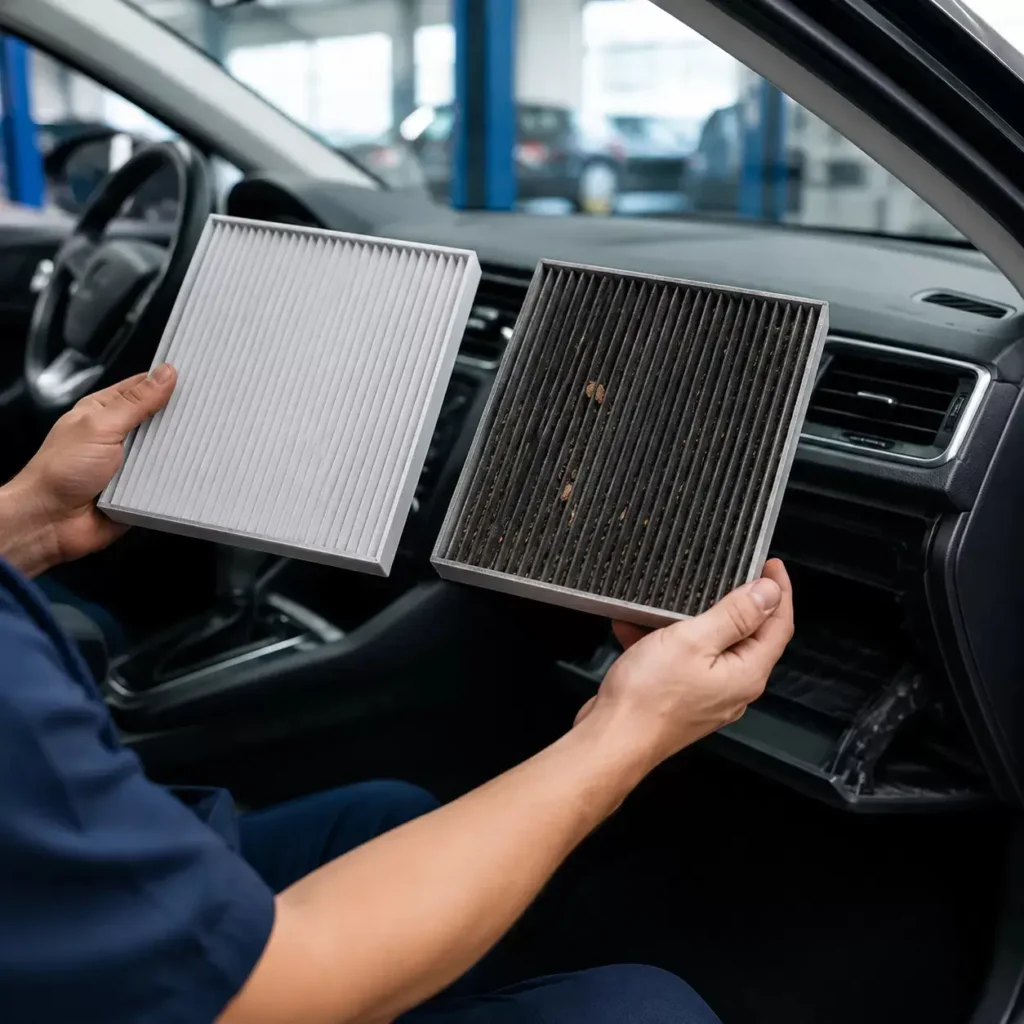
When it comes to your car’s ventilation system, standard automotive parts maintenance often gets overlooked. Upgrading to a premium Komtfil cabin air filter ensures your vehicle’s climate control operates at peak efficiency while delivering unmatched car interior air quality.
Advanced Filtration Media
Komtfil utilizes cutting-edge micron particle filtration technology. While ordinary filters only catch large debris, our advanced media acts as a high-efficiency barrier. It locks down microscopic dust and pollen reduction, preventing airborne irritants from circulating through your vents and directly protecting passenger cabin safety.
Multi-Layer Protection
Our premium filters feature specialized activated carbon filter layers designed to tackle more than just solid particles. This multi-layer defense is highly effective at neutralizing smog and exhaust fumes, absorbing a musty, bad smell in the car before it reaches your lungs. It provides significant respiratory health benefits, ensuring every breath you take inside your vehicle is clean and fresh.
Pro Tip: Just like maintaining home climate systems—where choosing between MERV 11 vs MERV 13 air filters impacts airflow and purification—your car requires the right multi-layer density to balance strong airflow with maximum particle capture.
Perfect OEM Fit
A filter is only effective if it seals properly. Komtfil cabin air filters are engineered for a perfect OEM fit, matching original factory specifications exactly. This precise design prevents unfiltered air from bypassing the media, eliminates annoying rattles inside the glove box housing, and protects your HVAC system blower motor from premature wear.
Frequently Asked Questions
Can I drive without a cabin air filter?
Yes, you can physically drive without one, but it is not highly recommended. Running your vehicle without this barrier allows raw dust, pollen, and road debris to enter the ventilation system directly. This can clog your heater core and AC evaporator, leading to expensive repairs. If you are considering bypassing it temporarily, you can check out our detailed breakdown on whether you can run without a cabin air filter to understand the long-term risks to your HVAC system blower motor.
How much does it cost to replace a cabin air filter?
The total cost typically ranges from $30 to $80 if you go to a repair shop, depending on your vehicle’s make and model. The filter part itself is relatively inexpensive, while dealership labor makes up the rest of the fee. Because the glove box location makes the housing easily accessible on most cars, doing this quick car maintenance task yourself can save you a significant amount of money. For a complete price breakdown and saving tips, read our guide on how much a cabin air filter should cost.
Will a dirty cabin air filter cause a bad smell in my car?
Absolutely. A clogged filter traps moisture, dead bugs, and organic debris over time, creating a breeding ground for mold and bacteria. When you turn on your air conditioning or heating, the ventilation system will blow a musty, bad smell directly into the passenger cabin, severely reducing your car’s interior air quality. Replacing the old unit with a fresh activated carbon filter layer upgrade will instantly neutralize these odors and restore clean air.