Is It Safe to Run Your Air Purifier All Day?
Running an air purifier 24/7 is not only safe but also the most effective way to maintain healthy indoor air quality. Modern air purifiers are explicitly engineered for continuous operation, utilizing low-wattage motors and advanced airflow designs that allow them to run nonstop without posing a risk to your home.
Understanding Built-In Safety Features
High-quality air purifiers are built with rigorous safety protocols to handle 24/7 continuous operation. Modern units incorporate multi-layered electronic safeguards to protect against electrical failures and operational stress.
- Thermal Cut-Off Switches: Automatically shut down the unit if internal motor temperatures exceed safe limits.
- Overcurrent Protection: Prevents damage caused by sudden power surges or electrical spikes.
- Tilt and Tip-Over Switches: Instantly cut power if the unit is knocked over by pets or children.
- Capacitor and Motor Insulation: High-grade insulation materials prevent electrical short circuits during extended use.
Overheating and Fire Hazards: Myth vs. Reality
The belief that running an air purifier all day causes overheating or fire hazards is largely a myth. While low-grade, uncertified appliances can pose risks, certified air purifiers undergo stringent safety testing.
| Factor | Myth | Reality |
|---|---|---|
| Motor Stress | Running 24/7 burns out the motor quickly. | Brushless DC (BLDC) motors are designed for years of uninterrupted service. |
| Heat Generation | Continuous use creates dangerous surface heat. | Energy-efficient designs produce minimal heat, remaining cool to the touch. |
| Fire Risk | Constant power supply increases electrical fires. | Built-in thermal fuses instantly disconnect power before hazards occur. |
Potential Risks of Non-Stop Operation
While electrical safety is assured with quality units, true continuous operation brings minor operational considerations that require basic management:
- Accelerated Filter Wear: Constant airflow traps more dust particles and allergens, requiring faster HEPA filter replacement.
- Dust Accumulation on Intakes: Outer grilles can gather heavy debris, slightly restricting airflow if not vacuumed regularly.
- Increased Power Usage: While minimal with modern units, uninterrupted operation gradually impacts cumulative electricity consumption.
- Minor Motor Wear and Tear: Over several years, non-stop operation leads to natural mechanical wear, making routine maintenance essential.
Why Running an Air Purifier Continuously Is Recommended
How Continuous Operation Maintains Clean Air
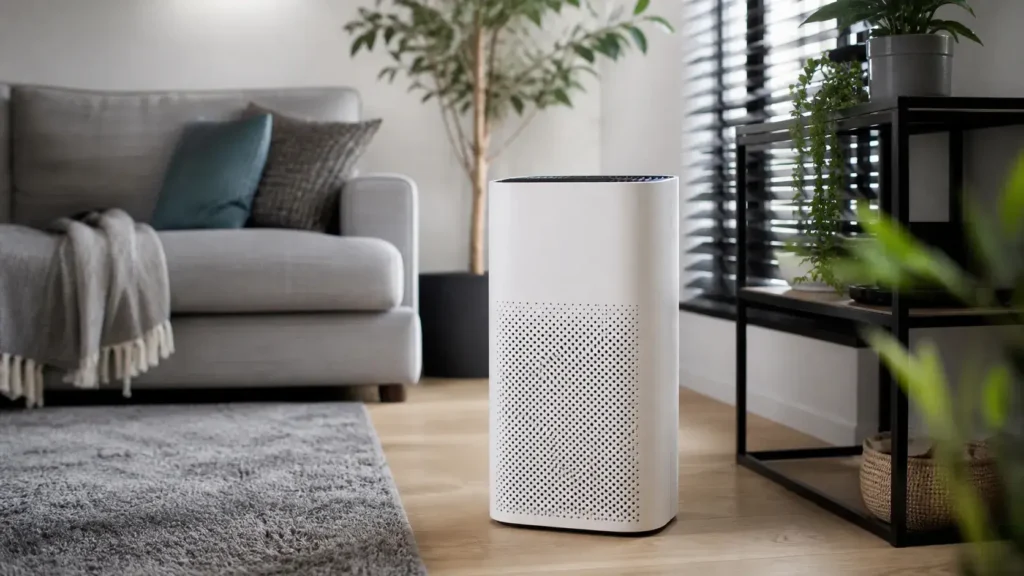
Air pollution isn’t a one-time event; it’s a continuous process. Every time you open a door, cook a meal, or walk across the carpet, you introduce new pollutants into your home. Running your unit non-stop ensures a baseline of filtration that keeps indoor pollutants from building up to harmful levels. As an air purifier filter manufacturer, we designed these units for uninterrupted duty because stopping the fan allows airborne contaminants to settle back onto your furniture and floor, defeating the purpose of purification.
Understanding Air Changes Per Hour (ACH)
To keep indoor air clean, a purifier must cycle the entire volume of air in a room multiple times every hour. This metric is known as Air Changes Per Hour (ACH). Most high-efficiency units aim for 4 to 5 air exchanges per hour to effectively capture dust particles, pet dander, and microscopic allergens. If you turn off your machine, your ACH drops to zero, allowing stale air and particulate matter to concentrate rapidly. Knowing how to calculate air changes per hour helps you select the right unit capacity and fan speed to maintain clean air around the clock without wasting energy.
Preventing Re-Contamination in Indoor Spaces
Intermittent use leaves your living space vulnerable to rapid re-contamination. When continuous airflow stops, floating particles drop onto surfaces, only to be kicked back into the air the moment movement occurs in the room.
- Constant Capture: Continuous operation traps airborne particles before they settle into carpets and upholstery.
- Pressure Balance: Steady filtration maintains clean indoor air quality even when outdoor air leaks through windows and doors.
- Odor & Gas Suppression: Activated carbon filters work best when air passes through them constantly, preventing trapped odors from lingering.
Keeping your air purifier running 24/7 creates a dynamic barrier against persistent indoor air quality threats, keeping your environment consistently fresh and safe.
Key Benefits of 24/7 Air Purifier Usage
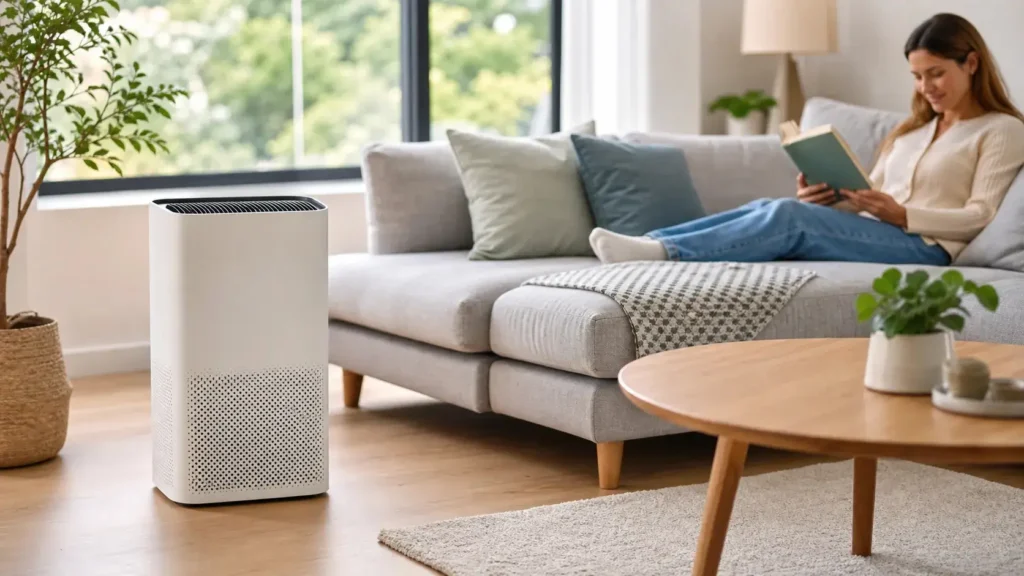
Running your unit non-stop provides constant protection against invisible indoor pollutants. When you ask, “is it safe to run your air purifier all day?”, the answer is not only yes, but doing so unlocks maximum health benefits for your living space.
Continuous Relief for Allergy and Asthma Sufferers
Airborne allergens like pollen, mold spores, and dust mites settle quickly when airflow stops. Keeping your HEPA filter active 24/7 creates a constant filtration barrier, preventing sudden spikes in asthma triggers.
| Pollutant Type | Impact of Intermittent Use | Benefit of 24/7 Operation |
|---|---|---|
| Pollen & Spores | Re-accumulate on furniture and floors | Trapped continuously before settling |
| Fine Dust | Resuspended into air by movement | Filtered out as soon as it becomes airborne |
| Asthma Triggers | Cause sudden nighttime flare-ups | Maintained at safe, low thresholds |
Effective Control of Pet Dander, Dust, and Odors
Pets constantly shed fur and microscopic pet dander, while daily household activities generate airborne dust particles. Continuous operation sweeps these particles into the filter media before they cling to carpets or upholstery. Activated carbon layers also absorb lingering cooking odors and VOCs around the clock.
- Pet Dander: Captured before settling into fabrics.
- Persistent Odors: Neutralized steadily rather than masking them later.
- Dust Accumulation: Reduced significantly across all room surfaces.
Protection During Wildfire Season and Smoke Events
During heavy pollution events or wildfire seasons, hazardous micro-particles enter homes through tiny gaps in windows and doors. Using a high-grade air filter for indoor smoke and odor control running around the clock ensures wildfire smoke and fine hazardous particles never build up to dangerous levels indoors.
- 24/7 Smoke Defense: Neutralizes toxic fine particulate matter ($PM_{2.5}$) constantly.
- Sealed Indoor Safety: Prevents outdoor smoke spikes from ruining your indoor air quality.
How All-Day Operation Impacts Energy Costs and Filters
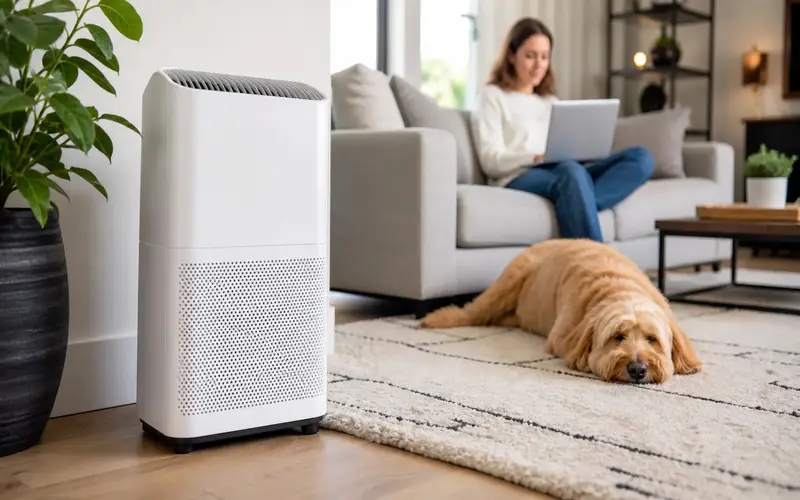
Running an air purifier 24/7 raises two practical questions: how much electricity does it use, and how often will you need to replace the filter? Understanding the relationship between electricity consumption and filter wear helps you keep your air clean without overspending.
Electricity Consumption and Running Costs
Most modern air purifiers are designed for low power usage, consuming between 20 to 60 watts on medium settings—roughly equivalent to a standard lightbulb.
- Low Fan Speeds: Modern units running continuously on low or auto settings add only a few dollars a month to your power bill.
- High Fan Speeds: Operating on maximum speed continuously increases energy consumption, though costs generally remain manageable compared to standard HVAC systems.
- Cost Efficiency: Choosing an Energy Star-rated purifier keeps daily operational costs minimal, even with non-stop use.
Impact of Continuous Use on HEPA Filter Lifespan
Continuous operation speeds up the rate at which your filter collects dust particles, pet dander, and other indoor pollutants.
- Accelerated Wear: Running your unit nonstop means the HEPA filter captures debris around the clock, reducing its operational lifespan faster than occasional use.
- Clogged Filters: A heavily saturated filter restricts airflow, forcing the motor to work harder and reducing the unit’s overall efficiency.
- Timely Replacement: Replacing filters as recommended prevents system strain. Understanding different types of air filters helps you choose the right replacement for long-term performance.
Balancing Energy Efficiency and Air Quality
You do not have to choose between fresh air and reasonable energy bills. Finding the right balance keeps your continuous operation efficient.
| Setting Strategy | Air Quality Impact | Energy & Filter Cost Impact |
|---|---|---|
| Fixed High Speed | Maximum allergen removal | Higher energy bills, faster filter replacement |
| Automated Mode | Dynamic cleaning based on pollution levels | Optimized energy usage, extended filter life |
| Low / Eco Speed | Steady maintenance for clean rooms | Lowest running costs, standard filter wear |
Using automated mode allows your air purifier to adjust its fan speed automatically when indoor air quality changes, delivering maximum filtration during pollution spikes while conserving energy and extending filter life during quieter hours.
When to Adjust or Scale Back Air Purifier Settings
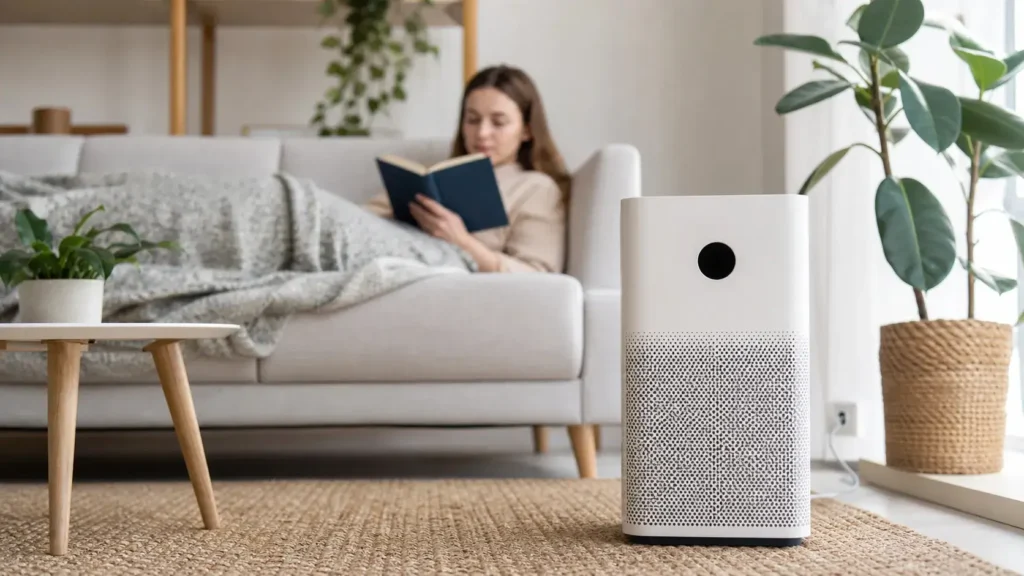
While running your unit 24/7 is generally safe and ideal for constant filtration, you don’t always need to run it on high speed. Knowing when to adjust your air purifier settings helps you optimize indoor air quality, protect your filters, and save on electricity consumption.
Utilizing Auto Mode and Smart Air Quality Sensors
Most modern purifiers come equipped with an automated mode and built-in smart sensors. This feature takes the guesswork out of daily operation by monitoring real-time pollution levels.
- Dynamic Fan Speed: The unit automatically increases fan speed when it detects sudden spikes in dust particles, cooking smoke, or allergens.
- Energy Savings: Once the air is clean, the sensor drops the unit back to a low, quiet setting. This reduces unnecessary power usage and minimizes overall wear and tear.
Managing Noise Levels for Nighttime and Bedroom Use
High fan speeds can generate noticeable white noise. To maintain a peaceful sleeping environment without sacrificing clean air:
- Switch to Sleep Mode: This lowers the fan to its quietest setting and dims display lights.
- Prioritize Low Settings: Running a unit on low overnight still provides steady filtration through your HEPA filter, keeping asthma triggers and pet dander at bay while you rest.
Adjusting Usage Based on Home Ventilation and Activity
Your daily habits and home environment dictate when to scale settings up or down:
| Scenario | Recommended Setting | Reason |
|---|---|---|
| Cooking or Cleaning | High / Turbo Mode | Quickly clears intense odors and airborne particles. |
| Windows Open for Fresh Air | Low or Turned Off | Prevents unnecessary filter strain when outdoor air flows freely. |
| High Indoor Activity | Medium / Auto Mode | Handles stirred-up dust from pets and human foot traffic. |
Pro Tip: If you frequently use fresh outdoor air to ventilate your space, ensure your general HVAC filtration is up to par as well. Choosing the right MERV rating filter for home air quality ensures whole-house protection before air even reaches your portable units.
By matching fan speeds to actual room conditions, you maintain high air standards while extending your filter lifespan.
Best Practices for Safe and Efficient All-Day Operation
Running an air purifier 24/7 is completely safe, but getting the most out of continuous operation requires a smart approach to setup and upkeep. As an air purifier filter manufacturer, I always emphasize that proper usage habits directly impact how clean your air stays and how long your unit lasts.
Here are the key strategies to ensure your device runs smoothly, safely, and efficiently around the clock.
Optimal Placement for Unrestricted Airflow
Where you place your purifier determines how well it cleans the room. Blocking intake or exhaust vents forces the motor to work harder, which can lead to unnecessary overuse wear tear and higher power usage.
- Maintain Clearance: Keep at least 3 to 6 feet of open space around all sides of the unit. Avoid pushing it directly against walls, curtains, or furniture.
- Keep It Centered: Position the unit near the center of the room or in high-traffic zones where indoor pollutants and dust particles concentrate.
- Avoid Corners: Tucking a unit into a tight corner severely restricts circulation, reducing the total air exchanges per hour.
- Elevate Small Units: If you have a compact purifier, place it on a tabletop or nightstand rather than the floor to capture floating allergens more effectively.
Routine Filter Maintenance and Care
Leaving a unit on all day means the filter works nonstop. Timely filter replacement is the single most important factor for maintaining optimal performance and protecting the motor from strain.
| Maintenance Task | Recommended Frequency | Purpose |
|---|---|---|
| Pre-Filter Cleaning | Every 2–4 Weeks | Vacuum or wash off large hair, lint, and pet dander to prevent premature clogging. |
| HEPA Filter Inspection | Monthly | Check for dark discoloration or excessive dust buildup. |
| HEPA Filter Replacement | Every 6–12 Months | Ensures maximum capture of microscopic asthma triggers and fine particles. |
| Sensor Cleaning | Every 2–3 Months | Wipe dust off the smart air quality sensor so the automated mode accurately reads air quality. |
Pro Tip: If you want to keep dust levels low throughout your entire home alongside your air purifier, consider upgrading your central HVAC system with the best air filters for dust control.
Selecting the Right Purifier Size for Continuous Use
Matching your device to your room size prevents the motor from running at high speed constantly, saving energy and minimizing noise.
- Check the CADR Rating: Always choose a unit with a CADR rating suited for your specific square footage to maintain fresh air flow.
- Size Up for Efficiency: Choosing a unit rated for a slightly larger room lets you run the device at a lower fan speed. This reduces overall electricity consumption, keeps noise levels low, and extends the lifespan of your HEPA filter.
- Account for High Pollution: If you deal with persistent smoke, high pollution levels, or heavy seasonal allergies, select a higher-capacity unit to handle the continuous load effortlessly.