What is Air Changes Per Hour (ACH)?
Maintaining optimal indoor air quality requires precise control over facility airflow. Air Changes Per Hour (ACH), also referred to as air exchange per hour (ACPH), is the fundamental metric used to measure how many times the total volume of air within a defined space is completely removed, replaced, or filtered within a single hour.
Defining ACH in HVAC and Air Filtration
In the commercial HVAC and air filtration industry, ACH dictates the overall efficiency of a ventilation system. It measures the volumetric flow rate of clean air entering a room compared to the room’s total volume. As a professional air filter manufacturer with over 20 years of experience, we understand that achieving your target ACH relies heavily on the quality of your filtration media. Whether your facility utilises standard HVAC filters or specialised HEPA and ULPA filters, the system must consistently move the required cubic feet per minute (CFM) without creating excessive pressure drop.
Why is Calculating ACH Important?
Accurately calculating the ACH formula is critical for maintaining safe, compliant, and highly productive environments.
- Ensures Clean Air: High ventilation rates effectively dilute and remove airborne contaminants, protecting occupant health.
- Meets Strict Industry Standards: Specialised facilities—such as healthcare environments, aerospace cleanrooms, and food processing plants—require strict ACH minimums to maintain operational compliance.
- Optimises HVAC Performance: Precise calculations prevent overworking your HVAC system, extending the service life of both your mechanical equipment and your air filtration devices.
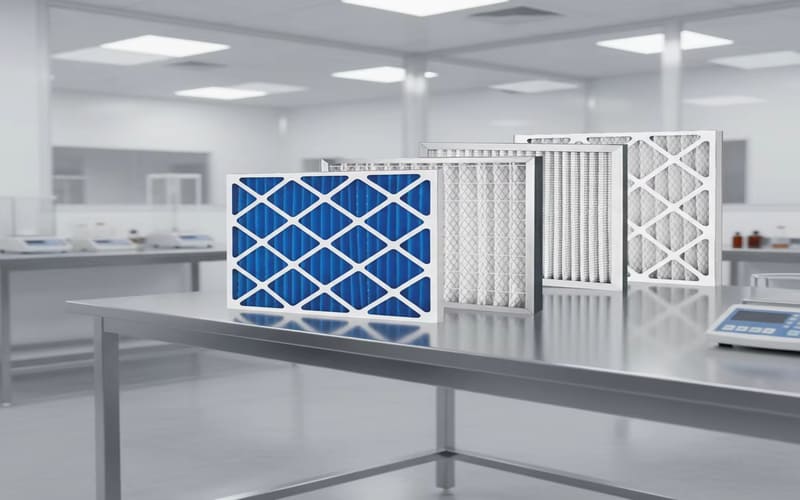
- Guides Filter Selection: Knowing your required ACH allows our engineering team to help you select the exact MERV 6 to MERV 15 or HEPA filters needed to handle your specific volume of air efficiently.
Understanding Building Airtightness and Ventilation
A building’s airtightness directly impacts its natural and mechanical ventilation rates. Modern, energy-efficient commercial buildings are tightly sealed, meaning natural air leakage is virtually eliminated. Consequently, these spaces rely entirely on mechanical HVAC systems to achieve the necessary air changes per hour. In highly airtight environments, the mechanical ventilation system must be precisely calibrated and equipped with high-performance air filters to ensure continuous, clean air circulation without restricting the necessary cubic feet per minute (CFM) output.
How to Calculate Air Changes Per Hour

Calculating Air Changes Per Hour (ACH) is a straightforward process once you have the right measurements. At Komtfil, we use these calculations daily to help our clients determine the exact filtration needs for their facilities, whether they are managing a hospital wing or a high-traffic commercial office.
The Standard ACH Formula Explained
To find your ACH, you need two primary figures: the airflow rate of your ventilation system and the total volume of the room. The standard formula used by HVAC professionals is:
ACH = (CFM × 60) / Volume of the Space (Cubic Feet)
- CFM (Cubic Feet per Minute): This is the volumetric flow rate of air entering the room through your supply registers.
- 60: Since CFM is measured by the minute, we multiply by 60 to convert the measurement into an hourly rate.
- Volume: The total three-dimensional space of the room (Length × Width × Height).
Step-by-Step Guide to Calculating ACH
Follow these steps to get an accurate reading of your current air exchange:
- Measure the Room Volume: Multiply the floor area by the ceiling height. For example, a 20ft x 25ft room with 10ft ceilings has a volume of 5,000 cubic feet.
- Determine the CFM: Check your HVAC system’s output or use a flow hood to measure the air coming from the vents. Note that using a high-efficiency MERV air filter can impact this flow if the system isn’t designed for the resistance.
- Apply the Formula: Multiply your CFM by 60, then divide that total by the room volume you calculated in step one.
Real-World Example ACH Calculation
Let’s look at a typical office scenario to see how this works in practice. Suppose you have a conference room with a volume of 3,000 cubic feet. Your HVAC system is delivering 250 CFM of filtered air to that specific room.
- Step 1: 250 CFM × 60 minutes = 15,000 cubic feet of air per hour.
- Step 2: 15,000 / 3,000 (Room Volume) = 5 ACH.
In this case, the air in the room is completely replaced or filtered five times every hour. If your calculation shows a lower rate than required for your industry standards, it may be time to inspect your system or consider how often to change your air filter to ensure dust buildup isn’t restricting your airflow and dropping your ACH. Our engineering team often helps clients optimize these rates by custom-designing filters that balance high filtration efficiency with low pressure drop.
Tools and Methods for ACH Measurement

Accurately measuring how many times air is replaced in a room requires the right tools and a clear understanding of airflow dynamics. Whether you are managing a hospital wing or an industrial workshop, guessing is not an option when safety and air quality are on the line.
How to Use an ACH Calculator
An ACH calculator simplifies the process by automating the math between your room dimensions and your equipment’s performance. To use one effectively, you need two primary data points: the total volume of the space (Length x Width x Height) and the total airflow (CFM) being delivered by your HVAC system or air filtration devices. By inputting these figures into a calculator, you can instantly see if your current setup meets the required standards for your specific industry.
Converting ACH to CFM (Cubic Feet per Minute)
In the filtration industry, we often need to work backwards. If a regulation requires a specific ACH, you must calculate the necessary Cubic Feet per Minute (CFM) to select the right hardware.
The conversion formula is straightforward:
- CFM = (Desired ACH × Room Volume) / 60
For example, if you need to maintain high standards in a sensitive environment, ensuring your mini-pleat HEPA filters can handle the calculated volumetric flow rate is essential. Without matching the CFM capacity to your ACH goals, the air remains stagnant, and pollutants accumulate.
Common Methods for Measuring Current Ventilation Rates
To find your actual ventilation rate, we use several professional methods to gather real-time data:
- Anemometers: These tools measure the velocity of air at supply registers. By multiplying the air speed by the area of the vent, we determine the CFM.
- Balometers (Capture Hoods): Placed directly over a diffuser, these provide a direct readout of the air volume flowing into the room.
- Tracer Gas Testing: A more technical approach where a safe gas is released, and its decay rate is measured to determine the exact air exchange rate.
- Sensor Monitoring: Using CO2 sensors as a proxy for ventilation efficiency helps identify areas where the ACH is too low for the occupant load.
At Komtfil, we use our ISO6-rated laboratory to test how different filter media affect these flow rates. Our goal is to ensure that your air quality remains high without creating a pressure drop that chokes your ventilation system and lowers your ACH.
ACH Recommendations and Building Requirements

Getting the right air changes per hour (ACH) isn’t just about comfort; it is about compliance, safety, and maintaining high indoor air quality. Different environments require vastly different ventilation rates to keep the air clean and safe for occupants.
Recommended ACH Rates by Room Type and Application
There is no one-size-fits-all number for ACH. The required volume of air replacement depends entirely on how the space is used. As an experienced air filter manufacturer, we design our filtration solutions to meet the specific demands of these diverse environments.
Here is a quick reference guide for standard ACH recommendations:
| Facility / Room Type | Recommended ACH | Primary Filtration Focus |
|---|---|---|
| Commercial Offices | 4 – 6 | Standard HVAC (MERV 8-13) |
| Classrooms | 4 – 6 | Standard HVAC (MERV 13) |
| Hospitals (Operating Rooms) | 15 – 25 | HEPA / ULPA Filtration |
| Industrial Workspaces | 6 – 12 | Heavy Particulate / Dust Collection |
| Warehouses | 2 – 4 | Basic Ventilation / MERV 6-8 |
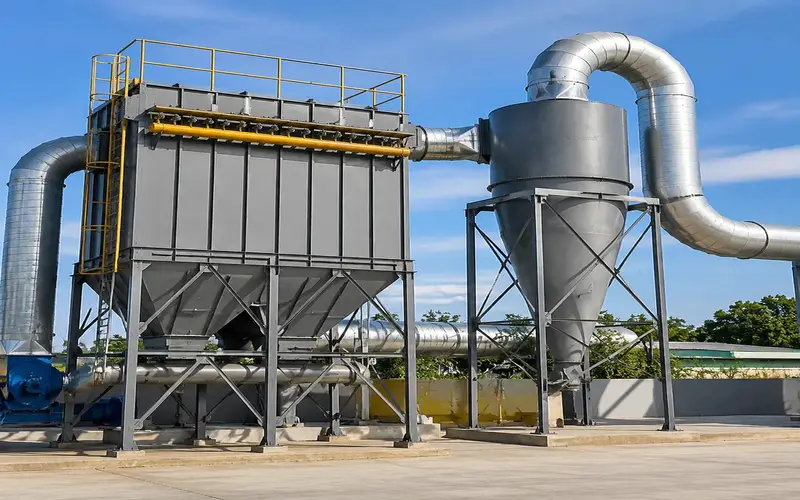
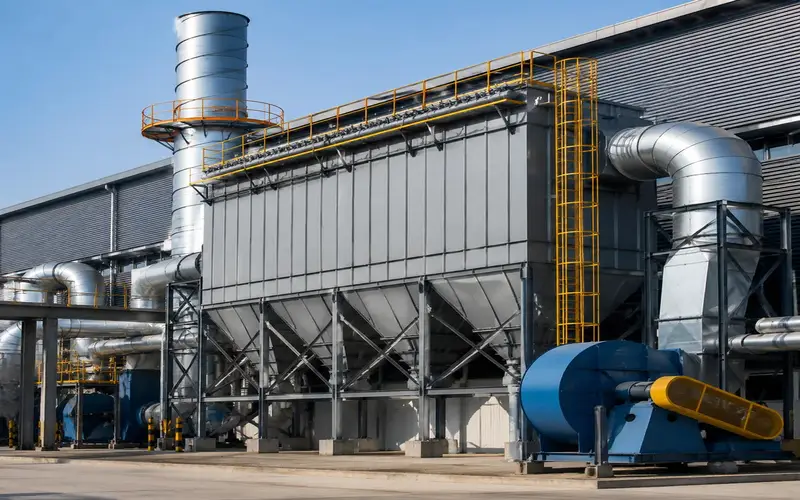
In heavy-duty industrial settings, maintaining a high air exchange per hour while managing massive amounts of airborne particulates requires specialised setups. For example, integrating a reliable dust collector bag filter ensures your system maintains its required volumetric flow rate without clogging or straining the exhaust fans.
Best Practice ACH vs. Code Minimums
When calculating ACH, you will often encounter two different sets of numbers: code minimums and best practices.
- Code Minimums: These are the baseline legal requirements set by organisations like ASHRAE or local building authorities. They are designed to prevent stale air and basic hazards, but they do not always guarantee optimal indoor air quality.
- Best Practices: These are the target rates you should actually aim for. Best practice ACH focuses on actively removing pathogens, VOCs, and fine dust to create a genuinely healthy environment.
We always advise facility managers to design their ventilation and air filtration systems around best practices. Relying only on the bare minimum outside air flow often leaves spaces vulnerable during periods of high occupancy or increased airborne pollutants.
Understanding Equivalent ACH (eACH) for Filtration
Sometimes, your existing HVAC system simply cannot pull in enough fresh outside air to hit your target ACH. This is where Equivalent ACH (eACH) comes into play.
Equivalent ACH measures the clean air added to a space through filtration, rather than just raw outside ventilation. If you cannot replace the air, you clean the air that is already there.
- How it works: By running recirculated air through high-efficiency filters (like MERV 13-15 or HEPA) or using a dedicated air filtration device, you remove contaminants at a rate that mimics bringing in fresh air.
- The benefit: It allows you to meet strict air quality standards without the massive energy costs of heating or cooling continuous outside air.
To maximise your eACH, the filtration media must be highly efficient with a low pressure drop. We engineer our filters specifically to handle high CFM (cubic feet per minute) demands, ensuring you get the maximum equivalent air changes without forcing your HVAC system to work overtime.
Solutions for Improving Your Air Change Rate
If your current setup isn’t hitting the target air changes per hour, you need practical ways to increase the volumetric flow rate without overworking your equipment. Improving indoor air quality requires a strategic mix of powerful ventilation and high-quality air filtration.
The Role of HVAC Systems in Ventilation
Your central HVAC system is the primary engine for moving air throughout a building. It manages both the outside air flow and the conditioned flow delivered through your supply registers. However, the efficiency of this system heavily depends on the filters installed inside it.
We are an air filter manufacturer, and we frequently see facilities struggle with low ACH simply because they use the wrong filtration media. If a filter is too restrictive, it drops the cubic feet per minute (CFM) output, which directly lowers your air exchange per hour.
- Match the MERV rating: Utilise the correct MERV 6 to MERV 15 range designed for your specific system’s capacity.
- Monitor pressure drop: High resistance means lower airflow and reduced ventilation rates.
- Prevent clogs: Heavily loaded filters restrict the volume of air passing through the system, ruining your target ACH.
Using HEPA Air Purifiers to Boost ACH
When upgrading the main HVAC system is too expensive or technically impossible, supplemental air purification is the most effective workaround. Adding standalone HEPA units to a room increases the equivalent ACH (eACH). This means you are filtering the air at a higher rate and generating clean air without altering the building’s core ductwork.
Understanding the air filter vs air purifier differences helps facility managers decide when to upgrade central HVAC filters and when to deploy dedicated air filtration devices for localised high-risk zones.
Selecting the Right Ventilation Equipment for Your Space
Getting the right equipment means matching your target ACPH with reliable hardware and custom filtration. Standard off-the-shelf options do not always fit complex industrial, commercial, or healthcare environments.
To secure the best airflow and filtration performance, focus on these core factors:
- Accurate Sizing: Always use an air changes per hour calculator to determine the exact CFM needed for your specific room volume.
- Custom Filter Design: We provide OEM and custom filter designs tailored to specific pressure drop and ACH requirements.
- Lab-Tested Performance: Our filters are rigorously tested in an ISO6-rated laboratory to guarantee they maintain optimal service life and airflow consistency.
- Fast Turnaround: Thanks to automated production equipment, we deliver custom, affordable filtration solutions within 12 days.
Pairing the right equipment with precision-engineered filters ensures your facility easily meets its required ACH formula targets while keeping operational costs low.