Ever feel like choosing the right air filter shouldn’t require a degree in mechanical engineering?
Between decoding MERV ratings, figuring out if HEPA filter standards actually matter for your home, and trying not to destroy your HVAC system’s airflow, it’s easy to get overwhelmed. But picking the wrong filter means breathing in hidden airborne contaminants—or worse, burning out your furnace.
I’ve spent years analyzing HVAC setups and indoor air quality. In this ultimate guide, we are going to cut through the marketing noise and break down the exact types of air filters you need for your home, your car, and beyond.
What Is an Air Filter and How Does It Work?
Indoor air quality has a direct impact on health, equipment longevity, and manufacturing precision. As a leading air filter manufacturer, we engineer advanced filtration solutions designed to purify the air we breathe and protect critical machinery. An air filter is a specialized device composed of porous materials that allow air to pass through while trapping solid particles and contaminants. Whether deployed in a residential HVAC system, an industrial cleanroom, or an automobile, the fundamental goal remains the same: delivering clean, purified air.
The Primary Function of Air Filters
The primary function of an air filter is to isolate and remove airborne impurities from an airstream. By doing so, these filters serve two critical purposes:
- Protecting Human Health: Removing harmful particulates from the breathing zone in homes, offices, and commercial spaces.
- Safeguarding Equipment: Preventing dust and debris from accumulating on sensitive HVAC components, engines, and industrial machinery, which ensures optimal operational efficiency and prevents premature system failure.
Common Airborne Contaminants Removed
High-efficiency air filtration systems target a wide array of pollutants. These contaminants are generally categorized into two main groups:
| Contaminant Type | Examples |
|---|---|
| Large Particulates | Lint, household dust, pet dander, and pollen. |
| Microscopic Particulates | Mold spores, bacteria, smoke, vehicle emissions, and viruses. |
| Gaseous Pollutants | Volatile organic compounds (VOCs), chemical fumes, and unpleasant odors. |
How Air Filters Capture Particles
Air filters do not operate like simple sieves; they utilize a combination of distinct physical mechanisms to achieve high-efficiency particulate removal:
- Sieving (Straining): The simplest method, where a particle is too large to fit through the spaces between the filter fibers and becomes physically blocked.
- Impaction: Heavy particles traveling in the airflow cannot shift direction quickly enough when the air curves around a fiber. Their momentum forces them to crash directly into the fiber, where they stick.
- Interception: Mid-sized particles follow the airstream closely but pass near enough to a filter fiber that they brush against it and become trapped.
- Diffusion: The smallest, microscopic particles (such as viruses and fine smoke) move erratically due to Brownian motion. This zig-zag path increases the likelihood that they will collide with and adhere to a filter fiber.
Understanding Air Filter Efficiency and Ratings
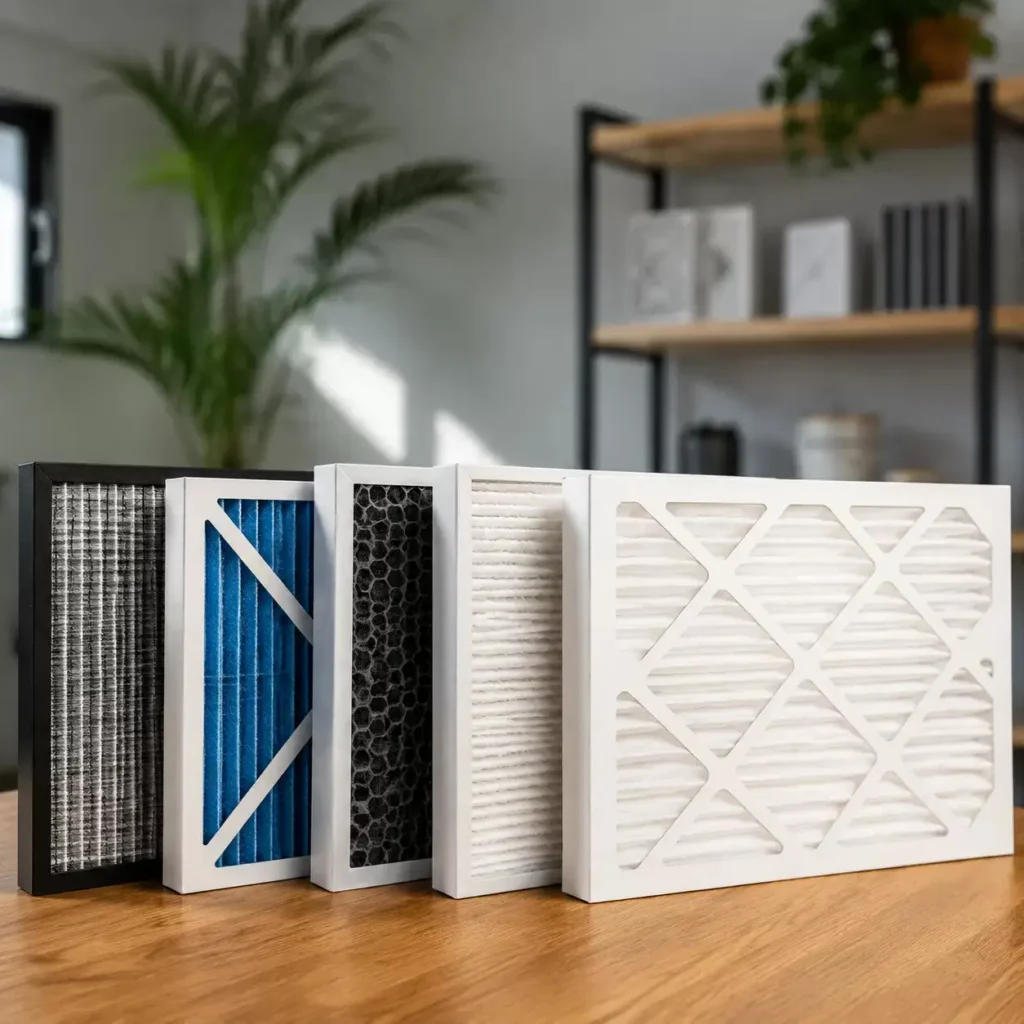
Choosing the right types of air filters requires a clear understanding of how they are rated. Higher filtration efficiency means cleaner indoor air quality, but it can also restrict airflow if your HVAC system isn’t designed to handle it.
What Is a MERV Rating?
MERV stands for Minimum Efficiency Reporting Value, and it scales from 1 to 16 for standard residential and commercial systems. This rating measures a filter’s ability to trap dust particles, pollen, and other particulate matter.
- MERV 1–4: Basic filtration, trapping large particles like lint and carpet fibers.
- MERV 5–8: Good standard protection for residential use, capturing mold spores and dust mites.
- MERV 9–12: High efficiency, ideal for pet dander and smaller allergens.
- MERV 13–16: Premium filtration that stops bacteria and smoke. For commercial settings or heavy-duty filtration, upgrading to specialized MERV 15 filters provides superior particulate removal if they match your HVAC system.
HEPA Filter Standards
HEPA, or High-Efficiency Particulate Air, is the gold standard for air filtration. To meet true HEPA standards, a filter must trap at least 99.97% of airborne contaminants as small as 0.3 microns.
Note: Because HEPA filters are highly dense, they are typically used in standalone room air purifiers, medical facilities, and specialized industrial setups rather than standard home HVAC systems, which lack the fan power to push air through them.
Alternative Rating Systems (FPR and MPR)
While the industry defaults to MERV, major retail brands use their own rating scales. You will frequently encounter these two alternative systems when shopping for your home:
| Rating System | Created By | What It Measures | Scale |
|---|---|---|---|
| MPR (Microparticle Performance Rating) | 3M / Filtrete | Focuses on the filter’s ability to capture the smallest E1 particles (0.3 to 1 micron). | 300 to 2800+ |
| FPR (Filter Performance Rating) | Home Depot | Evaluates overall filtration quality and the ability to capture specific weighted particles. | 4 to 12 (Color-coded) |
Main Types of Residential and HVAC Air Filters
Choosing the right air filtration for your home or business comes down to balancing cost, airflow, and indoor air quality needs. As an experienced air filter manufacturer, we produce various options designed to fit different HVAC systems and budget requirements.
Fiberglass and Spun Glass Filters
Fiberglass or spun glass filters are the traditional, budget-friendly options found in many older HVAC systems.
- Design: Made from layered fiberglass reinforced by a metal grating.
- Pros: Highly affordable and allows maximum airflow, putting minimal strain on your furnace or AC motor.
- Cons: Extremely low efficiency. They only catch large dust particles and lint, offering virtually no protection against microscopic allergens.
If you are trying to decide between upfront savings and better air quality, it helps to understand how these stack up in the pleated vs fiberglass air filters debate before buying.
Pleated Media Filters
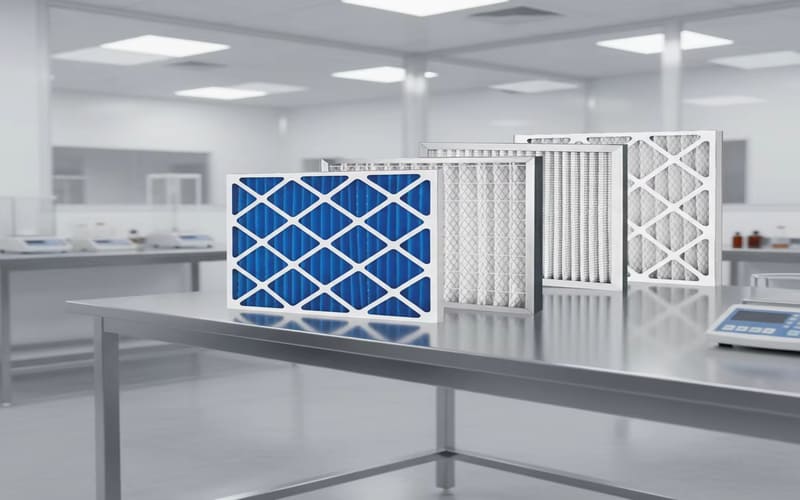
Pleated media filters are the industry standard for modern homes. They use folded cotton or synthetic polyester fibers to vastly increase the surface area available for trapping particulate matter.
- High Efficiency: The dense folds capture much smaller particles, including pollen, mold spores, and pet dander.
- System Protection: They keep your HVAC coils cleaner, which prevents efficiency drops and breakdowns.
- Longevity: Because of the increased surface area, a quality pleated filter lasts significantly longer than a standard fiberglass one.
Electrostatic and Ionizer Filters
Electrostatic filters use self-charging static electricity to attract and trap airborne particles like a magnet.
- How They Work: As air passes through the filter, the fibers generate a static charge that pulls dust, smoke, and pollen out of the air stream.
- Options: Available in both disposable and washable versions.
Washable and Reusable Air Filters
For those looking for an eco-friendly option, washable and reusable air filters feature a heavy-duty aluminum or plastic frame with a durable filtration media that can be rinsed clean.
- Cost-Effective: While the initial price is higher, you can reuse them for years, eliminating the need to buy monthly replacements.
- Maintenance: They require regular washing and must be completely dry before reinstallation to prevent mold growth.
To figure out if a reusable option makes sense for your setup, look at our breakdown on which type of air filter will last the longest to compare long-term performance and maintenance needs.
Specialized Air Purification Filter Types
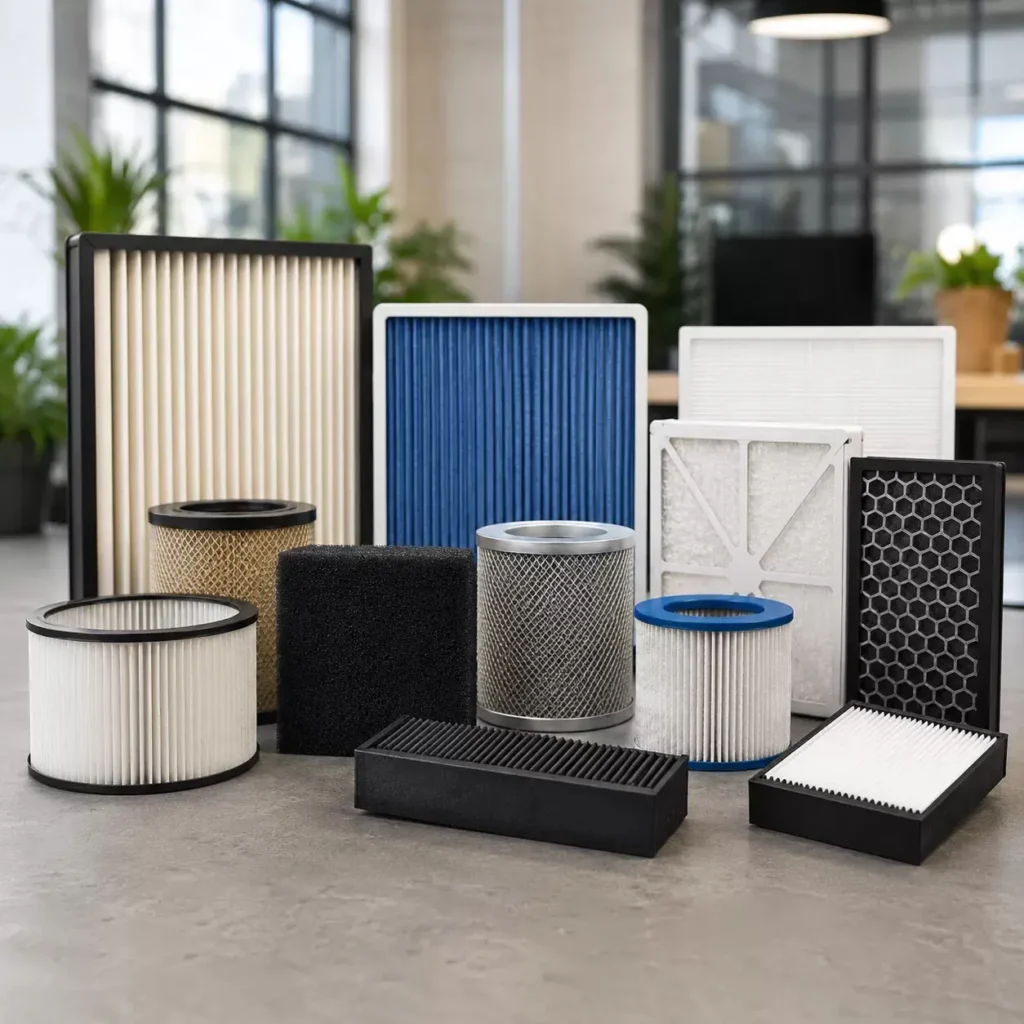
Standard filters excel at stopping physical particles, but gas, odors, and microscopic pathogens require specialized air filtration technologies. As an air filter manufacturer, we engineer these advanced media types to target molecular and biological indoor air quality threats that standard pleated filters miss.
Activated Carbon and Charcoal Filters
When you need to eliminate smoke, chemical vapors, and stubborn odors, activated carbon is the industry standard. Through a process called adsorption, gaseous pollutants and volatile organic compounds (VOCs) bond physically to the massive surface area of the treated charcoal media.
Because carbon filtering works differently from mechanical filtration, we often get asked about maintenance. To get the best performance out of these systems, understanding how to manage the media is crucial—especially when deciding between replacing or attempting to clean air purifier filters to maintain optimal airflow. For heavy-duty odor control, choosing an activated carbon air filter provides a dedicated molecular barrier that standard particulate filters simply cannot match.
UV (Ultraviolet) Light Filters
UV light filters do not trap particles; instead, they sanitize the air. By emitting short-wave ultraviolet-C (UV-C) light, these modules disrupt the DNA of airborne biological contaminants.
- Primary Targets: Viruses, bacteria, mold spores, and fungi.
- Installation: Usually integrated directly into the HVAC system coils or high-end room air purifiers.
- Main Benefit: Prevents biological growth from multiplying inside the ductwork and spreading throughout the property.
Photo-Catalytic Oxidation (PCO) Filters
PCO is an advanced technology that combines UV light with a titanium dioxide catalyst. When the UV light hits the catalyst, it creates a powerful chemical reaction that oxidizes and breaks down organic pollutants on impact.
- Destroys, Doesn’t Trap: Converts harmful gaseous pollutants and VOCs into harmless water vapor and carbon dioxide.
- Broad Spectrum: Highly effective against microscopic particles, chemical fumes, and lingering odors simultaneously.
- Application: Ideal for specialized commercial environments and residential spaces requiring maximum air purification.
Automotive and Industrial Air Filters
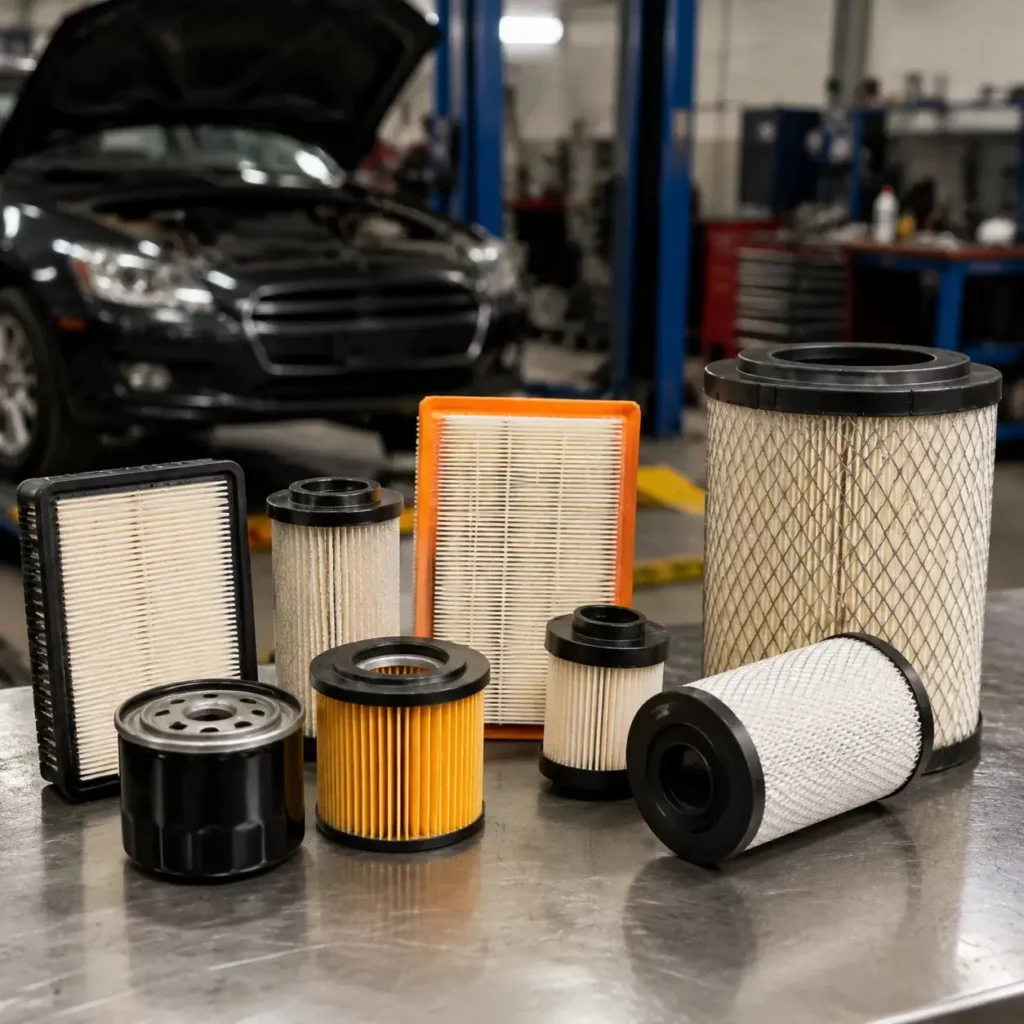
Vehicles and industrial machinery require specialized air filtration to protect moving parts, maintain efficiency, and ensure safety. As an air filter manufacturer, we engineer these filters to withstand harsh environments, high pressures, and heavy particulate loads.
Internal Combustion Engine Air Filters
An engine needs clean air to burn fuel efficiently. Engine air filters trap dust, dirt, and debris before they can enter the cylinders and cause mechanical wear.
- Materials: Typically made of pleated paper, synthetic fibers, or washable cotton gauze.
- Impact: A clogged engine filter reduces airflow, dropping fuel economy and engine power.
- Replacement: Generally replaced every 12,000 to 15,000 miles, depending on driving conditions.
Automotive Cabin Air Filters
While engine filters protect the machine, cabin air filters protect the passengers. These filters clean the air flowing into the vehicle’s interior through the heating, ventilation, and air conditioning system.
- Particulate Removal: Captures dust particles, pollen, mold spores, and soot.
- Odors and Gases: Premium options feature activated carbon to neutralize exhaust fumes and outside odors.
- Maintenance: Understanding what a cabin air filter does helps drivers spot symptoms like weak airflow or persistent musty smells, indicating it is time for a replacement.
Industrial Compressed Air Filters
In manufacturing and industrial settings, compressed air systems require heavy-duty filtration to protect pneumatic tools and downstream processes. Contaminants in these systems can ruin product batches and damage expensive machinery.
| Filter Type | Primary Function | Target Contaminants |
|---|---|---|
| Particulate Filters | Removes solid particles from the air stream. | Dust, pipe scale, rust |
| Coalescing Filters | Merges small liquid droplets into larger drops for removal. | Oil aerosols, water mists |
| Adsorption Filters | Uses carbon filtering to bind gaseous pollutants. | Oil vapors, industrial odors |
Using high-quality industrial air filters ensures system reliability, prevents corrosion, and minimizes downtime in automated production lines.
Key Factors to Consider When Choosing an Air Filter
Selecting the right air filter involves more than just picking the first option off the shelf. As an air filter manufacturer, we know that the right choice balances system protection with optimal indoor air quality.
Matching Filter Size and Thickness
Using an ill-fitting filter allows unfiltered air to bypass the system entirely, rendering your air filtration efforts useless. Always check the exact dimensions printed on your current filter’s frame before purchasing.
- Nominal vs. Actual Size: The printed size is usually a rounded-up “nominal” number. The actual physical dimensions are slightly smaller.
- Thickness Matters: Residential filters range from 1-inch to 5-inch media depths. Deeper pleated filters last longer and trap more dust particles without restricting airflow.
- Finding Your Fit: If you are unsure about the measurements, check out our complete guide on what size air filter you need to avoid costly mistakes.
Evaluating CADR and System Airflow Resistance
Every HVAC system has a maximum limit on the amount of airflow resistance it can handle. Installing a filter that is too restrictive can choke the system, leading to higher energy bills and premature equipment failure.
- CADR (Clean Air Delivery Rate): Primarily used for room air purifiers to measure the volume of clean air a unit delivers per minute for smoke, dust, and pollen.
- Static Pressure: In a whole-house HVAC system, high-efficiency filters create more resistance.
- The Sweet Spot: Look for a filter that offers high particulate removal without exceeding your system’s rated blower capacity.
Balancing Filtration Efficiency and Maintenance Costs
Higher efficiency filters capture more microscopic contaminants, gaseous pollutants, and odors, but they also require a clear understanding of your long-term budget.
| Filter Type | Efficiency Level | Lifespan | Best For |
|---|---|---|---|
| Fiberglass / Spun Glass | Low | 30 Days | Basic system protection |
| Standard Pleated | Medium | 60–90 Days | Balanced filtration & value |
| High-MERV / HEPA | High | 3–6 Months, HEPA can last 6-12 months or more. | Severe allergies & pets |
| Washable / Reusable | Low-Medium | Multi-year (Wash monthly) | Eco-conscious users |
Investing in a premium filter reduces overall maintenance costs by keeping your heating and cooling coils free of debris. To get a better idea of how different materials and efficiencies affect your wallet over time, review our comprehensive furnace filter cost factors and price guide.