Understanding the Role of Your HVAC Filter
An HVAC filter is the unsung hero of your home comfort system. Far from being a minor accessory, this component serves as the primary barrier protecting both your mechanical equipment and your indoor air quality from airborne contaminants.
Why a Clean Filter Matters
Maintaining clean filters is the simplest, most effective way to ensure your heating system and AC unit operate at peak performance. As an HVAC filter manufacturer and supplier, we engineer these components to balance optimal filtration with unrestricted airflow.
A clean furnace filter delivers three core benefits:
- Enhanced Indoor Air Quality: It traps airborne particles like dust, pollen, pet dander, and mold spores before they circulate through your air ducts.
- Lower Energy Bills: Clean filters allow air to move freely, reducing the strain on your air handler and keeping monthly utility bills low.
- Equipment Protection: By keeping dust buildup off internal components, a clean filter prevents premature wear and tear, reducing the need for emergency furnace repair.
What Happens to Your System When It Is Clogged
When an HVAC filter becomes overloaded with debris, the entire system suffers. A clogged filter restricts the essential air volume needed to regulate your home comfort safely and efficiently.
System Impact: Restricted airflow forces your heating system or air conditioner to work twice as hard to move air through the house.
The consequences of ignoring a blocked filter include:
- Reduced Airflow: The air vents will struggle to push out a sufficient volume of conditioned air.
- Increased Wear and Tear: Overworked motors overheat, leading to mechanical breakdowns.
- Short Cycling: The system overheats rapidly and shuts down before completing a full cycle, driving up electric bills and straining components.
5 Clear Signs Your HVAC Filter Is Clogged
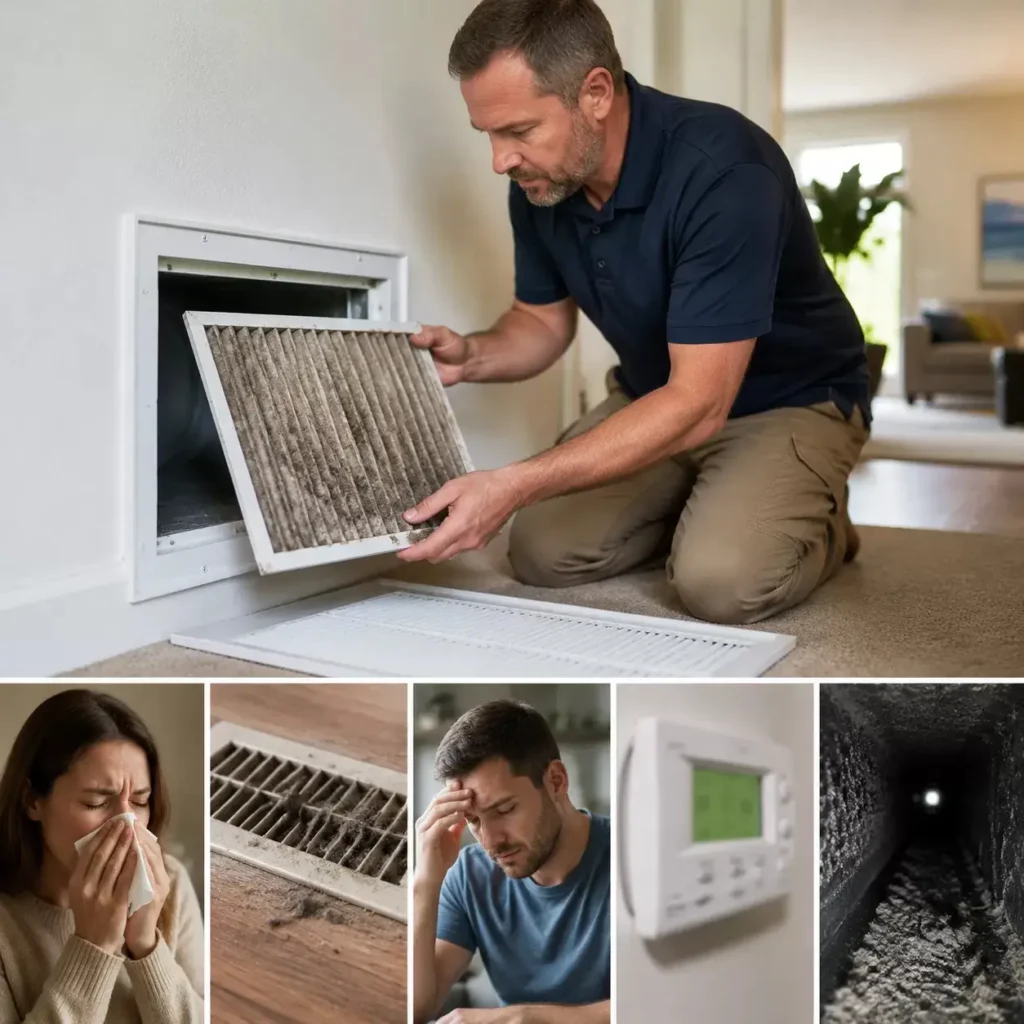
When a furnace filter or AC filter gets overloaded with debris, your entire system struggles to breathe. Catching the warning signs early protects your equipment and preserves your home comfort.
Here are the five definitive signs that your filter is choked with dust and needs immediate attention.
1. Weakened Airflow from the Vents
If you notice a distinct reduced airflow coming from your air vents, a clogged filter is usually the prime suspect. When dust blocks the media, the air handler has to work twice as hard to push conditioned air through the system. You will feel a weak breeze instead of a strong, steady stream of air, making it incredibly difficult to keep your living space comfortable.
2. Spikes in Monthly Energy Bills
An overworked system draws significantly more electricity. If your monthly utility bills and electric bills are climbing without a sudden change in the weather, your heating system or cooling unit is likely fighting against a blocked filter. Replacing a dirty filter is one of the easiest maintenance tips to restore efficiency and lower your operating costs.
3. Uneven Heating or Cooling Across Rooms
Are you experiencing random hot spots or chilly zones throughout your house? A restricted filter prevents your ac unit from distributing air evenly through the air ducts. This leaves some rooms feeling perfectly comfortable while others remain stubborn pockets of stagnant, unconditioned air.
4. Excessive Dust Around the House and Vents
A filter’s main job is to trap airborne particles to maintain high indoor air quality. Once the filter reaches its maximum capacity, it can no longer hold new debris. This results in rapid dust buildup settling on your furniture, floors, and directly around the supply vents, triggering unwanted allergy symptoms for everyone inside.
5. Shorter, More Frequent Cycles (Short Cycling)
When airflow is restricted, heat builds up inside a furnace, or the cooling coils freeze over in an air conditioner. To prevent catastrophic failure, the system’s safety controls will shut it down prematurely, only for it to turn back on moments later. This destructive pattern is known as short cycling. It puts massive strain on your equipment and frequently leads to expensive furnace repair bills or complete system failure.
Secondary Signs of a Blocked Air Filter
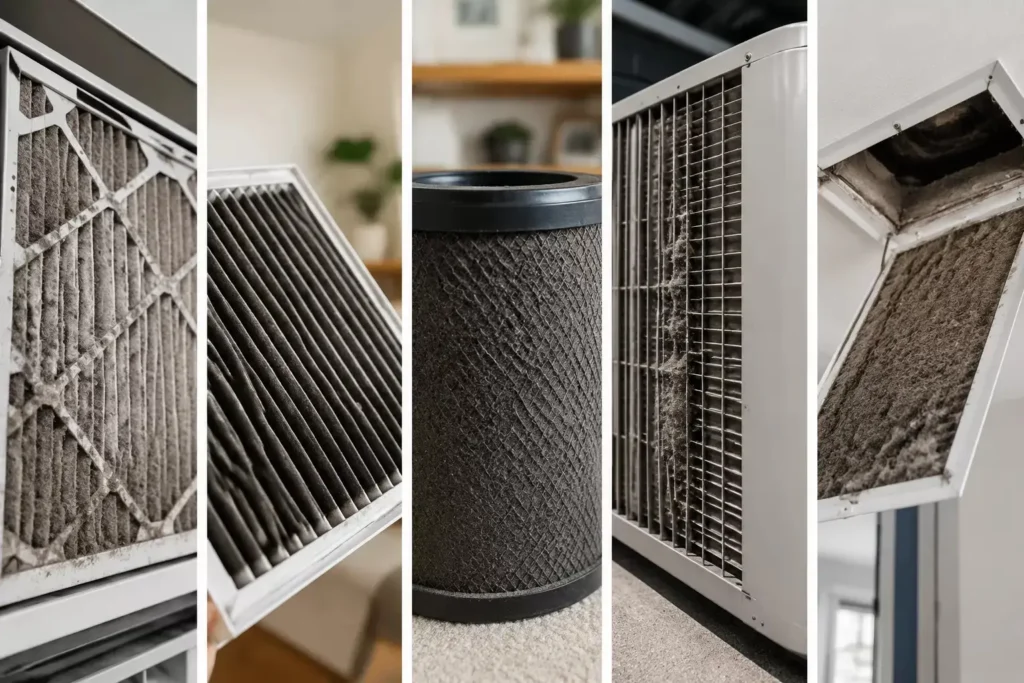
Beyond the obvious drop in system performance, a clogged furnace filter or AC unit filter triggers several secondary warning signs. Paying attention to these subtle changes in your home environment can save you from costly furnace repairs and unexpected system failures down the road.
Worsening Allergy and Respiratory Symptoms
When your HVAC filter is completely full, it loses its ability to trap airborne particles. Instead of cleaning the air, the system begins circulating dust, pet dander, pollen, and mold spores throughout your living spaces.
If you or your family members notice a sudden spike in allergy symptoms, frequent coughing, or respiratory discomfort while inside, your indoor air quality has likely plummeted. To maintain a healthy living environment, it is critical to know how to clean air conditioner filter setups or replace disposable filters before they become a health hazard.
Strange Noises and Burning Smells from the System
A blocked filter forces the air handler to work twice as hard to pull air through the restricted material. This strain manifests in two distinct ways:
- Whistling or Rattling Noises: The increased suction creates a vacuum effect inside the air ducts, leading to strange whistling, popping, or straining sounds near the return vents.
- Burning Odors: As the blower motor overheats due to inadequate airflow, you may notice a distinct metallic or burning smell coming from your vents. If this happens, shut the system down immediately to avoid permanent motor damage.
The Physical Visual Check (The White Sheet Test)
If you are unsure whether it is time to replace your filter, you can perform a quick visual assessment called the White Sheet Test:
- Hang a clean, white sheet or cloth about 6 to 12 inches away from one of your main output air vents.
- Leave the system running normally for 24 to 48 hours.
- Check the sheet. If it turns gray or accumulates visible dust buildup, your filter is no longer doing its job and needs immediate attention.
Step-by-Step Guide: How to Fix a Clogged HVAC Filter
If your system is struggling with reduced airflow or spiking energy bills, it is time to take action. Replacing a clogged furnace filter is a quick DIY project that restores home comfort and protects your equipment from unnecessary furnace repair.
Follow this straightforward guide to safely swap out your dirty filter.
1. Shut Down the Power to the System
Never change an air filter while the system is running. Turn off your heating system or AC unit at the thermostat first. For maximum safety, flip the dedicated switch on the air handler or shut off the breaker in your main electrical panel. This prevents the fan from turning on and sucking loose dust or debris into the air ducts during the swap.
2. Locate and Access the Filter Compartment
Find where your filter lives. In most home setups, it is located inside the return air vent slot next to the blower compartment, or inside a dedicated slot in the air handler itself. If you are having trouble finding the right spot or aren’t sure what size replacement to buy, check out our complete guide on what size air filter you need to get the perfect match. Once located, open the access door or slide off the compartment cover.
3. Safely Remove the Damaged or Dirty Filter
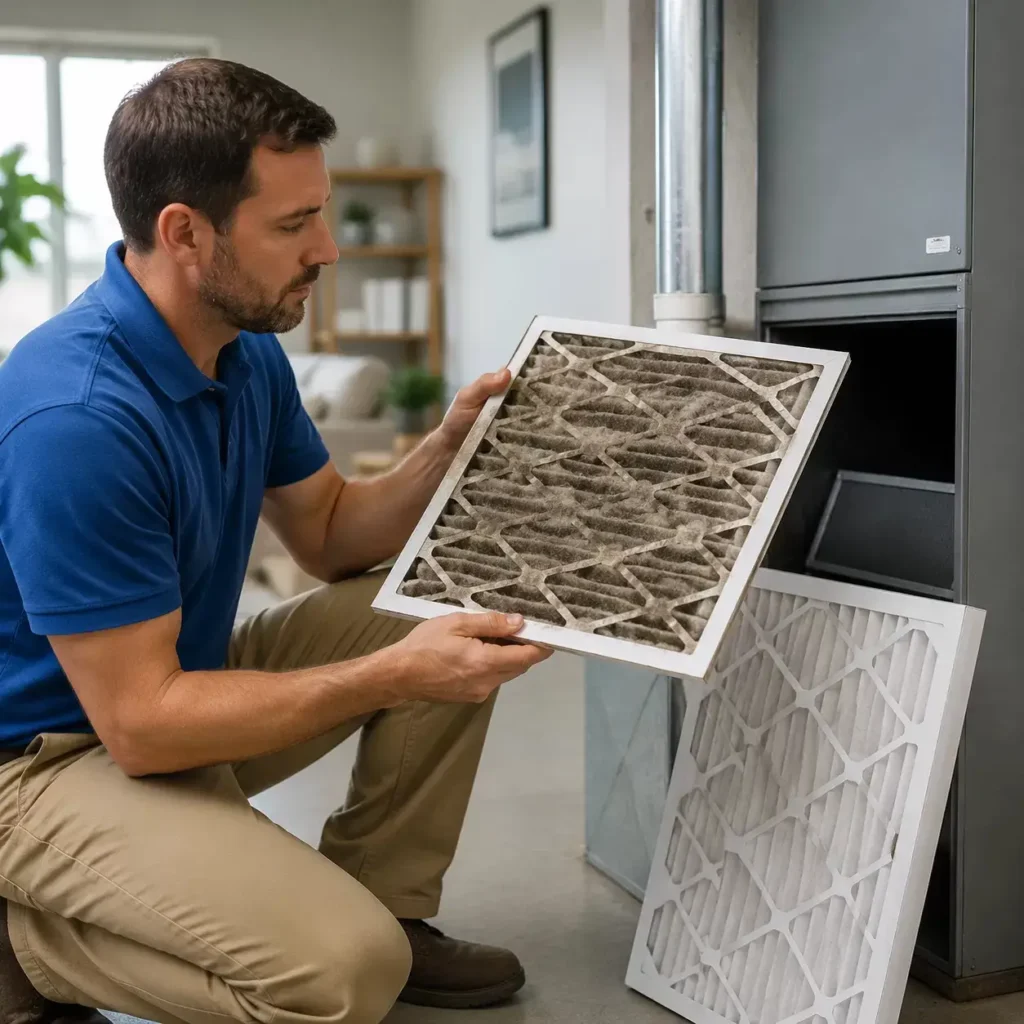
Slide the old filter out of the housing gently to avoid knocking dust buildup back into your indoor air. Take a close look at its condition. If it is caked in gray dust and pet dander, it is ready for the trash. If you use disposable filters, drop it directly into a garbage bag to keep your indoor air quality clean.
4. Install the Correct Replacement Filter
Slide the fresh, clean filters into the slot. Pay close attention to the airflow arrows printed on the filter frame. These arrows must point in the direction that the air flows through the system—generally toward the blower motor or furnace unit. Installing it backward restricts airflow and forces your system to work twice as hard.
5. Power the System Back On and Check Performance
Secure the compartment door or vent cover tightly. Flip the power switch or breaker back on, and set your thermostat to your desired temperature. Listen closely as the system starts up to ensure it runs smoothly without any unusual noises, and feel the air vents to confirm that strong, steady airflow has returned to your home.
Choosing the Right Replacement Filter
Selecting the correct replacement filter is vital to keeping your heating system and air handler running smoothly. As a manufacturer, we know that installing the wrong filter can restrict airflow just as badly as a clogged one, driving up your electric bills and stressing your equipment.
Understanding MERV Ratings
MERV, or Minimum Efficiency Reporting Value, measures how effectively a filter traps airborne particles. Ratings range from 1 to 16 for residential and commercial systems, but higher is not always better for your home comfort.
- MERV 1–4: Provides basic protection, trapping large particles like lint and dust fibers.
- MERV 5–8: Standard residential choice. Efficiently captures pet dander, mold spores, and pollen.
- MERV 9–12: Superior filtration. Removes finer dust buildup and smoke without severely restricting airflow.
Choosing the ideal rating depends entirely on your specific household needs and HVAC capabilities. To find the sweet spot for your system, check out our complete guide to MERV air filter ratings.
Finding the Proper Dimensions and Fit
An HVAC filter must fit snugly to prevent dirty air from bypassing the media and entering your air ducts.
- Check the Nominal Size: Look at the outer frame of your current furnace filter. You will see dimensions printed like 16″ x 25″ x 1″. This is the nominal size used for retail labeling.
- Measure the Actual Size: If the print has faded, use a tape measure to get the exact length, width, and thickness.
- Avoid Gaps: A loose filter lets dust slip into the AC unit, while a forced, bent filter can collapse under system pressure.
Reusable vs. Disposable Filters
Both options have a direct impact on your indoor air quality and ongoing maintenance tips.
| Filter Type | Pros | Cons | Best For |
|---|---|---|---|
| Disposable Pleated | Higher filtration efficiency; easy to replace and discard. | Ongoing monthly cost; creates waste. | Homes with pets, allergies, or high dust levels. |
| Reusable / Washable | Eco-friendly; one-time purchase; lasts for years. | Requires regular washing and drying; lower MERV ratings. | Budget-conscious homeowners with low allergy concerns. |
If you are torn between the convenience of tossing a dirty filter or the sustainability of washing one, compare the long-term performance benefits in our breakdown of washable vs. disposable air filters.
Preventative Maintenance and Best Practices
Recommended Filter Replacement Schedule
Keeping your heating system and AC unit running efficiently requires a consistent maintenance schedule. As a rule of thumb, standard 1-inch pleated filters should be replaced every 60 to 90 days. However, if you have pets or suffer from severe allergies, you should inspect and potentially change the furnace filter every 30 days to ensure optimal home comfort and low electric bills.
Common Causes for Rapid Filter Clogging
If you notice your filter getting dirty much faster than usual, several local environmental factors are usually at play. Heavy dust buildup can happen rapidly due to:
- Pets: Shedding fur and dander clog the filter mesh quickly.
- Continuous Fan Operation: Running the air handler fan constantly draws in more airborne debris.
- Nearby Construction: Outdoor dust and debris easily find a way into your air ducts.
- Smoking or Cooking: Airborne residues and soot bind to the filter fibers, restricting airflow.
If your filter turns completely black unexpectedly, it is crucial to understand the underlying issues. You can check out our guide on why is my air filter black to identify the exact causes and find the right solutions for your home.
When to Call a Professional HVAC Technician
While regular filter replacement is a straightforward DIY task, some symptoms point to deeper system issues that require a professional. You should contact a certified HVAC technician for furnace repair or system diagnostics if you experience:
- Persistent Short Cycling: The system turns on and off rapidly even after installing clean filters.
- No Cool or Warm Air: The AC unit runs but fails to regulate the temperature, indicating potential compressor or refrigerant issues.
- Strange Noises or Burning Smells: Electrical or mechanical failures inside the air handler that present safety hazards.
- Abnormal Ice Accumulation: Evaporator coils freezing over despite maintaining a fresh filter.
Frequently Asked Questions
Can a clogged filter cause my entire system to shut down?
Yes, absolutely. When reduced airflow becomes severe, your heating system or AC unit cannot breathe. This causes the heat exchanger to overheat or the cooling coils to freeze over. To prevent permanent damage, the system’s safety controls will trigger a complete shutdown. Keeping clean filters in your unit is the easiest way to avoid these frustrating breakdowns and expensive furnace repair bills.
How often should I check my filter if I have pets?
If you have pets, you should check your furnace filter every 30 days. Pet dander and fur speed up dust buildup significantly, which chokes your air vents much faster than in pet-free homes. For a standard household with multiple pets, we recommend that you how often to change air filter guidelines be set to every 1 to 2 months to maintain optimal indoor air quality and keep your electric bills low.
Why is my AC running but not blowing cold air?
A clogged filter is often the main culprit. When dust blocks the air handler, the lack of airflow causes the evaporator coils to freeze, stopping the cooling process entirely. Other common reasons include:
- Refrigerant leaks or low levels
- A malfunctioning outdoor condenser unit
- Faulty thermostat settings
- Blocked or leaking air ducts
Before calling a technician, replace the filter and see if your home comfort restores once the system thaws out.