Ever notice how your home’s air filters seem completely caked in dust just weeks after changing them?
If you’re tired of constantly swapping them out, you’re not alone. As an HVAC specialist, I see homeowners make the same minor system blunders every single day—mistakes that secretly choke your airflow, spike your energy bills, and ruin your indoor air quality.
The truth is, a dirty air filter isn’t just an eyesore; it’s a silent killer for your HVAC system.
In this quick guide, you’ll learn the exact reasons your filters are clogging so fast, how to spot the warning signs before your AC freezes up, and the simple tweaks you can make today to extend your filter’s life.
Top Reasons Your Air Filters Get Dirty So Fast
When your home’s air filters clog ahead of schedule, it is rarely a fluke. A rapidly fouling air filter usually points to specific environmental factors or systemic settings within your heating, ventilation, and air conditioning (HVAC) setup. Understanding these drivers allows you to regain control over your indoor air quality and protect your equipment from premature wear.
Thermostat Fan Is Set to “ON” Instead of “AUTO”
Keeping your thermostat fan set to “ON” forces the system’s blower motor to run continuously, regardless of whether the system is actively heating or cooling.
- Continuous Filtration: Running the fan non-stop means the air handler is constantly pulling air from your living spaces through the furnace filter.
- Accelerated Particle Collection: Because the volume of air passing through the media increases exponentially, the filter traps airborne contaminants 24 hours a day, causing rapid graying and debris loading.
- The Fix: Switch your thermostat fan setting to “AUTO.” This ensures the fan only operates during a heating or cooling season cycle, drastically reducing unnecessary filter exposure and extending its operational lifespan.
Leaky Air Ducts Pulling in Extra Dust
Unsealed or leaky air ducts act like vacuum cleaners within the hidden spaces of your home, such as unconditioned attics, crawlspaces, or basements.
- Negative Pressure Pull: When return air ducts have cracks, loose connections, or structural holes, they pull in dusty, stagnant air from outside the living envelope.
- Heavy Particle Loads: This unconditioned air is heavily laden with insulation fibers, drywall dust, and outdoor dirt.
- Filter Overload: This influx of extra debris bypasses normal living spaces and dumps directly onto your pleated filters, causing them to choke up far faster than they would under normal operating conditions.
Furry Pets and High Household Activity
Your home’s vibrant daily life directly dictates the lifecycle of your air filtration system. Pets and high foot traffic are primary contributors to premature filter restriction.
- Dander Accumulation: Furry pets shed constant streams of pet hair and dander. Because these particles are lightweight, they remain suspended in the air until the HVAC system draws them into the return vents.
- High Household Activity: Children, frequent guests, and indoor friction kick up settled floor dust, pollen, and dust mites.
- Fiber Clogging: This constant suspension of heavy organic matter forms a thick, felt-like layer over the fiberglass filters or pleated media, choking off air velocity within weeks.
Using Low-Quality or 1-Inch Pleated Filters
The physical design and material composition of your filter play a massive role in how quickly it fills up.
| Filter Type | Surface Area | Capture Capacity | Behavior |
|---|---|---|---|
| Fiberglass Filters | Very Low | Minimal | Passes fine dust; clogs quickly with large debris. |
| 1-Inch Pleated Filters | Low to Moderate | Moderate | High initial efficiency, but limited holding capacity causes fast clogging. |
| Deep-Pleated Media (4-5″) | High | Maximum | Spreads dust over a massive surface area; lasts months longer. |
Standard 1-inch pleated filters have a relatively small surface area. While they are highly effective at capturing fine airborne contaminants, their limited physical holding capacity means they reach maximum dust saturation rapidly. Upgrading your system or selecting filters optimized for both holding capacity and airflow restriction is vital for stabilizing maintenance cycles.
The Hidden Dangers of a Dirty Air Filter
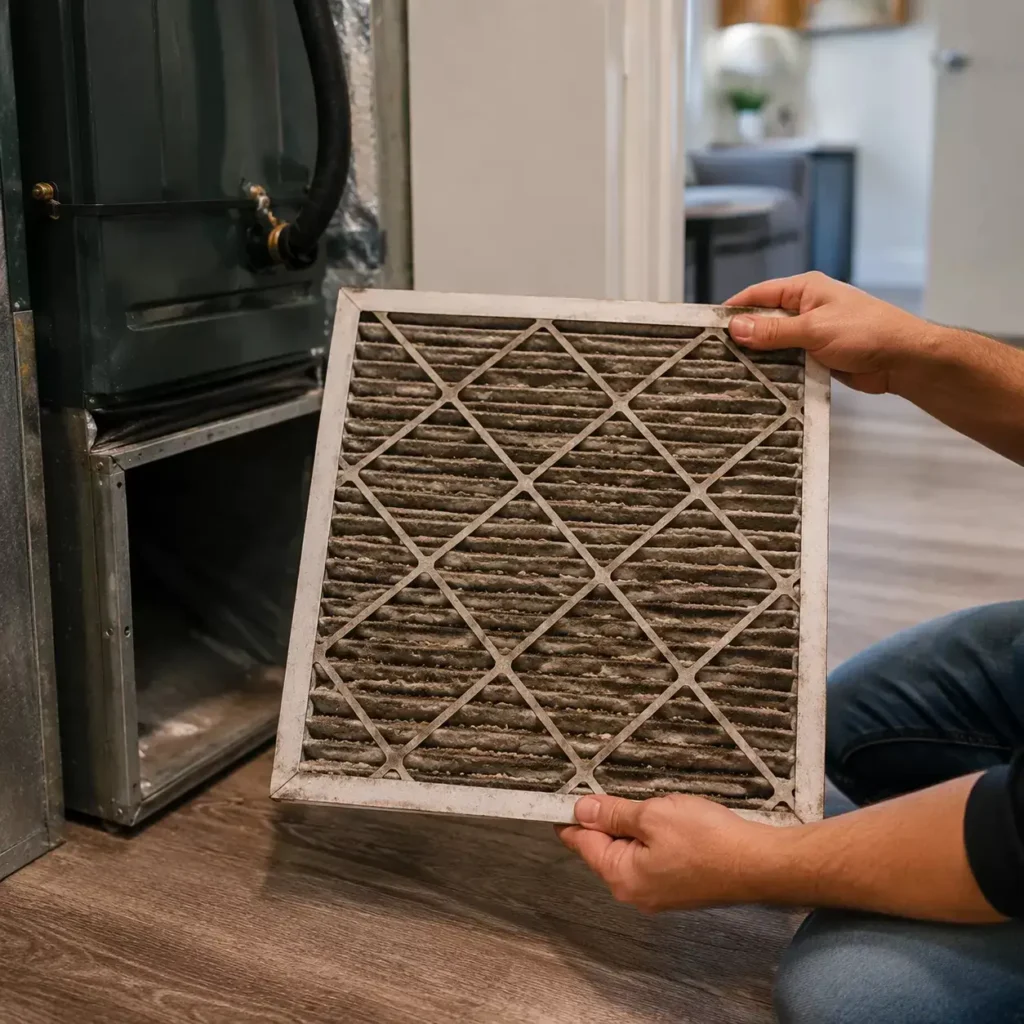
Leaving a clogged filter in your HVAC system does far more damage than most homeowners realize. When you neglect regular filter replacements, you trigger a chain reaction of mechanical and financial issues throughout your home.
Reduced Airflow and Poor Efficiency
A heavily soiled furnace filter acts like a solid wall, creating severe airflow restriction within your system. Your air handler has to work twice as hard to push conditioned air through the choked material, forcing the entire AC unit or furnace to consume significantly more energy.
This directly translates to a major drop in energy efficiency and a noticeable spike in your monthly utility costs. To prevent this performance drop, understanding how often to change air filter setups based on your household size and pet situation is critical for maintaining optimal airflow.
Increased Wear and Tear on Your HVAC System
Operating your system under constant strain accelerates the degradation of expensive internal components.
- Blower Motor Burnout: The motor must draw more amperage to overcome the resistance of a dirty filter, leading to overheating and premature failure.
- System Short-Cycling: Restricted airflow causes heat to trap inside the furnace or forces the cooling coils to drop below freezing, making the system shut down and restart constantly.
- Component Failures: Over time, this extra stress leads to cracked heat exchangers or failed compressors—repairs that often cost thousands of dollars.
Negative Impacts on Indoor Air Quality and Health
When an air filter hits its maximum capacity, it can no longer trap incoming airborne contaminants. Instead, the bypass air forces trapped pollutants directly back into your living spaces.
A clogged filter stops cleaning your air and starts cycling pollutants, severely degrading your indoor air quality.
This leads to a rapid accumulation of dust mites, pollen, mold spores, and dander throughout your home. For family members with allergies or respiratory sensitivities, this continuous recirculation of triggers can cause immediate health discomfort and heightened allergy symptoms during peak cooling and heating seasons.
Signs It Is Time to Replace Your Air Filter
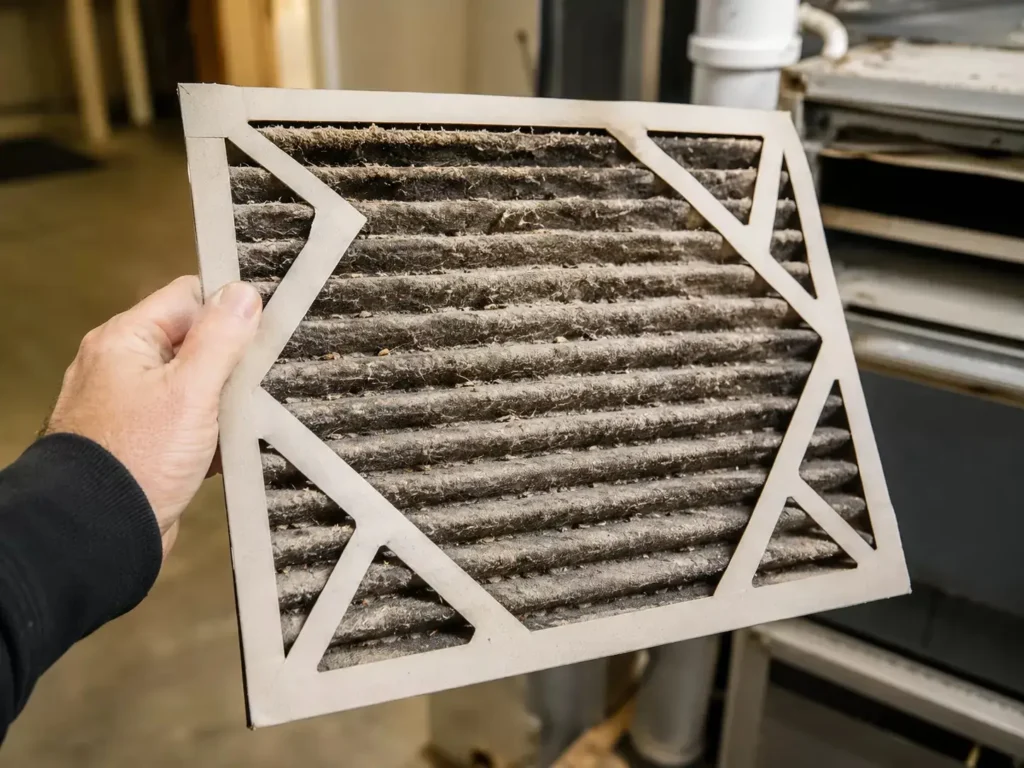
If you notice your air filters get dirty so fast, you cannot rely solely on the calendar to change them. Your HVAC system will drop clear hints when it is struggling against a clogged filter. Pay attention to these three unmistakable signs that a replacement is overdue.
Visible Dust Buildup and Discoloration
A quick visual inspection is the easiest way to check your filter’s health. Pull the filter out of the air handler and examine its surface.
- Grey or Black Coloring: A clean filter is usually white. If it has turned dark grey or black, it is completely loaded with trapped airborne contaminants like dust mites, pollen, and mold spores.
- The “Light Test”: Hold the filter up to a bright light. If the light cannot penetrate the fabric, airflow restriction is already occurring, and your system is choking.
- Surface Debris: Visible cakes of pet hair and thick dander mean the filter has reached its maximum holding capacity.
Unexpected Spikes in Your Energy Bills
When a furnace filter or AC filter is packed with dirt, your HVAC system has to work twice as hard to push air through the house. This extra effort directly translates to higher electricity consumption.
Note: If your utility bills are creeping up during the peak cooling season or heating season without a change in your actual usage habits, a clogged air filter is the most likely culprit.
By maintaining a clean filter, you restore proper energy efficiency and prevent your AC unit from running longer cycles than necessary.
Uneven Cooling or Heating Throughout the Home
Are some rooms in your house feeling like an icebox while others stay stuffy and warm? A dirty filter restricts the volume of conditioned air traveling through your air ducts.
- Weak Airflow: Check the register vents furthest from your indoor unit. If the airflow feels weak, a dirty filter is limiting the system’s pushing power.
- Temperature Imbalances: Without consistent airflow, heat and cool air cannot distribute evenly, leading to uncomfortable hot or cold spots across different rooms.
- Short Cycling: The restricted air can cause heat to build up in the furnace or cause the AC coils to get too cold, forcing the system to shut down prematurely before the home reaches the thermostat setpoint.
How to Choose the Right Air Filter for Your Home
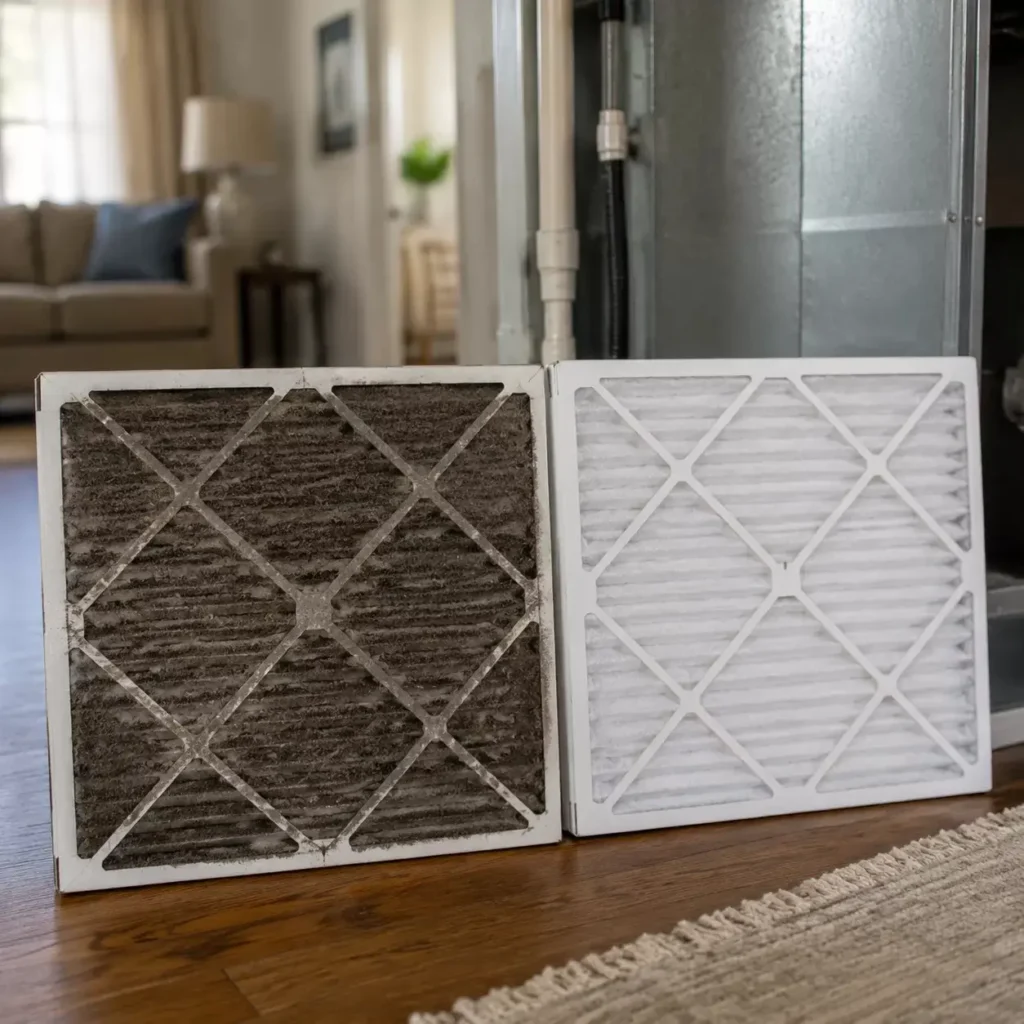
Choosing the right filter stops airborne contaminants without suffocating your HVAC system. As an air filter manufacturer, we know that finding the perfect balance keeps your air clean and your energy bills low.
Understanding MERV and Filter Ratings
MERV (Minimum Efficiency Reporting Value) ratings scale from 1 to 16 for residential use. A higher rating catches smaller particles, but it also forces your air handler to work harder.
| MERV Rating | What It Captures | Best Used For |
|---|---|---|
| MERV 1–4 | Large dust particles, lint, carpet fibers | Basic protection for old HVAC systems |
| MERV 5–8 | Pollen, mold spores, dust mites, pet dander | Standard residential homes |
| MERV 11–13 | Smog, car emissions, bacteria, pet hair | Homes with allergies or multiple pets |
For a deeper dive into choosing the right efficiency level for your household, check out our complete guide to MERV air filter ratings.
Selecting the Correct Filter Size and Material
Using the wrong size allows dirty air to bypass the filter completely, while the wrong material can restrict airflow.
- Find the Dimensions: Check the cardboard edge of your old filter for the nominal size (e.g., $20 times 20 times 1$). To ensure a perfect snug fit, learn how to measure your air filter size by comparing nominal versus actual dimensions.
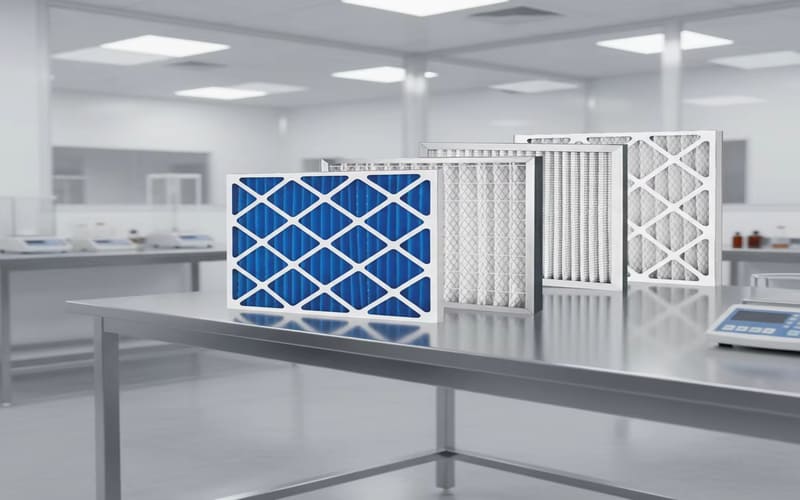
- Fiberglass Filters: Cheap and disposable. They only stop large debris and offer almost no protection against small allergens.
- Pleated Filters: Made from synthetic cotton blends. They have more surface area to trap dust and dander without immediately clogging.
Balancing Filtration Efficiency with HVAC Performance
High-efficiency filters trap more dust, but they also create airflow restriction if your system isn’t designed for them.
- Check System Compatibility: Most standard residential AC units perform best with a MERV 8 to MERV 11 filter.
- Avoid Over-Filtration: Putting a MERV 13 filter into an older furnace can cause the system to overheat or freeze up.
- Match Household Needs: If you need heavy filtration due to severe allergies, choose a high-quality pleated filter, but commit to changing it more frequently during the peak cooling and heating seasons.
Prevention and Maintenance Tips to Extend Filter Life
Keeping your air filters from clogging up too quickly saves money and protects your HVAC system. By adopting a few routine habits, you can keep airborne contaminants at bay and extend the lifespan of your filters.
Best Practices for Regular HVAC Maintenance
Consistent HVAC maintenance is the easiest way to prevent premature filter clogging. When the rest of your system is clean, your furnace filter doesn’t have to do all the heavy lifting alone.
- Schedule Annual Tune-Ups: Have a professional inspect your AC unit and heating system before the peak cooling season and heating season.
- Clean Around the Return Vents: Vacuum the grilles of your return vents regularly to stop heavy dust bunnies from getting sucked straight into the air handler.
- Keep Outdoor Units Clear: Trim back weeds, leaves, and debris from your outdoor unit to maintain proper system balance and airflow.
How to Seal Leaky Air Ducts
Leaky ducts act like a vacuum cleaner, sucking in raw dirt, insulation particles, and mold spores from your attic or crawlspace. Sealing these gaps stops that extra debris from overloading your filter.
- Locate the Leaks: Look for visible gaps, disconnected sections, or loose tape along the exposed air ducts in your basement or attic.
- Clean the Surface: Wipe away dust and grease from the metal joints so the sealant adheres properly.
- Apply Mastic Sealant or Foil Tape: Use a high-quality duct mastic or UL-certified foil tape to seal the seams. Avoid standard cloth duct tape, as it degrades rapidly over time.
- Insulate the Ducts: Once sealed, wrap ducts in unconditioned spaces with proper insulation to boost overall energy efficiency.
Managing Dust and Pet Dander Indoors
High levels of pet hair, dander accumulation, and dust mites mean your filter has to work double time. Controlling these particles at the source keeps your air cleaner and your filters fresher for longer.
- Groom Pets Frequently: Brush your dogs and cats outdoors or in an isolated area to capture loose fur and dander before it enters the HVAC system.
- Vacuum with a HEPA Filter: Vacuum rugs and carpets at least once a week to trap heavy particles that would otherwise get kicked up into the air stream.
- Wash Bedding Weekly: Wash sheets, blankets, and pet beds in hot water to eliminate dust mites and minimize household dust.
Frequently Asked Questions
Why is my air filter black or grey after one week?
If your furnace filter turns black or grey after just a single week, it usually points to a few specific household culprits. Soot from burning candles or using a fireplace is the most common reason for rapid discoloration. Additionally, if you have gas appliances, improper combustion can produce black carbon soot that quickly clogs the pleats. In the worst cases, a dark grey or black appearance can signal mold spores growing inside your HVAC system due to high humidity. If you notice a dark, soot-like buildup, check out our guide on why an air filter turns black to identify the exact cause and fix it before it ruins your indoor air quality.
Can a dirty air filter cause my AC to freeze up?
Yes, absolutely. As an air filter manufacturer, we see this issue constantly during the peak cooling season. When a filter becomes heavily clogged with dust and pet hair, it creates a severe airflow restriction. Without enough warm air passing over the evaporator coil, the refrigerant inside the coil drops below freezing temperatures. This causes the moisture in the air to freeze directly onto the coil, turning your AC unit into a block of ice. A frozen coil completely stops the cooling process and can permanently damage your air handler compressor. If your home isn’t cooling down properly, a clogged filter is often the prime suspect behind why an AC stops cooling.
Can I run my AC without a filter for a few days?
You should never run your AC without a filter for more than a few hours, let alone a few days. Operating the system completely unprotected allows raw airborne contaminants, dust mites, and dander accumulation to blow directly onto the internal components of your HVAC system.
Running your unit completely unprotected causes immediate risks:
- Coil Contamination: Dust coats the sticky, wet evaporator coils, leading to system inefficiency and potential mold growth.
- Blower Motor Damage: Debris settles on the fan blades, causing the motor to overheat and burn out prematurely.
- Ductwork Pollution: Heavy dust settles inside your air ducts, triggering long-term indoor air quality issues.
If you are waiting for a replacement filter, it is better to turn the system off entirely rather than risk costly mechanical failure.