What Is Air Filter Airflow and How Does It Work?
Airflow is the lifeblood of any HVAC system. Simply put, it’s all about the air flow through the filter—the precise balance of air moving through the filter media to capture contaminants while delivering clean, conditioned air throughout a facility or home.
What Does an Air Filter Do?
An air filter serves as the primary barrier protecting both your equipment and your indoor environment. As air circulates through the return duct, the filter media traps harmful air contaminants while allowing clean air to continue through the system.
- Protects HVAC Equipment: Keeps dust and debris off blower motors, heating elements, and evaporator coils.
- Purifies Indoor Air: Captures dust, pollen, mold spores, pet dander, and fine particulates.
- Sustains System Hygiene: Prevents dirt buildup inside ductwork, maintaining long-term system efficiency.
Why Proper Airflow Through the Filter Matters
Consistent and unobstructed airflow ensures your heating and cooling systems operate at peak performance. Maintaining the correct balance between filtration efficiency and air movement directly impacts comfort and operational cost.
- Maximizes Energy Efficiency: Allows blower fans to move conditioned air with minimal electrical draw.
- Ensures Temperature Balance: Prevents hot or cold spots by maintaining standard cubic feet per minute (CFM) output.
- Extends Equipment Service Life: Reduces mechanical stress and prevents premature system breakdowns.
How Air Resistance Affects System Performance
Every air filter creates a natural level of air resistance, also known as static pressure drop. When air resistance is too high, the system must work significantly harder to draw air through the filter media.
| Air Resistance Level | System Impact | Operational Result |
|---|---|---|
| Optimal Resistance | Balanced airflow & capture rate | Low energy bills, extended equipment life, reliable comfort |
| Excessive Resistance | Restrictive airflow & high static pressure | Overheated components, frozen coils, increased utility costs |
Managing air resistance through proper filter selection guarantees maximum filtration performance without strangling your system’s air supply.
The Main Mechanisms of Air Filtration
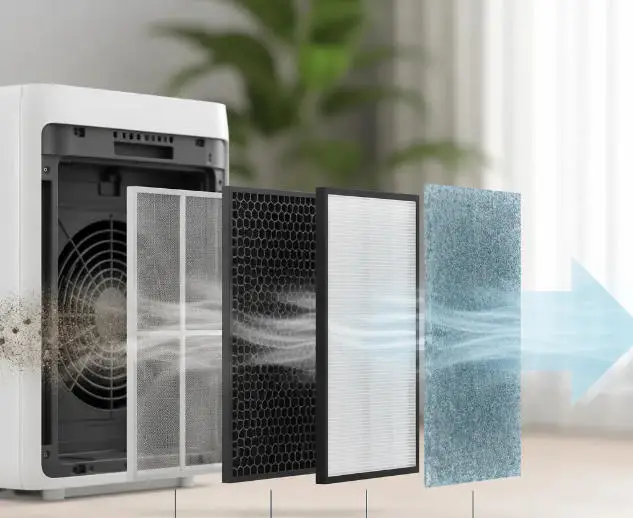
As an HVAC filter manufacturer, we engineer filter media to capture airborne particles without restricting airflow. Air filters do far more than act as simple strainers. They rely on specific mechanical and physical processes to trap particles of varying sizes.
Inertial Impaction
Inertial impaction targets larger air contaminants, such as heavy dust, pollen, and carpet fibers.
- How it works: As air flows through your HVAC system, heavy particles carry momentum. When the air stream curves around a filter fiber, these heavier particles cannot change direction fast enough.
- The result: They slam directly into the fiber and get trapped on impact.
Interception and Diffusion
Smaller contaminants require different capture methods as they pass through the filter media.
- Interception: Mid-sized particles follow the air stream around fibers, but if they pass close enough—within one particle radius—they touch the fiber edge and stick.
- Diffusion: Ultra-fine sub-micron particles (like smoke or microscopic bacteria) move erratically in a zigzag pattern known as Brownian motion. This random motion causes them to collide with filter fibers even when moving at low speeds.
Engineered filter media balances these forces to maintain low air resistance while trapping tiny particles. You can learn more about how different media types perform in our guide to types of air filters explained.
Electrostatic Attraction
Electrostatic attraction acts as a magnet for fine airborne dust, spores, and allergens.
By charging synthetic fibers during manufacturing, our air cleaning technology attracts oppositely charged particles out of the air stream. This allows the filter to trap high volumes of fine debris without needing overly dense fibers, maintaining high airflow while boosting indoor air quality. If you want high efficiency without choking your blower motor, explore our recommendations for the best furnace filters for airflow and indoor air quality.
Types of Air Filters and Their Airflow Characteristics
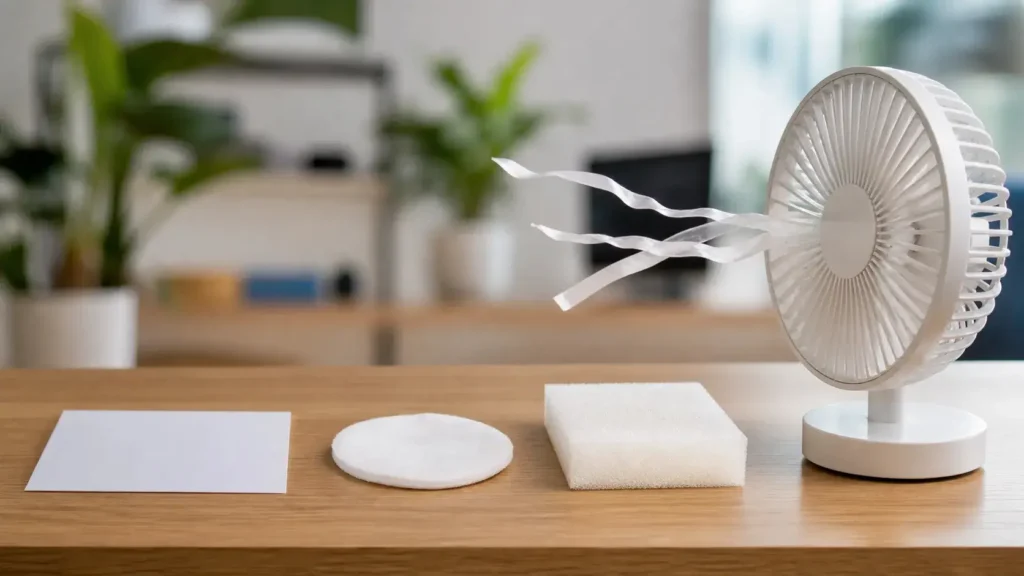
Different materials handle air movement in unique ways. As an HVAC filter manufacturer, we design filter media to strike the ideal balance between air resistance and filtration performance. Selecting the right material ensures your HVAC system maintains proper air velocity without overloading the blower motor.
| Filter Type | Airflow Resistance | Filtration Efficiency | Reusability |
|---|---|---|---|
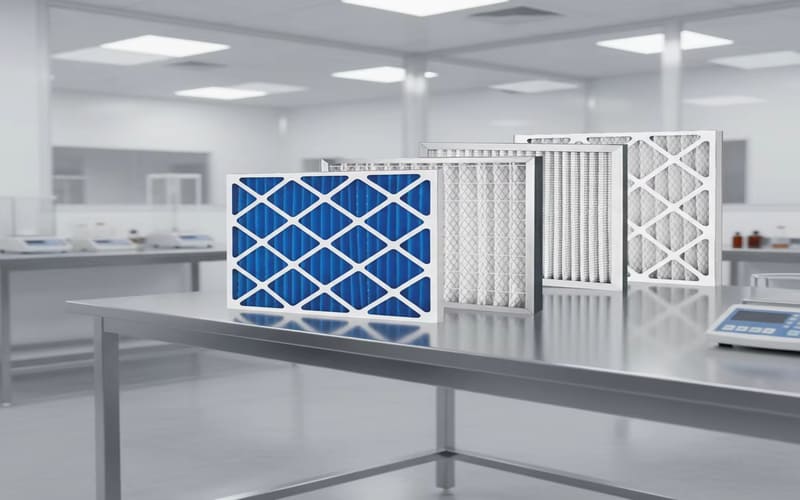
| Paper / Pleated | Moderate to High | High (Traps fine particles) | Disposable |
| Cotton Gauze | Low | Moderate (High airflow capacity) | Washable & Reusable |
| Foam | Low to Moderate | Moderate (Depth filtration) | Washable & Reusable |
Paper Air Filters
Paper and synthetic pleated media are the industry standard for daily residential and commercial protection. They use a tightly woven weave designed to catch fine air contaminants before they enter your ductwork.
- Airflow Characteristics: Provides solid particle retention, but air resistance rises quickly as dust accumulates on the surface.
- Best Usage: Ideal for standard return air intake setups prioritizing high MERV ratings and indoor air quality.
- Pro Tip: Comparing carbon vs standard air filters helps determine whether you need standard dust capture or advanced odor mitigation for your space.
Cotton Gauze Filters
Cotton gauze filters rely on multiple layers of oiled cotton fabric held between metal mesh screens.
- Airflow Characteristics: Offers minimal air resistance, allowing a massive volume of air to pass freely through the system.
- Best Usage: High-velocity applications where maintaining uninterrupted airflow is critical.
- Key Advantage: Sticky oil treatment traps particles through impaction while preserving maximum air delivery.
Foam Air Filters
Foam filters feature a porous, open-cell matrix that captures debris throughout the entire depth of the pad rather than just on the surface.
- Airflow Characteristics: Maintains stable air resistance over time because dusty air flows around the open-cell structure instead of blocking it immediately.
- Best Usage: High-dust commercial spaces, equipment intakes, and custom filter frames.
- System Benefit: Utilizing high-flow HVAC air intake filters to save money and improve efficiency keeps equipment running smoothly without unnecessary pressure drop.
How to Determine Proper Air Filter Flow Direction
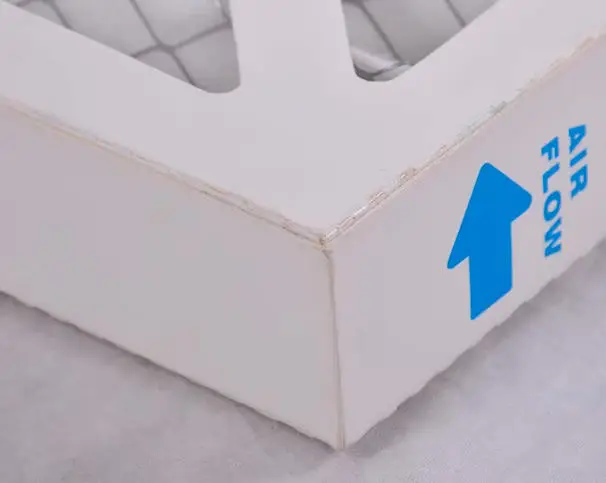
Getting your filter installation right is essential for maintaining smooth airflow and protecting your equipment. As an HVAC filter manufacturer, we design filter frames and media to withstand pressure from one specific direction. Finding the correct airflow direction takes only a few seconds once you know what structural cues to check.
Locate the Airflow Arrow Marker
The easiest guide on any standard filter is the printed directional arrow along the side frame.
- Arrow Direction: Points directly in the direction air moves—away from the return air intake and toward the furnace or AC blower motor.
- Proper Alignment: Position the filter so this directional arrow points toward the main HVAC unit before securing the filter slot.
Inspect the Filter Frame Construction
If the arrow is faded or missing, you can easily determine the correct orientation by inspecting the physical build of the filter media:
- Wire Mesh Backing: The reinforced metal grid or cardboard netting is always located on the downstream side (facing the blower fan) to keep the media from bowing or collapsing into the cabinet under suction.
- Filter Media Layers: The looser, fluffier side of the media faces incoming air to catch larger debris, while the denser backing captures fine air contaminants before clean air exits.
Check the Orientation of the Existing Filter
Before sliding out an old unit, take note of how it sits in the slot. However, don’t rely entirely on the previous setup, as it might have been installed backward. Always trace the air path: air is drawn from your home’s living areas, through the return ducting, past the filter, and into the air handler. First-time homeowners can quickly confirm their duct layout by reviewing where the air filter is located within their specific furnace or return grill housing.
- What Happens If You Install an Air Filter Backwards?
As an HVAC filter manufacturer, we design every furnace filter to process air in one specific direction. Installing an air filter backwards disrupts the engineered airflow pattern, forcing your HVAC system to work against excessive air resistance and reducing overall performance.
- Restricted Airflow and Reduced Efficiency
Air filter media is constructed with a density gradient: looser fibers on the incoming side to catch large dust particles, and denser fibers on the outgoing side to capture fine particles. Reversing the filter installation flips this design.
- Immediate Clogging: Finer particles jam the tight weave on the wrong side first, causing the media to clog almost immediately.
- Severe Air Resistance: Airflow drops significantly, making your HVAC system struggle to pull or push air through the ductwork.
- Filter Bypass: High pressure forces dirty air to leak around the edges of the filter frame, letting unfiltered air contaminants circulate through your system.
- Increased Strain and Risk of System Damage
When a filter is backwards, the structural wire backing—designed to support the media against air pressure—is positioned on the wrong side. Without proper backing, strong suction can buckle or collapse the filter directly into the blower compartment.
The extra force required to pull air through a restricted filter places heavy strain on the blower motor. Over time, this leads to overheating, frozen evaporator coils, and premature system failure. Misaligning your filter starves your equipment of essential air—creating performance issues almost as severe as running an air conditioner without a filter.
- Higher Energy Bills and Lower Indoor Air Quality
A backwards filter directly impacts both your wallet and your health. Because air cannot circulate efficiently, your furnace or air conditioner must run longer cycles to reach your desired thermostat setting.
| Impact Area | Backwards Filter Effect | Consequence |
|---|---|---|
| Energy Consumption | Extended system run times | Noticeable spikes in monthly utility bills |
| Indoor Air Quality | Reduced filtration efficacy | Dust, pollen, and pet dander remain airborne |
| Equipment Lifespan | Continuous mechanical strain | Costly repair bills and early system replacement |
Following the directional arrow marked on the filter frame ensures optimal airflow, protects your HVAC investment, and keeps your indoor air clean.
Best Practices for Air Filter Maintenance and Upgrades
Keeping your HVAC system running smoothly isn’t complicated: it’s all about the air flow through the filter. As an HVAC filter manufacturer, we know that routine maintenance and timely upgrades protect your blower motor, reduce energy consumption, and maintain healthier indoor air quality.
How Often You Should Replace Your Air Filter
Filter lifespan depends on your household environment, filter thickness, and daily usage. Standard 1-inch furnace filter units need more frequent swaps, while high-capacity pleated options hold up longer under heavy load.
| Environment & Setup | Filter Media Type | Replacement Frequency |
|---|---|---|
| Single resident, no pets | Standard Pleated | Every 90 days |
| Average suburban home with 1 pet | Pleated / High MERV | Every 60 days |
| Homes with multiple pets or allergies | High-Efficiency Pleated | Every 30–45 days |
| Vacation homes or minimal usage | Standard Pleated | Every 6 to 12 months |
Signs Your Air Filter Is Clogged or Restricted
When dust and debris accumulate, air resistance spikes, forcing your equipment to work harder. Recognizing the signs your HVAC filter is clogged allows you to fix airflow bottlenecks before they turn into costly mechanical repairs.
Watch for these clear indicators: Weak Airflow: Noticeably reduced air pressure coming from supply registers. Higher Utility Bills: The HVAC system runs longer cycles to reach set temperatures, burning extra power. Dust Accumulation: A sudden buildup of dust around vents and return air intake grilles. Overheating System: AC filter replacement delay often triggers system overheating and short-cycling.
Key Benefits of Upgrading Your Air Filter
Upgrading from basic fiberglass panels to high-performance pleated media transforms your indoor climate control. Choosing a higher MERV rating designed for optimal permeability provides powerful benefits:
- Superior Contaminant Capture: Traps fine allergens, mold spores, and pet dander effectively.
- Lower Energy Costs: Maintains smooth airflow rates without suffocating the air handler motor.
- Extended Equipment Lifespan: Keeps cooling coils and heating elements free from restrictive dust layers.