Choosing the right furnace filter always feels like a frustrating tug-of-war.
On one hand, you want exceptional indoor air quality to trap stubborn pet dander, dust mites, and allergens. On the other hand, a filter that’s too restrictive suffocates your HVAC system, creating an intense pressure drop that spikes your energy bills and triggers expensive furnace maintenance issues.
So, how do you find that perfect sweet spot between maximum filtration efficiency and unrestricted airflow?
It all comes down to decoding the science of static pressure and picking the exact right rating—whether that’s MERV 8, MERV 11, or MERV 13—for your specific setup.
In this guide, we’ll cut through the marketing fluff to compare standard fiberglass air filters against advanced pleated filters. You’ll discover exactly how premium engineering from brands like Komtfil can protect your central air conditioning and heating components while delivering truly clean air.
The Best Furnace Filters for Airflow and Indoor Air Quality
Finding the perfect balance between clean air and a healthy HVAC system is a major challenge for many homeowners. On one hand, you want maximum particle filtration to trap dust, pollen, and allergens. On the other hand, you need unrestricted clean air flow so your heating and cooling system can breathe.
When you choose a filter that is too restrictive, you create a stressful tug-of-war inside your ductwork. High filtration efficiency requires a denser material, but that density naturally resists air movement. Understanding this balance is the first step to optimizing your home’s climate control.
Understanding Pressure Drop and Static Pressure
Every air filter introduces some level of resistance. This resistance is known as pressure drop. When you install a dense filter, the resistance increases, raising the static pressure within your HVAC system.
- The Blower Motor Strain: High static pressure forces the blower motor to work significantly harder to push air through the house.
- Energy Spikes: A struggling motor draws more electricity, leading to higher monthly utility bills.
- Premature Wear: Continuous operation under high stress shortens the lifespan of critical HVAC components.
The Cost of the Wrong Choice
Choosing a filter that suffocates your system does more than just raise your electric bill—it can cause catastrophic equipment failure during peak seasons.
| System Mode | Impact of Restricted Airflow | Major Financial Consequence |
|---|---|---|
| Central Air Conditioning | Low airflow causes temperatures to plummet in the cooling coils, leading to frozen evaporator coils. | Compressors can fail, resulting in expensive replacement costs. |
| Heating Cycles | Heat cannot escape the system quickly enough, causing the furnace to overheat. | Overheated/cracked heat exchangers allow dangerous gases to leak, requiring a total system replacement. |
As manufacturers, we engineer our pleated filters to deliver the ideal sweet spot: high-tier pollutant capture without sacrificing the vital airflow your system needs to survive.
Deep Dive Into Filter Types: Fiberglass vs. Pleated Filters
When choosing the best furnace filters for airflow and indoor air quality, the design of the filter media changes everything. The market is dominated by two primary options, but they serve completely different purposes for your HVAC system.
Fiberglass Air Filters (The Minimum Protection)
Fiberglass air filters are the spun-glass, see-through filters that many homeowners buy out of habit. While they offer low upfront cost and virtually unrestricted airflow, their filtration efficiency for airborne health hazards is near zero.
- Primary Role: They are designed strictly to capture large lint and debris to protect the internal mechanical parts of your furnace.
- The IAQ Reality: They do not clean your breathing air. Microscopic pollutants like pollen, mold, and pet dander pass right through the loose fibers.
Pleated Filters (The Modern Residential Standard)
Pleated filters have become the modern standard for residential homes. By folding the filter material into an accordion shape, the surface area is drastically increased. This engineering choice maximizes both dust-holding capacity and air throughput simultaneously.
At Komtfil, we have engineered advanced structural pleats that hold their shape under high pressure. This design maintains dedicated clean air channels, delivering superior particle filtration without escalating the pressure drop that strains blower motors. To find the right balance of airflow and filtration for your specific setup, you can learn more about which MERV rating filter should you use for home air quality to optimize your home comfort.
| Filter Type | Airflow Capacity | Particle Filtration | Average Lifespan | Primary Function |
|---|---|---|---|---|
| Fiberglass | Extremely High | Very Low | 30 Days | Equipment Protection |
| komtfil Pleated | Balanced / High | High to Excellent | 90+ Days | Equipment & Health Protection |
Decoding the MERV Scale: Finding Your System’s Sweet Spot
Choosing the right MERV rating requires balancing filtration efficiency with the airflow needs of your HVAC system.
MERV 8: The Balanced Baseline
- What it captures: Large dust particles, lint, dust mites, and mold spores.
- System Impact: Delivers excellent airflow with minimal resistance. This is the safest default choice for older residential homes with standard blower motors.
- Best For: Budgets looking for dependable, basic protection without risking system strain. If you are comparing lower-tier options, check out our breakdown on MERV 8 vs. MERV 10 air filters to see how baseline filtration stacks up.
MERV 11: The Allergy Alleviator
- What it captures: Everything a MERV 8 stops, plus pet dander, pollen, and automobile emissions.
- System Impact: Introduces moderate airflow resistance.
- Best For: High-traffic homes, pet owners, and individuals dealing with mild seasonal allergies who need enhanced particle filtration without severe pressure drop.
MERV 13: The High-Efficiency Hero
- What it captures: Fine smoke particles, airborne bacteria, sneeze droplets, and microscopic allergens.
- System Impact: The tighter weave creates higher static pressure, requiring a modern, well-sized HVAC system to maintain proper air turnover.
- Best For: Superior indoor air quality, smoke-prone zones, and households with severe respiratory needs.
Thickness Matters: Why 4-Inch Media Filters Outperform 1-Inch Filters
When choosing the best furnace filters for airflow and indoor air quality, thickness is a total game-changer. Most homeowners default to standard 1-inch pleated filters because they fit the narrow slots found in standard HVAC setups. However, upgrading to a deeper 4-inch or 5-inch media filter provides a massive advantage for both your equipment and your breathing air.
The Surface Area Equation
It seems counterintuitive that a thicker filter allows better airflow, but it all comes down to physics and surface area.
- More Material, Less Resistance: A 4-inch media filter uses deep, accordion-style folds. When unfolded, it contains significantly more surface area than a flat 1-inch filter.
- Lower Initial Pressure Drop: Because the air has a much larger surface area to pass through, a 4-inch filter offers much lower initial resistance (static pressure) than a 1-inch filter at the exact same MERV rating.
- Better Filtration Efficiency: You get maximum particle filtration without suffocating your blower motor.
Lifespan and Longevity
Switching to a thicker media filter drastically cuts down on your routine furnace maintenance.
| Filter Thickness | Average Lifespan | Main Benefit |
|---|---|---|
| Standard 1-Inch Filter | 90 Days (or less) | Cheap upfront, but clogs quickly and restricts airflow. |
| Deep 4-Inch Media Filter | 6 to 12 Months | Holds massive amounts of dust before causing a pressure drop. |
Because these deep media filters trap high volumes of dust mites, pet dander, and debris without choking your HVAC system, you only need to replace them once or twice a year. This long-term reliability protects your central air conditioning and heating components from premature wear, ensuring consistent clean air throughout your home with far less hassle.
How to Choose the Best Furnace Filters for Airflow and Indoor Air Quality
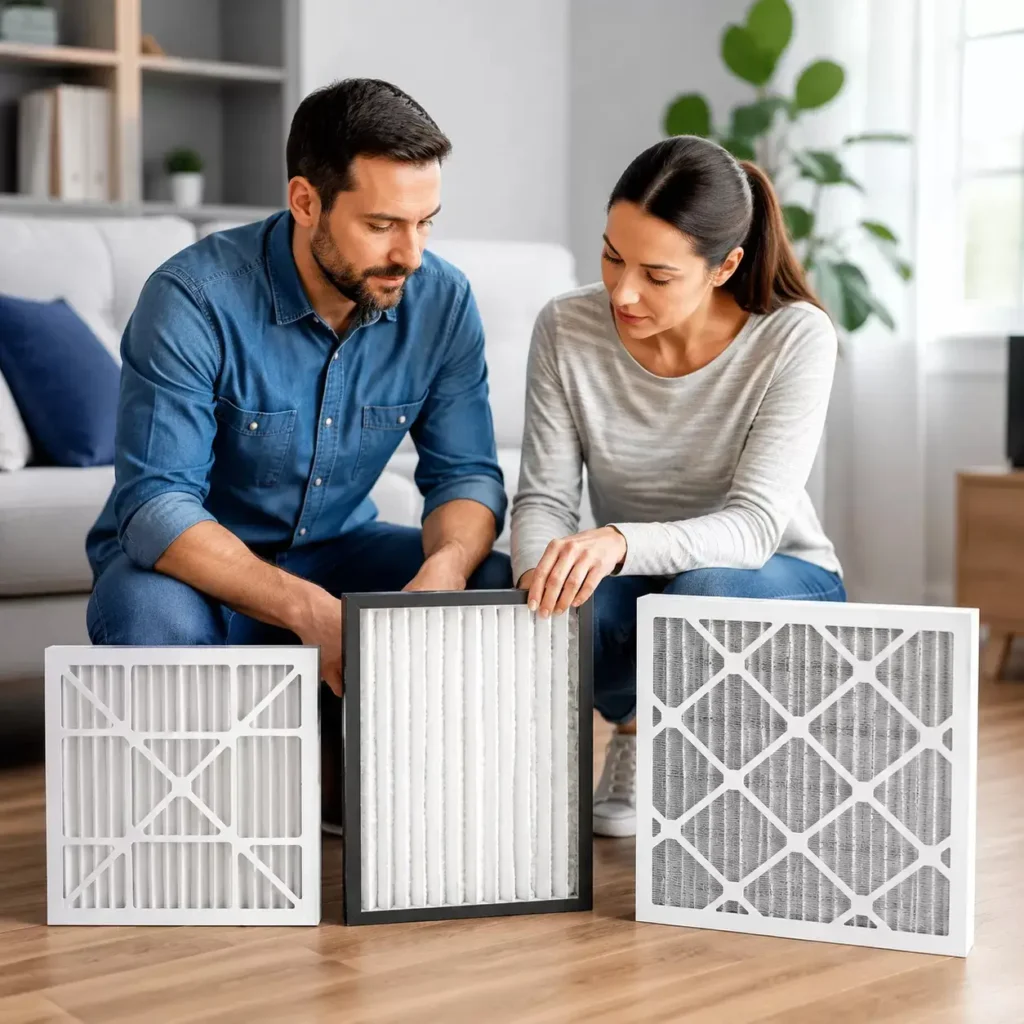
Finding the right balance between clean air and a healthy HVAC system comes down to a few deliberate steps. You cannot just pick the highest rating on the shelf and hope for the best; your system has to be able to handle it.
Step 1: Check Your HVAC Manufacturer Specifications
Before upgrading your filtration efficiency, you need to know what your system can actually handle. Every HVAC system is rated for a maximum static pressure tolerance—essentially, how hard the blower motor can push against resistance. You can usually find this information in your system manual or on the data plate inside the furnace cabinet. Exceeding this limit restricts particle filtration and strains your equipment.
Step 2: Evaluate Household Health & Environmental Needs
Your home’s environment dictates how much filtration you really need. Standard homes without pets or severe allergies can rely on baseline particle removal. However, if you are battling asthma, seasonal allergies, or live in a wildfire smoke zone, upgrading to a higher efficiency tier is essential for maintaining clean air.
Step 3: Match the MERV Rating to Blower Motor Capabilities
Once you know your system’s limits and your family’s needs, you can select the ideal Komtfil pleated filters. Matching the right MERV rating ensures you get optimal indoor air quality without killing your airflow.
| Household Type | Health Profile | Recommended Komtfil Filter |
|---|---|---|
| Standard Home (No pets, normal traffic) | Baseline dust and lint control | komtfil MERV 8 |
| High-Traffic Home (Pets, minor allergies) | Controls pet dander, pollen, and dust mites | komtfil MERV 11 |
| Hypersensitive Home (Asthma, smoke zones) | Captures bacteria, smoke, and fine allergens | komtfil MERV 13 |
If you are unsure whether your current setup is delivering the right balance of clean air, it is a good idea to how to test your indoor air quality to establish a reliable baseline before switching filters. Older residential homes with aging blower motors generally run best with a MERV 8 or 11, while modern, well-sized HVAC systems can easily handle the tighter weave of a MERV 13 hero.
Proactive Furnace Maintenance for Optimal Airflow and IAQ
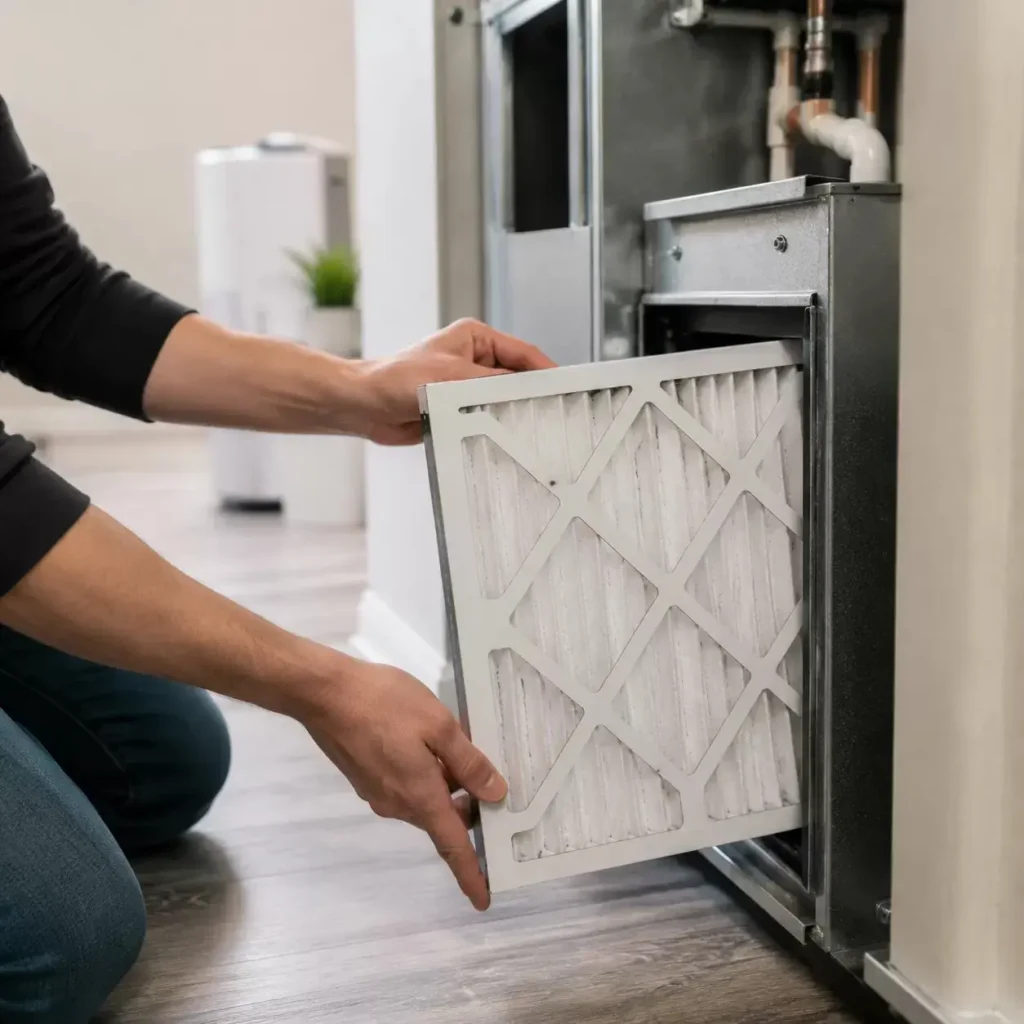
Keeping your HVAC system running smoothly requires a balance between clean air and steady airflow. Regular furnace maintenance prevents your system from working against itself.
The “Dirty Filter” Multiplier
Many homeowners worry that upgrading to a high-efficiency filter will choke their system. However, a neglected, clogged MERV 8 filter restricts significantly more air than a fresh, clean MERV 13 filter. As dust and pet dander accumulate, they create an impenetrable wall. This drastically increases static pressure and forces your blower motor to work twice as hard to move air through the home.
The Replacement Timetable
Filter lifespans depend heavily on thickness and seasonal usage. Standard 1-inch pleated filters need frequent attention, while thicker media filters can last through multiple seasons.
| Filter Thickness | Peak Season (Winter/Summer) | Off-Peak Season (Spring/Autumn) |
|---|---|---|
| 1-Inch Pleated Filters | Every 30 to 60 days | Every 90 days |
| 4-Inch Deep Media Filters | Every 3 to 6 months | Every 9 to 12 months |
Signs Your Blower Motor is Struggling
When airflow drops, and the pressure drop rises, your HVAC system will drop hints before a total breakdown occurs. Watch out for these critical warning signs:
- Weak Airflow: Scant or lukewarm air trickling out of your supply registers.
- Short-Cycling: The furnace turns on and off rapidly because the heat exchangers are overheating.
- Spiking Energy Bills: The blower motor draws excessive electricity, trying to pull air through a restricted channel.
Neglecting these signs leads to premature equipment failure and poor indoor air quality. Routine replacement keeps your filtration efficiency high and your central air conditioning running exactly as engineered.
Frequently Asked Questions (FAQs)
Will a MERV 13 filter damage my standard residential furnace?
Not necessarily, but it requires caution. A MERV 13 filter has a tighter weave that can increase static pressure and restrict airflow in older HVAC systems. If your system has a weak blower motor, this restriction can cause the system to overheat or short-cycle. For peace of mind, check our guide on MERV 11 vs MERV 13 air filters to see which efficiency level fits your equipment.
Can I clean and reuse a pleated furnace filter?
No. Standard pleated filters are strictly disposable. Attempting to wash or vacuum them destroys the structural integrity of the media and ruins their particle filtration efficiency. Always replace them with a fresh filter to maintain clean air.
How do MPR or FPR ratings compare to the industry-standard MERV rating?
MERV is the universal industry standard developed by ASHRAE. MPR (used by 3M) and FPR (used by Home Depot) are proprietary brand scales.
| MERV Rating | MPR Equivalent | FPR Equivalent | Best For |
|---|---|---|---|
| MERV 8 | 600 | 5 | Basic dust and lint |
| MERV 11 | 1000 – 1200 | 7 | Pet dander and allergies |
| MERV 13 | 1500 – 1900 | 10 | Bacteria and smoke particles |
What are the best indicators that my filter needs an immediate swap out?
Keep an eye out for these clear warning signs that your central air conditioning and heating system is struggling:
- Visual buildup: The pleated layers look grey, choked, or caked with dust.
- Weak airflow: Air blowing from your residential homes’ registers feels noticeably weaker.
- Spiking energy bills: The HVAC system runs longer to hit the thermostat target.
To avoid hidden damage to your system, learn how to tell if your furnace filter needs changing before performance drops off.