If you’re asking yourself what cabin air filter do I need, you’re in the right place. Choosing the right filter is the difference between breathing clean, fresh air and dealing with musty odors, weak A/C airflow, and annoying allergy symptoms inside your car.
In this guide, you’ll learn the exact differences between standard particulate, activated carbon, and HEPA filters, plus how to quickly find the exact match for your vehicle year, make, and model.
What Is a Cabin Air Filter and How Does It Work?
A cabin air filter is an essential automotive component designed to clean the outside air entering your vehicle’s passenger compartment. Operating directly within the vehicle’s HVAC system, it traps airborne contaminants before air flows through your dashboard vents.
The Purpose of a Cabin Air Filter
The primary job of a cabin air filter is to maintain air quality inside your car while protecting critical climate control components.
- Passenger Protection: Traps dust, pollen, mold spores, smog, and airborne particles.
- HVAC Performance: Prevents debris from clogging the A/C evaporator and heater core.
- Defroster Efficiency: Ensures maximum airflow to prevent window fogging and condensation buildup.
Difference Between Cabin Air Filters and Engine Air Filters
While both components clean incoming air, they serve entirely different systems in your vehicle.
| Feature | Cabin Air Filter | Engine Air Filter |
|---|---|---|
| Primary Target | Passenger cabin air | Engine combustion chamber |
| Main Location | Behind the glove box or dashboard | Under the hood inside the engine bay |
| Protects | Driver & passenger respiratory health | Engine performance & fuel efficiency |
| Traps | Pollen, dust, allergens, mold | Dirt, debris, sand, leaves |
Is a Cabin Air Filter the Same as an A/C Filter?
Yes, a cabin air filter is the same thing as a car A/C filter. Drivers and technicians often use terms like pollen filter, HVAC filter, or car AC filter interchangeably. No matter which name is used, it refers to the single filtration unit responsible for cleaning both heated and cooled air flowing through your vehicle’s air vents.
Types of Cabin Air Filters: Which One Do You Need?
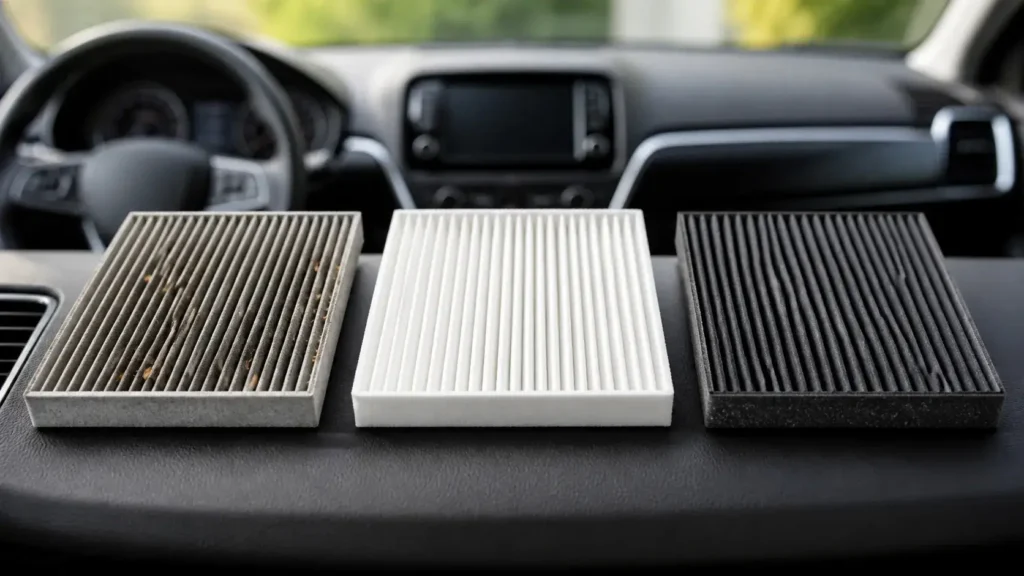
Choosing the right filter depends on your local driving conditions, health priorities, and budget. As a dedicated cabin air filter manufacturer, we engineer three primary filter types to keep your interior air clean and your HVAC system running efficiently.
Standard Particulate Cabin Filters
Standard particulate filters serve as baseline protection for your vehicle. Constructed from synthetic non-woven fiber, this basic pollen filter captures solid contaminants before they enter your air vents.
- Primary Function: Traps pollen, road dust, debris, and soot.
- Best For: Drivers operating in low-pollution environments with minimal traffic.
- Key Advantage: Budget-friendly OEM replacement that maintains optimal airflow.
When determining what cabin air filter do i need for daily driving, comparing carbon vs standard air filters helps clarify which media type suits your routine.
Activated Carbon Cabin Filters
An activated carbon filter enhances basic particulate protection by incorporating an activated charcoal layer. This combination filter adsorbs harmful gases, chemical fumes, and unpleasant smells that pass right through standard filters.
- Primary Function: Neutralizes exhaust fumes, smog, ozone, and bad odors.
- Best For: Urban commuters, city driving, and heavy traffic conditions.
- Key Advantage: Prevents outside pollutants from creating a persistent musty odor inside the vehicle.
HEPA and Biofunctional Cabin Filters
HEPA and biofunctional filters provide the highest level of cabin air purification. Designed with specialized multi-layer media and anti-microbial treatments, these filters capture microscopic allergens and stop mold growth.
- Primary Function: Filters up to 99.97% of airborne particles down to 0.3 microns, including fine dust, bacteria, and spores.
- Best For: Allergy sufferers, families with young children, and areas affected by wildfire smoke or high pollen.
- Key Advantage: Delivers maximum filtration efficiency without causing excessive air resistance.
Explore our complete selection of premium cabin air filters to find the exact fit for your vehicle’s specifications.
How to Find the Right Cabin Air Filter for Your Vehicle

Figuring out what cabin air filter do I need comes down to matching your exact vehicle specs. Getting a proper fit ensures dirty outdoor air does not bypass the filter media, keeping your cabin clean and your HVAC system running efficiently.
Search by Vehicle Year, Make, and Model
The fastest way to select the right fit is through a quick vehicle lookup.
- Consult Your Owner’s Manual: Your manual provides original part specifications and general service details.
- Select Your Specific Vehicle: Always match your exact year, make, and model, including the engine size or trim level if prompted.
As a dedicated cabin air filter manufacturer, we build direct-fit replacements to ensure a tight seal without any custom trimming required.
Locate Your Filter Part Number
If you want to double-check before ordering, pull the existing filter to find its unique identifier.
- Access the filter housing, typically located right behind the glove box.
- Remove the current unit and check the outer frame for a stamped part number.
- Use that number to cross-reference and order your new unit.
Once you have the part in hand, knowing how to change your car’s air filter makes the replacement process quick and easy.
Choosing OEM vs. Aftermarket Brands
When shopping for a replacement, you will choose between factory original parts and aftermarket options:
| Filter Choice | Key Features | Best Used For |
|---|---|---|
| OEM Replacement | Standard factory specs, direct fit | Simple replacement at dealer pricing |
| Premium Aftermarket | Upgraded media (like activated carbon), budget-friendly | Better filtration against odors at a lower cost |
A high-performance aftermarket filter delivers equal or superior filtration performance while saving you money on routine maintenance.
Signs Your Cabin Air Filter Needs Replacement
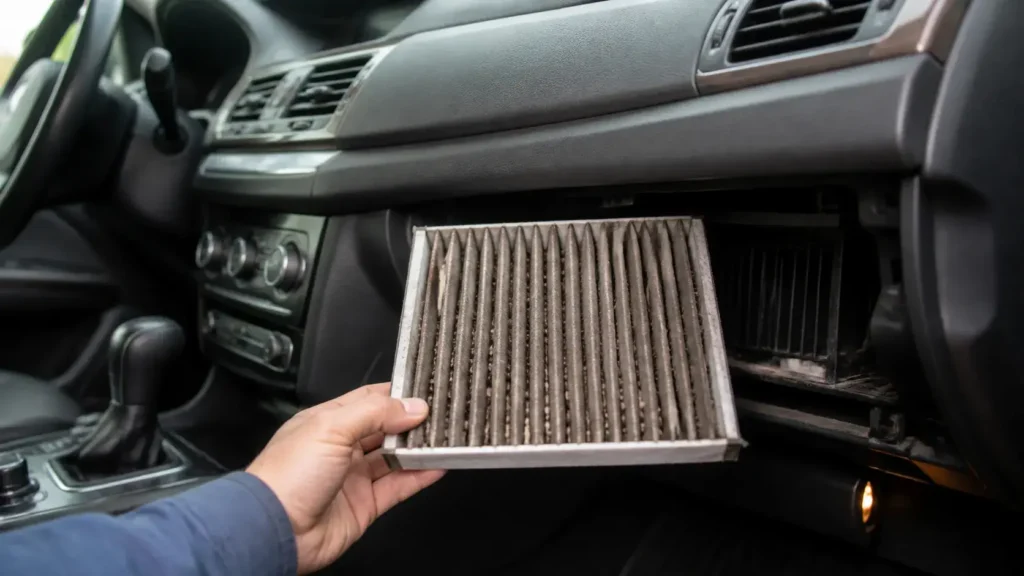
Knowing when to replace your car’s AC filter protects your respiratory health and keeps your vehicle’s blower motor running efficiently. If you are asking yourself what cabin air filter do I need and whether your current one is spent, your vehicle will display clear warning signs.
Weak Airflow from A/C and Heating Vents
When dust, leaves, and road debris block the filter media, your car HVAC system has to work significantly harder to push air into the cabin.
- Lower fan output: You will notice reduced airflow coming through your dashboard air vents, even on the maximum fan setting.
- Blower motor strain: The fan motor will sound noticeably louder or produce a higher pitch as it struggles to pull air.
Spotting these signs your filter is clogged early prevents long-term strain and costly repairs to your vehicle’s heating and cooling components.
Musty Odors and Bad Smells Inside the Vehicle
A saturated filter traps moisture along with trapped organic matter, creating the perfect environment for mold and bacteria growth.
- Moldy scent: A distinct musty odor hits you immediately after turning on the air conditioning or defroster.
- Persistent odors: Stale cabin air that retains outside exhaust fumes, smoke, or damp smells.
Increased Dust Accumulation and Allergy Symptoms
Once the filter fibers become overloaded, they can no longer trap fine airborne particles, allowing contaminants to flow straight into your passenger compartment.
- Dashboard dust build-up: A visible layer of dust settles on your dashboard and console shortly after cleaning.
- Driver discomfort: Unexplained sneezing, coughing, watery eyes, or sinus irritation while driving indicates that pollen and soot are bypassing your filter.
How Often Should You Change Your Cabin Air Filter?
Knowing what cabin air filter do i need is only half the battle; knowing when to replace it is just as critical. As a specialized cabin air filter manufacturer, we design replacement filters to capture dust, allergens, and noxious odors before they enter your vehicle’s HVAC system.
Recommended Mileage and Time Intervals
Under standard driving conditions, you should stick to a replacement interval of every 12,000 to 15,000 miles, or at least once every 12 months.
| Mileage Interval | Driving Environment | Recommended Action |
|---|---|---|
| 12,000 – 15,000 miles | Normal highway and suburban driving | Standard annual replacement |
| 6,000 – 10,000 miles | Dense city traffic or unpaved roads | Bi-annual inspection & early replacement |
| Every 6 months | Extreme pollen seasons or heavy smoke zones | Bi-annual replacement |
Understanding how often to change air filter elements keeps your interior air clean and prevents strain on your blow motor. When you notice reduced airflow, learning how to change cabin air filter units yourself takes just minutes and ensures peak airflow performance.
Driving Conditions That Shorten Filter Lifespan
Your filter’s true lifespan depends heavily on your daily environment. Severe conditions force media to trap debris faster:
- Heavy City Smog and Traffic: Daily urban driving exposes your system to soot and exhaust fumes, overloading activated carbon filter media quickly.
- Dusty and Gravel Roads: Unpaved roads force large volumes of dust into your intake, filling up a standard pollen filter ahead of schedule.
- High Allergen Environments: Living near dense forestry or agricultural zones causes rapid organic debris buildup that leads to reduced airflow.
- Wildfire Smoke and Air Pollution: Fine ash and particulate matter penetrate standard filters, requiring immediate replacement to maintain clean cabin air.
How to Replace Your Cabin Air Filter
Replacing your vehicle filter yourself is one of the easiest maintenance tasks you can perform. With standard hand tools or no tools at all, you can swap out an old, dirty filter in less than 15 minutes and avoid unnecessary dealer service fees.
Where Is the Cabin Air Filter Located?
Before installing your new part, knowing exact where the air filter is located in your specific setup saves significant time. Across most vehicles, you will find the access panel in one of three primary locations:
- Behind the Glove Compartment: The most common layout on the passenger side. Lowering the glove box door grants direct access to the housing tray.
- Under the Dashboard: Positioned lower in the passenger footwell, secured by a plastic hatch or simple clips.
- Under the Hood: Located near the base of the windshield (cowl area) on specific luxury or heavy-duty vehicle models.
Step-by-Step DIY Installation Guide
Installing your replacement unit requires just a few straightforward steps:
- Open the Filter Housing: Empty the glove box, unhook the side stop pins or dampener arm, and lower the compartment to expose the filter cover door.
- Remove the Used Filter: Unclip the housing door and slide out the old filter. Note the airflow direction arrow stamped on the side frame.
- Clean the Housing Slot: Vacuum or wipe away any trapped leaves, pine needles, or dirt lingering inside the tray cavity.
- Insert the New Unit: Align the replacement filter so its printed airflow arrows point in the exact same direction as the original, then slide it into place.
- Secure and Test: Snap the access door back into position, reattach the glove box clips, and run your HVAC system to confirm fresh, powerful airflow.