Do Bag Filters Eliminate the Need for a Dust Separator?
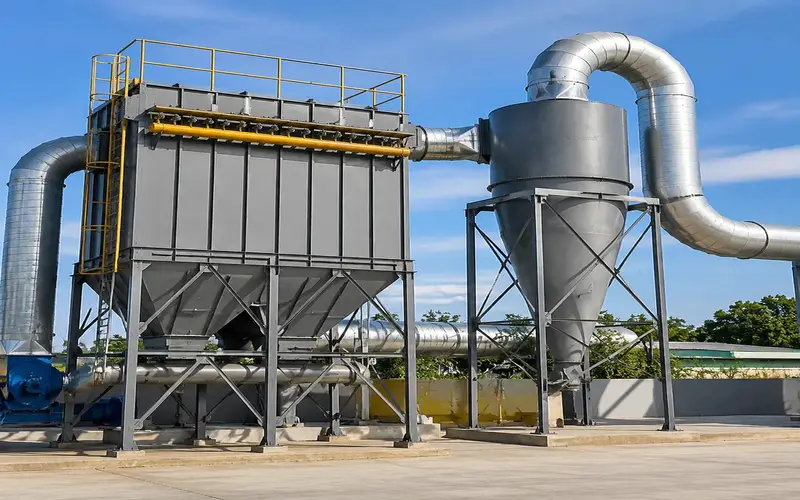
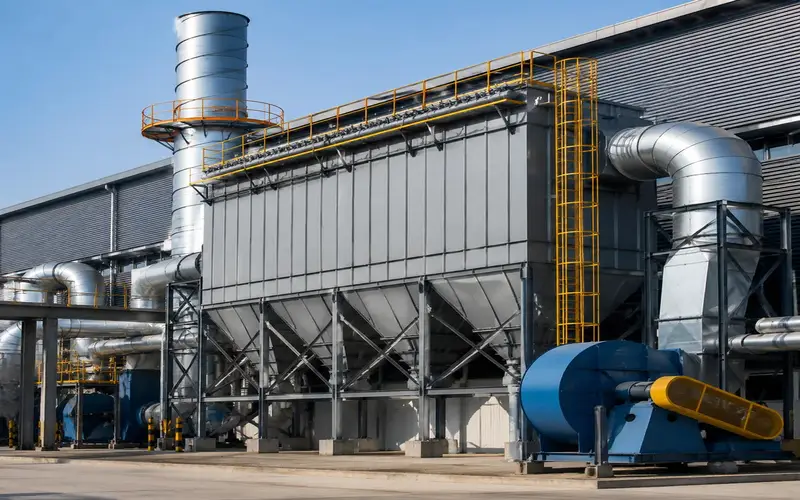
A bag filter can operate without a dust separator, but it does not eliminate the need for one across all industrial applications. While a standalone bag filter dust collector excels at final particulate capture, combining it with a pre-separator creates the most reliable, cost-effective dust collection system for heavy-duty operations.
The Short Answer: Primary Roles of Filters vs. Separators
Dust separators and bag filters perform distinct, complementary functions within an air filtration system:
- Cyclone Separator: Uses centrifugal force to knock out coarse debris and bulk material, handling heavy loads without physical filter media.
- Baghouse Dust Collector: Uses fabric or pleated bag filters to trap fine, submicron particulates, securing high filtration efficiency and clean air discharge.
| System Component | Primary Role | Particle Focus | Main Benefit |
|---|---|---|---|
| Cyclone Separator | Bulk pre-filtration | Large, abrasive debris | Shields downstream filters |
| Bag Filter | Fine dust capture | Fine & submicron dust | Achieves low outlet emissions |
When a Bag Filter Can Operate Independently
A bag filter system can run effectively as a single-stage collector under specific conditions:
- Fine Dust Operations: Processes generating micro-particulates without heavy chips or stringy waste (e.g., pharmaceutical powders, light chemical processing, fine sanding).
- Low-Volume Extraction: Workstations operating at lower CFM airflow where dust loading remains light and consistent.
- Footprint Limitations: Facilities with tight spatial constraints that cannot accommodate a multi-stage system.
Why Pre-Separation Is Still Preferred for Heavy Loads
Directing raw, high-volume dust straight into a baghouse creates operational bottlenecks. Adding a cyclone separator upstream yields key advantages:
- Extends Filter Life: Removing up to 90% of heavy particulates prior to filtration significantly reduces overall filter loading.
- Protects Filter Media: Prevents high-velocity, abrasive materials from tearing or degrading filter fabrics.
- Stabilizes Airflow: Lower dust accumulation prevents sharp increases in pressure drop, eliminating sudden suction loss.
- Lowers Operating Costs: Reduced replacement frequency directly cuts bag media expenditure and maintenance downtime.
Understanding Bag Filters and Dust Separators
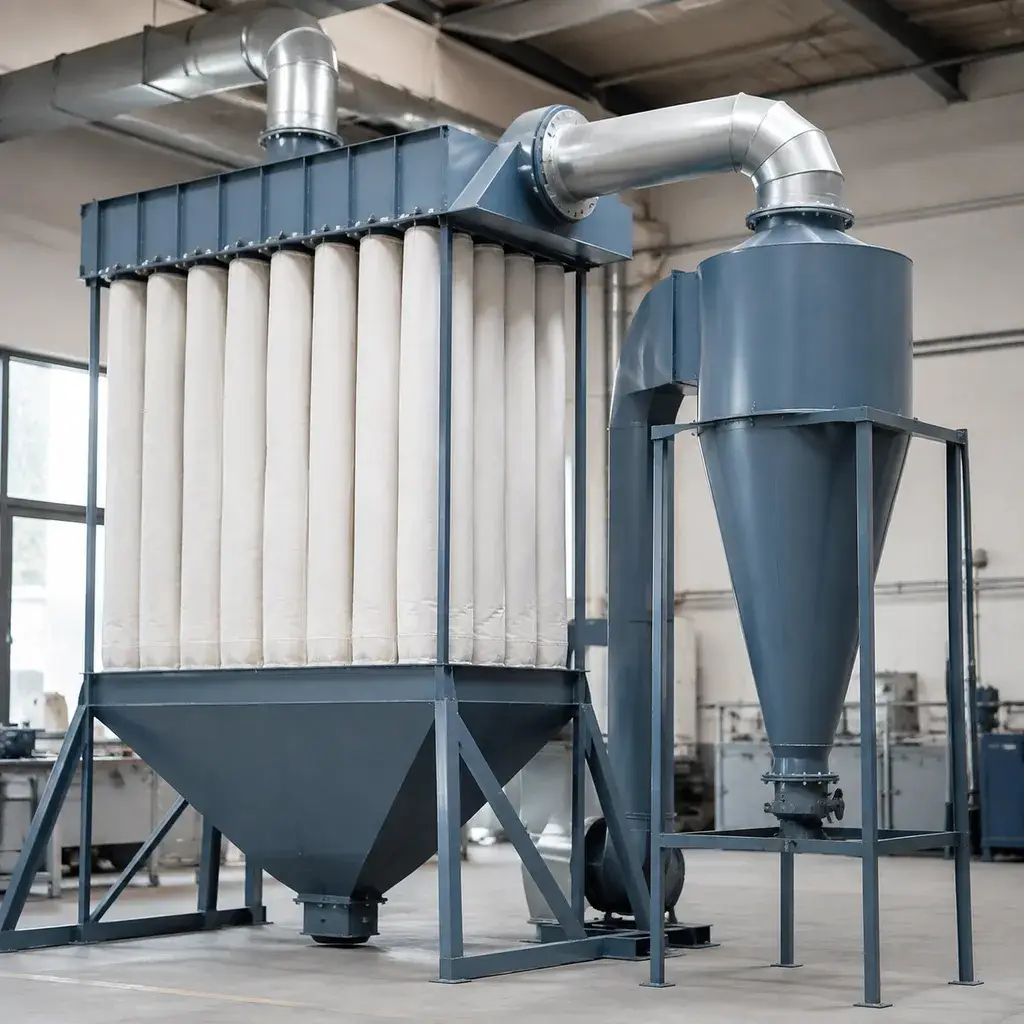
To build an efficient industrial air quality system, you need to know how each component handles airflow and particulate loads.
What Is a Bag Filter Dust Collector?
As a bag filter manufacturer, we build these units specifically for high-efficiency media filtration. A dust collector bag filter traps fine dust and submicron particulates by pulling dirty air through woven or non-woven fabric filter bags.
- Primary Role: High-efficiency fine dust capture.
- Key Benefit: Traps micron-sized particles that standard mechanical collectors miss.
- Industrial Application: To see how these systems perform in heavy manufacturing, explore what bag filters are used for across sectors like woodworking, chemical processing, and metal fabrication.
What Is a Cyclone Dust Separator?
A cyclone dust separator serves as a mechanical pre-separator. It uses centrifugal force to spin incoming airstreams, knocking heavy debris, wood chips, and coarse dust out of the air and dropping them directly into a collection bin.
- Primary Role: Bulk debris drop-out and coarse pre-filtration.
- Key Benefit: Runs without filter media, preventing immediate clogs or suction loss from large material.
- Mechanism: Gravity and rotational motion separate dense particles before the airstream moves downstream.
How Filters and Separators Work Together
Combining both units creates a heavy-duty, two-stage dust collector system optimized for demanding operational environments.
- Stage One (Cyclone Separator): Removes 80% to 90% of large, abrasive material before it can touch the fabric media.
- Stage Two (Bag Filter): Captures the remaining micro-particulates to meet strict environmental outlet emission standards.
This combined workflow prevents rapid filter loading, stabilizes overall CFM airflow, and lowers routine maintenance costs over the life of your equipment.
Key Differences Between Bag Filters and Cyclone Separators
While both components improve air quality, they tackle dust collection from entirely different angles. Here is how they stack up side by side:
| Feature | Bag Filter (Baghouse) | Cyclone Separator |
|---|---|---|
| Primary Target | Fine dust & submicron particulates | Large debris, chips, & heavy loads |
| Filtration Efficiency | Up to 99.9% fine particle capture | 70%–90% coarse particle capture |
| Airflow Resistance | Increases as filters load up | Low and constant static pressure |
| Maintenance Need | Periodic bag cleaning & replacement | Emptying dust bin (no media to replace) |
Filtration Efficiency and Dust Particle Size
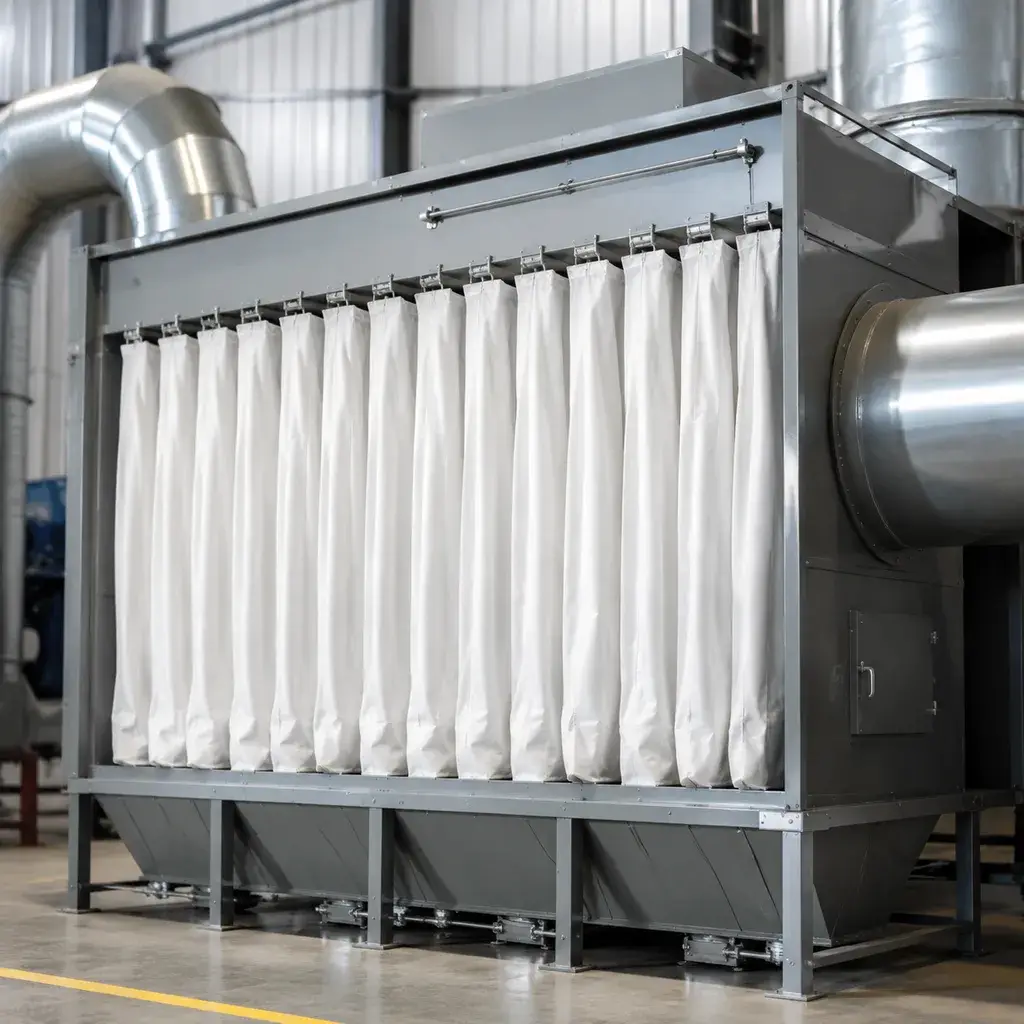
As a bag filter manufacturer, we design filter media to excel where mechanical separation falls short. A baghouse dust collector traps fine dust down to submicron particulates, delivering unmatched overall filtration efficiency and clean air outlet emissions.
In contrast, a cyclone separator relies on centrifugal force to knock heavy wood chips, metal shavings, and abrasive debris directly into a collection bin. However, it lacks the fine pore structure required to catch light, floating fine dust on its own.
Operating Costs and Maintenance Frequency
- Cyclone Separators: Zero filter media to swap out. They take the brunt of heavy debris, keeping operating and maintenance costs remarkably low.
- Bag Filter Systems: Require periodic bag cleaning and eventual media replacements.
Running high volumes of heavy dust straight into a baghouse leads to rapid filter loading. Pairing the system with a pre-separator keeps heavy waste out of the filter housing, dramatically extending overall filter life.
Airflow Performance and Pressure Drop
Airflow performance (measured in CFM airflow) determines your system’s raw suction power. As dust builds up on fabric media, bag filters experience an increase in pressure drop and airflow resistance, which gradually reduces suction if not pulse-cleaned regularly.
Cyclone separators operate with a stable, predictable pressure drop because there are no fabric pores to clog. Air moves freely through the cyclonic chamber, guaranteeing consistent suction power even during heavy, continuous operation.
Advantages of Using a Dust Separator Ahead of a Bag Filter
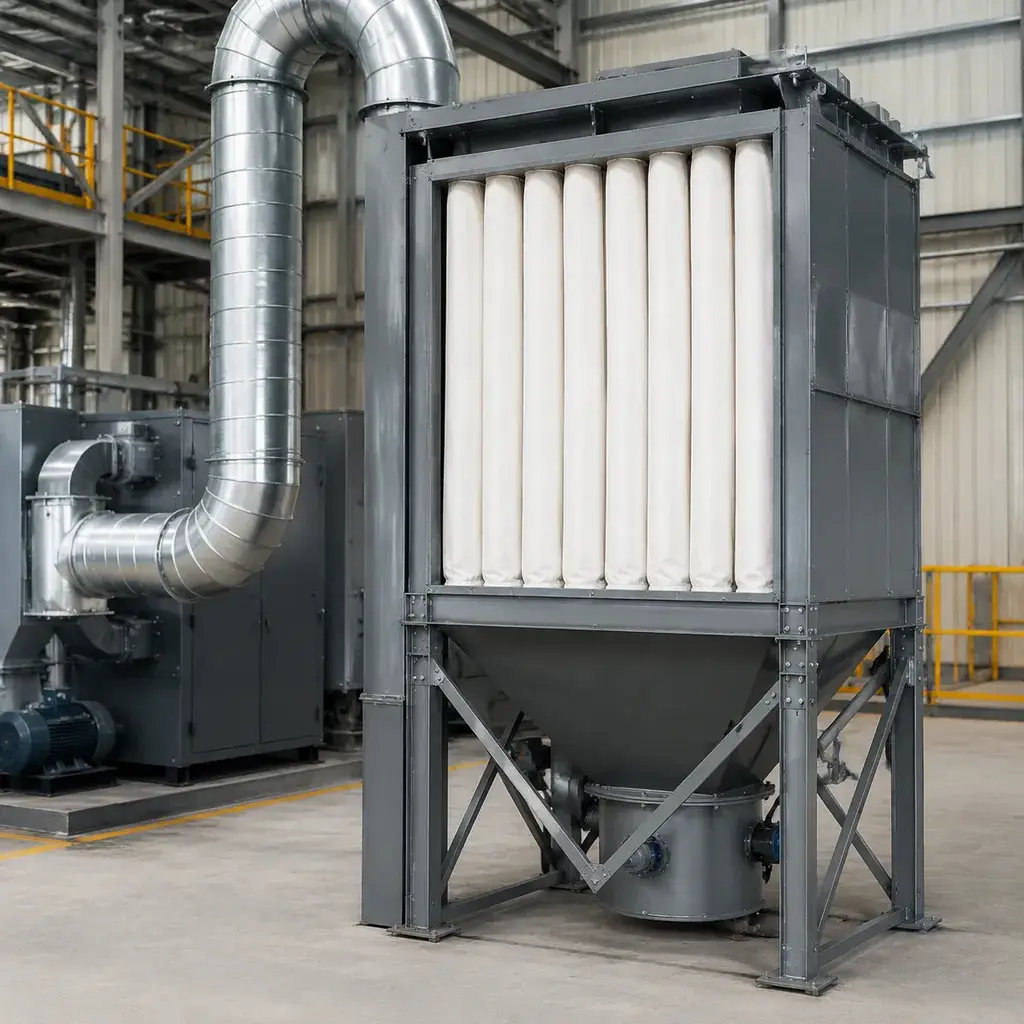
As a dedicated bag filter manufacturer, we look at system performance from a practical operational standpoint. While a quality baghouse dust collector captures submicron particulates exceptionally well, pairing it with a cyclone pre-separator creates a two-stage dust collector setup that delivers massive operational advantages over a standalone unit.
Protecting Bag Filters from High Abrasion and Wear
High-velocity dust streams loaded with metal shavings, wood chips, or gravel cause severe mechanical abrasion on fabric filter media.
- Impact Reduction: A cyclone separator uses centrifugal force to drop 80% to 95% of coarse debris straight into a collection bin before air reaches the filter housing.
- Media Protection: Heavy particles never hit the filter fabric, eliminating tears, punctures, and surface gouging.
- Reduced Blinding: Keeping dense, sticky, or wet debris out of the bag compartment prevents immediate filter clogging.
Extending Filter Lifespan and Lowering Replacement Costs
Routing raw, unseparated dust straight into a filter leads to rapid filter loading and aggressive pulse-cleaning cycles.
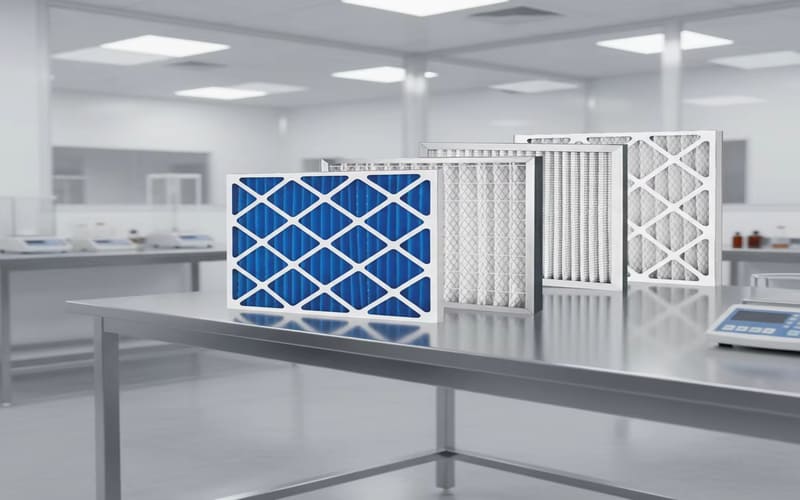
When a pre-separator handles the heavy material, your primary filter only captures fine airborne dust. Reviewing different types of air filters and their uses highlights how target particle sizes dictate filter wear; reducing the bulk load significantly increases filter life. Longer filter life reduces replacement frequency, slashes maintenance costs, and limits operational downtime.
Maintaining Consistent Airflow and Suction Power
Uncontrolled dust buildup on bags creates dynamic pressure drops that destroy system performance.
| Performance Metric | Standalone Bag Filter | Bag Filter with Pre-Separator |
|---|---|---|
| Filter Loading Rate | Rapid dust cake accumulation | Slow, even fine-dust cake |
| System Pressure Drop | High, frequent spikes | Low, stable differential pressure |
| CFM Airflow | Severe suction loss over time | Steady, continuous CFM airflow |
| Blower Energy Strain | High fan motor load | Lower energy consumption |
When Can You Rely Solely on a Bag Filter?
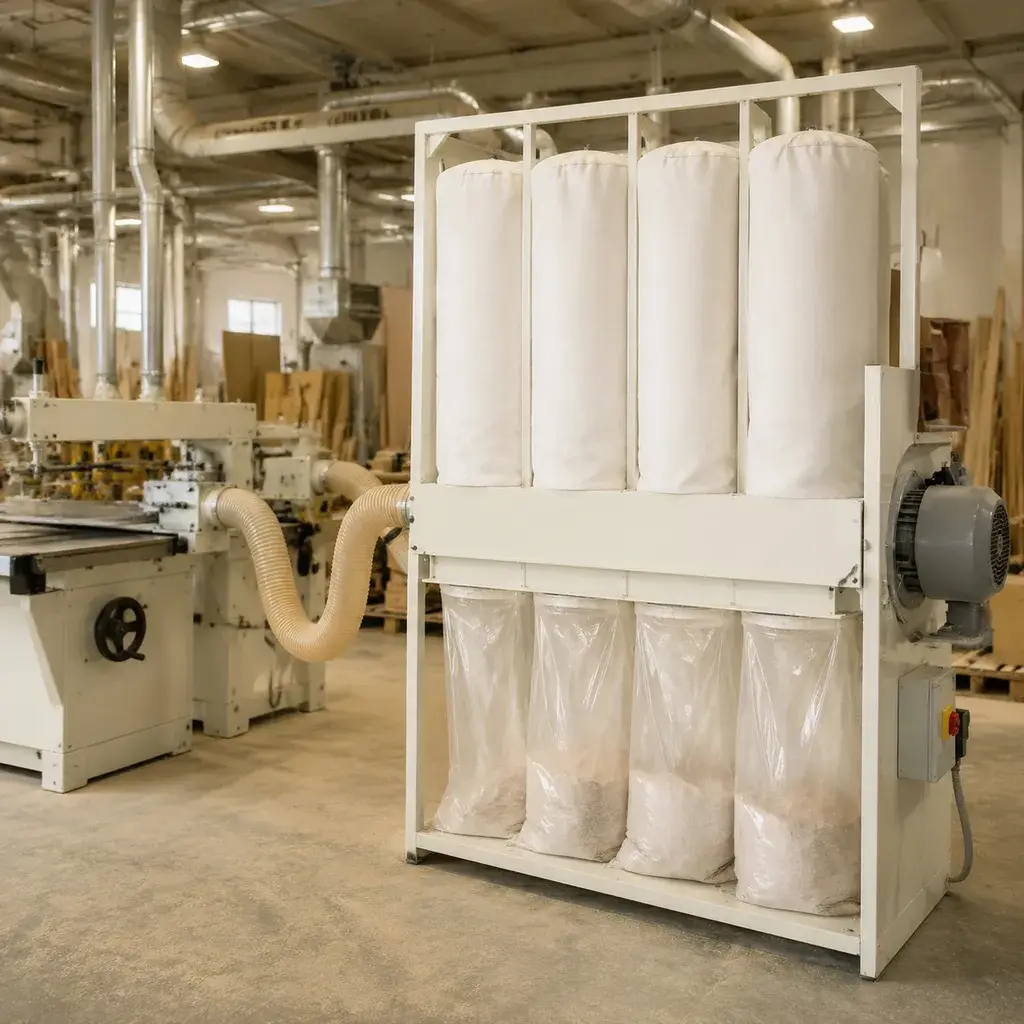
As a bag filter manufacturer, we know that bag filters eliminate the need for a dust separator under specific operating conditions. While heavy industrial processes benefit from two-stage separation, standalone bag filters effectively run single-stage dust collection when system parameters match their design strengths.
Handling Fine Dust without Large Debris
A single-stage bag filter performs exceptionally well when processing uniform, small particulates without large, sharp debris in the airstream.
- No Mechanical Impact Wear: Without heavy wood chunks or metal turnings hitting the filter media, fabric bags experience zero gouging or abrasive tears.
- Optimal Fine Dust Capture: Fine particles like flour, pharmaceutical powders, and chemical dust coat the filter surface evenly, forming a uniform dust cake that improves overall filtration efficiency.
- Direct Dust Drop: Pulsed dust falls cleanly straight into the bottom collection hopper without requiring a pre-separator drop-out box.
Low-Volume and Intermittent Dust Collection
For operations running low CFM airflow or non-continuous shifts, adding a cyclone separator creates unnecessary cost and system complexity.
- Reduced Filter Loading: Intermittent operation allows dust to build up slowly, preventing sudden spikes in pressure drop.
- Lower Operating Costs: Lower usage stress extends overall filter life, cutting down on replacement costs without sacrificing air quality. For smaller utility systems, understanding basic maintenance—such as whether you can wash and reuse a vacuum filter—helps keep operational expenses minimal.
- Simplified Setup: Eliminating pre-filtration hardware lowers initial capital investment while maintaining full suction power for light-duty runs.
Space-Constrained Facilities and Mobile Collectors
Adding a tall cyclone separator demands significant ceiling clearance and valuable floor real estate. Standalone baghouse dust collector units deliver a streamlined, space-saving alternative.
| Feature | Standalone Bag Filter | Two-Stage Bag + Cyclone |
|---|---|---|
| Footprint Required | Minimal (Single cabinet design) | High (Dual collection points + cyclone cone) |
| System Suction Loss | Low (Direct ducting path) | Moderate to High (Additional cyclone resistance) |
| Portability | High (Ideal for mobile shop units) | Low (Fixed installation preferred) |
- Direct Ducting: Air routes straight from your equipment dust port into the bag cabinet, avoiding extra elbow bends that reduce airflow performance.
- Flexible Placement: Single-stage units fit effortlessly into tight shop corners or on mobile cart frames for point-of-source extraction.
How to Choose the Right Dust Collection System
Assessing Dust Type, Volume, and Particle Distribution
Selecting the right setup starts with knowing your material. Large, abrasive debris rapidly wears out filter media, while submicron particulates blind media quickly if pre-separation is missing. Evaluating particle size distribution helps determine whether your process requires a dedicated cyclone pre-separator or if direct filtration works. Selecting the best air filters for dust control depends heavily on matching filter media efficiency directly to your daily dust volume and particle sizes.
Comparing Initial Setup Costs vs. Long-Term Efficiency
While skipping a pre-separator lowers your initial purchase price, heavy dust loads drastically increase replacement costs and suction loss over time.
| Feature | Single-Stage (Bag Filter Only) | Two-Stage (Cyclone + Baghouse Dust Collector) |
|---|---|---|
| Initial Investment | Lower upfront cost | Higher initial equipment cost |
| Filter Lifespan | Shorter (requires frequent cleaning) | Extended filter life |
| Maintenance Costs | High filter replacement expenses | Low ongoing maintenance |
| CFM Airflow Stability | Drops rapidly as dust builds up | Remains consistent over long runs |
| Primary Application | Low-volume, fine dust capture | High-volume, abrasive or mixed particle loads |
Selecting the Best System Configuration for Your Needs
As a bag filter manufacturer, we recommend matching your hardware setup to your specific operational workload:
- Standalone Baghouse Dust Collector: Ideal for low-volume operations, intermittent dust collection, space-constrained facilities, or environments handling exclusively fine dust without heavy chips or abrasive materials.
- Two-Stage Dust Collector (Cyclone Pre-Separator + Bag Filter): Essential for high-volume manufacturing, woodworking, or metal grinding where heavy particulate loads cause rapid filter loading, pressure drop, and severe abrasion. Evaluating which type of air filter will last the longest under heavy use ensures maximum uptime and lower long-term operating costs.