Deconstructing the Terminology: What is an Air Purifier?
When you are looking to clear the air in your home or office, the terms thrown around by manufacturers can get confusing fast. As a leading filtration technology manufacturer, we want to simplify things.
At its core, an air purifier is a broad, umbrella term for any standalone device designed to clean the air inside a specific indoor space.
Definition & Mechanism: How Room Air Purifiers Work
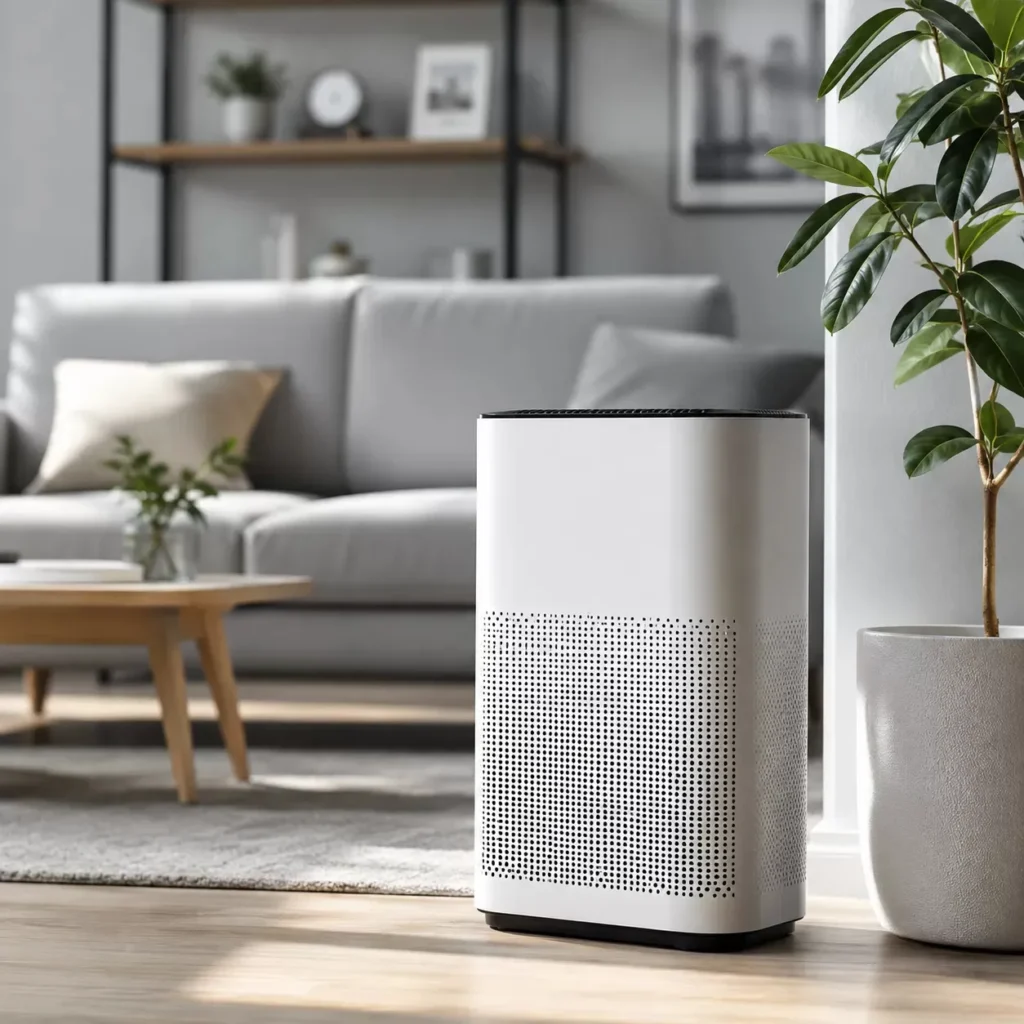
Portable room air purifiers operate on a simple continuous cycle. The unit utilizes an internal fan to pull ambient indoor air into the system. As the air passes through the device, it encounters one or more specialized air cleaners or filtration media designed to trap or neutralize airborne particles and pollutants. Once processed, the cleaned air is pushed back out into the room, improving overall indoor air quality (IAQ) and aiding in asthma relief.
The Broad Spectrum of Purifiers
Not all air purifiers are created equal. While many people automatically think of physical filters, the broader market includes various alternative technologies engineered to treat indoor air. Some systems rely on electrical charges to clump particles together, while others use light waves to neutralize organic material. Understanding these differences is crucial for selecting the right filtration technology for your global market needs.
Alternative Technologies: Pros & Cons
Aside from mechanical filters, three alternative technologies dominate the market. Here is how they stack up:
- Ionic Filters (Ionizers)
- Pros: Filterless design means no recurring filter replacement costs; completely silent operation.
- Cons: They do not actually remove particulate matter from the room; instead, they charge airborne particles so they cling to nearby walls and furniture. They can also produce trace amounts of ozone, a known lung irritant.
- Electrostatic Precipitators
- Pros: Highly effective at attracting small smoke particles and allergens onto washable internal collection plates; low maintenance overhead.
- Cons: Efficiency drops rapidly as the collection plates get dirty, requiring frequent washing. Like ionic filters, an electrostatic precipitator can generate ozone.
- UV Light Purifiers
- Pros: Excellent at destroying the DNA of biological contaminants like mold spores, bacteria, and viruses.
- Cons: Completely ineffective against physical debris like dust mites, pet dander, or volatile organic compounds (VOCs). They must be paired with a physical filter to provide true air purification.
What is a HEPA Air Purifier?
To understand the peak of indoor filtration, we have to look at the gold standard: the HEPA air purifier. HEPA stands for High-Efficiency Particulate Air. By strict regulatory standards, a filter can only wear this label if it removes at least 99.97% of airborne particles as small as 0.3 microns from the air passing through it.
The Significance of 0.3 Microns
Why is 0.3 microns the magic number? In filtration physics, particles of this exact size are the hardest to catch—they are too large for certain physical forces to trap easily, yet too small to be blocked by simple mesh screens. By hitting a 99.97% efficiency rate at this specific baseline, a True HEPA filter guarantees it can trap practically any microscopic threat in your home.
How True HEPA Filtration Works
As an air filter manufacturer, we engineer our media using a dense, randomly arranged mat of fiberglass/high-quality synthetic fibers. Unlike a basic screen that just sifts out large debris, a True HEPA filter relies on three distinct mechanical principles to lock down particulate matter:
- Impaction: Large airborne particles travel in a straight line, collide directly with the fibers, and get stuck.
- Interception: Mid-sized particles follow the airflow around the fibers but brush against them closely enough to be captured.
- Diffusion: The smallest, most erratic microscopic particles bounce around randomly (Brownian motion), causing them to delay and eventually smash into a fiber.
Common Pollutants Captured
This multi-layered defense mechanism allows a HEPA air purifier to clean your breathing zone with extreme precision. It easily traps the most troublesome indoor allergens and irritants, including:
- Dust mites and their waste
- Pet dander and shedding skin flakes
- Mold spores and fungal fragments
- Pollen from trees, weeds, and grasses
- Coarse smoke particles from cooking or fireplaces
Air Purifier vs. HEPA Air Purifier: Side-by-Side Comparison
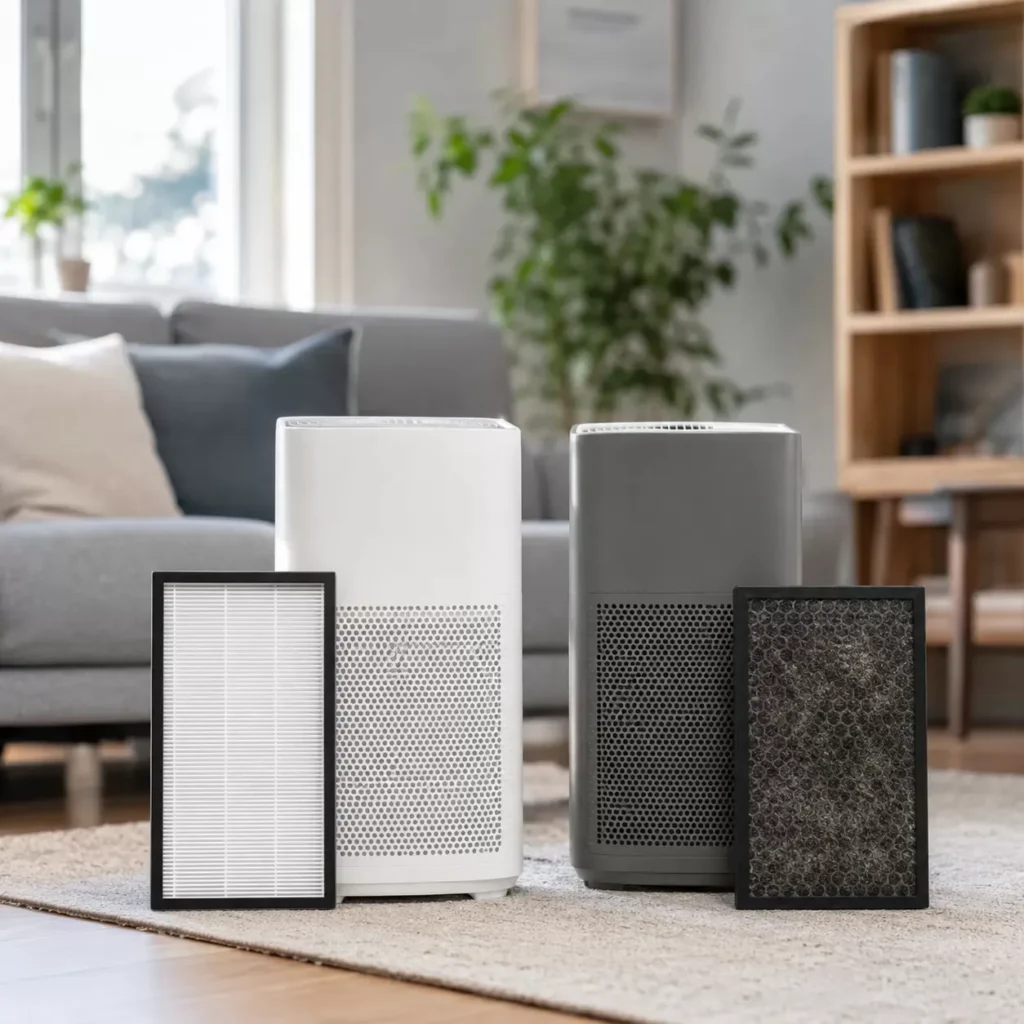
When evaluating a standard air purifier versus a true HEPA air purifier, the difference lies entirely in the filtration technology hidden inside the chassis. While generic air cleaners rely on ionization, static electricity, or basic mesh to catch visible dust, a dedicated HEPA system targets the invisible threats that compromise indoor air quality.
Comprehensive Comparison Table
The matrix below breaks down how basic purification methods stack up against medical-grade HEPA filtration across key performance metrics.
| Performance Metric | Standard Air Purifier (Ionic/Electrostatic/Basic Mesh) | HEPA Air Purifier (True HEPA Filter) |
|---|---|---|
| Particle Capture Efficiency | Variable (often 30% to 70% for small particles) | 99.97% efficient down to 0.3 microns |
| Target Pollutants | Large dust, pet hair, coarse carpet fibers | PM2.5, mold spores, pollen, pet dander, smoke |
| Filter Replacement Costs | Low to moderate (washable plates or cheap foam) | Moderate to high (precision synthetic mesh layers) |
| Odor & Gas Removal | Poor (unless equipped with a secondary active layer) | Poor on its own (requires an activated carbon companion) |
| Airflow Capacity | High (low resistance allows rapid, loose airflow) | Balanced (requires calibrated fans to pull air through dense media) |
The Core Distinction: The PM2.5 Shortfall
The primary reason a standard air purifier falls short is its inability to trap microscopic particulate matter (PM2.5). Fine particles smaller than 2.5 microns—such as combustion particles, organic compounds, and fine wild smoke—easily pass right through low-tier ionic or electrostatic precipitators. These inferior systems lack the dense, tightly woven synthetic mesh required to create physical barriers for microscopic threats.
Without a certified True HEPA barrier, an air cleaner simply recirculates these dangerous, respirable particles back into your breathing zone. For a deeper look at how different systems handle home filtration, read our analysis on the air filter vs air purifier differences, benefits, and which to choose to ensure you deploy the right technology for your space.
The Critical Add-On: Why HEPA Needs Activated Carbon
The Missing Link: True HEPA Limits
A True HEPA filter is an absolute powerhouse for trapping airborne particles like dust, pollen, and pet dander. However, it has one major blind spot: gases. Because HEPA media is made from dense fiberglass/synthetic mesh designed to catch solid particulate matter, gaseous pollutants slip right through. True HEPA cannot trap volatile organic compounds (VOCs), chemical fumes, wildfire smoke odor, or everyday household smells.
The Solution: The Ultimate Dual-Defense System
To achieve complete air purification, you must bridge this gap. This is where an activated carbon air filter becomes essential. By combining a True HEPA filter with a dedicated carbon layer, you create a dual-defense system that tackles both solid particles and gas-phase pollutants simultaneously.
- True HEPA Layer: Captures microscopic particulate matter (PM2.5) down to 0.3 microns.
- Activated Carbon Layer: Adsorbs hazardous chemical vapors, cooking odors, pet smells, and smoke gases.
Benefits of the Combination
| Filter Type | Target Pollutants | Health & Comfort Benefit |
|---|---|---|
| True HEPA | Dust mites, mold spores, pollen, dander | Reduces physical airway irritation |
| Activated Carbon | VOCs, formaldehyde, smoke fumes, odors | Delivers deep odor reduction and asthma relief |
| Combined System | Complete particulate + gas elimination | Creates a safe, trigger-free breathing zone |
For asthma sufferers and anyone sensitive to poor indoor air quality, relying on a HEPA filter alone isn’t enough. Our manufacturing process ensures that adding a thick layer of carbon works in harmony with the HEPA media, providing maximum particle capture alongside thorough odor reduction without choking your system’s airflow.
“HEPA-Type” vs. “True HEPA”: Spotting the Marketing Trap
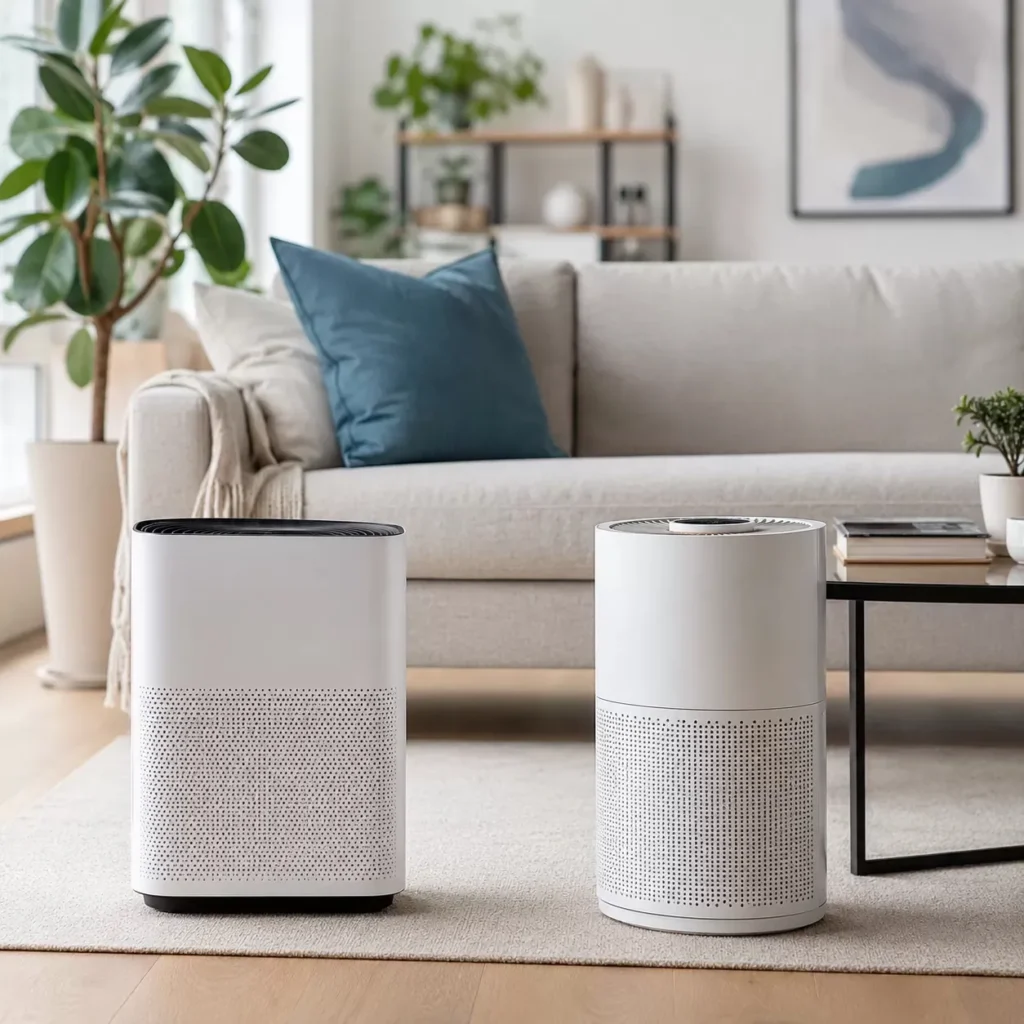
When shopping for room air purifiers, the marketplace is flooded with clever wording designed to trick your wallet. As an air purifier filter manufacturer, we see these deceptive labels daily. Terms like “HEPA-like,” “HEPA-type,” or “99% HEPA” are nothing more than marketing gimmicks. They lack the structural integrity of real filtration technology and fail to meet recognized global standards.
The Math Matters: Why Lesser Filters Fail
The difference between a knockoff and genuine filtration isn’t just semantics—it directly impacts your respiratory health.
- True HEPA Filtration: Guarantees a minimum 99.97% efficiency rate at capturing airborne particles as small as 0.3 microns.
- “HEPA-Type” Filters: Usually top out at 85% to 90% efficiency.
While a 10% difference sounds minor, the mathematical reality is alarming. A “HEPA-type” filter allows up to 33 times more dangerous particulate matter ($PM_{2.5}$), wildfire smoke, and allergens to slip straight through the media and back into your breathing zone.
How to Verify Genuine Quality
Protect your indoor air quality by looking past the flashy box art and verifying the engineering specifications.
- Check the Grade: Look for explicit H13 or H14 True HEPA classifications. These medical-grade ratings ensure maximum particle capture.
- Inspect the Material: True HEPA relies on a dense, high-quality synthetic fiber mesh, not cheap filter paper.
- Look for Structural Integrity: Cheap filters warp easily, letting dirty air bypass the filter entirely. To ensure your system runs efficiently without air leaks, it helps to understand what a bad air filter looks like before your indoor air quality suffers.
Real-World Applications: Which One Do You Need?
Choosing between a generic air purifier and a certified True HEPA air purifier comes down to your specific indoor air quality challenges. Different environments demand different filtration strategies to effectively safeguard your health.
Scenario A: Allergy and Asthma Sufferers
If you suffer from chronic allergies or asthma, a certified True HEPA air purifier is non-negotiable. Standard air cleaners often let microscopic allergens slip right back into your breathing zone. A True HEPA filter captures $99.97%$ of airborne particles down to 0.3 microns, providing immediate asthma relief by trapping:
- Dust mites and their waste
- Pet dander flaking off shedding animals
- Mold spores travel through damp spaces
- Seasonal pollen pulled in from outdoors
Scenario B: Pet Owners and Heavy Cooking
Living with multiple pets or frequently cooking with oils and spices creates a dual challenge: airborne particles and stubborn odors. A standalone HEPA filter traps the fur and dander but completely ignores smells. For these spaces, you need a hybrid system combining a True HEPA filter with a thick layer of activated carbon. This dual-defense setup delivers both particle capture and high-efficiency odor reduction, neutralizing volatile organic compounds (VOCs) and pungent cooking fumes.
Scenario C: Wildfire Smoke and High Air Quality Index (AQI) Zones
When seasonal wildfire smoke hits, or urban smog spikes the Air Quality Index (AQI), your lungs are under direct attack from microscopic particulate matter ($PM_{2.5}$). To survive these conditions, you must deploy a True HEPA purifier with a high CADR rating (Clean Air Delivery Rate). A high CADR ensures the unit cycles the air fast enough to keep pace with heavy smoke infiltration, keeping dangerous fine particles out of your respiratory system.
Portable Room Purifiers vs. Whole-House HVAC Filtration
A common mistake is relying solely on your home’s central heating and cooling system to clean the air. While high-quality HVAC filtration protects your equipment and catches large debris, it lacks the localized airflow capacity to eliminate micro-particles in high-traffic rooms.
For maximum protection, use portable room air purifiers to target specific problem areas—like bedrooms and living rooms—to perfectly complement your central system.
Maintenance & Longevity: Keeping Your System Efficient
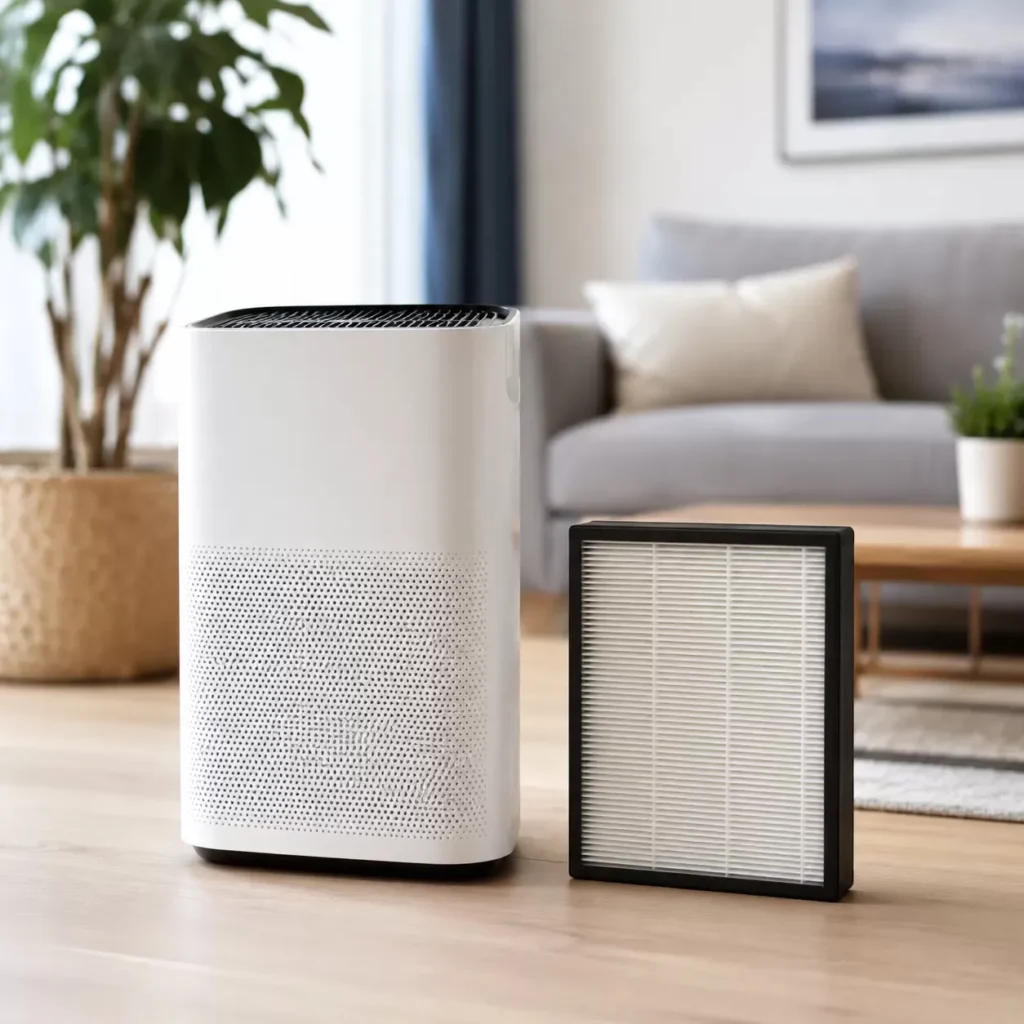
The Cost of Clean Air: Filter Replacement Intervals
Owning a high-performance air cleaner requires a commitment to regular maintenance. Filter replacement is a non-negotiable reality if you want to maintain optimal indoor air quality. In our manufacturing facility, we engineer filters with specific lifespans based on material degradation and particle loading capacity.
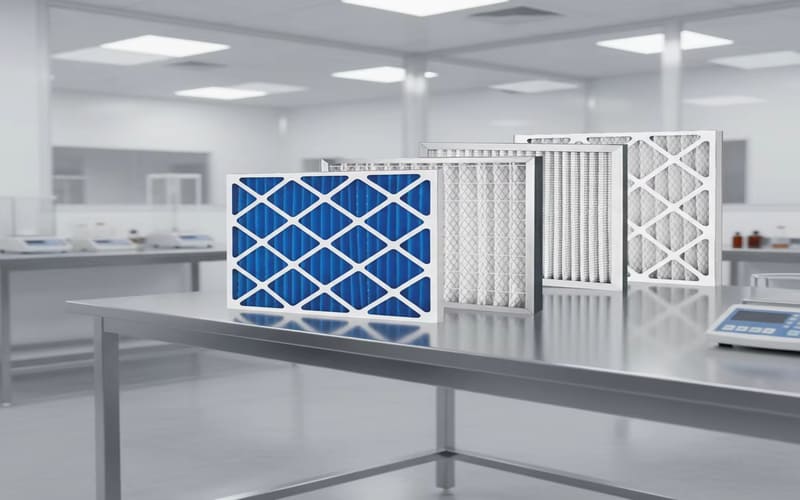
- Pre-filters: Should be cleaned or replaced every 2 to 4 weeks. Learning how to clean an air filter properly can extend the life of your secondary layers.
- Activated Carbon Layers: Typically last 3 to 6 months due to chemical saturation limits.
- True HEPA Filters: Generally require replacement every 6 to 12 months, depending on the ambient particulate matter levels.
Skipping these intervals turns your purifier into a costly fan, recirculating bypassed air and putting your respiratory health at risk.
Airflow Capacity and System Stress
The engineering behind a room air purifier must balance filtration efficiency with airflow capacity. True HEPA media is dense, consisting of a complex fiberglass/synthetic mesh designed to trap microscopic airborne particles down to 0.3 microns. If this media is poorly engineered, it creates massive static pressure, forcing the motor to work harder, spike your energy bills, and ultimately burn out.
As a dedicated filtration technology manufacturer, we precision-engineer our filter pleats to maximize surface area. This design choice ensures a high Clean Air Delivery Rate (CADR rating) without restricting the airflow capacity of your unit. When a filter becomes completely clogged with dust mites, pet dander, and wildfire smoke, the system experiences severe stress. Timely filter replacement protects the motor, lowers energy consumption, and maintains the pressure balance required for continuous whole-house or single-room purification.
Frequently Asked Questions (FAQs)
We get a lot of questions about the specifics of air filtration. Here are the straight answers to the most common queries regarding the difference between an air purifier and a HEPA air purifier.
Can a regular air purifier remove virus-sized particles without a True HEPA filter?
In short, no. Most “regular” air purifiers using basic mesh or low-grade synthetic filters are designed for visible dust and hair. Virus-sized particles are incredibly small, often measuring below 0.1 microns. Only a certified True HEPA filter has the dense synthetic mesh required to capture these microscopic threats through diffusion and interception. Without that HEPA rating, those tiny particles simply pass through the filter and back into your room.
How often should I replace the True HEPA filter versus the activated carbon layer?
The replacement schedule depends on your environment, but generally:
- True HEPA Filters: Every 6 to 12 months. They last longer because they are physically capturing dust.
- Activated Carbon Filters: Every 3 to 6 months. Carbon works via adsorption; once the “pores” are full of chemicals and odors, it stops working, even if it looks clean.
To keep your air quality high, you should know how often to change air filter components based on your specific indoor pollution levels.
Does a HEPA air purifier produce ozone like ionic air purifiers do?
No. A mechanical True HEPA air purifier is a “passive” technology. It simply pulls air through a dense filter. Unlike ionic filters or electrostatic precipitators that use an electrical charge to clump particles—which often produces ozone as a byproduct—HEPA filtration is completely safe and ozone-free, making it the preferred choice for asthma relief.
Will a whole-house HVAC filtration system replace the need for portable room air purifiers?
Not necessarily. While a high-quality furnace filter is essential, it usually lacks the density of a standalone HEPA unit because your HVAC blower isn’t strong enough to push air through a True HEPA membrane without burning out the motor. Using portable room air purifiers in high-traffic areas like bedrooms or offices provides a localized “clean zone” that your central system can’t achieve alone. It is often best to use a hybrid approach, ensuring you select the correct size air filter for your central system while supplementing with HEPA units where you breathe the most.