Do Scented Furnace Filters Work? How Traditional Systems Operate
Many homeowners ask us, “Do scented furnace filters work?” while looking for an easy way to spread a fresh aroma across their entire home. The idea is simple: use your existing HVAC system to distribute pleasant scents to every room simultaneously. However, the way traditional retail options attempt this comes with major design flaws.
The Mechanics of Scent Distribution
Traditional scented filters rely entirely on the air rushing through your ventilation system to pick up and carry fragrance molecules. As your furnace or air conditioner runs, air is pulled through the return vents, passed through the scented media, and pushed back out into your living spaces.
While this sounds efficient in theory, it creates an immediate conflict of interest within your HVAC system. A filter’s actual job is to trap indoor pollutants like dust, pet dander, and allergens. Forcing that same material to simultaneously release a long-lasting scent restricts its ability to do either job well.
Types of Scented Media
Manufacturers use a few primary methods to add fragrance to standard AC filter products:
- Pre-Scented Cardboard Frames: The outer structural frame is infused with synthetic oils, which quickly lose potency.
- Sprayed-On Topical Fragrances: Liquid scents are sprayed directly onto the pleated fabric, which can clog the tight pores needed for dust filtration.
- Attachable Fragrance Pads: Separate scented gel packets or fiber strips that clip directly onto the mesh of your existing furnace filter.
The Lifespan Reality
The biggest drawback to traditional scented filters is their rapid decline in performance. While a quality standard filter can manage dust filtration for up to 90 days, the oils and fragrance pads used in scented versions rarely last.
| Filter Feature | Standard Filter | Traditional Scented Filter |
|---|---|---|
| Primary Function | Traps indoor pollutants | Attempts filtration + scent distribution |
| Aroma Longevity | N/A | Typically fades within 3 to 7 days |
| Material Behavior | Stays dry and breathable | Can become sticky, attracting rapid dust buildup |
| Airflow Efficiency | High throughout lifespan | Drops quickly as oils trap debris prematurely |
We find that within the first week, the scent completely disappears, leaving you with a prematurely clogged filter that forces your blower wheel to work harder, reducing your system’s overall efficiency.
The Hidden Costs: Why Standard Scented Filters Can Harm Your HVAC System
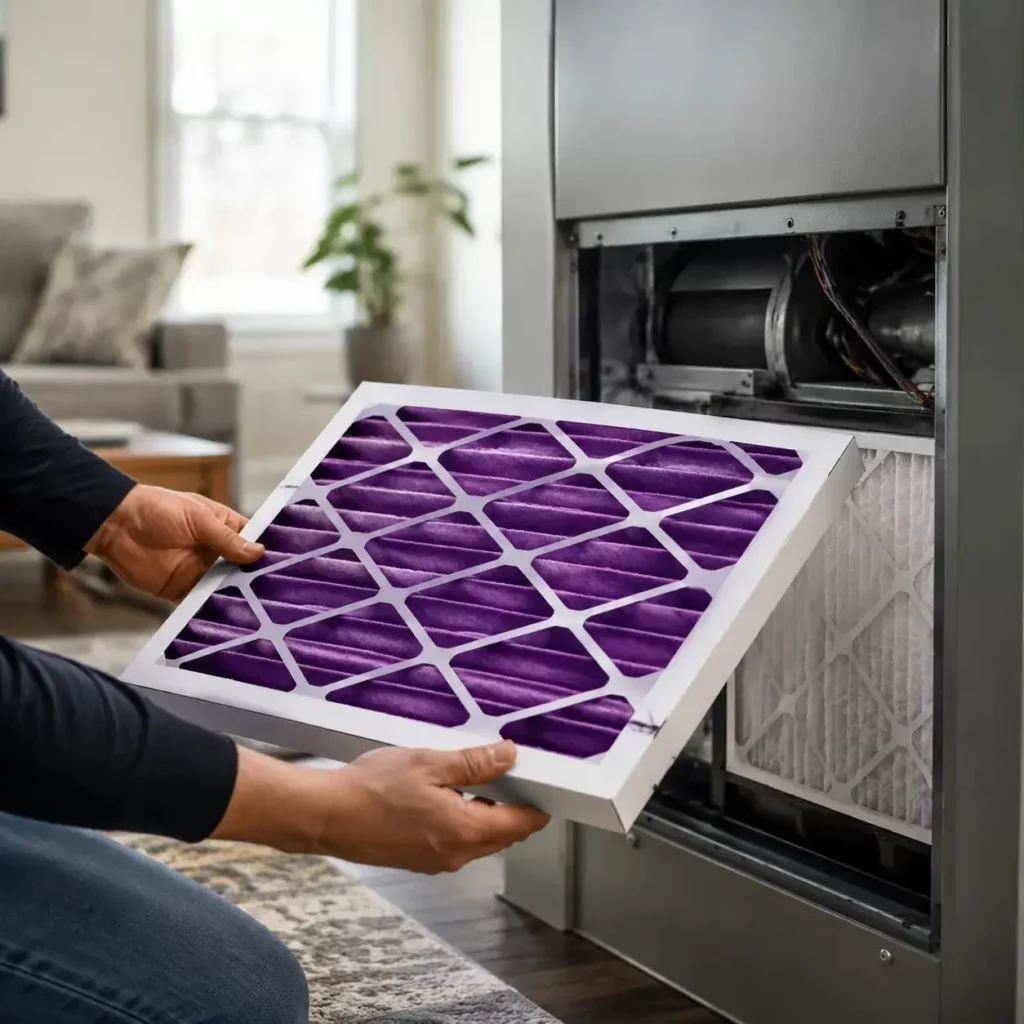
While the idea of a plug-and-play whole-house air freshener sounds convenient, off-the-shelf scented filters often introduce severe hidden costs to your heating and cooling equipment. Adding heavy fragrances directly to filtration media fundamentally alters how air moves through your home, forcing your system to work twice as hard.
The Threat of Airflow Restriction
Standard scented filters usually rely on thick oils, gels, or added fragrance pads to release their scent. These additives clog the microscopic gaps in the filter media.
- Reduced Air Velocity: The HVAC system struggles to pull air through the choked material.
- Increased Static Pressure: Restricted airflow strains the system, spiking monthly energy bills.
- Shortened Filter Lifespan: Media loaded with artificial scents clogs much faster than a standard ac filter.
The Blower Wheel & Coil Vulnerability
The mechanical consequences of using low-quality scented filters go far beyond a simple slowdown. As air struggles to pass through the restricted filter, the internal climate of your HVAC unit shifts drastically.
- Evaporator Coil Freezing: Without enough warm air passing over the cooling coils, the system drops below freezing temperatures, leading to a total system breakdown.
- Blower Wheel Strain: The motor must spin faster and hotter to compensate for the pressure drop, leading to premature motor burnout.
| HVAC Component | Impact of Scented Filters | Long-Term Result |
|---|---|---|
| Blower Motor | Overheating from high static pressure | Costly motor replacement |
| Evaporator Coils | Ice buildup due to low airflow | System short-cycling & compressor damage |
| Ductwork | Low air velocity | Poor air distribution and hot/cold spots |
Serious Mechanical Consequences
When you compromise airflow for a temporary aroma, you risk catastrophic equipment failure. The constant stress on the blower wheel accelerates wear and tear, turning a cheap air freshener shortcut into an expensive emergency technician visit. For clean air and system longevity, traditional filtration must remain completely uninhibited by heavy topical oils.
The Air Quality Paradox: Fragrance vs. Filtration

Many homeowners turn to scented furnace filters to mask household odors, but this creates a serious air quality paradox. Adding artificial fragrances directly to your filtration media completely undermines the primary job of a filter: to clean your indoor air, not pollute it.
Understanding Volatile Organic Compounds (VOCs)
Standard scented filters rely on synthetic oils and chemical fragrances to deliver that whole-house aroma. As air rushes through the HVAC system, it forces these chemicals to evaporate into your living spaces.
- The Chemical Shift: These evaporating scents release volatile organic compounds (VOCs) directly into your breathing zone.
- The Irony: Instead of removing airborne impurities, a scented filter actively introduces chemical pollutants into every room of your home.
The Impact of Allergens on Health
For families dealing with respiratory sensitivities, chemical scent distribution is a major trigger. Synthetic fragrances do not capture or neutralize odor-causing bacteria; they simply overwhelm your senses.
- Respiratory Irritation: Constant exposure to airborne VOCs can irritate the eyes, nose, and throat.
- Allergy Triggers: Rather than lowering the count of indoor pollutants, added fragrances can exacerbate asthma and allergy symptoms.
- Masking the Problem: Covering up odors prevents you from identifying the root cause of indoor air issues, such as mold or stagnant dust accumulation.
The Primary Job of a Filter
A high-quality AC filter has one true purpose: trapping airborne particles like dust, pet dander, pollen, and mold spores. When a filter is treated with heavy oils or fragrance pads, its surface properties change, which can reduce its ability to hold dust efficiently.
| Filter Type | Primary Function | Air Quality Impact |
|---|---|---|
| Standard Filtration | Captures dust, allergens, and microscopic debris. | Improves indoor air quality and protects HVAC equipment. |
| Scented Filter Media | Emits synthetic fragrances while catching large particles. | Introduces VOCs and can lower overall air purification efficiency. |
To keep your home healthy, filtration must remain separate from scenting. If your current filter is loaded with dust and restricting your airflow, it is time for a replacement. Knowing how often to change your air filter ensures your ventilation system runs efficiently without relying on chemical cover-ups to handle odor control.
How to Achieve Safe Whole-House Aroma: The Komtfil Approach

We believe you shouldn’t have to choose between fresh-smelling air and a healthy HVAC system. Traditional scented filters fail because they force one product to do two entirely different jobs. At Komtfil, we engineered a better way to achieve a high-quality whole-house aroma without risking your equipment or your health.
Separating Filtration from Fragrance
The secret to safe home scenting is separation. An air filter has one primary job: trapping dust, allergens, and indoor pollutants. When you try to force a filter to act as an air freshener, you compromise its ability to clean the air.
By separating the filtration media from the scent mechanism, we ensure your electrostatic air filter can run at peak efficiency while your home stays smelling incredible. This design prevents the common pitfalls of standard scented filters, much like ensuring proper airflow by knowing which way does the air filter go during installation.
The Komtfil Engineering Solution
Our team re-engineered the whole-home scenting process from the ground up. Instead of spraying cheap perfumes directly onto the pleats, we developed a system that works in harmony with your existing ventilation system.
- Zero Airflow Compromise: Our specialized fragrance delivery system bypasses the filter media entirely. This eliminates the risk of airflow restriction, protecting your blower wheel and keeping your energy bills low.
- Pure Ingredient Integrity: We use high-quality essential oils and clean fragrance formulations. You get a premium aroma without releasing harmful volatile organic compounds (VOCs) into your living spaces.
- Consistent Delivery: Traditional scented options blast you with fragrance for three days and then fade away. Our engineered solution provides a steady, long-lasting scent distribution across every room for weeks.
Smart Alternatives for Safe Home Scenting

If you want a great-smelling house without risking your HVAC system, stop spraying your AC filter or buying gimmicky scented media. You can achieve a luxury whole-house aroma safely by separating your fragrance from your filtration process entirely.
Whole-Home HVAC Diffusers
The most professional way to distribute scent through your ventilation system is with a standalone whole-home HVAC diffuser. These devices use cold-air diffusion technology to turn essential oils into a dry mist.
- Where they go: They install directly into your supply ductwork after the furnace filter and blower wheel.
- Why they work: The scent distribution travels with the airflow, but zero residue ever touches your sensitive heating and cooling components.
- The benefit: You get a consistent, long-lasting scent across every room without creating any airflow restriction.
Strategic Source Control
Instead of trying to force fragrance through a filtration system that is actively trying to trap airborne particles, focus on strategic placement.
- Use freestanding ultrasonic diffusers in high-traffic zones.
- Hide natural scent pouches inside closets or near return vents (but never blocking them).
- Remember that a clean home naturally smells better. If your system smells musty, look for the root cause—often a dirty, overloaded filter—rather than masking it with synthetic perfumes.
Safe DIY Rules
If you insist on a DIY approach to home aroma, never apply essential oils or fragrance pads directly to the surface of your primary air filter. Liquid oils attract dust like a magnet, quickly clogging the mesh and forcing your system to work harder.
To keep your system running efficiently while managing indoor pollutants, always prioritize clean, unrestricted airflow first. Check out our guide on how to spot the 5 signs your HVAC filter is clogged and ways to fix it before adding any scent to your home routine. Keep your dust filtration completely separate from your odor control to protect your equipment and your wallet.
FAQs About Scented Furnace Filters
Do Scented Filters Cause Airflow Restriction in the HVAC System?
Yes, they absolutely can. Many retail scented filters use thick, oil-soaked coatings or restrictive fragrance pads to release aromas. This extra material forces your blower motor to work twice as hard to pull air through, leading to severe airflow restriction. Over time, this choked airflow drives up utility bills and places unnecessary wear on system components. If you suspect your current setup has already caused strain, learning how can i tell if my furnace filter needs changing can help you prevent total system failure.
Can Synthetic Fragrances Release Harmful Volatile Organic Compounds (VOCs)?
Yes. Traditional scented options often rely on cheap, synthetic perfumes. When heated by your furnace, these chemicals break down and pump volatile organic compounds (VOCs) directly into your living spaces. Instead of cleaning your air, you end up circulating indoor pollutants that can trigger asthma, headaches, and severe allergies.
How Do Fragrance Pads Affect the Blower Wheel?
Fragrance pads and stick-on scents release heavy oils and chemical vapors into the air stream. As these vapors travel through your ventilation system, they condense into a sticky film directly on the blower wheel and internal electronics. This sticky residue acts like a magnet for dust and pet dander. Once the blower wheel accumulates this grime, it becomes unbalanced, vibrates heavily, and can suffer complete mechanical failure.
Will Essential Oils Damage My AC Filter?
Dabbing pure essential oils directly onto a standard AC filter or fiberglass media will degrade the structural integrity of the filter material. The concentrated oils dissolve the synthetic fibers, creating holes that let dust filtration drop to zero. Furthermore, those unevaporated oils will blow right past the filter and coat your sensitive air conditioning coils, leading to expensive professional cleanings.