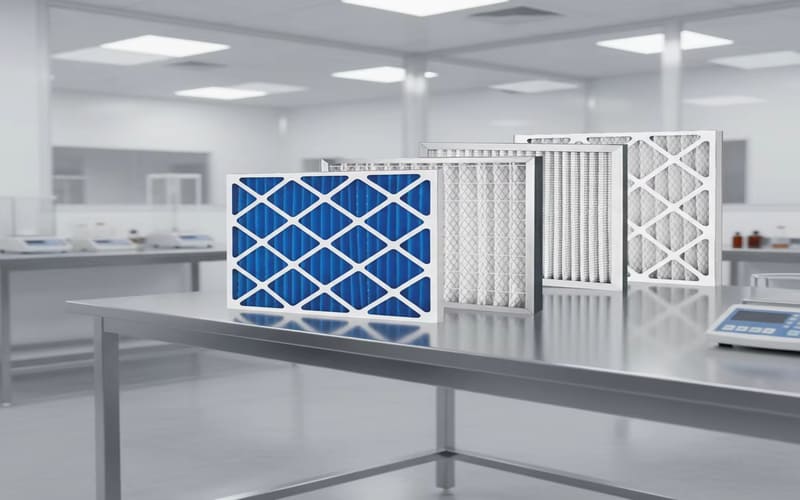
Are you staring at your HVAC system, wondering if a furnace filter upgrade will finally cure your household allergies—or accidentally suffocate your heating and cooling equipment?
You aren’t alone. Choosing between MERV 11 and MERV 12 is one of the most confusing crossroads in home maintenance. They sit right on the razor’s edge of medium and superior residential filtration.
Go too low, and you’re letting airborne contaminants like fine particles, pet dander, and dust mites cycle right back into your living room. Go too high, and you risk creating an accidental “brick wall” that spikes your energy bills and triggers severe airflow restriction.
So, how do you find that perfect sweet spot for both your lungs and your wallet?
In this guide, we are breaking down the hard technical data—from microns to static pressure—to help you make the right call.
Demystifying the Numbers: What Do MERV 11 and MERV 12 Actually Mean?
When shopping for a new furnace filter, homeowners are often bombarded with numbers and ratings that offer little context. To understand What’s the Difference Between MERV 11 and MERV 12?, we must look at how the industry measures filtration efficiency. As a dedicated air filter manufacturer, we rely on standardized testing to determine exactly how many airborne contaminants a filter can trap before they enter your living space.
The ASHRAE Standard
The Minimum Efficiency Reporting Value (MERV) is a national standard developed by ASHRAE to measure a filter’s ability to capture specific particle sizes. During testing, filters are exposed to synthetic dust and particles at a controlled velocity to see what gets through and what gets trapped. The higher the MERV rating, the tighter the weave of the filter media, allowing it to arrest smaller, more elusive airborne contaminants.
The Micron Breakdown
To truly evaluate a residential HVAC filter, we look at performance across three distinct particle size ranges measured in microns.
- E1 (0.3 to 1.0 Microns): Very fine particles like smoke, viruses, and bacteria.
- E2 (1.0 to 3.0 Microns): Medium particles including pet dander, dust mites, and mold spores.
- E3 (3.0 to 10.0 Microns): Large particles such as pollen, carpet fibers, and coarse dust.
Filtration Efficiency
| Particle Size Range | MERV 11 Efficiency | MERV 12 Efficiency | Target Contaminants |
|---|---|---|---|
| E1 (0.3–1.0 um) | Less than 20% | Less than 35% | Smoke, smog, auto exhaust |
| E2 (1.0–3.0 µm) | 65% to 79% | 80% to 89% | Pet dander, dust mites, mold |
| E3 (3.0–10.0 µm) | 85% or greater | 90% or greater | Pollen, sanding dust, large debris |
While both tiers easily stop large E3 particles like pollen, a MERV 12 filter provides a measurable mathematical bump in the E2 and E1 ranges. This slight bump means fewer fine particles circulate back into your breathing zone, though it requires your heating and cooling system to push air through a denser material.
Head-to-Head Comparison: MERV 11 vs. MERV 12
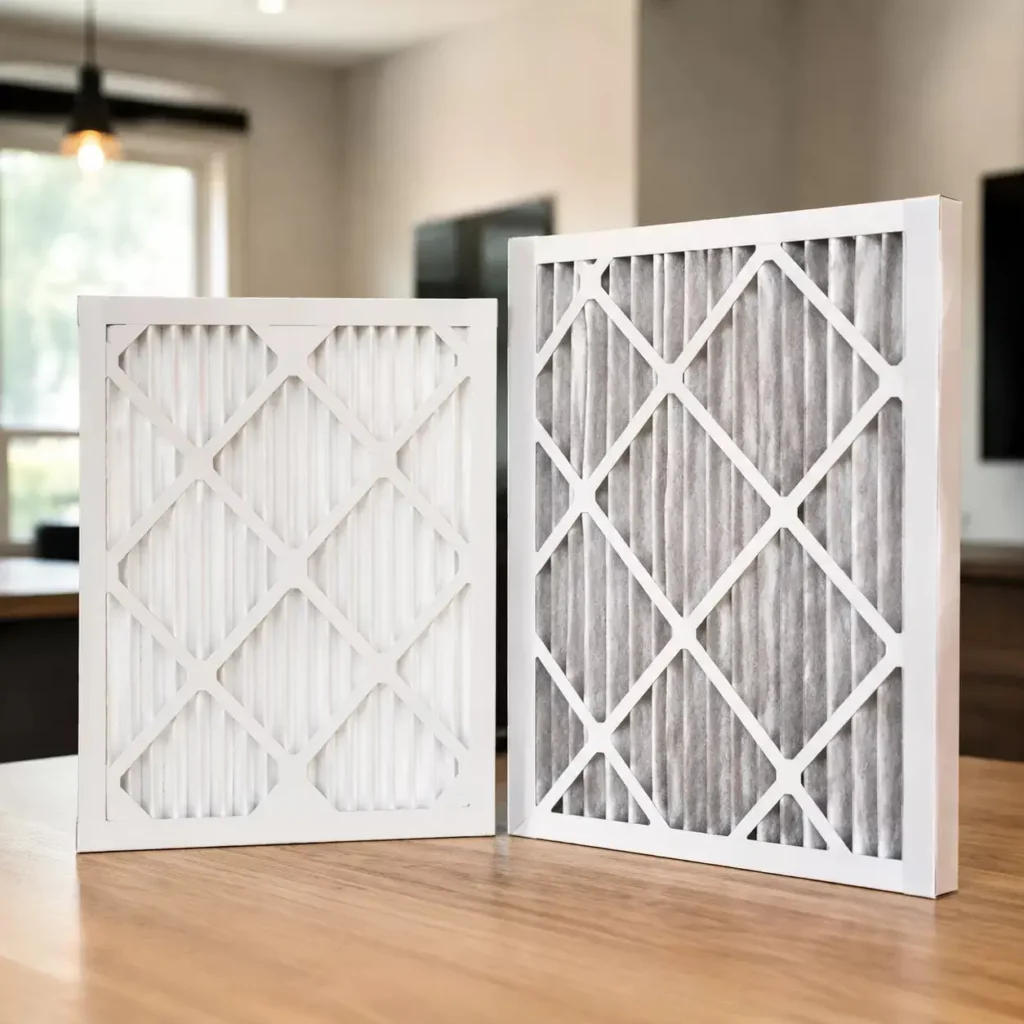
When choosing between a MERV 11 and a MERV 12 furnace filter, the decision comes down to balancing filtration efficiency against your home’s specific air quality needs. Both tiers sit at the intersection of standard residential comfort and high-efficiency commercial filtration.
Filtration Efficiency vs. Everyday Irritants
Both MERV 11 and MERV 12 filters easily capture large airborne contaminants like dust, pollen, dust mites, and large debris. For a standard household without chronic respiratory issues, a MERV 11 filter provides excellent baseline protection for your heating and cooling system while keeping common allergens out of your breathing zone.
Pet Dander & Severe Allergies
For households with multiple shedding pets or family members dealing with severe allergies, MERV 12 filters offer a slight mathematical advantage. They capture a higher percentage of fine particles, specifically targetable pet dander and microscopic mold spores, providing extra relief for sensitive lungs.
Smoke & Smog
When it comes to blocking fine combustion particles from smoke or outdoor smog, mid-to-high filter tiers perform noticeably better than basic options. While MERV 11 catches a decent portion of these fine particles, a MERV 12 filter traps more sub-micron pollution. However, if your primary goal is dealing with heavy wildfire smoke or strong odors, a specialized weed air filter for indoor smoke or a carbon-infused media option will yield better results than standard pleated filters alone.
The Split-The-Difference Phenomenon
In the residential HVAC market, MERV 12 occupies a narrow niche. Many allergy sufferers experience a “split-the-difference” phenomenon: if their HVAC system can handle the increased resistance of a MERV 12 filter, they often bypass it entirely and step up to a MERV 13 filter for maximum protection against bacteria and viruses.
Performance Comparison Matrix
| Target Contaminant | MERV 11 Capture Efficiency | MERV 12 Capture Efficiency | Ideal Household Match |
|---|---|---|---|
| Large Particles (Pollen, Dust, Lint) | Only ≥ 85% | Only ≥ 90% | Both (Excellent for standard homes) |
| Medium Particles (Pet Dander, Mold Spores) | 65% – 79% | 80% – 89% | MERV 12 (Best for active pet owners) |
| Fine Particles (Smoke, Smog, Emissions) | Less than 50% | Only ≥ 35% | MERV 12 (Better baseline for smog) |
The Engineering Cost: Airflow Restriction and Static Pressure
The Brick Wall Principle
Upgrading your furnace filter isn’t just about catching more airborne contaminants; it directly impacts how your system breathes. Think of a standard filter as a chain-link fence and a high-efficiency filter as a tight fabric mesh. As we tighten the media weave to catch smaller microns, we naturally create more airflow restriction. If the filter media is too dense, it acts like a brick wall, forcing your heating and cooling system to work twice as hard just to pull air through.
Understanding Pressure Drop
Every time air passes through a filter, it loses energy. This is known as pressure drop. When you introduce dense furnace filters into a standard residential HVAC setup, the resistance spikes. The blower motor must fight against this sudden drop in pressure. If the filter material restricts air too much, the velocity of the air moving through your ductwork plummets, starving your system of the airflow it needs to function correctly.
The Danger of High Static Pressure
Running a system with high static pressure is a recipe for expensive repairs. When a filter causes too much resistance, the HVAC motor runs hotter and draws more electricity, which quickly inflates your utility bills. Over time, this constant strain causes severe wear and tear on vital components. In worst-case scenarios, excessive static pressure leads to short-cycling—where your furnace or AC constantly shuts down and restarts because it is overheating or freezing up. To avoid these issues, many homeowners opt to how to test your indoor air quality to find the right balance between clean air and system health.
System Compatibility
Before stepping up to a higher filtration efficiency, you must verify if your residential HVAC hardware can actually handle the extra load. Older or smaller systems are rarely designed to push air through restrictive media without suffering performance losses. Check your system manual for the maximum allowable static pressure. If your ductwork is undersized or your blower motor isn’t rated for high-resistance filters, sticking with a lower rating or switching to a thicker panel filters setup is the safest bet to protect your equipment.
Practical Household Scenarios: Which Should You Buy?
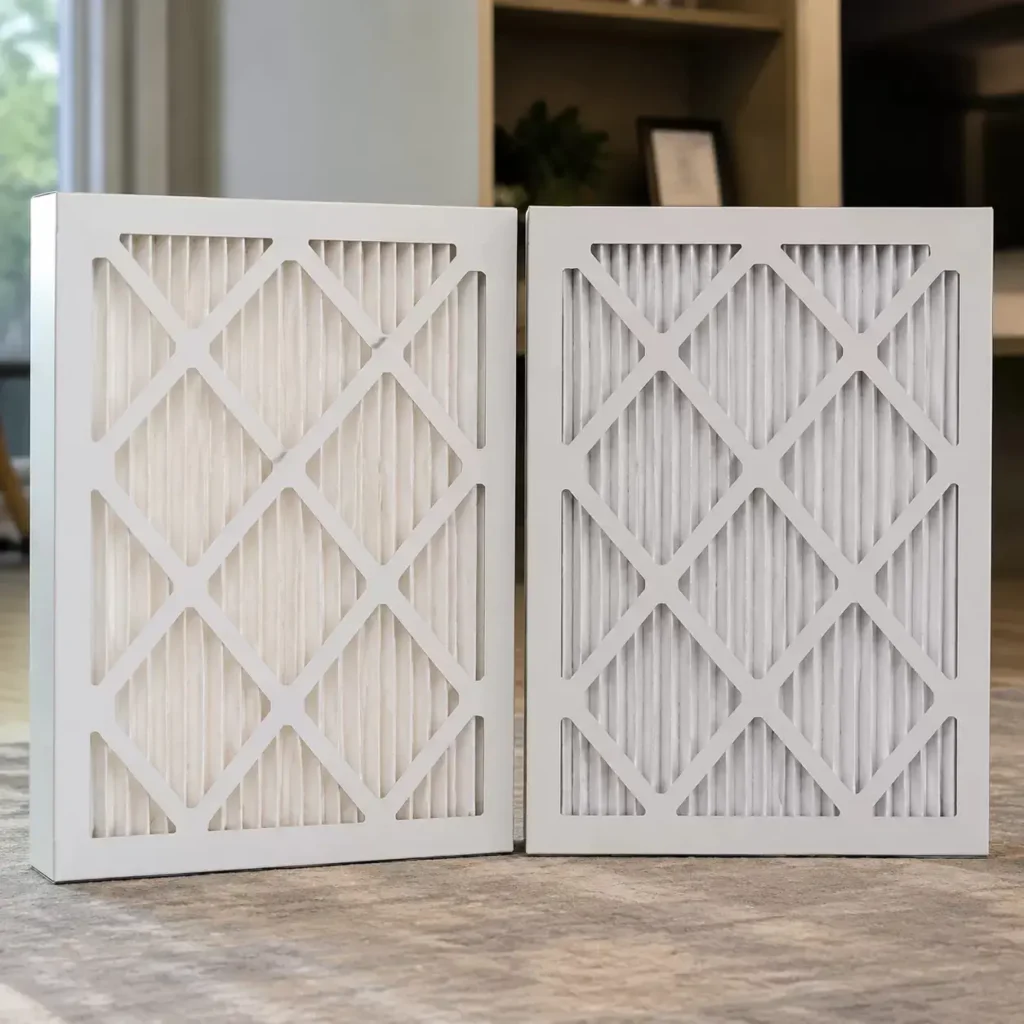
Choosing between a MERV 11 and a MERV 12 filter comes down to balancing your indoor air quality needs with the breathing capacity of your HVAC system. Both options capture common airborne contaminants like pollen, dust mites, and lint, but they serve different household priorities.
Quick Decision Matrix
| Household Priority | Best Filter Choice | Why It Works |
|---|---|---|
| Standard Protection & System Longevity | MERV 11 | Low airflow restriction, protects equipment, excellent for standard homes. |
| Pet Hair & Light Dander | MERV 11 | Catches fur and large particles without premature clogging. |
| Mild Asthma & Severe Allergies | MERV 12 | Higher filtration efficiency for fine particles that trigger lungs. |
| Deep Media Slots (4-to-5-inch) | MERV 12 | Low airflow restriction protects equipment, excellent for standard homes. |
Choose MERV 11 If: Balancing Standard Protection and System Lifespan
A MERV 11 air filter is the sweet spot for the vast majority of residential HVAC systems. If your main goals are maintaining a healthy home, managing pet hair, and avoiding high static pressure, this is your best option.
- Maximum Airflow: It keeps your heating and cooling system running efficiently without straining the furnace blower motor.
- Cost-Effective Protection: Safely captures up to 85% of large particles and over 65% of fine particles without causing utility bills to spike.
- Standard 1-Inch Slots: It delivers excellent filtration without the risk of choking standard, shallow filter slots.
Choose MERV 12 If: Managing Mild Asthma or Using Thick Media
Upgrade to a MERV 12 filter if your household requires an extra layer of defense against airborne contaminants, or if your system is engineered to handle denser pleats.
- Allergy Sufferers: Provides a higher mathematical edge to trap microscopic pet dander, smoke, and fine dust before they trigger sensitive lungs.
- Thicker Filter Profiles: If your system uses 4-inch or 5-inch media filters, a MERV 12 is highly recommended. The massive surface area naturally lowers the pressure drop, giving you superior filtration efficiency without the danger of airflow restriction.
The Komtfil Manufacturing Edge: Maximizing Flow, Minimizing Resistance
When choosing between MERV 11 and MERV 12 filters, standard manufacturing often forces a compromise between clean air and system strain. At Komtfil, we engineer our pleated air filters to break that trade-off, ensuring your heating and cooling system breathes easily while capturing fine particles.
Engineering Better Media to Lower Pressure Drop
Standard high-MERV filters use densely packed synthetic strands that act like a wall, spiking your system’s static pressure. We design our media with premium synthetic blends and an advanced pleat geometry. By optimizing the surface area, we lower the initial pressure drop. This allows your residential HVAC to pull in more air with less effort, preventing the blower motor from working overtime.
The Thickness Advantage: 2-Inch vs. 4-Inch Profiles
If you want to upgrade your filtration efficiency without causing serious airflow restriction, look at filter depth. Moving from a standard 1-inch slot to a 2-inch or 4-inch media filter fundamentally alters the airflow equation:
- 1-Inch Filters: Face high resistance because air must force its way through a shallow surface area.
- 2-Inch and 4-Inch Filters: Provide up to three times more pleated surface area. This extra room spreads out dust loading, keeps resistance low, and prevents your system from short-cycling.
Maintenance Cadence Beats a Higher MERV Rating
Many homeowners assume buying the highest MERV rating solves all indoor air quality issues. In reality, a fresh, free-flowing filter always outperforms a clogged high-tier filter.
Keeping a strict 60 to 90-day filter swap schedule is far better for your system lifespan and utility bills than running a dense filter for too long. If you find your home accumulates dust unusually fast despite regular changes, it is worth exploring what causes dust in residential spaces to address the root issue. Regular replacements keep airborne contaminants low without endangering your furnace blower.
Frequently Asked Questions About MERV 11 vs. MERV 12
Will switching from MERV 11 to MERV 12 damage my furnace blower motor?
It is unlikely to cause immediate damage, but it does increase the strain on your HVAC system. A MERV 12 filter has a tighter weave, which naturally creates a higher pressure drop across the system. If your residential HVAC system is older or already struggling with airflow restriction, the added static pressure can cause the blower motor to run hotter, use more electricity, and potentially short-cycle. Before upgrading, it is wise to consult your system manual or check our complete guide to MERV ratings to verify what level of resistance your equipment can safely handle.
Can I use a MERV 12 filter if I have heavy-shedding pets and seasonal allergies?
Yes, you can, but it might not be the most efficient strategy. While a MERV 12 filter offers higher filtration efficiency for fine particles like pet dander, pollen, and dust mites, heavy pet hair will clog those tighter pleats very quickly. For homes with multiple shedding pets, we generally recommend staying with a high-capacity MERV 11 filter and changing it frequently, rather than choking your airflow with a higher rating.
Does a MERV 12 filter require more frequent replacement than a MERV 11 filter?
Absolutely. Because a MERV 12 furnace filter captures a higher percentage of smaller airborne contaminants, the filter media loads up with debris much faster. To prevent excessive static pressure and protect your heating and cooling system, you should inspect a 1-inch MERV 12 filter every 30 to 45 days, whereas a MERV 11 can often slide by for 60 to 90 days, depending on your household environment.
How do micron ratings translate to actual dust and pollen removal in my home?
MERV ratings are calculated by measuring how well a filter stops particles across three specific micron ranges: E1 (0.3–1.0 microns), E2 (1.0–3.0 microns), and E3 (3.0–10.0 microns).
- Large Particles (E3): Both MERV 11 and MERV 12 catch over 85% of large debris, like pollen and household dust.
- Fine Particles (E2): This is where they diverge. A MERV 12 filter traps more than 80% of fine particles like mold spores and pet dander, giving allergy sufferers a slight mathematical edge over the 65% to 79% capture rate of a MERV 11.