Demystifying the Rating: What Does MERV 8 Actually Mean?
When shopping for residential AC replacements, you will constantly see the term MERV. So, what does MERV 8 mean on an air filter?
MERV stands for Minimum Efficiency Reporting Values. It is a universal rating system that measures a filter’s ability to capture airborne particles from the air stream passing through your HVAC systems. As an experienced air filter manufacturer, we know that a MERV 8 rating represents the sweet spot for standard home filtration—balancing reliable indoor air quality with excellent equipment protection.
The ASHRAE Standard: How Filters Are Tested
The MERV scale is not a marketing gimmick; it is a strict industry standard. Developed by the American Society of Heating, Refrigerating and Air-Conditioning Engineers (ASHRAE), the standard tests how well a pleated air filter performs under real-world stress.
Filters are placed in a test laboratory and exposed to synthetic dust containing particles of various sizes. Technicians measure the percentage of particles captured both before and after the air passes through the media. The filter is then ranked on a scale from 1 to 16. A higher number indicates a tighter mesh capable of trapping smaller contaminants.
Target Particle Sizes: The Micron Range MERV 8 Targets
Airborne particles are measured in microns (one-millionth of a meter). To put that in perspective, a single human hair is about 70 microns wide.
A MERV 8 air filter specifically targets larger particulate matter, categorized by ASHRAE as E3 particles.
- Target Range: 3.0 to 10.0 microns
- Capture Efficiency: Up to 85% or more of particles in this size range
By focusing on this specific particle size, a MERV 8 pleated air filter successfully traps common household nuisances like dust mites, mold spores, and pollen before they can recirculate through your rooms or settle inside your HVAC components.
What Contaminants Does a MERV 8 Filter Capture (and Miss)?

When evaluating what a MERV 8 air filter does for your indoor air quality, it helps to look at it as the reliable workhorse of residential AC systems. It provides a solid baseline of protection, but it isn’t designed to trap every single airborne particle.
What It Traps Effectively: Dust, Pollen, and Large Spores
A MERV 8 filter excels at capturing larger, everyday nuisances that settle on your furniture and trigger seasonal allergies. It is highly efficient at trapping:
- Dust mites and lint
- Pollen grains carried in from outdoors
- Mold spores and large plant spores
- Debris and large dust particles
What It Misses: Smoke, Viruses, and Fine Pet Dander
Because a MERV 8 filter targets particles in the 3.0 to 10.0-micron range, smaller sub-micron particles will pass right through the media. If you are looking to eliminate the following contaminants, you will need a higher rating:
- Smoke (tobacco, wildfire, or cooking smoke)
- Viruses and bacteria
- Fine pet dander (though it catches larger pet hair)
- Smog and microscopic automotive emissions
Fiberglass vs. Pleated Air Filters: Why Pleated Design Wins
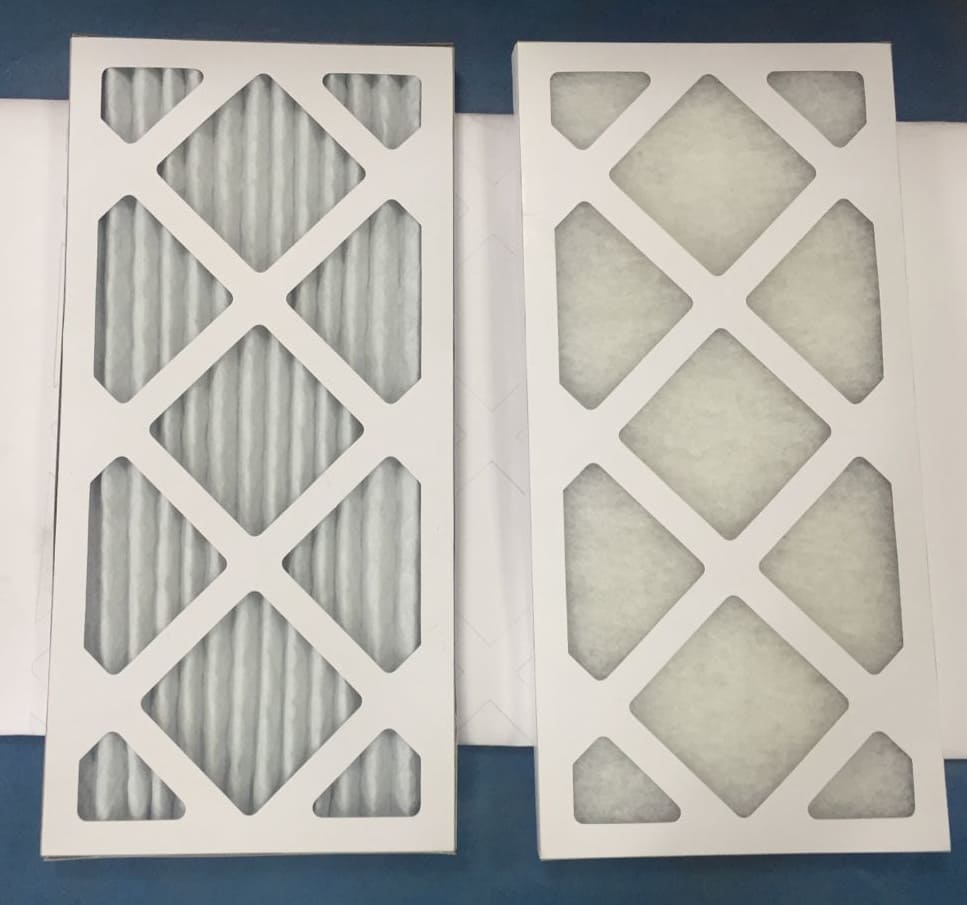
When comparing pleated vs fiberglass air filters, the structural design makes all the difference for your home filtration. Standard fiberglass filters are practically transparent, only catching the largest lint balls while letting dust coat your HVAC systems.
Our pleated air filter design significantly increases the surface area of the media. This pleating allows the filter to capture a much higher volume of airborne particles without restricting your system’s airflow efficiency. Choosing a pleated MERV 8 filter over a flat fiberglass option is the easiest way to upgrade your home’s air quality while protecting your heating and cooling equipment from dust buildup.
The Balancing Act: Airflow Efficiency vs. Filtration Power
The Myth of “Higher is Always Better”
When looking at air filter ratings, many homeowners assume that a higher number automatically equals a better choice for their home. As an experienced MERV 8 filter manufacturer and supplier, we often have to debunk this myth. While higher-rated filters capture smaller particles, they also restrict the air moving through your home. Choosing the right filtration level requires a careful balance between clean air and proper airflow efficiency.
Understanding Pressure Drop
Every time you insert a filter into your residential AC, you introduce resistance. In our industry, we call this pressure drop. A high-grade filter acts like a thick wall, forcing your HVAC systems to work twice as hard to pull air through the pleated fabric. A MERV 8 filter strikes the perfect sweet spot: it delivers excellent home filtration without causing a severe drop in air pressure. If you find your system struggling even with a standard filter, it might be time to evaluate your overall setup by comparing an air filter vs. air purifier to see which method best suits your space.
HVAC System Safety
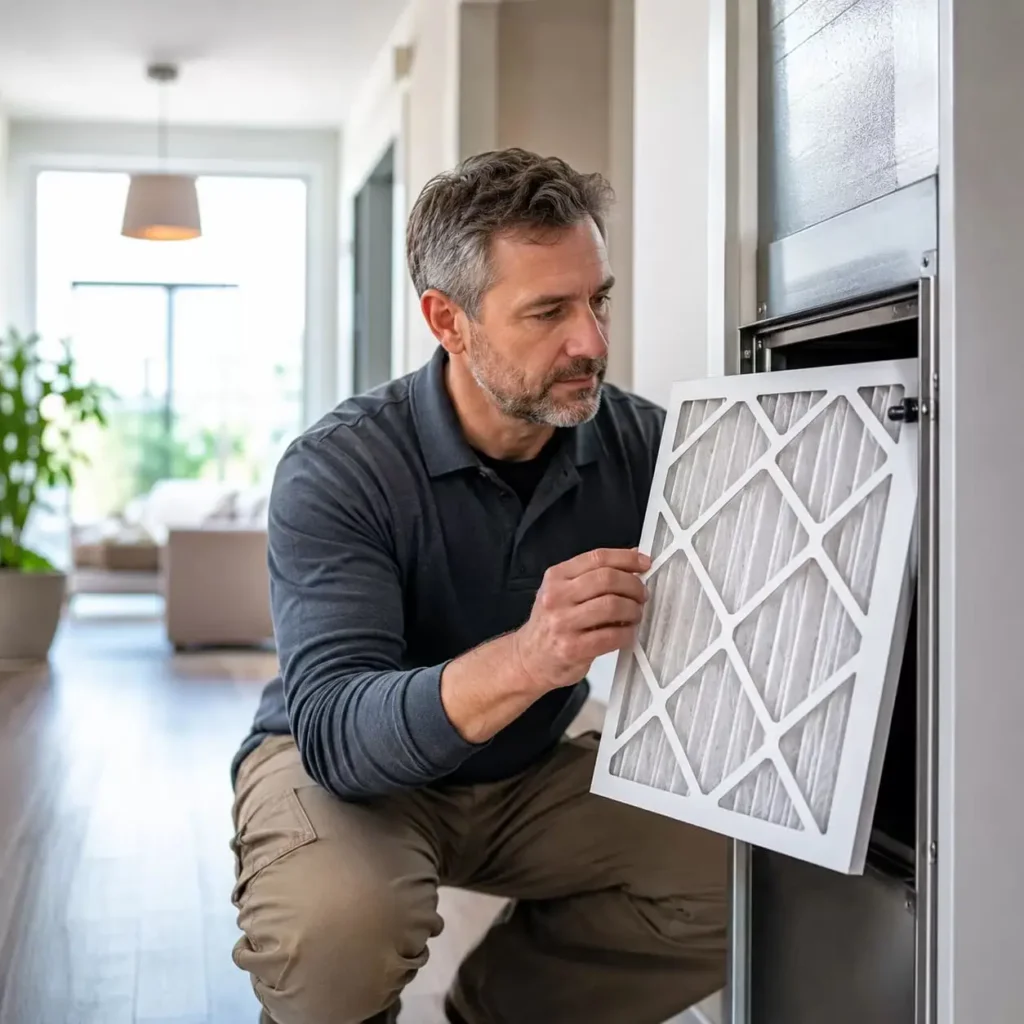
Protecting your blower motor from unnecessary stress is vital for avoiding costly repair bills. When a system suffers from low airflow due to an overly restrictive filter, the blower motor overheats and experiences premature wear and tear.
- Reduced Airflow: Causes short-cycling and uneven heating or cooling.
- Increased Energy Bills: Your system runs longer to achieve the set temperature.
- Blower Motor Strain: Can lead to total system failure over time.
By maintaining the right balance with a MERV 8 pleated air filter, you keep your air clean while ensuring your HVAC system runs safely and efficiently.
Head-to-Head Comparison: MERV 8 vs. MERV 11 vs. MERV 13
Choosing the right efficiency level for your residential AC comes down to balancing indoor air quality with your system’s capabilities. While a MERV 8 filter serves as the standard baseline for many homes, higher ratings target smaller airborne particles at the cost of increased resistance.
Comparison Matrix: Ratings, Particle Sizes, and System Strain
| MERV Rating | Target Particle Size | Common Contaminants Trapped | HVAC System Strain |
|---|---|---|---|
| MERV 8 | 3.0 to 10.0 microns | Dust mites, pollen, mold spores, large dust | Low (Excellent airflow efficiency) |
| MERV 11 | 1.0 to 3.0 microns | Pet dander, car emissions, lint, fine dust | Moderate |
| MERV 13 | 0.3 to 1.0 microns | Bacteria, smoke, virus carriers, smog | High (Requires monitoring pressure drop) |
When to Stick with MERV 8
A pleated air filter rated at MERV 8 is the best choice for standard households without pets or severe respiratory issues. It delivers the ideal balance of home filtration and airflow efficiency. Because it has a lower pressure drop, it keeps your HVAC systems running smoothly without putting unnecessary stress on the blower motor. For a deeper look at how these numbers stack up against retail rating systems, check out our detailed air filter ratings guide.
When to Upgrade to MERV 11 or 13
Upgrading becomes necessary when you need to manage specific health concerns or living conditions:
- Upgrade to MERV 11: Ideal if you have multiple pets shedding pet dander or if family members suffer from mild seasonal allergies.
- Upgrade to MERV 13: Best for households with severe asthma, weak immune systems, or regions prone to wildfire smoke.
If you are unsure which level your system can handle safely, read our guide on choosing the right MERV rating for home air quality to prevent accidental equipment damage.
Maintenance Best Practices: How Often Should You Replace a MERV 8 Filter?
Standard Lifespan: The 60 to 90-Day Replacement Window
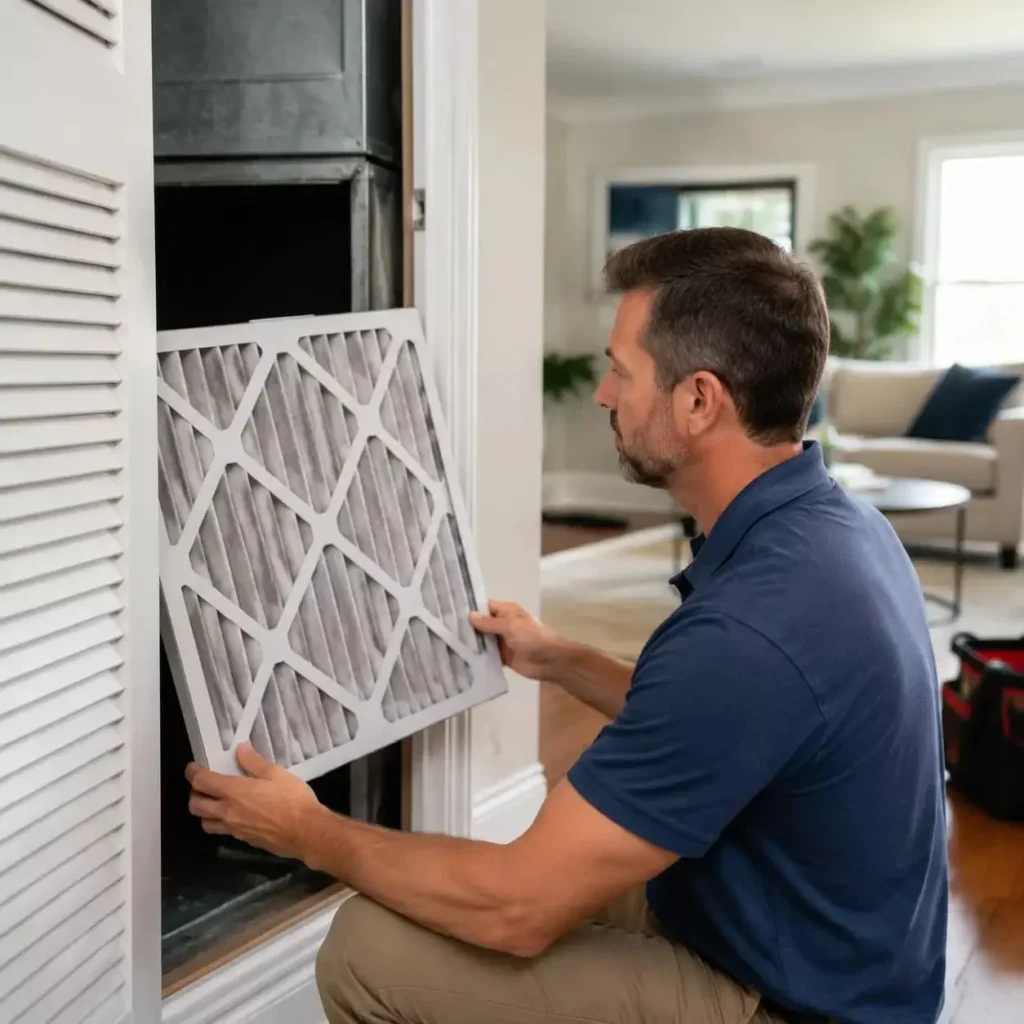
As a manufacturer of high-quality MERV 8 filters, we generally recommend a standard replacement window of 60 to 90 days for residential AC systems. In an average home, this timeframe ensures optimal indoor air quality without placing unnecessary stress on your HVAC systems. Keeping a fresh pleated air filter in place maintains proper airflow efficiency and prevents dust accumulation on your equipment. Knowing how often to change your air filter keeps your system running at peak performance.
Variables That Shorten Filter Life
The 90-day rule isn’t one-size-fits-all. Several household variables will pack airborne particles into the pleats much faster, requiring more frequent changes:
- Pets: Dogs and cats shed fur and heavy pet dander that quickly clog the filter media.
- Climate: High-pollution areas or regions with intense pollen seasons load up filters rapidly.
- Fan Runtime: Running your HVAC system continuously, rather than on “Auto,” circulates more air and traps more debris per day.
If you have multiple pets or suffer from severe allergies, expect to swap out your MERV 8 filter every 30 to 45 days instead.
Signs Your Filter Needs Immediate Replacement
Do not rely solely on the calendar. Check your home filtration setup monthly for these visible signs of failure:
- Visible Gray Discoloration: A dark layer of dust and mold spores covering the pleats.
- Increased Pressure Drop: Unusual whistling sounds or weaker airflow coming from your supply vents.
- Dust Buildup Near Vents: Fine particles settle on furniture immediately after your residential AC cycles on.
When these signs appear, replace the filter immediately to protect your blower motor from excessive stress and keep your energy bills in check.
Frequently Asked Questions About MERV 8 Filters
We get a lot of questions from homeowners trying to find the sweet spot between clean air and a functional HVAC system. Here is the straight talk on what you can expect when using a MERV 8 air filter.
Can a MERV 8 filter stop viruses or bacteria?
The short answer is no. While a MERV 8 air filter is a workhorse for capturing larger airborne particles, it is not designed to trap microscopic pathogens like viruses or most bacteria. These germs are significantly smaller than the particle size a standard pleated filter can catch. If your goal is hospital-grade sterilization or virus mitigation, you would typically need to upgrade to MERV 11 or 13 filters, provided your system can handle the increased resistance.
Will a MERV 8 filter reduce my monthly energy bills?
It can, especially if you are switching from a neglected, dirty filter or an overly restrictive high-MERV filter that your system wasn’t built for.
- Airflow Efficiency: Because MERV 8 provides a low pressure drop, your fan motor doesn’t have to work overtime to pull air through the material.
- System Longevity: Better airflow means shorter run cycles, which keeps your residential AC energy consumption in check and prevents expensive blower motor repairs.
Is MERV 8 good enough for homes with dogs or cats?
For many households, a high-quality MERV 8 air filter is the perfect baseline. It easily handles the “heavy hitters” like dust mites, pollen, and large clumps of pet hair. However, if you have a “zoo” at home or family members with high sensitivity to fine pet dander, you might find a MERV 8 slightly lacking.
Quick Reference Guide:
| Feature | MERV 8 Performance |
|---|---|
| Stop Viruses? | No; too small for this rating. |
| Energy Impact | High efficiency; low resistance. |
| Pet Owners | Good for hair/fur; moderate for dander. |
| Dust & Pollen | Excellent; traps most common allergens. |
In most standard home filtration setups, sticking with a MERV 8 provides the best balance of indoor air quality and mechanical safety for your equipment.