What Is Foam Air Filter Material?
Foam air filter material is an open-cell, reticulated polyurethane filter foam engineered for efficient air filtration and fluid management. Built with an interconnected three-dimensional skeletal matrix, this flexible media traps airborne contaminants while maintaining high volume airflow with minimal pressure drop. As a specialized air filter media manufacturer, we develop durable, washable filter media engineered to withstand demanding industrial, automotive, and residential applications.
Key Properties and Pore Size (PPI)
The performance of open-cell filter foam is dictated by its Pores Per Inch (PPI) rating, which balances dust retention against airflow capacity:
- Reticulated Structure: Features a 97% open void area, providing high airflow velocity and deep particulate loading capacity.
- 10–30 PPI (Coarse Foam): Provides low airflow restriction; perfect for small engine intakes, power equipment, and pre-filtration stages.
- 45–60 PPI (Medium Density): Delivers balanced filtration efficiency; widely used in air conditioner filter sheets and general HVAC ventilation.
- 80–100 PPI (Fine Density): Traps fine dust particles and pollen; ideal for sensitive electronics, medical devices, and cleanroom applications.
Advantages of Foam Over Standard Paper Filters
| Filtration Feature | Polyurethane Filter Foam | Standard Disposable Paper Filter |
|---|---|---|
| Reusability | Washable filter media that can be rinsed, oiled, and reused repeatedly | Single-use only; requires frequent total replacement |
| Filtration Mechanism | 3D Depth Loading: Traps particles throughout the entire thickness of the foam sheet | Surface Loading: Clogs rapidly once the outer layer fills with dust |
| Moisture Resistance | Fully waterproof and oil-resistant; will not degrade or collapse when wet | Tears easily and loses structural integrity in humid conditions |
| Versatility | Easily cut to size from a universal foam sheet to fit any filter housing | Rigid, pre-molded shapes that cannot be altered |
Where to Buy Foam Air Filter Material
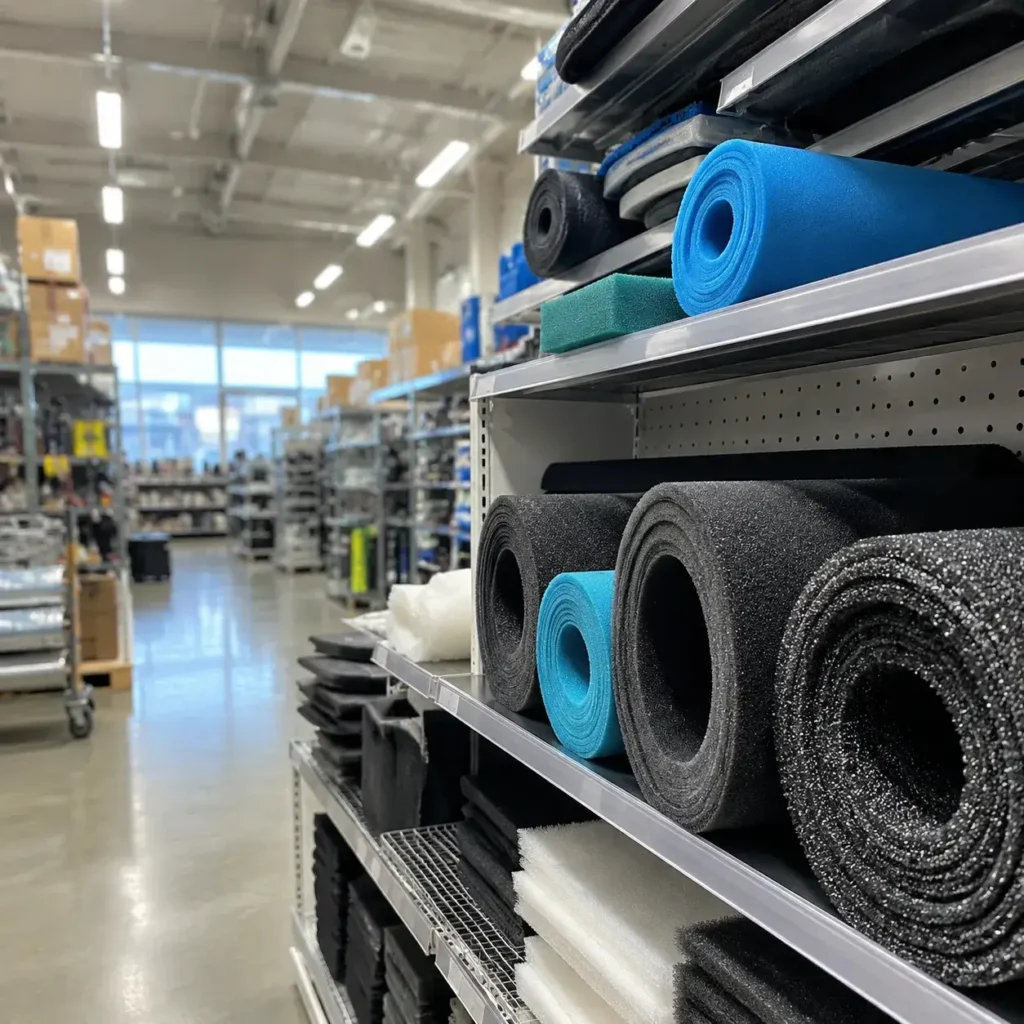
Finding high-grade polyurethane filter foam depends on your project size, required pore density, and volume needs. You can source reliable, cut-to-size reusable filter material across four main channels:
Major Online Retailers and Marketplaces
E-commerce platforms offer the widest variety of sheet dimensions and PPI (pores per inch) ratings. Online Marketplaces: Ideal for quick delivery on single universal foam sheets, cut-to-size air conditioner pads, and specialized Uni-filter media. Specialty Filtration Sites: Best for sourcing exact technical specifications, verified PPI densities (10 PPI to 80 PPI), and specialized flame-retardant grades.
Home Improvement and Hardware Stores
Local hardware stores and home improvement centers carry open-cell foam sheets designed for residential air conditioners and window units. If you are balancing custom foam installations with standard central air maintenance, checking the best furnace filters for airflow and indoor air quality helps keep your overall HVAC system running efficiently. Hardware stores typically offer: Pre-Cut AC Filter Sheets: Standard washable filter media usually sold in 15 × 24 inch sizes. Cut-to-Fit Window Unit Foam: Inexpensive coarse foam for rapid dust and pollen filtration.
Automotive and Small Engine Parts Suppliers
Auto parts stores and motorcycle shops stock heavy-duty, oil-compatible reticulated foam engineered for dirt bikes, mowers, and vehicle intakes. While making your own custom foam element saves money on custom setups, understanding how much does it cost to change your vehicle’s cabin and engine air filters helps you evaluate when to build custom versus buying drop-in OEM replacements.
Industrial Foam Manufacturers for Bulk Orders
As an air filter media manufacturer, we supply commercial clients, equipment builders, and bulk buyers directly from the factory floor. Sourcing directly from an industrial manufacturer gives you distinct production advantages:
| Buying Direct Advantage | Description |
|---|---|
| Custom Specs | Tailored pore densities (10–100 PPI) and exact thickness matching. |
| Bulk Roll Pricing | Maximum cost savings on large bulk foam rolls and volume sheet orders. |
| Precision Die-Cutting | Factory pre-cut shapes tailored directly to your production housing. |
Types of Foam Filter Sheets and Bulk Options
Reticulated Polyurethane Filter Foam
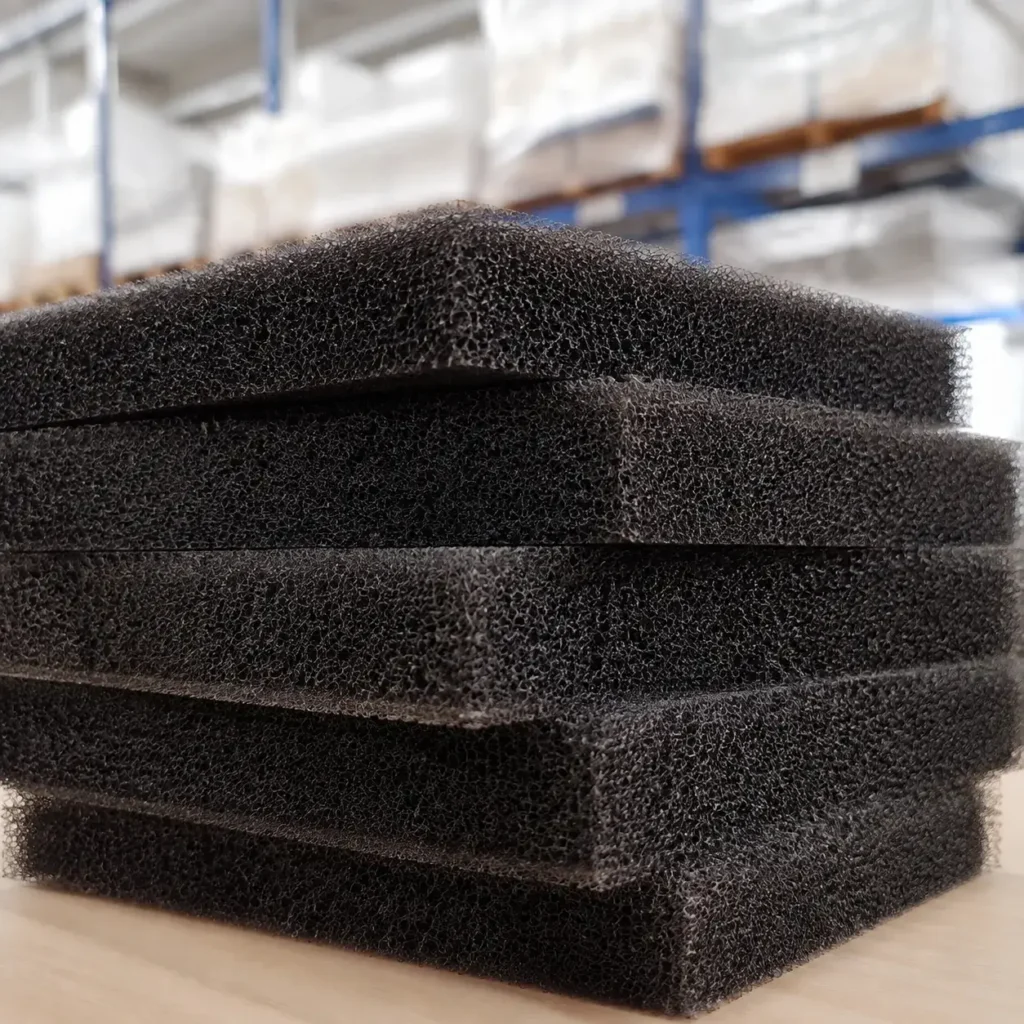
We manufacture reticulated polyurethane filter foam by thermal processing to strip away cell membranes, leaving behind a 100% open cell foam structure. This unique 3D network lets air flow freely while trapping dust, dirt, and moisture. Because this reusable filter material holds its shape when wet, you can wash and re-oil it without losing filtration structural integrity.
Coarse vs. Fine Density Filter Sheets
Filter foam density is measured in PPI (Pores Per Inch). Lower PPI means bigger pores and higher airflow, while higher PPI offers finer dust capture. When balancing airflow against particle retention, review our analysis on comparing filters for resistance and efficiency.
| PPI Rating | Foam Density | Best Suited Applications | Key Benefits |
|---|---|---|---|
| 10 – 20 PPI | Coarse | Small engine intakes, outdoor power equipment | Maximum airflow, catches heavy debris |
| 30 PPI | Medium | General HVAC pre-filters, dirt bike air intakes | Ideal balance of airflow and dust filtration |
| 40 – 80 PPI | Fine | Delicate electronics, aquarium filtration, fine dust protection | Superior particle capture, tight pore mesh |
Bulk Foam Rolls vs. Pre-Cut Material
When evaluating where to buy foam air filter material, your decision often comes down to format:
- Bulk Foam Rolls: The most cost-effective choice for facility maintenance, large-scale HVAC setups, or custom industrial cutouts. You cut what you need on demand with zero waste.
- Pre-Cut Air Filtration Sheets: Convenient, uniform pieces ready for quick swaps in standard equipment or small custom projects.
For a broader breakdown of how foam fits into modern filtration systems, explore our full guide on types of air filters explained.
Common Applications for Custom Air Filter Foam
Custom foam filter sheets are remarkably versatile. Because you can cut open-cell polyurethane filter foam to any dimension, we supply this adaptable material for everything from heavy machinery to home cooling units.
HVAC and Window AC Unit Filters
Standard paper filters often clog quickly or fail to fit custom vents. Using a washable air conditioner filter sheet gives you a durable, cost-effective alternative for home and commercial climate control.
- Window Units & Mini-Splits: Easily trimmed to fit tight intake grids and front panels.
- Central Air Systems: Using high-efficiency HVAC air intake filters helps trap dust and pollen without placing unnecessary strain on your blower motor.
- Return Air Vents: Works as a pre-filter layer to extend the life of the main media banks.
Automotive, Motorcycle, and Dirt Bike Air Intakes
Off-road vehicles and high-performance engines require maximum airflow alongside aggressive dust filtration.
- Dirt Bike Air Filter Replacement: Open-cell foam soaked in filter oil traps fine silt while letting the engine breathe.
- Custom Automotive Intakes: Perfect for classic cars, hot rods, or custom air boxes where off-the-shelf paper filters don’t fit.
- Universal Foam Sheet Upgrades: Offers higher tear resistance and reusability compared to factory paper elements.
Lawn Mowers and Power Equipment
Outdoor power equipment constantly operates in high-dust environments. A custom equipment air filter protects small engines from airborne debris that causes premature wear.
- Lawn Mowers & Tractors: Shields carburetors from grass clippings, soil particles, and dry debris.
- Chainsaws & Trimmers: Lightweight foam inserts keep dirt out without adding bulk to hand-operated tools.
- Generators & Pressure Washers: Cut-to-size foam pads provide low-restriction pre-filtration for long-running engines.
Aquarium, Marine, and Electronics Ventilation
Beyond basic air filtration, reticulated foam performs exceptionally well in water filtration and sensitive electrical enclosures.
- Electronics & Server Cabinets: Block dust from entering computer towers, audio amplifiers, and industrial control boxes to prevent overheating.
- Aquarium Sump Filters: Serve as a biological and mechanical filter media, offering a massive surface area for beneficial bacteria growth.
- Marine Engine Vents: Resists moisture and salt air degradation while keeping bilge areas and engine compartments well-ventilated.
How to Choose the Right Foam Filter Sheet
Picking the right universal foam sheet comes down to three basic factors: size, pore density, and whether you need oil treatment. As an air filter media manufacturer, we design open-cell foam sheets to handle specific airflow and capture demands without killing your system’s efficiency.
Determining Required Thickness and Dimensions
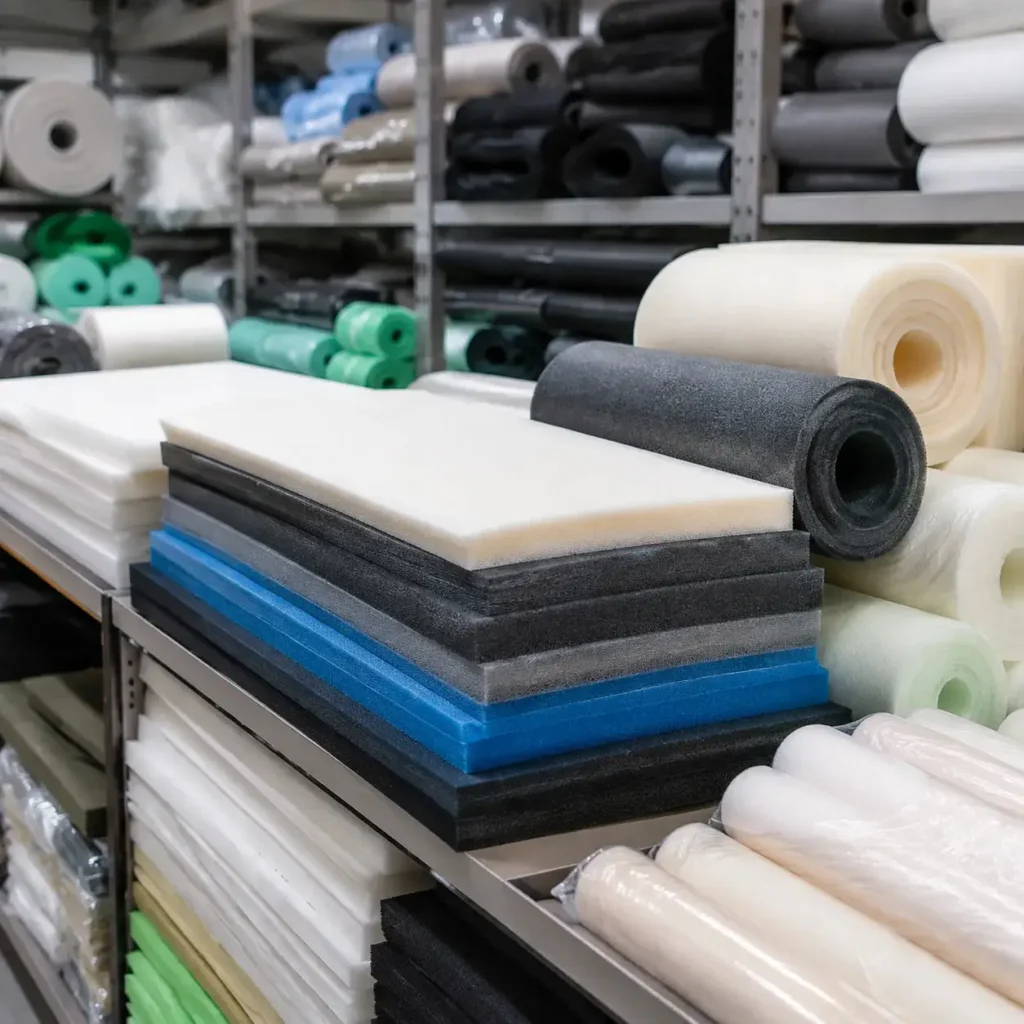
To get a tight seal, precision matters when buying reusable filter material:
- Measure the Frame: Take exact depth, width, and height measurements of your filter housing or tray.
- Allow Extra Margin: Buy a bulk foam sheet that is slightly larger than needed so you can easily cut to size for a snug fit.
- Select Thickness: Standard sheets range from 1/4 inch to 2 inches. Match the original filter thickness so air cannot bypass the edges.
Matching Pore Density (PPI) to Airflow Needs
Pore density is measured in Pores Per Inch (PPI). Higher PPI offers better dust pollen filtration, while lower PPI prioritizes maximum air movement. Understanding how PPI affects overall air filter airflow ensures your equipment runs efficiently without suffocation.
| Pore Density (PPI) | Airflow Resistance | Filtration Level | Best Application |
|---|---|---|---|
| 10 – 20 PPI | Extremely Low | Coarse particles, large debris | Lawn mowers, heavy machinery, rough pre-filters |
| 30 – 40 PPI | Balanced | Medium dust, soot, lint | 30 ppi coarse foam for dirt bikes, HVAC, equipment air filters |
| 60 – 80+ PPI | Moderate to High | Fine dust, pollen, microscopic debris | Electronics ventilation, sensitive air conditioner filter sheets |
Selecting Oiled vs. Dry Foam Material
Depending on your application environment, you will choose between oiled and dry polyurethane filter foam:
- Oiled Foam Material: Best for high-dust, outdoor environments like dirt bike air intakes and outdoor power equipment. The sticky filter oil catches fine microscopic grit that dry foam might let pass.
- Dry Foam Material: Ideal for indoor HVAC units, window air conditioners, and electronics ventilation where oil residue could cause damage or gather messy surface grime.
How to Custom Cut Your Own Foam Air Filter
As a filter media manufacturer, we design open-cell polyurethane filter foam to be easily adaptable for custom enclosures, power equipment, and unique air intakes. Cutting your own custom foam filter allows you to replace hard-to-find original filters quickly and affordably.
Essential Tools for Cutting Filter Foam
Achieving clean, straight edges on a reusable filter material requires sharp tools to prevent tearing or pinching the foam.
- Electric Bread Knife: The gold standard for thicker foam sheets (over 1 inch). The dual reciprocating blades slice smoothly without compressing the material.
- Heavy-Duty Utility Knife: Best for thinner foam sheets. Always use a brand-new, razor-sharp blade.
- Fabric Shears or Heavy Scissors: Ideal for thin, low-density sheets or final edge trimming.
- Steel Straightedge and Chalk Marker: Provides an accurate guideline without soaking into the open-cell structure.
- Cardboard Template: Pressing cardboard against your filter box gives you a perfect pattern to trace.
Measuring and Trimming to Fit Your Housing
When crafting a custom foam filter, precise dimensions prevent unfiltered air from bypassing the media.
- Trace the Old Filter: Lay your original filter or cardboard template onto the bulk foam sheet.
- Add a Seaming Margin: Always add 1/8 to 1/4 inch (3 to 6 mm) around all outer edges. Foam compresses easily, and this extra overhang ensures a snug perimeter fit.
- Understand Dimensions: When preparing your template, understanding how to measure your air filter size helps prevent accidental gaps or over-compression.
- Make Smooth Cuts: Compress the foam slightly with your straightedge rule and make continuous, long strokes with your utility knife rather than short hacking motions.
Ensuring a Proper Airtight Seal
A custom-cut foam filter is only as effective as its seal against the housing wall.
| Sealing Method | Best Application | Instructions |
|---|---|---|
| Gasket Compression | HVAC & AC Units | Cut the foam slightly oversized so the housing frame compresses the edges evenly. |
| Filter Rim Grease | Small Engines & Motorcycles | Apply a thin bead of waterproof rim grease along the sealing lip to capture dirt on high-vibration intakes. |
| Adhesive Backing | Equipment Cabinets | Use a non-porous foam tape around the frame border to hold the flexible foam firmly in place. |
Fast, simple maintenance keeps your custom foam filter operating at peak efficiency and extends its working lifespan. Because open-cell polyurethane filter foam is inherently durable, proper care ensures you get the maximum value out of every cut-to-size sheet.
Steps to Safely Wash and Dry Foam Filters
Cleaning your washable filter media requires a gentle approach to preserve the structural integrity of the pores:
- Remove loose debris: Lightly tap the filter against a flat surface to shake off heavy dirt.
- Wash with mild soap: Submerge the foam in warm water mixed with mild dish soap or a dedicated filter cleaner. Gently massage out trapped dust and grime. The process is very similar to learning can you wash and reuse a vacuum filter without degrading the foam structure.
- Squeeze, do not wring: Press the foam between your palms to remove dirty water. Never twist or wring the material, as this tears the open-cell structure.
- Rinse thoroughly: Flush under clean, warm water until the water runs completely clear.
- Air dry fully: Set the foam in a warm, well-ventilated area. Ensure it is 100% dry before re-oiling or reinstalling to prevent mold growth or reduced air filtration.
Applying Filter Oil for Maximum Efficiency
For high-dust applications like dirt bike air filters, lawn mowers, and automotive intakes, applying dedicated filter oil is crucial to trap ultra-fine debris:
- Choose the right oil: Use specialized tacky foam filter oil rather than motor oil or light lubricants, which can drain out or break down the material.
- Work it in evenly: Pour a small amount of oil onto the dry foam and massage it thoroughly into every pore until the entire sheet shows a uniform color.
- Remove excess oil: Squeeze out any extra oil using paper towels. The filter should feel sticky to the touch, not dripping wet.
Note: HVAC filter media, window air conditioner filter sheets, and electronics ventilation foam should always remain dry.
Signs It Is Time to Replace Your Foam Filter
Even the highest quality reusable filter material eventually degrades. Replace your foam sheet immediately if you notice any of these indicators:
- Flaking or crumbling: Exposure to heat, oil, and UV light causes older foam to disintegrate into brittle pieces.
- Permanent deformation: If the foam stays compressed and loses its original shape, it will no longer create an airtight seal inside the housing.
- Tears or seam splits: Any visible hole allows unfiltered air and contaminants to directly enter your intake or motor.
- Restricted airflow after washing: When fine particulates permanently embed into the pores and restrict performance, recognizing the signs your air filter is clogged lets you know it is time to cut a fresh sheet from your bulk foam supply.