You might already know that choosing the wrong air filter can quietly choke your HVAC system and send your energy bills spiking.
But how do you find the perfect balance between clean air and healthy airflow?
It all comes down to MERV 8 vs. MERV 11 air filter pressure drop.
While a higher MERV rating traps smaller particles like pet dander, it also increases airflow resistance and static pressure. If your filter is too restrictive, it can actually damage your furnace or AC unit over time.
In this quick guide, we’ll break down the core differences in filtration efficiency, look at a residential pressure drop chart, and help you figure out exactly which filter matches your system’s compatibility.
What Is Air Filter Pressure Drop and Why Does It Matter?
Understanding Static Pressure and Airflow Resistance
In any residential HVAC system, the blower motor pushes air through a network of ducts to maintain comfortable indoor temperatures. Static pressure is the amount of resistance that air encounters as it moves through this system.
When you introduce a home air filter into the slot, it naturally creates airflow resistance. This resistance causes a reduction in air pressure immediately after the air passes through the filter media. This drop in pressure from the upstream side to the downstream side of the filter is known as the air filter pressure drop.
How Filter Pressure Drop Affects HVAC System Performance
Every HVAC system is engineered to operate within a specific total external static pressure limit. If the air filtration media is too dense, the pressure drop increases, forcing the system to work harder.
High pressure drop directly impacts your cooling system and heating units by: Restricting Airflow: Lower air distribution throughout the home leads to hot or cold spots. Straining the Blower Motor: The motor consumes more electricity to overcome the resistance, accelerating wear and tear. Risking Component Damage: Severe restriction can cause a heat exchanger to overheat or an AC evaporator coil to freeze.
As a dedicated MERV filter manufacturer, we engineer our filters to balance high particulate matter capture with optimal airflow to protect your equipment.
Initial Pressure Drop vs. Pressure Drop
Understanding the lifecycle of filter resistance is critical for maintaining indoor air quality and system health. Pressure drop is not a static number; it changes over time.
| Pressure Drop Stage | Definition | Impact on HVAC System |
|---|---|---|
| Initial Pressure Drop | The resistance of a brand-new, clean air filter out of the box. | Baseline resistance: the lowest level of restriction for that specific MERV rating. |
| Final Pressure Drop | The maximum allowable resistance before the filter becomes severely restrictive. | Indicates that the filter is loaded with dust and allergy particles; signals immediate filter replacement is needed. |
Key Takeaway: A higher initial pressure drop means less room for dust accumulation before the filter begins to negatively impact ventilation efficiency and increase energy consumption.
MERV 8 vs. MERV 11: The Core Differences
Choosing between MERV 8 and MERV 11 filters comes down to balancing indoor air quality with your system’s performance. As a MERV filter manufacturer, we see firsthand how these two options impact both airborne particles and system strain.
Filtration Efficiency and Particle Size Comparison
MERV 8 filters serve as an excellent baseline for standard residential HVAC systems. They capture larger nuisance particles but allow smaller allergens to pass through. MERV 11 filters offer tighter filtration, trapping finer particulate matter that triggers seasonal allergies.
| Feature / Particle Type | MERV 8 Efficiency | MERV 11 Efficiency |
|---|---|---|
| Pollen & Dust Mites | 70% – 85% | 85% or higher |
| Pet Dander & Mold Spores | Less than 20% | 65% – 79% |
| Smog & Car Emissions | Negligible | 20% – 34% |
| Primary Use Case | Basic system protection | Allergy and pet relief |
Airflow Comparison: Does MERV 11 Restrict Airflow Too Much?
A common concern is whether upgrading to a higher efficiency rating will choke your HVAC system. The MERV 8 vs. MERV 11 air filter pressure drop variance is typically minor in well-designed systems, but it does exist.
- MERV 8 Filters: Offer low resistance, ensuring maximum airflow and minimal stress on your blower motor.
- MERV 11 Filters: Features denser media to catch smaller particles, which inherently increases static pressure.
For most modern residential HVAC setups, a clean MERV 11 filter will not restrict airflow enough to cause damage. However, choosing the best furnace filters for airflow and indoor air quality requires verifying that your specific system can handle the slight increase in resistance without dropping efficiency.
Cost and Value Analysis for Homeowners
While MERV 8 filters have a lower upfront purchase price, MERV 11 filters deliver superior value for households with pets, smokers, or asthma sufferers.
- Upfront Cost: MERV 8 filters are highly budget-friendly. MERV 11 filters cost slightly more due to the advanced synthetic materials used in production.
- Long-Term Value: A MERV 11 filter improves indoor air quality significantly, potentially lowering health-related expenses and keeping your cooling system coils cleaner over time.
- Energy Impact: If your system is older, the higher pressure drop of a MERV 11 could slightly increase energy consumption, making MERV 8 the more cost-effective choice for basic air distribution needs.
MERV 8 vs. MERV 11 Pressure Drop Chart & Performance
How to Read an Air Filter Pressure Drop Chart
Reading a pressure drop chart is straightforward once you know what to look for. The chart plots airflow velocity—measured in Feet Per Minute (FPM) or Cubic Feet Per Minute (CFM)—against resistance, which is measured as static pressure in inches of water column (in. w.c.).
As air velocity goes up, resistance increases. When reviewing our manufacturing data, always look at the initial pressure drop (the resistance of a clean filter) at your system’s standard operating speed—typically around 300 to 500 FPM.
Pressure Drop Comparison: MERV 8 vs. MERV 11 vs. MERV 13
Upgrading your air filtration changes the baseline resistance in your HVAC system. A MERV 8 filter offers a loose weave that lets air pass easily, while a MERV 11 filter uses tighter pleats to capture smaller allergy particles. For a comprehensive look at how these efficiency ratings match up across different household needs, check out our MERV 8 vs. MERV 11 air filters guide for home HVAC.
Here is a direct performance comparison of standard 1-inch clean filters operating at a baseline of 492 FPM:
| Filter Rating | Average Initial Pressure Drop (in. w.c.) | Airflow Resistance Level | Primary Target Particles |
|---|---|---|---|
| MERV 8 | 0.16 – 0.20 | Low | Dust, lint, pollen, dust mites |
| MERV 11 | 0.23 – 0.28 | Moderate | Pet dander, mold spores, smog |
| MERV 13 | 0.30 – 0.35 | High | Bacteria, tobacco smoke, and virus carriers |
How Filter Material and Thickness Affect Resistance
The physical design of the home air filter dictates its total resistance. As a manufacturer, we utilize specific engineering methods to balance filtration with healthy airflow:
- Pleat Count: More pleats per linear foot increase the total surface area. More surface area means the air has more paths to travel through, which actively lowers the initial pressure drop.
- Media Type: Synthetic media delivers lower airflow resistance compared to heavy fiberglass pads while trapping far more particulate matter.
- Filter Thickness: Upgrading from a 1-inch filter to a 4-inch media filter dramatically drops resistance. A thicker 4-inch MERV 11 filter often has less pressure drop than a thin 1-inch MERV 8 filter because the surface area is vastly expanded.
Will a MERV 11 Filter Damage Your HVAC System?
What Pressure Drop Level Is Safe for Residential Systems?
As a MERV filter manufacturer, we know that keeping your HVAC system healthy comes down to balancing air filtration with airflow. For most standard residential HVAC systems, the maximum allowable total static pressure is 0.5 inches of water column (wc). The air filter itself should only take up a fraction of that limit.
A safe initial pressure drop for a clean residential filter is typically between 0.15 and 0.25 inches wc. A standard MERV 8 filter usually sits comfortably around 0.16 inches wc, while a MERV 11 filter increases resistance slightly to about 0.22 inches wc. As long as your overall system static pressure stays below the 0.5 inches wc threshold, upgrading to a MERV 11 filter will not damage your cooling system or furnace.
Signs Your Air Filter Is Too Restrictive
When the pressure drop across your filter gets too high, your blower motor has to work twice as hard to push air through the ventilation network. If your system is struggling with a filter that is too restrictive, you will notice immediate red flags.
- Weak Airflow: Little to no air coming out of your supply vents.
- Short Cycling: The system turns on and off rapidly without reaching the thermostat setpoint.
- Frozen Evaporator Coils: Restricted airflow causes the temperature of the cooling system coils to drop below freezing.
- Overheating: The furnace trips its high-limit switch because heat cannot escape the heat exchanger.
If you suspect your system is choking, look out for the unmistakable signs your HVAC filter is clogged to prevent permanent equipment damage.
The Relationship Between Pressure Drop and Energy Bills
High resistance directly impacts your monthly utility costs. When comparing MERV 8 vs. MERV 11 air filter pressure drop, the higher resistance of the MERV 11 requires more electrical energy to maintain proper air distribution.
| Filter Type | Average Initial Pressure Drop | Impact on Blower Motor | Effect on Energy Bills |
|---|---|---|---|
| MERV 8 | Lower (~0.16″ wc) | Standard operation | Baseline energy consumption |
| MERV 11 | Moderate (~0.22″ wc) | Slight workload increase | Minimal increase (if changed on time) |
| Clogged Filter | High (>0.50″ wc) | Extreme strain | 10% to 15% spike in utility costs |
An elevated pressure drop forces the blower motor to run longer cycles to regulate home temperatures. To keep energy consumption low, regular filter replacement is non-negotiable before dust accumulation turns a safe MERV 11 filter into a system-damaging bottleneck.
How to Choose the Right MERV Rating for Your Home
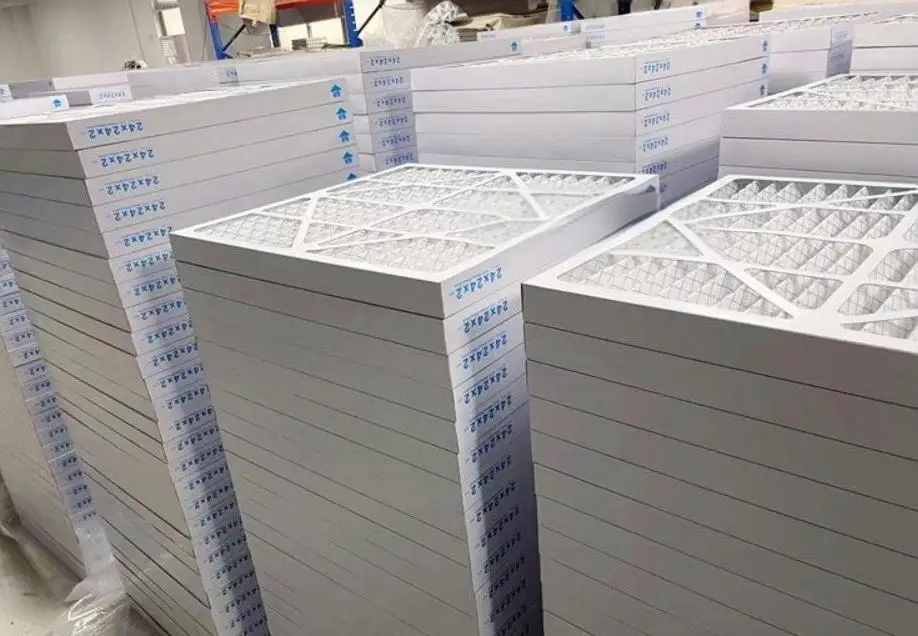
Choosing between a MERV 8 and a MERV 11 filter comes down to balancing your indoor air quality goals with your HVAC system’s capabilities. A higher rating captures smaller particles, but it also increases resistance to airflow. Finding the right sweet spot ensures clean air without stressing your equipment.
When to Choose a MERV 8 Air Filter
A MERV 8 air filter is the standard go-to choice for the majority of residential HVAC systems. It provides adequate filtration to protect your heating and cooling equipment from dust buildup while maintaining excellent airflow.
- Best for: Households without pets, severe allergies, or respiratory conditions.
- Airflow Impact: Extremely low resistance, ensuring your blower motor runs efficiently.
- What it captures: Pollen, dust mites, lint, and large mold spores.
If you want a deeper look at what this baseline rating covers, check out our complete guide to what MERV 8 means on an air filter.
When to Upgrade to a MERV 11 Air Filter
Upgrading to a MERV 11 air filter is highly beneficial when you need an extra layer of defense against smaller airborne contaminants. It bridges the gap between basic equipment protection and superior residential air filtration.
- Best for: Homes with pets, mild allergy sufferers, children, or elderly residents.
- Airflow Impact: Moderate resistance; acceptable for most modern residential HVAC systems in good condition.
- What it captures: Pet dander, dust/pollen, smoke, auto emissions, and fine particulate matter.
Evaluating Your System Compatibility and Household Needs
Before making a final decision, evaluate your specific household demographics alongside your system’s design. Older HVAC units might struggle with the added static pressure of higher-efficiency pleated media.
| Factor | MERV 8 Filter | MERV 11 Filter |
|---|---|---|
| Airflow Resistance | Very Low | Moderate |
| Pet Dander Control | Fair | Excellent |
| Allergy Relief | Basic | Advanced |
| Blower Motor Stress | Minimal | Low to Moderate |
| Replacement Frequency | Every 90 days | Every 60 to 90 days |
To find the perfect balance for your specific setup, read our detailed breakdown on which MERV rating filter you should use for home air quality to protect both your lungs and your compressor.
Maintenance and Lifespan: MERV 8 vs. MERV 11
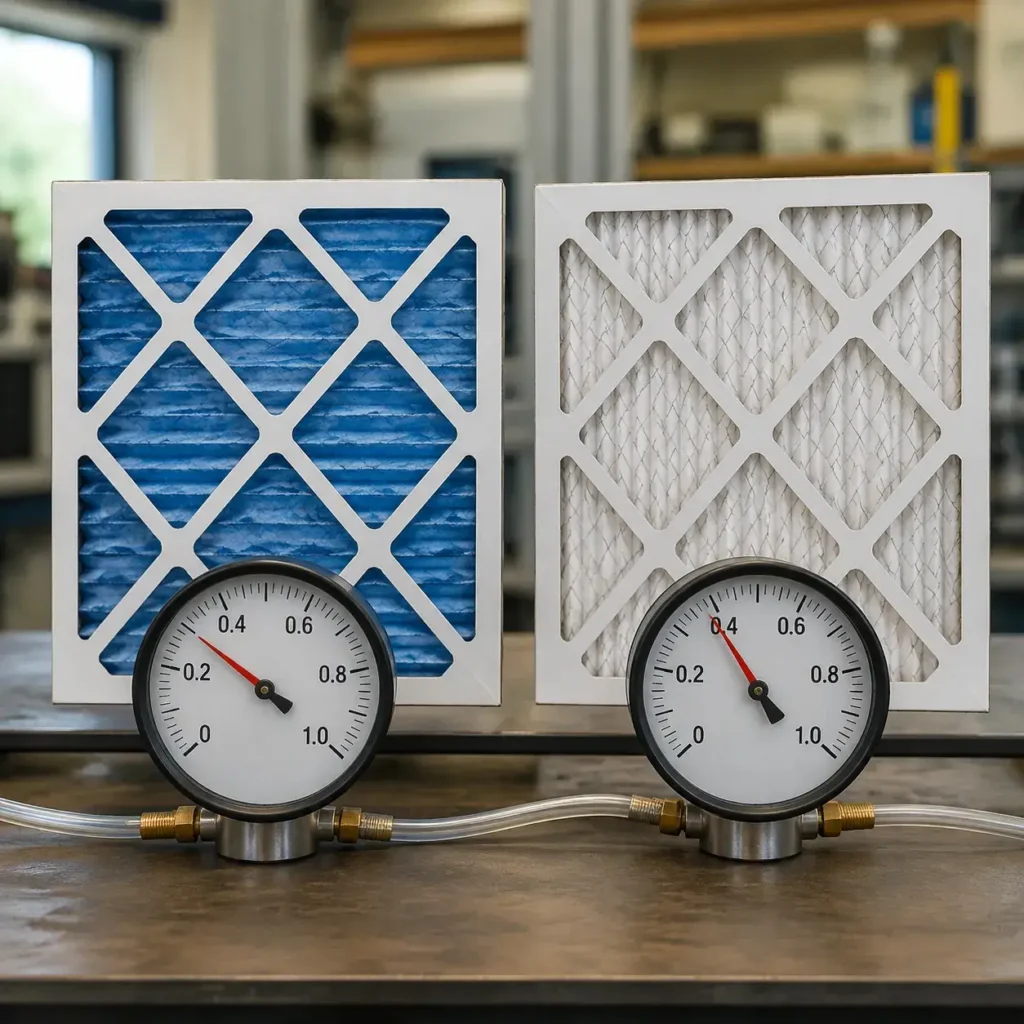
How Often to Replace a MERV 8 vs. MERV 11 Filter
As a dedicated MERV filter manufacturer, we see firsthand how maintenance schedules change based on your filtration choice. A standard MERV 8 filter typically lasts 2 to 3 months in an average home because its larger pores take longer to clog.
On the other hand, a MERV 11 filter captures smaller particulate matter, meaning it fills up faster. You should plan to replace a MERV 11 filter every 1 to 2 months, especially if you have pets or smokers in the house.
How Accumulating Dust Changes Filter Pressure Drop
Every air filter experiences a shift from its initial pressure drop to its final pressure drop as it loads with dust.
- The MERV 8 Trajectory: Starts with low resistance and builds up pressure slowly. Airflow stays relatively steady for the first 60 days.
- The MERV 11 Trajectory: Starts with a slightly higher baseline resistance. Because it traps finer particles, the MERV 8 vs. MERV 11 air filter pressure drop gap widens quickly as dust accumulates, causing the blower motor to work harder over time if left unchanged.
Tips for Maximizing HVAC Efficiency and Filter Life
To keep your residential HVAC operating at peak performance without spiking your energy consumption, use these straightforward maintenance practices:
- Visual Inspections: Check your indoor air quality system monthly. If the filter material looks dark grey and caked, swap it out immediately, regardless of the calendar.
- Upgrade Filter Thickness: If your system accommodates a 4-inch media cabinet instead of a standard 1-inch slot, upgrade. Thicker filters offer more surface area, lowering airflow resistance and extending filter life up to 6 months.
- Seal Intake Ductwork: Prevent leaks from drawing in heavy dust from unconditioned spaces like attics or crawlspaces, which prematurely loads the filter.
Proper maintenance ensures your hvac air intake filters save money and improve efficiency while keeping your air distribution smooth and balanced.
Frequently Asked Questions About MERV Pressure Drop
Can I measure air filter pressure drop myself?
Yes, you can measure it if you have the right tools. To get an accurate reading, you need a magnehelic gauge or a digital manometer. By placing static pressure probes before and after the air filter slot in your HVAC system, you can calculate the exact resistance. For most homeowners, though, watching for signs of reduced airflow or system strain is a more practical approach than buying specialized testing equipment.
Does a higher MERV rating protect my HVAC system better?
Not necessarily. While a higher rating catches smaller allergy particles and keeps your blower motor and heat exchanger cleaner, it also increases the initial pressure drop. If the resistance is too high, it chokes the system’s airflow. A MERV 8 air filter provides the ideal balance of equipment protection and airflow for standard setups without causing undue mechanical stress.
Will a MERV 11 filter remove pet dander and odors?
- Pet Dander: Yes. A MERV 11 air filter is highly efficient at capturing pet dander, pollen, and fine particulate matter.
- Odors: No. Standard filters only trap solid airborne particles. To eliminate pet odors, smoke, or cooking smells, you need a filter that includes an activated carbon layer to absorb gaseous pollutants.
Is MERV 11 too high for standard residential AC units?
It depends on your specific residential HVAC design. Many modern cooling systems handle a MERV 11 filter easily, provided the filter is replaced regularly to avoid excessive final pressure drop. However, if your system has older ductwork or a weaker blower motor, the added resistance might restrict air distribution too much. Checking your system’s maximum static pressure limit is the best way to ensure compatibility.