Understanding Air Filter Components
To thoroughly answer what are air filters made of, we must first break down the fundamental anatomy of a standard filter. As a leading air filter manufacturer, we design and engineer filters around two critical components: the active filtration material and the structural casing that holds it securely in place.
What Is Air Filter Media?
Air filter media is the core functional component responsible for capturing dust, pollen, and airborne debris. This porous material acts as the primary barrier for air purification in both home HVAC systems and internal combustion engines.
Depending on the specific application, air filter media is crafted from various materials:
- Spun Fiberglass: A highly common, cost-effective material utilized in standard flat-panel furnace filters.
- Woven Synthetic Fibers: Engineered for durability and moisture resistance, these are widely used in advanced pleated air filters.
- Pleated Paper: Blended with synthetic resins, this material is a staple in automotive engine and cabin air filters.
- Electrostatic Materials: Specially charged fibers designed to act like a magnet for microscopic particles.
Frames and Support Structures
The filter media cannot operate effectively on its own; it requires robust filter frames and support structures to maintain its shape and integrity under the constant pressure of high-velocity airflow.
Key structural components include:
- Outer Frames: Typically constructed from heavy-duty die-cut cardboard (beverage board), rigid plastics, or galvanized metal. The frame prevents the filter from collapsing inside the system.
- Wire Backing: A sturdy metal wire mesh is often bonded directly to the air filter media. This provides essential rigidity, preventing the material from bowing, fluttering, or tearing.
- Industrial Adhesives: High-strength glues and sealants bind the media seamlessly to the inner edge of the frame, ensuring zero air bypass so that 100% of the air is forced through the filter media.
What Are Home and HVAC Air Filters Made Of?
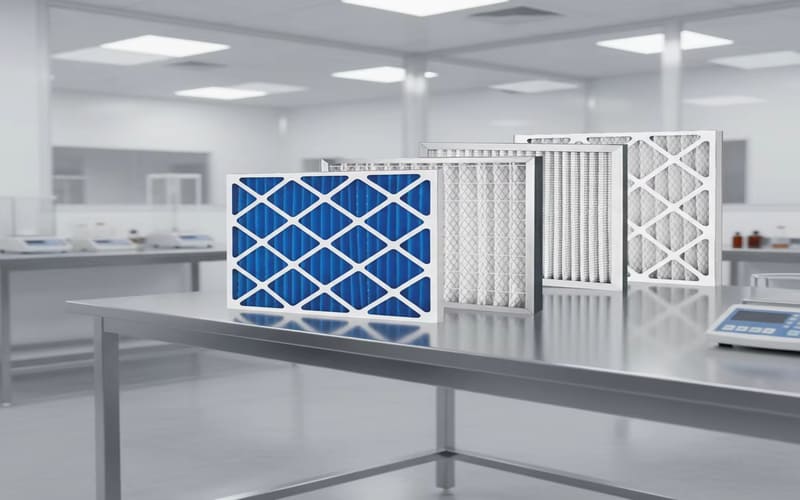
The materials inside your home’s HVAC filters determine how effectively they clean the air. We manufacture these filters using a variety of distinct materials, each serving a specific filtration purpose for modern HVAC systems.
Spun Fiberglass Filters
Spun fiberglass is the most basic and affordable air filter media on the market. These filters consist of spun glass fibers laid continuously over each other, usually held together by a cardboard frame and a metal backing. While a standard fiberglass air filter is great at catching large lint and dust particles to protect the furnace motor, it does not improve indoor air purification significantly.
Pleated Synthetic Materials
Pleated filters step up the game by using woven synthetic fibers, typically polyester or cotton blends. The material is folded into accordion-like pleats to maximize the surface area without restricting airflow. When comparing pleated vs fiberglass air filters, the tightly woven synthetic materials capture far more microscopic particles, including pollen and pet dander.
Electrostatic and Washable Media
Electrostatic materials are designed with self-charging fibers—often made from polypropylene—that attract dust and allergens like a magnet.
Disposable Electrostatic: Uses charged synthetic fibers for high efficiency.
Washable Air Filters: Built with durable, reusable porous materials and rigid aluminum frames. They can be washed, dried, and reinserted for years of use.
High-Efficiency Particulate Air (HEPA) Materials
HEPA filters are constructed from incredibly dense mats of fine, randomly arranged fiberglass threads. They offer the highest level of particulate air filtration available. Because HEPA materials are so tightly packed, they create significant airflow resistance. They are typically reserved for specialized air purifiers or heavy-duty commercial setups rather than standard residential furnace filters.
What Are Automotive Engine Air Filters Made Of?
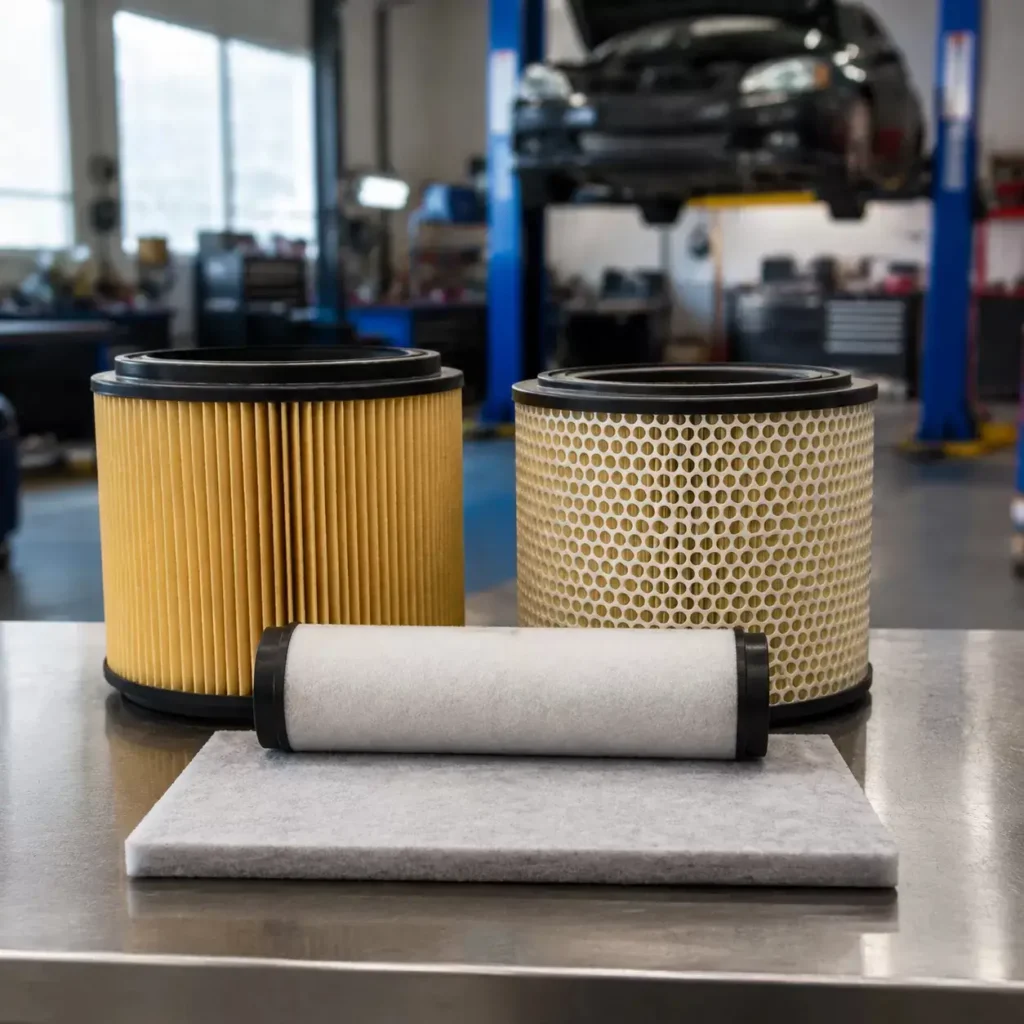
When people ask what are air filters made of, they often think of their home HVAC systems. However, internal combustion engines require a completely different class of filtration to perform efficiently. While passenger comfort usually involves deciding between carbon vs standard air filters for cabin air filtration, engine air filters strictly focus on blocking road dust, dirt, and debris from destroying critical engine components.
As a manufacturer, we see three primary materials dominate the automotive engine filter market.
Standard Paper Filters
Standard paper filters are the most common choice for daily drivers. Do not let the word “paper” fool you; this is a highly specialized, heavy-duty material.
Material Composition: Made from dense, pleated paper created from wood pulp (cellulose) blended with synthetic fibers.
Structure: The pleating increases the surface area, allowing the filter to trap more particles without restricting airflow.
Best For: Standard commuting and everyday vehicles. They are highly effective, disposable, and cost-efficient.
Oiled Cotton Filters
Cotton air filters are the go-to upgrade for automotive enthusiasts and performance drivers.
Material Composition: Constructed from multiple layers of woven synthetic fibers and premium cotton gauze.
Filtration Method: The cotton layers are treated with a specialized suspension oil. As air passes through, the oil grabs and holds onto microscopic dirt particles.
Best For: High-performance vehicles. These filters are washable and reusable, offering excellent airflow and long-term durability.
Polyurethane Foam Filters
Foam air filters are designed for extreme environments where dust and debris are overwhelming.
Material Composition: Made from specialized porous materials, usually polyurethane foam.
Structure: They often feature multiple layers of varying density (coarse foam on the outside, fine foam on the inside) coated in a sticky oil.
Best For: Off-road vehicles, dirt bikes, and heavy-duty equipment. The thick foam structure holds a massive amount of dirt before airflow is compromised, making it perfect for harsh, dusty conditions.
The Air Filter Manufacturing Process
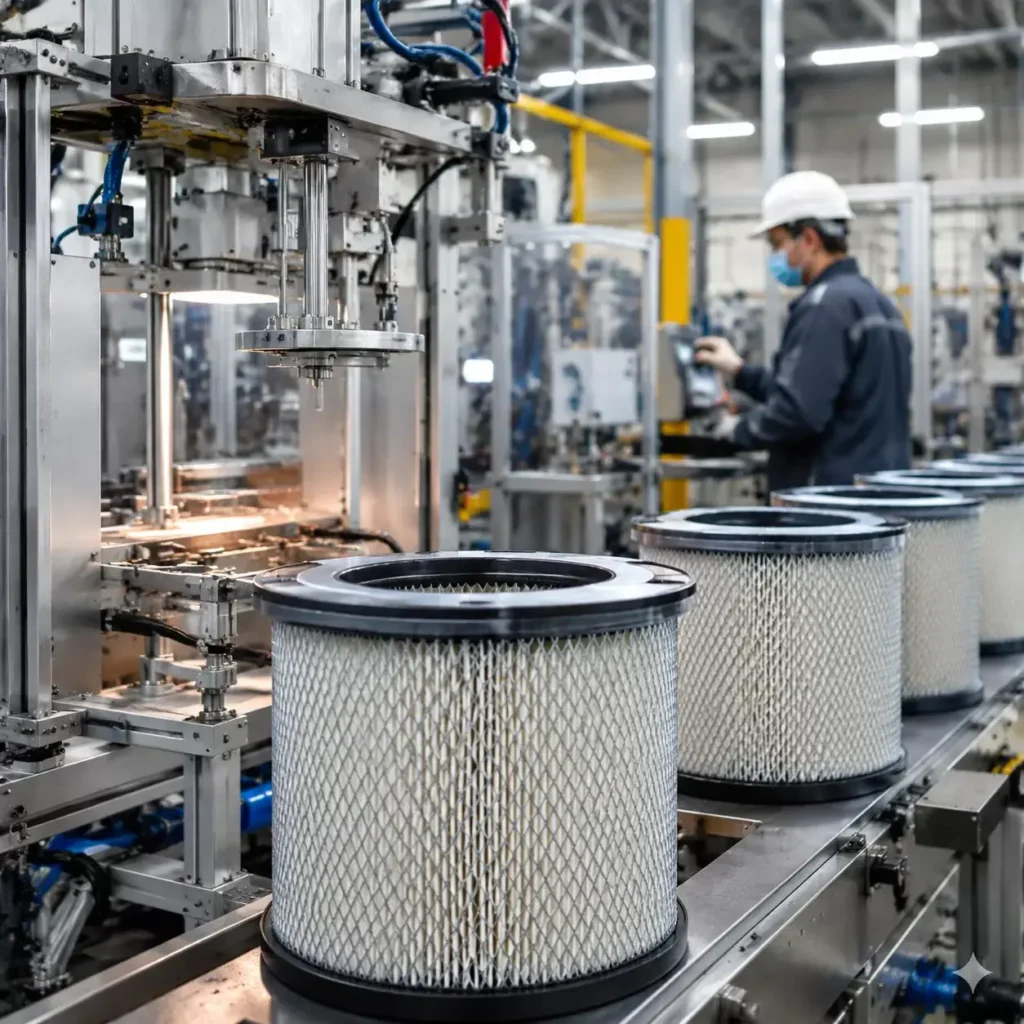
Transforming raw materials into high-performing HVAC filters requires precision and strict quality control. As an experienced air filter manufacturer, we know exactly what it takes to turn raw fibers into reliable air purification tools.
Material Pleating Techniques
The efficiency of most filters relies heavily on surface area. We use advanced machinery to fold the air filter media—such as pleated paper, synthetic fibers, or polypropylene—into tight, uniform accordion patterns.
Maximum capture rate: Pleating creates significantly more space for porous materials to trap dust, pollen, and debris.
Optimized airflow: Precise pleat spacing allows air to flow freely through HVAC systems, preventing equipment strain.
Broad application: This technique is essential for everything from standard furnace filters to advanced HEPA filters.
Frame Assembly and Sealing
Once the media is pleated, it must be firmly secured into robust filter frames.
Structural integrity: We use heavy-duty, moisture-resistant beverage board, plastic, or metal to prevent the filter from collapsing under high air pressure.
Airtight seals: The pleated synthetic fibers or electrostatic materials are securely bonded to the inside of the frame using industrial adhesives. This prevents unconditioned, dirty air from bypassing the filter.
The best air filter manufacturers understand that a filter is only as effective as its seal, whether it is a cabin air filter for a vehicle or a heavy-duty filter for internal combustion engines.
Quality Testing and Standardization
Before any product hits the shelves, it undergoes rigorous laboratory testing to verify its performance and determine its precise MERV rating.
Particle capture testing: We measure exactly how well the particulate air filter traps various sizes of debris, from pet dander to microscopic allergens.
Airflow resistance: We check the pressure drop to ensure the filter material does not restrict airflow and damage the system.
Durability checks: We test the structural strength of different materials, verifying that spun fiberglass, activated carbon filters, and washable air filters will hold up reliably throughout their intended lifespan.
Understanding Filter Efficiency and MERV Ratings
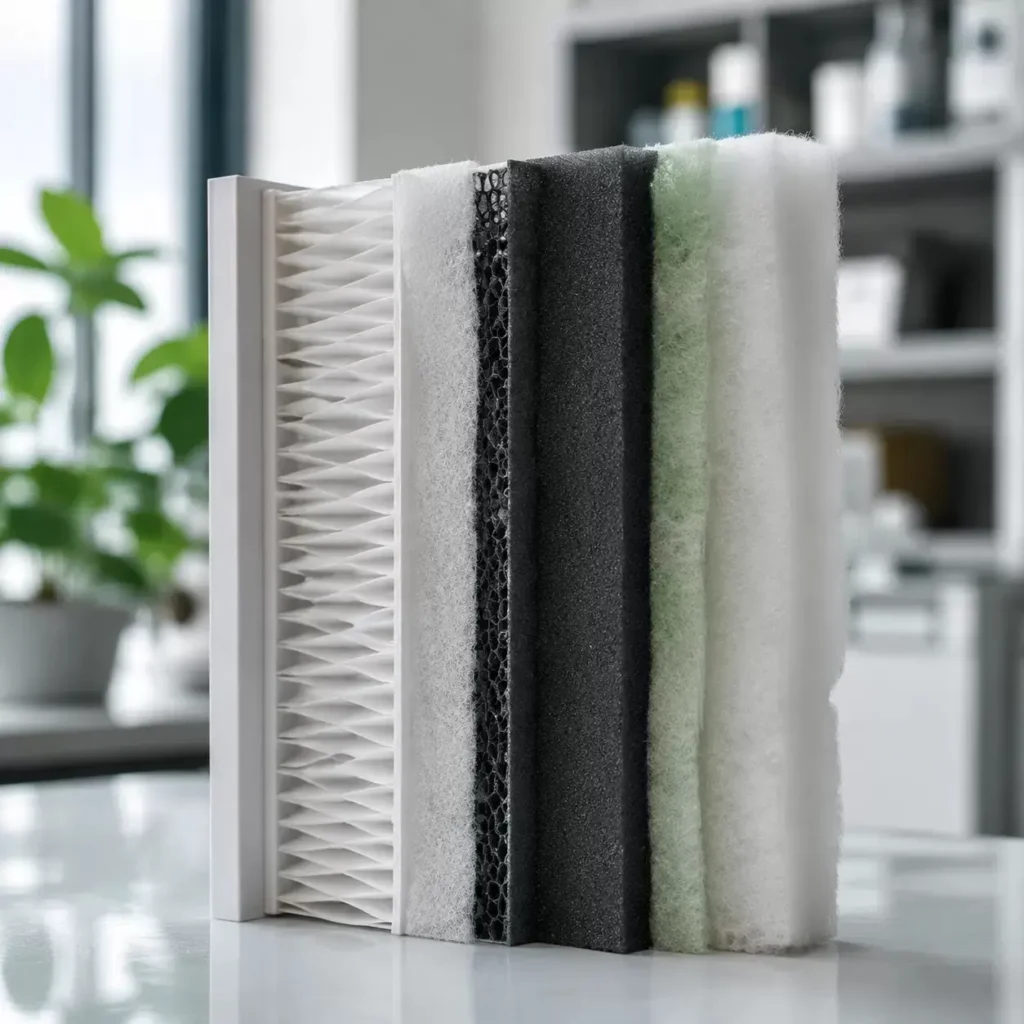
When discussing what air filters are made of, we have to talk about how well those materials actually perform. The materials directly dictate the filter’s overall efficiency in cleaning your air.
What is a MERV Rating?
MERV stands for Minimum Efficiency Reporting Value. It is the universal standard used to evaluate the efficiency of a particulate air filter. In plain terms, it tells you how effectively the filter traps airborne particles as they pass through your HVAC systems. The higher the number, the smaller the particles the filter can catch.
To fully understand what a MERV air filter rating is, here is a quick breakdown of the standard scale:
- MERV 1-4: Captures large particles like dust mites and pollen.
- MERV 5-8: Good for standard home setups. Traps mold spores and pet dander.
- MERV 9-12: Superior residential control. Captures fine dust and auto emissions.
- MERV 13-16: Hospital-level air purification. Traps bacteria, virus carriers, and smoke.
How Material Types Affect MERV Scores
The specific air filter media used during manufacturing ultimately decides the MERV score. You cannot get a MERV 13 rating out of basic, cheap materials.
Here is how different materials stack up on the efficiency scale:
- Spun Fiberglass: These are highly porous materials. They allow maximum airflow and are very cheap to produce, but they only achieve a MERV 1-4 rating. They simply cannot trap fine dust.
- Pleated Synthetic Fibers: By folding the synthetic material, we increase the functional surface area housed within the filter frames. This structural design easily hits the MERV 5-13 range.
- HEPA Materials: These fibers are engineered with a high density, acting like a barrier for microscopic dust. They achieve MERV 16+ ratings.
The material makeup directly impacts both your indoor air quality and your system’s performance. Because higher ratings often mean denser materials, it is critical to determine exactly which MERV rating filter you should use so you do not accidentally overwork your blower motor.
How to Choose the Best Air Filter Material
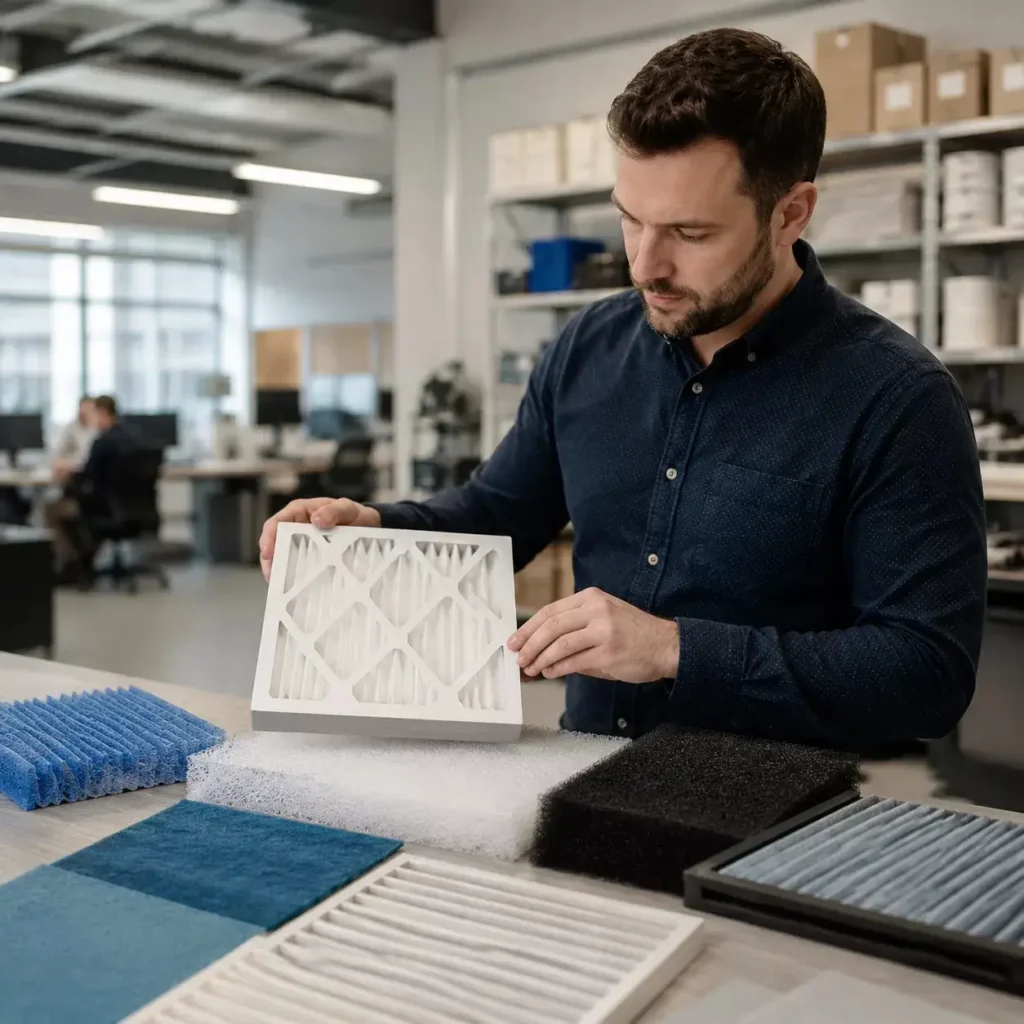
Choosing what air filters are made of comes down to matching the material to your specific environment and performance needs. As an air filter manufacturer, we see firsthand how the right air filter media impacts overall efficiency, airflow, and equipment lifespan.
Selecting HVAC Filters for Your Home
For residential HVAC systems, you need a balance between strong airflow and effective particulate trapping. If you are comparing standard furnace filters against standalone units, understanding the differences between air filters and air purifiers can help you make the best choice for indoor air quality.
Here is a quick breakdown of common home HVAC filters:
| Material Type | Best For | MERV Rating Range |
|---|---|---|
| Spun Fiberglass | Basic dust and lint protection | MERV 1-4 |
| Pleated Synthetic Fibers | Pet dander, pollen, daily household dust | MERV 5-13 |
| Electrostatic Materials | Washable setups, budget-friendly long-term use | MERV 4-10 |
| HEPA Filters | Severe allergies, maximum air purification | MERV 17+ (HEPA standard) |
Choosing the Right Engine Air Filter
Internal combustion engines require strong, high-flow porous materials to keep contaminants out of sensitive engine parts.
Pleated Paper: The industry standard. It is affordable and highly effective for daily driving.
Cotton Air Filters: Often oiled and reusable, these provide higher airflow for performance vehicles.
Foam Air Filters: Ideal for off-road or heavily dusty environments because polyurethane foam traps massive amounts of dirt without immediately clogging.
Addressing Fiberglass Safety Concerns
Spun fiberglass is one of the most common materials used in cheap furnace filters. While handling fiberglass insulation requires heavy protective gear, fiberglass air filters are generally safe for everyday handling. The fibers are bound together firmly to prevent them from breaking off and entering your air stream. However, because they only offer a low MERV rating, they only protect your HVAC equipment from large debris, doing very little for actual indoor air purification. If you want cleaner air, upgrading to woven synthetic fibers or pleated paper is highly recommended.
Air Filter Maintenance and Replacement
Knowing exactly what air filters are made of helps you understand how to maintain them. Proper upkeep keeps your HVAC systems running efficiently and ensures optimal indoor air quality. Understanding how often to change your air filter depends heavily on the specific materials used in its construction and the environment it operates in.
Lifespan of Different Filter Materials
The lifespan of your filter directly correlates with its air filter media. Basic spun fiberglass fills up faster than dense synthetic fibers, while washable options offer long-term use if maintained correctly.
| Filter Material | Average Lifespan | Characteristics |
|---|---|---|
| Spun Fiberglass | 30 days | Basic dust protection, high airflow, low cost. |
| Pleated Paper / Synthetic Fibers | 60 to 90 days | Better surface area, captures smaller particles, ideal for standard HVAC setups. |
| Washable Air Filters | 5 to 10 years | Requires monthly washing; eco-friendly but generally lower MERV rating. |
| HEPA Filters | 6 to 12 months | Maximum air purification, traps microscopic particulate matter. |
Signs Your Air Filter Needs Replacing
Even if you track the average lifespan of your filter materials, your specific environment might require faster replacements. Watch for these clear indicators that it is time for a change:
- Visible Dirt and Grime: The filter media has turned gray, black, or is visibly caked with dust and debris.
- Reduced Airflow: Weak air pressure coming from your vents indicates a clogged porous material.
- Spike in Energy Bills: A blocked filter forces your system to run longer and work harder, driving up costs.
- Increased Indoor Dust: If surfaces in your home get dusty rapidly, the filter is no longer holding capacity.
- Musty Odors: Strange smells blowing through your vents often mean the filter media is holding onto damp dust or trapped odors.