How Pets Affect Your Home’s Indoor Air Quality
Every pet owner knows that cats and dogs bring immense joy to a home, but they also introduce unique challenges to your indoor air quality. As your HVAC system circulates air throughout the house, it acts as the respiratory system of your living space. Without the right filtration, the accumulation of microscopic airborne irritants from your pets can degrade your air quality, impacting both your family’s health and the efficiency of your heating and cooling equipment.
The Impact of Pet Dander, Fur, and Odors
Pets constantly shed materials that compromise the air you breathe. Managing these pollutants requires understanding what is actually floating around in your living space:
- Pet Dander: These microscopic flecks of skin shed by animals are extremely lightweight. Dander stays airborne for long periods, easily entering lungs and triggering allergic reactions.
- Pet Hair and Fur: Visible fur settles on furniture and floors, but lighter strands get pulled directly into air return vents, quickly coating your HVAC components.
- Biological Odors: Bacteria and moisture associated with pet sweat, saliva, and outdoor debris attach to airborne particles, creating persistent, musty smells throughout the house.
- Secondary Pollutants: Pets tracking inside from outdoors bring along hitchhiking allergens like pollen, dust mites, and mold spores, compounding the indoor air quality issue.
Why Standard HVAC Filters Aren’t Enough for Pet Owners
Standard fiberglass filters—often the cheap, see-through options found at local hardware stores—are designed solely to catch large dust bunnies and protect the furnace motor from major debris. They offer virtually zero protection against pet-specific contaminants.
The Reality for Multi-Pet Homes: Low-efficiency filters allow microscopic pet dander, fine hair, and associated odors to pass right through the media. These particles recirculate into your living areas or, worse, settle on your HVAC system’s sensitive coils, leading to reduced airflow resistance, higher energy bills, and premature system failure. For households with pets, upgrading to specialized pleated filters is a necessity, not an option.
Understanding MERV Ratings for Pet Hair and Allergies
What is a MERV Rating and Why Does It Matter?
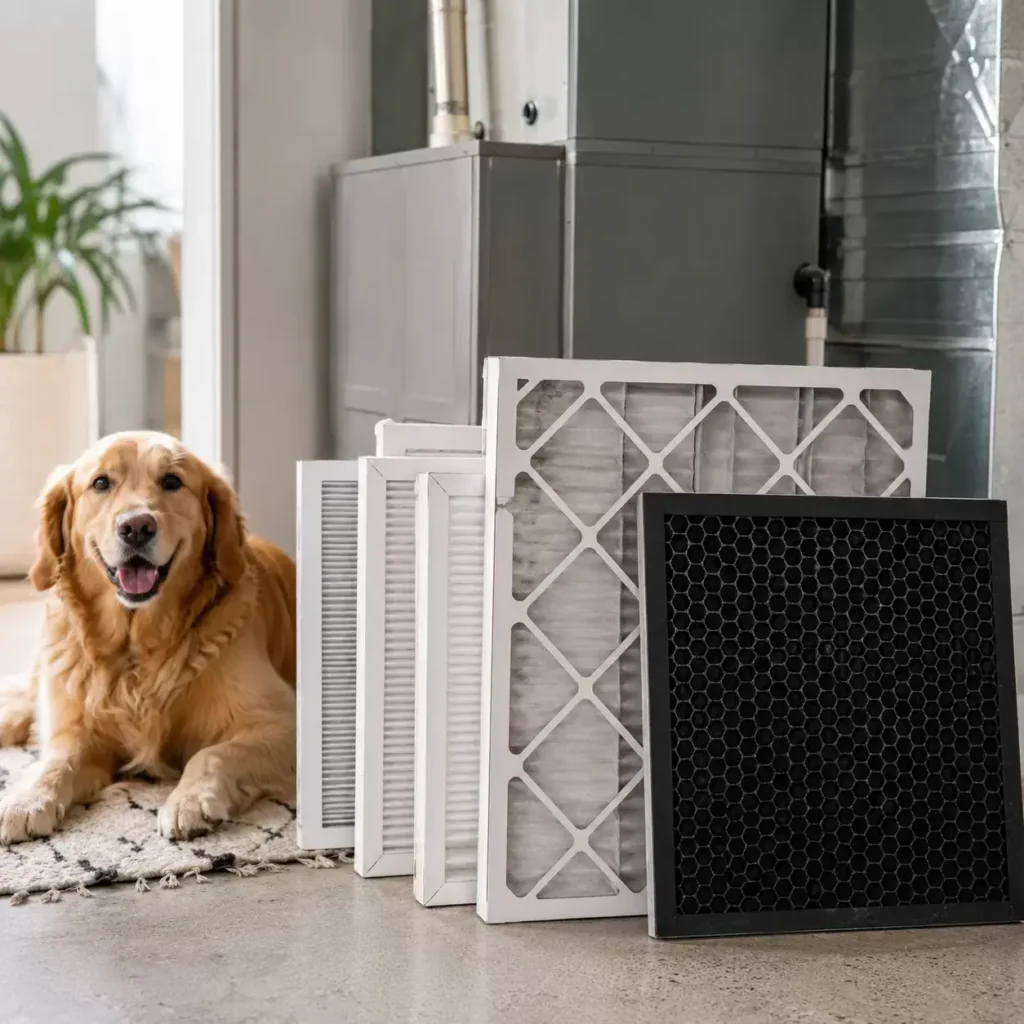
MERV stands for Minimum Efficiency Reporting Value. It is the industry standard scale measuring a filter’s ability to capture airborne particles. As a furnace filter manufacturer, we use this rating system to tell you exactly how small of a particle the filter can trap. For pet owners, understanding the MERV rating is crucial. It dictates whether a filter will catch fine pet dander or simply let it recirculate back into your living spaces, lowering your overall indoor air quality.
The Ideal MERV Rating for Homes With Pets
For households with cats and dogs, the sweet spot is a MERV 11 or MERV 13 filter.
- MERV 11: Captures the majority of pet hair, dander, dust mites, and pollen. It provides excellent air purification for standard homes with pets.
- MERV 13: Offers higher efficiency, trapping even smaller air pollutants and virus-carrying droplets. This is the best choice if family members suffer from severe asthma or allergies.
While some people consider alternative options, traditional pleated filters in these MERV ranges offer the best balance of filtration efficiency and system safety compared to standard fiberglass or reusable options.
How High MERV Ratings Affect Your HVAC System Airflow
Higher MERV ratings mean tighter weaves, which can increase airflow resistance. If a filter is too restrictive, your hvac systems or ac filter setup will work harder, leading to higher energy bills or system strain.
| MERV Rating | Pet Filtration Efficiency | Airflow Resistance Risk |
|---|---|---|
| MERV 8 | Low (Misses fine dander) | Very Low |
| MERV 11 | High (Ideal for pets) | Low to Moderate |
| MERV 13 | Very High (Excellent for allergies) | Moderate (Check system compatibility) |
Choosing a high-quality, deeply pleated design ensures maximum surface area, allowing you to capture stubborn pet allergens without suffocating your system’s airflow.
Best Types of Furnace Filters for Pet Owners
MERV 11 and MERV 13 Pleated Air Filters
For homes with cats and dogs, disposable pleated filters rated at MERV 11 or MERV 13 are the industry standard. As a furnace filter manufacturer, we design these with tightly woven synthetic fibers that create a high-surface-area barrier.
- MERV 11 Filters: Capture up to 85% of airborne pet dander and microscopic dust particles. This is the sweet spot for standard multi-pet households.
- MERV 13 Filters: Trap more than 90% of air pollutants, including tiny bacteria and smoke particles, making them ideal if you suffer from severe pet allergies.
Odor-Reducing Carbon and Charcoal Filters
Standard pleated filters excel at trapping physical particles like pet hair, but they cannot stop gaseous smells. To eliminate stubborn litter box odors or wet dog smells, you need an activated carbon air filter.
These filters feature a specialized layer of treated charcoal that actively absorbs volatile organic compounds (VOCs) and household odors. For maximum air purification, we recommend using a dual-filter setup or a pleated filter infused with carbon to tackle both pet dander and odor removal simultaneously.
HEPA and Washable Filters vs. Disposable Pleated Filters
Choosing the right filter structure depends on your specific HVAC setup and maintenance habits.
- HEPA Filters: While HEPA filters offer the highest filtration efficiency by trapping 99.97% of particles down to 0.3 microns, standard residential HVAC systems cannot handle their extreme airflow resistance. True HEPA filtration usually requires standalone air purifiers rather than a standard AC filter slot.
- Washable Filters: These reusable options save money over time, but they present a major downside for pet owners. They rely on static electricity and typically carry a lower MERV rating, meaning they let fine pet dander pass right through. Furthermore, if you do not let them dry completely after washing, they can trap moisture and breed mold.
- Disposable Pleated Filters: These remain the best choice for pet owners. They offer the optimal balance of high-efficiency particle capture, proper airflow, and convenient replacement.
Top-Rated Furnace Filters for Homes With Pets
Finding the right balance between clean air and system performance is crucial when you share your home with animals. As a manufacturer, we design our filters to tackle the exact challenges that cats and dogs bring into your living space without suffocating your HVAC system.
Best Overall Filter for Pet Dander and Dust
For the majority of pet owners, a MERV 11 or MERV 13 pleated filter is the absolute sweet spot. These filters capture up to 90% of airborne particles, including microscopic pet dander, lint, and dust mites.
- Why it works: The pleated design multiplies the surface area, allowing it to trap heavy loads of pet hair without instantly crushing your system’s airflow.
- Who it’s for: Homeowners who want noticeable relief from seasonal allergies and everyday pet shedding.
If you require specialized, high-efficiency containment for severe allergies or dedicated air cleaners, upgrading to mini-pleat HEPA filters provides the ultimate medical-grade filtration barrier against the smallest microscopic allergens.
Best Budget-Friendly Filters for Multi-Pet Households
When you run a multi-pet household, you go through filters fast. Standard fiberglass filters are cheap but useless for pet hair. Instead, opt for our bulk-packed Standard Pleated AC Filters.
| Feature | Budget Pleated Filters | Cheap Fiberglass Filters |
|---|---|---|
| Pet Hair Capture | High (Traps surface hair) | Low (Passes right through) |
| Dander Protection | Moderate (MERV 8-10) | None |
| Value Pack Savings | Excellent (Buy in bulk) | Low (Requires constant replacing) |
Buying these in multi-packs allows you to swap them out every 30 to 45 days without breaking the bank, keeping your indoor air clean and your energy bills low.
Best Filter for Eliminating Tough Pet Odors
If your main battle is with wet dog smells or litter box odors, standard filtration won’t cut it. You need a filter infused with activated carbon or charcoal.
Activated carbon relies on chemical adsorption to lock in volatile organic compounds (VOCs) and standard pet odors rather than just masking them. For households dealing with complex odor challenges, choosing a dedicated air filter for indoor smoke and odor control ensures that both heavy pet smells and stagnant indoor odors are completely neutralized at the molecular level.
How to Choose the Right Filter Size and Thickness
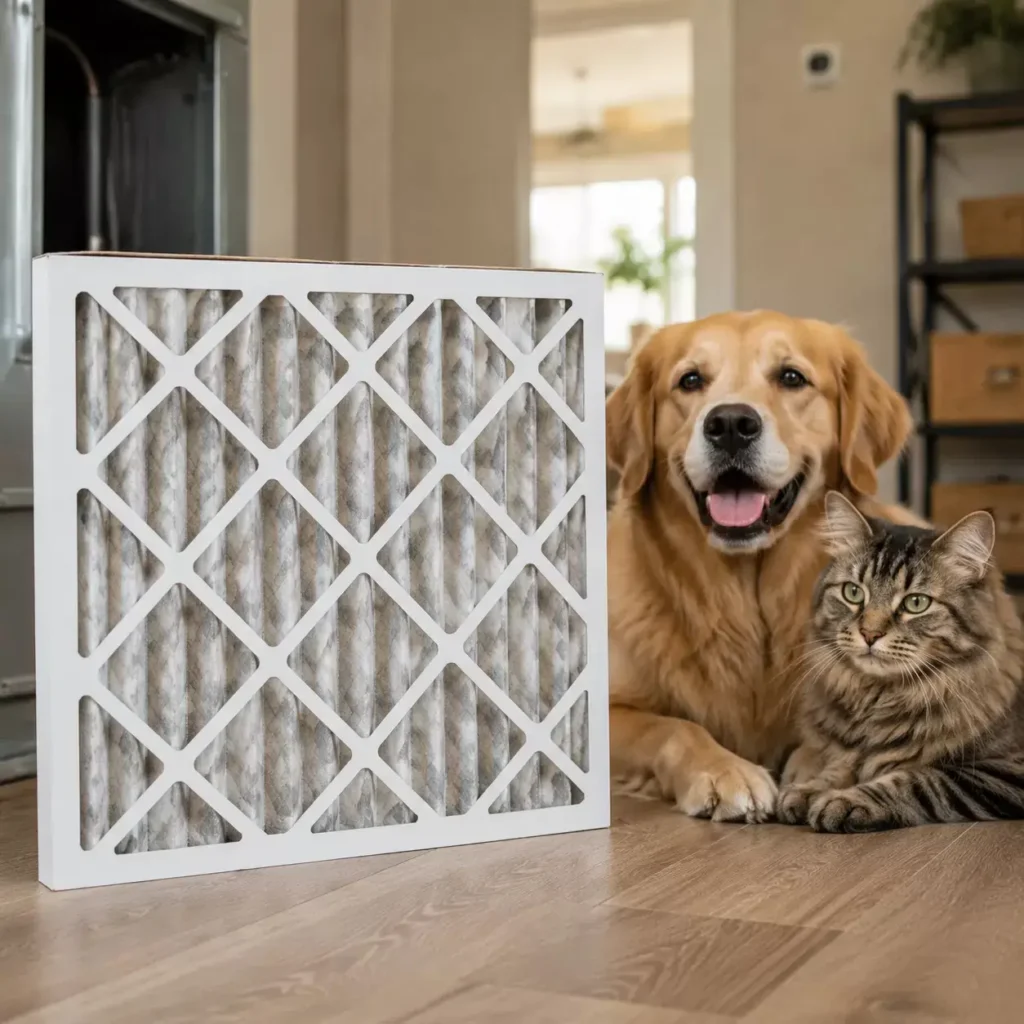
Choosing the right furnace filter size and thickness is just as important as choosing the right MERV rating. If a filter doesn’t fit perfectly, air will bypass it entirely, allowing pet dander and hair to cycle right back into your living space and damage your HVAC system.
How to Find and Measure Your Current Filter Size
The easiest way to find your filter size is to check the cardboard frame of your existing filter. You will typically see two sets of numbers: the nominal size (the rounded numbers used for labeling) and the actual size (the precise physical measurements).
If the print has faded, you can measure the length, width, and thickness manually using a tape measure. When buying replacements, always use the nominal size. For a detailed breakdown of how these measurements work, check out our guide on nominal vs. actual air filter sizes. If you are unsure which dimensions are standard for your system, you can also consult our comprehensive air conditioner air filter sizes guide to find your match.
Comparing 1-Inch Filters vs. 4- to 5-Inch Media Filters
Thickness plays a massive role in how much pet hair and dust a filter can hold before it restricts airflow. While standard slot dimensions restrict most homes to 1-inch filters, larger media cabinets can accommodate thicker options.
| Filter Thickness | Typical Lifespan (With Pets) | Best For | Pros & Cons |
|---|---|---|---|
| 1-Inch Filters | 1 to 2 months | Standard HVAC slots; homes with single pets | Pros: Inexpensive, widely available. Cons: Clogs quickly; requires frequent changes. |
| 4- to 5-Inch Media Filters | 6 to 9 months | Large multi-pet households; high-airflow systems | Pros: Massive surface area, superior dust capacity. Cons: Requires a dedicated media cabinet. |
Thicker filters have more pleated surface area. This extra material allows them to capture significantly more pet dander and airborne pollutants without creating high airflow resistance, making them the superior choice for heavy-shedding cats and dogs.
Furnace Filter Maintenance Guide for Pet Owners
Managing a home with furry companions means your heating and cooling system works double-time. Standard maintenance schedules don’t apply when pet hair and dander are constantly circulating through your indoor air. Keeping your system running smoothly requires a proactive approach to filter management.
How Often to Change Your Filter When You Have Pets
As a furnace filter manufacturer, we know firsthand that pets completely change the timeline for filter replacements. While a pet-free home might get away with changing a filter every 90 days, your timeline drops significantly based on your animal headcount.
- Single Pet Households: Replace your pleated filters every 60 days.
- Multiple Pets or Heavy Shedders: Change the filter every 30 to 45 days to maintain optimal air quality.
- Pets with Allergies: If you or your pets suffer from respiratory issues, stick to a strict 30-day schedule, especially during shedding seasons.
Knowing how often to change your air filter prevents pet dander and dust mites from bypassing the media and settling into your HVAC system.
Signs Your Filter Is Clogged With Pet Hair and Needs Replacing
Don’t wait for your system to break down before checking your AC filter. Look out for these clear warning signs that your filter is maxed out:
- Visible Fur Matting: A gray layer of pet hair and dust blanketing the intake side of the filter.
- Increased Dust: A sudden buildup of fine dander and dust on your furniture shortly after cleaning.
- Lingering Odors: A persistent, stale pet smell that won’t go away, indicating the filter can no longer trap odor-causing particles.
- Reduced Airflow: Weak air coming out of your supply vents, which forces your system to run longer cycles.
If you notice your utility bills creeping up or hear your furnace straining, you should immediately check to see if your furnace filter needs changing to avoid costly system damage and maintain proper airflow resistance.
Additional Tips to Reduce Pet Dander and Maintain Clean Air
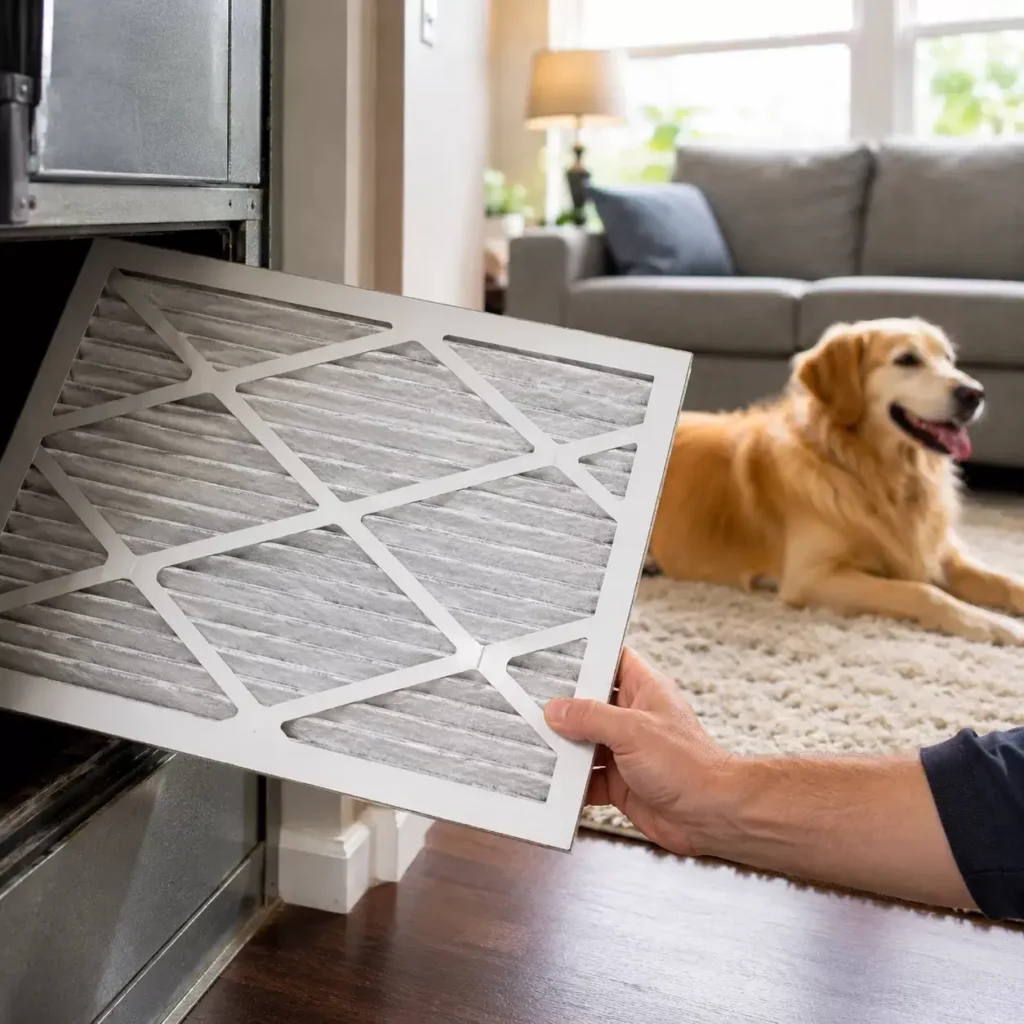
High-quality furnace filters do a heavy lift, but stopping pet dander and hair at the source keeps your HVAC system running smoothly and extends the life of your filters.
The Importance of Regular Pet Grooming and Deshedding
Managing shedding before it reaches your return vents is the most effective way to protect your indoor air quality. Loose fur and dander trapped on your pet won’t end up airborne if you maintain a strict grooming routine.
- Brush pets outdoors: Brush your cats and dogs outside at least two to three times a week to keep loose fur out of the house.
- Use deshedding tools: Utilize specialized brushes during peak shedding seasons to catch the undercoat hair.
- Regular baths: Washing your pets monthly reduces the volume of dander and dried saliva that flakes off into your living spaces.
Complementary IAQ Solutions: Vacuuming, Dusting, and Air Purifiers
A furnace filter works best when paired with daily cleaning habits that minimize the overall dust and pet hair load in the home.
- Vacuum with a HEPA filter: Vacuum carpets, rugs, and upholstery at least twice a week to trap heavy pet hair before it gets kicked back up into the air.
- Damp dusting: Wipe down hard surfaces with a microfiber cloth instead of a dry duster, which just scatters dander back into the room.
- Deploy dedicated air purifiers: Place standalone air purifiers in high-traffic pet areas or bedrooms to capture fine particles. If you use localized units, understanding the difference between a standard air purifier vs. HEPA air purifier will help you maximize your overall indoor air purification strategy alongside your main furnace filter.
Frequently Asked Questions About Pet HVAC Filters
Can a Furnace Filter Really Alleviate Pet Allergies?
Yes, the right furnace filter can significantly reduce pet allergies by trapping airborne irritants before they circulate through your rooms. When cats and dogs shed, they release microscopic skin flakes known as pet dander. These tiny particles, along with dust mites and pollen, float in the indoor air and trigger sneezing and congestion.
Upgrading to a high-quality pleated filter captures these small allergens effectively. While it won’t eliminate allergies completely on its own, it acts as the first line of defense for your indoor air quality.
Are Specialized “Pet Air Filters” Actually Worth It?
Mostly, no. Many brands slap a “pet filter” label on a box and charge a premium price. What actually matters is the filter’s build quality, the MERV rating, and whether it includes an activated carbon layer for odor removal.
Instead of paying extra for clever marketing, you get better value by choosing standard MERV 11 or MERV 13 pleated filters from a direct manufacturer. If odors are your main concern, look for filters explicitly built with carbon or charcoal layers rather than relying on gimmicks like scented options. For a deeper look at why scent additives aren’t the best fix, see our breakdown on whether scented furnace filters work.
Will Using a Higher MERV Filter Damage My Furnace?
It won’t damage your system if you manage it properly, but going too high can cause issues. A higher MERV rating means a tighter weave that catches smaller particles. However, this tight weave also increases airflow resistance.
- MERV 11 to 13: The sweet spot for pet owners. They capture pet hair and dander without choking modern HVAC systems.
- MERV 14 and above: These can severely restrict airflow in older systems, forcing the fan motor to work harder, which raises utility bills and can cause system overheating.
To keep your furnace safe, always replace your filters on time to prevent pet hair from completely blocking the airflow.